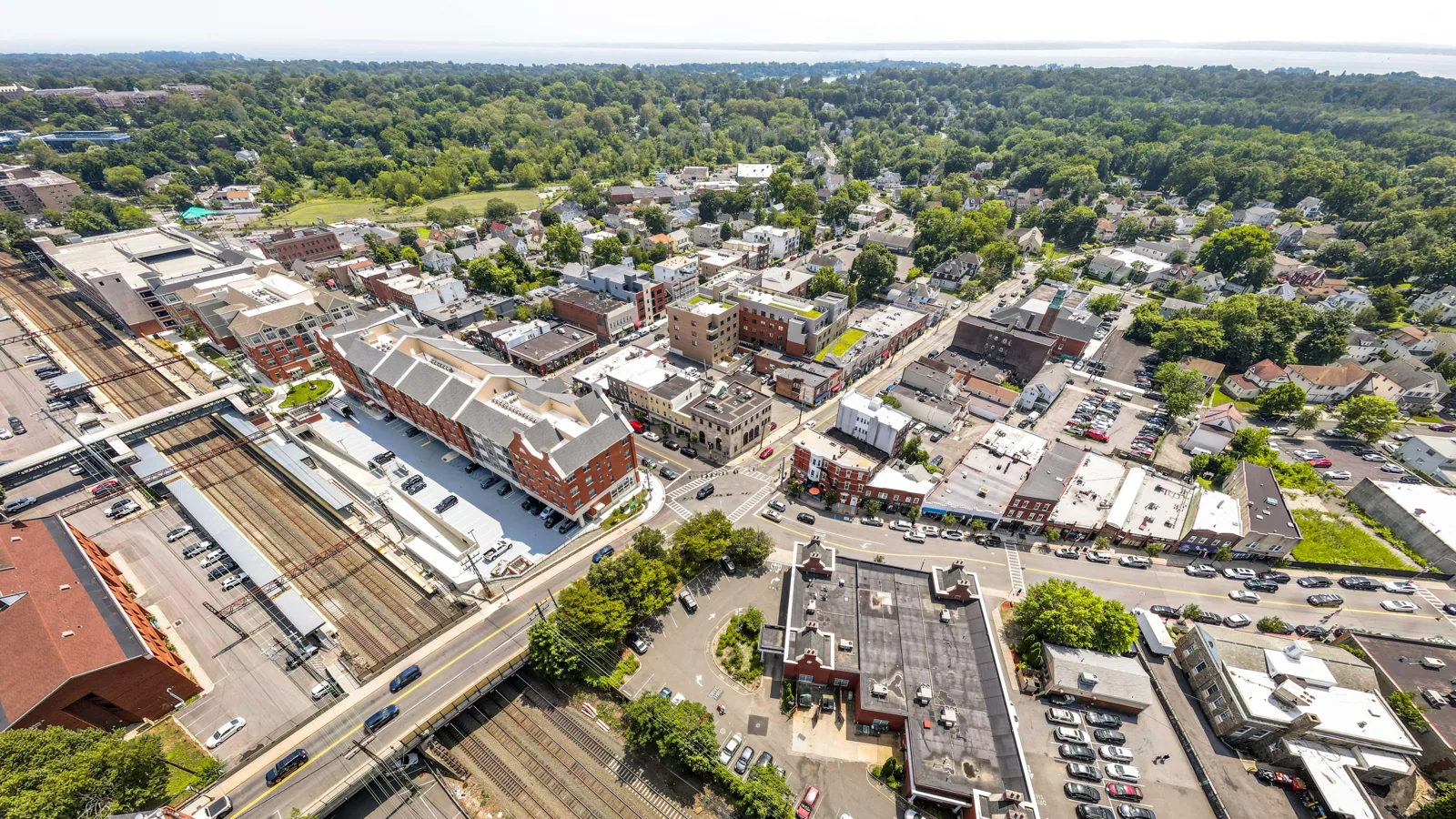
Restaurants and large retail stores wear roofs in opposite ways, one with grease and heat, the other with long spans and heavy foot traffic from service crews, and Berlin, CT has both close together. The town's 2023 Plan of Conservation and Development puts commercial zoning mainly around the Farmington Avenue corridor and Berlin Turnpike, calls Farmington Avenue the strongest commercial corridor with the highest business concentration and most of the restaurant and retail uses, and describes Berlin Turnpike as an active, auto-oriented retail corridor with larger businesses.
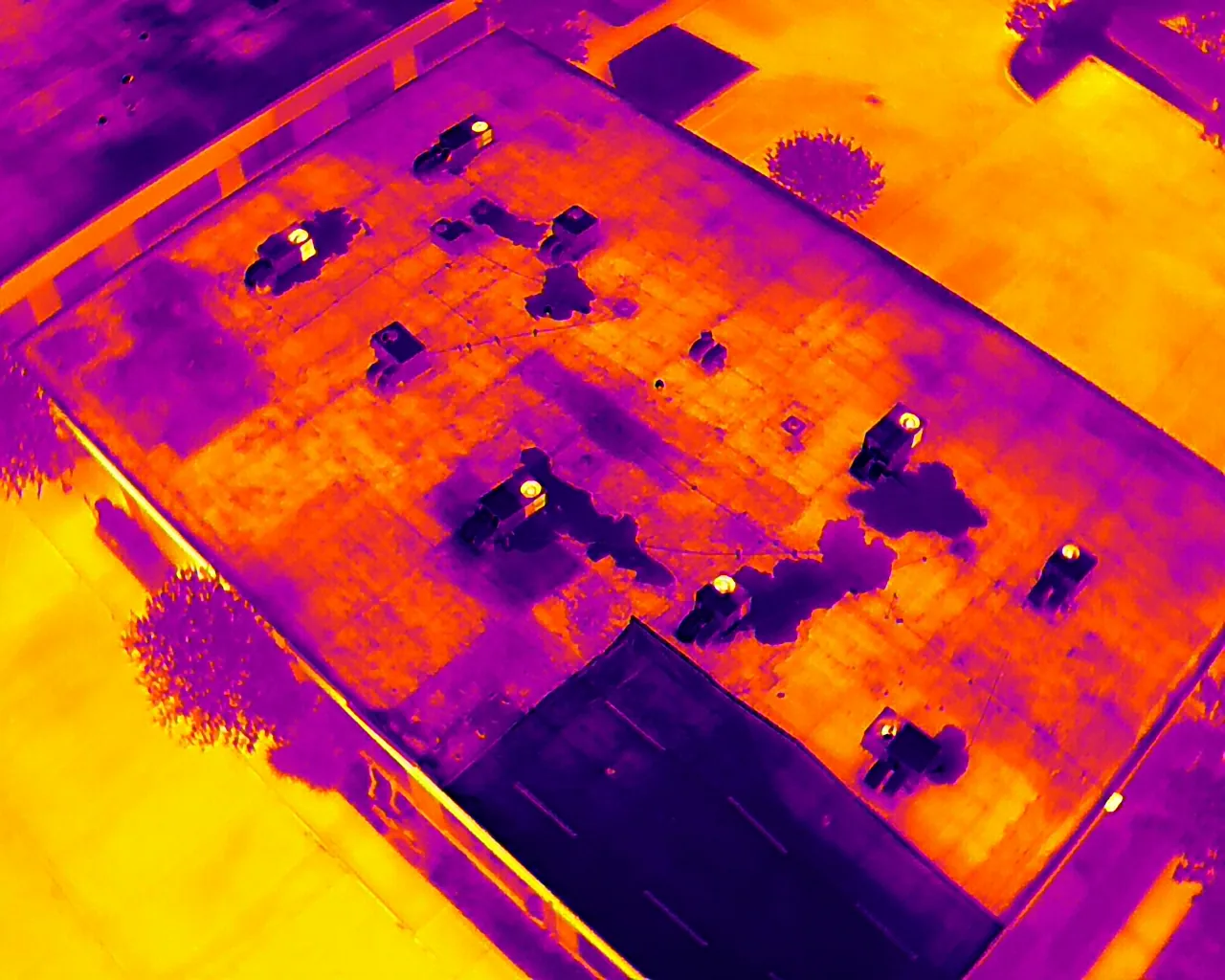
The first budget decision is where each building sits on a repair, recover or replacement path. We settle it with the finding that matters most, the moisture map, and then schedule around the business instead of the other way round.
Plan restaurant roofs on Farmington Avenue around kitchen hours
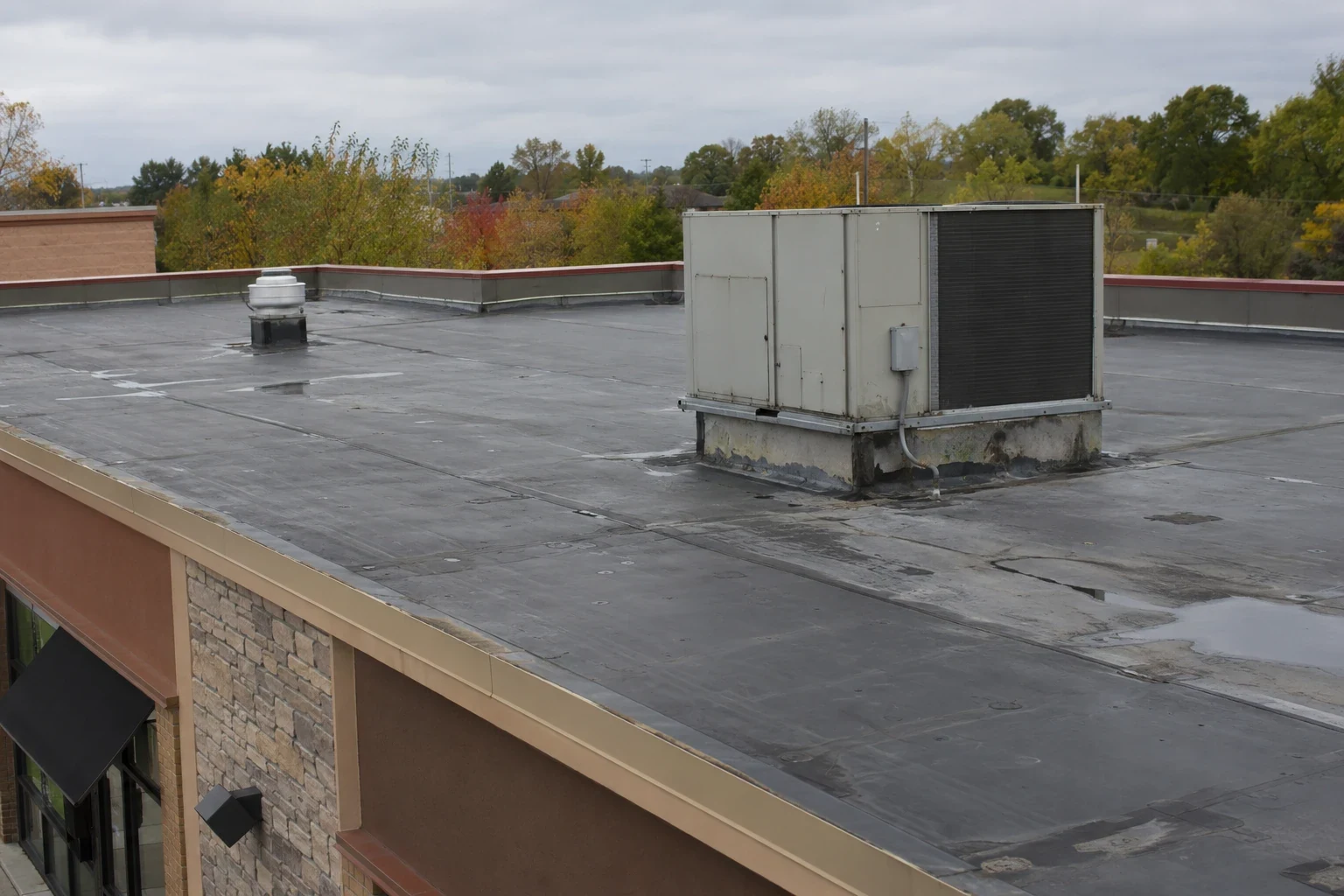
A restaurant roof carries exhaust fans, make-up air and sometimes walk-in refrigeration, and the fans throw grease on the membrane downwind. Grease softens some coverings, collects dirt and runs to the drains. Before pricing a repair, we inspect the roof around each fan, check the curb flashing and the condition of the membrane in the grease path, and ask which hours the kitchen runs.
Restaurants cannot close for long, so the dry-in plan is more important than the tear-off plan. We open only the section the crew can close by the end of the day, place protection over the kitchen and dining areas, and schedule noisy work for the hours between lunch and dinner service if the owner agrees. A restaurant roofing scope also lists a cleaning routine and walk pads, because the cheapest roof repair is the one that does not recur.
Where a restaurant shares a building with other tenants, a grease stain on the shared roof raises the question of who pays. The report photographs the stain, locates the fan that is the likely source and separates damage from grease from damage from age. That record lets the landlord assign the cost fairly and lets the restaurant owner show what cleaning or containment would prevent.
Schedule large-format retail on the Berlin Turnpike
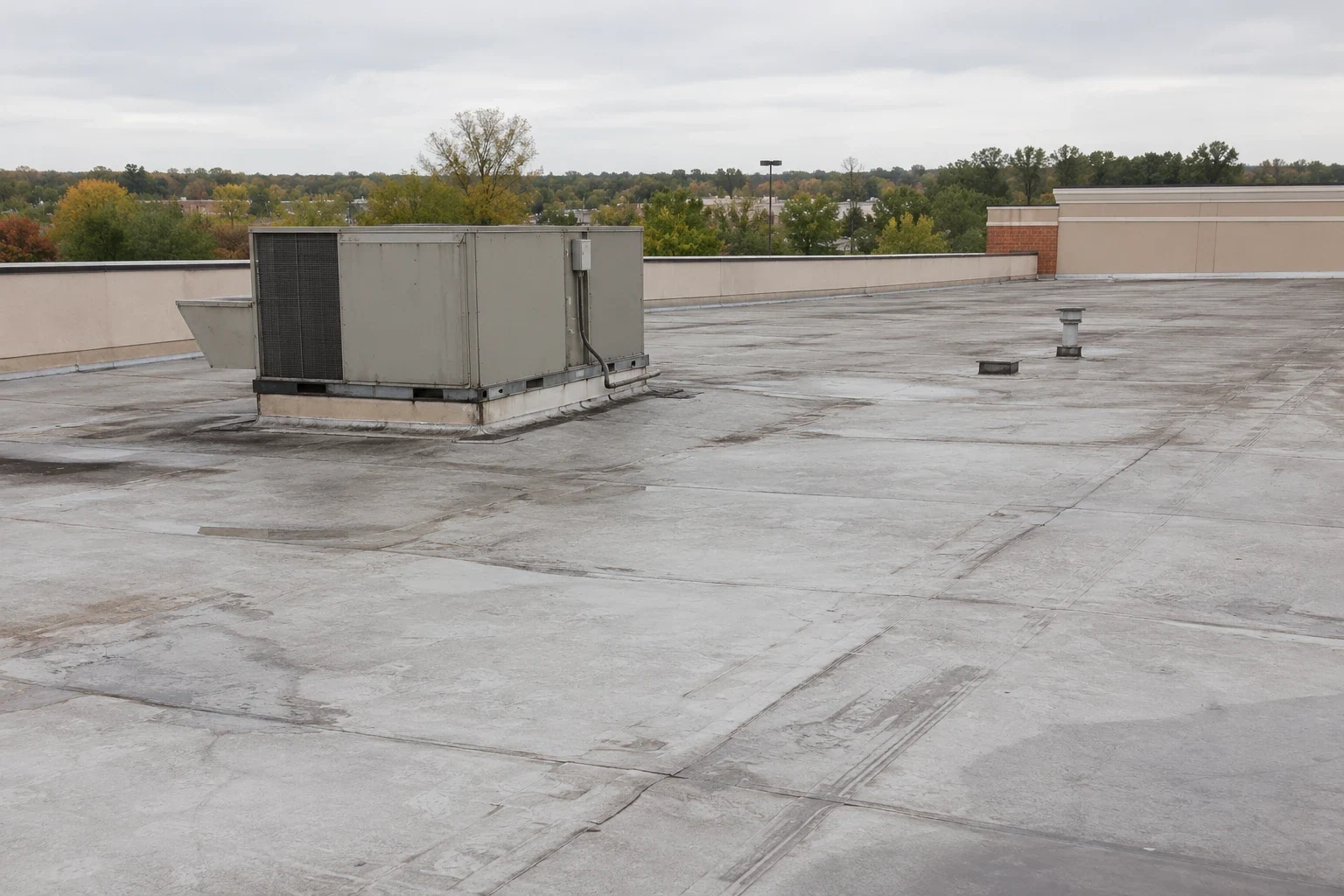
Larger retail buildings on an auto-oriented corridor have long roofs, many rooftop units and constant service traffic. Each unit has a curb, a utility line and a crew that visits for maintenance, and the walk path from the hatch to each unit shows wear. We count the units, inspect each curb and pipe support and look for punctures in the path of the service crews.
The work schedule follows the store calendar. A big-box or large-format store cannot afford a closed department, so the roof is divided into sections that match the interior zones, with a dry-in point for each. Deliveries to the roof use the lot's quietest hours, and customer parking is protected with a marked route. A large-format retail roof estimate shows the cost of each section so the owner can phase the work across budget years if needed.
Wind and uplift matter on a long roof with a wide perimeter. We look at edge metal, coping and the first few feet of membrane at the perimeter, because loose edges are where a storm starts to peel a roof. If the edge is weak, the repair line includes new fasteners and sealant along the affected run, and the report notes whether the attachment pattern in the field should be checked as well.
Handle industrial roofs in the northeast and along the rail line
The plan says Berlin's industrial zones are concentrated in the northeast, with several more along the New Haven-Hartford rail line. Industrial buildings in those zones may house manufacturing, storage or distribution, and their roofs usually have long drain paths, process penetrations and few reasons for the operator to shut down. We ask what happens below each section and whether any area is sensitive to dust or water.
Roofs near a rail line may see vibration from passing trains and dust from the right of way. We do not assume those effects on any building, but we check seams and fasteners for movement and look for dust that has collected at drains. A moisture survey across the roof gives the operator a map that supports the choice between a repair line and a larger scope, with the evidence needed for a lender or insurer.
Whether an industrial roof is recovered or torn off comes down to its layers. We cut test samples to see how many layers are in place, whether the insulation is dry and whether the deck can carry another system. If the roof already has more than one layer, a tear-off may be needed, and the estimate shows the added disposal cost so the choice is not made on partial information.
Check for heat, heavy rain and winter loads
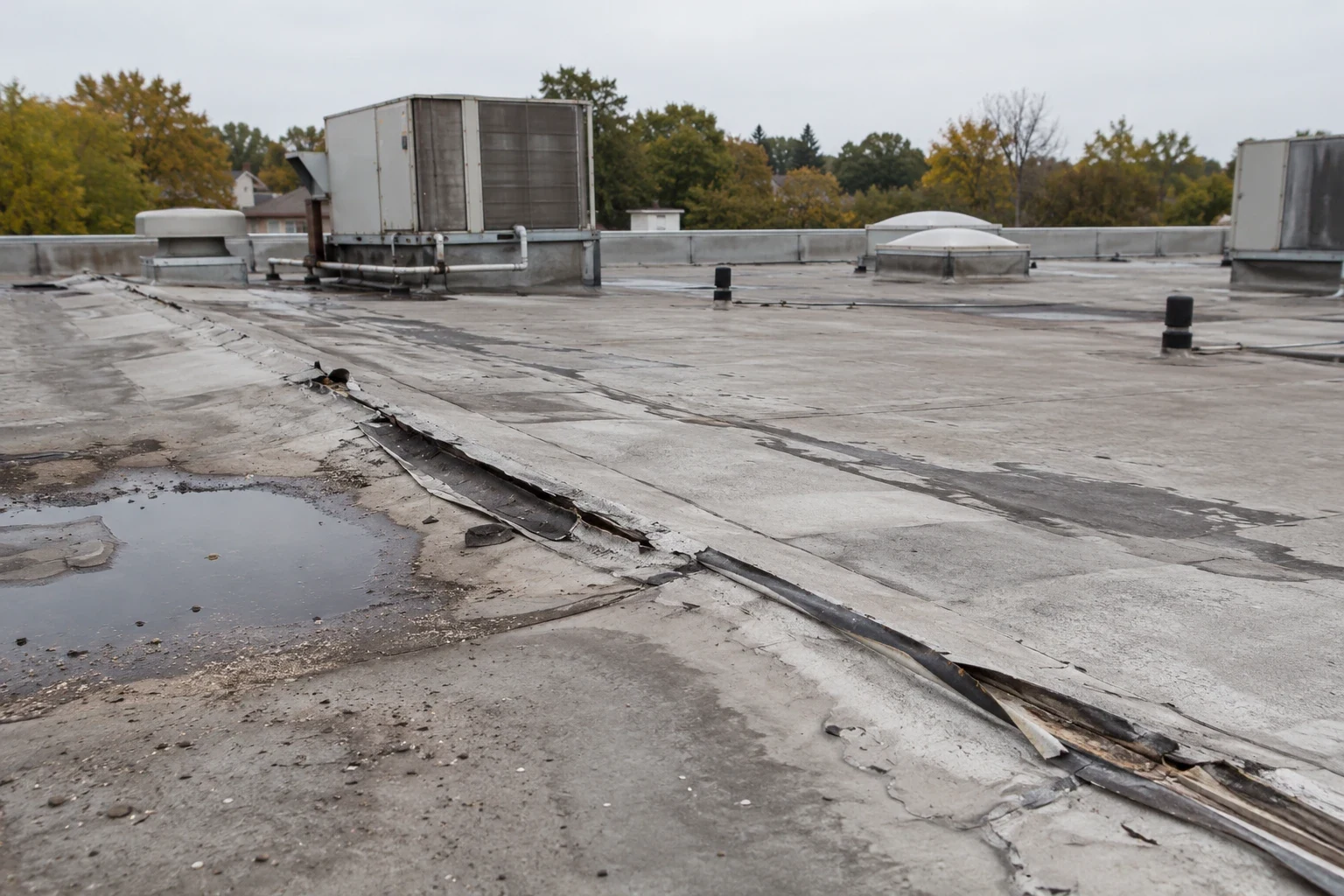
The 2021 plan prepared for Waterbury projects hotter summers and more extreme precipitation for Connecticut, and it reports a 24-hour rainfall estimate for that city. A big retail or industrial roof with blocked drains collects water quickly and carries it as weight. We test the drains, mark the low spots and photograph the ponding that remains after a rain.
Heat ages membranes and softens sealants, so we inspect seams, laps and flashing for movement in the warm months. Winter storms add snow load, and the melt needs a clear route. Where seams have opened, a seam failure repair in the spring is a typical item, and the report lists any seam that is holding but not tight, with a date to recheck.
Break the cost into lines a regional manager can compare
A regional or multi-site manager needs numbers that line up from one property to the next. Our estimate lists the repair line, the recover option and the replacement line, each with the same cost drivers: tear-off, disposal, insulation, perimeter metal, flashing, drains, protection and closeout. Wet-core allowances are unit rates, so two buildings with different wet areas can be compared on the same basis.
A replacement is read against Connecticut's 2022 building code, which draws on the 2021 International Codes, and we state which items are code driven. For owners who also hold properties in Plainville or New Britain, a shared multi-site roof program ranks the roofs and shows the order in which they should be funded. That ranking, with photographs and moisture results behind it, is what lets a decision be approved quickly.
Commercial Roofing Questions
How do you keep a restaurant open during roof work?
We open one section at a time, dry it in before the day ends, protect the kitchen and dining areas, and schedule noisy tear-off between service periods if the owner agrees.
What do you look for on a large retail roof?
Rooftop unit curbs, pipe supports, punctures along service paths, drain clearance and seam condition. We count the units and inspect each one.
Does a rail line affect a roof?
It might, through vibration or dust, but we do not assume it. We check seams and fasteners for movement and look for dust at drains, and we judge the roof on what we find.
Can two buildings with different wet areas be compared?
Yes. Wet-core allowances are priced as unit rates, so the cost of each building's wet area can be compared with the other's on the same basis.
What is the benefit of a multi-site program?
It ranks the roofs by condition and puts the money first where moisture or repeated leaks are worst. It also spreads mobilization across several properties.
Send the unit count and the store or kitchen hours
Share the property contact, operating hours, roof records and the areas where leaks appear. We will map the roof by section, test for moisture and report whether repair, recover or replacement is supported.