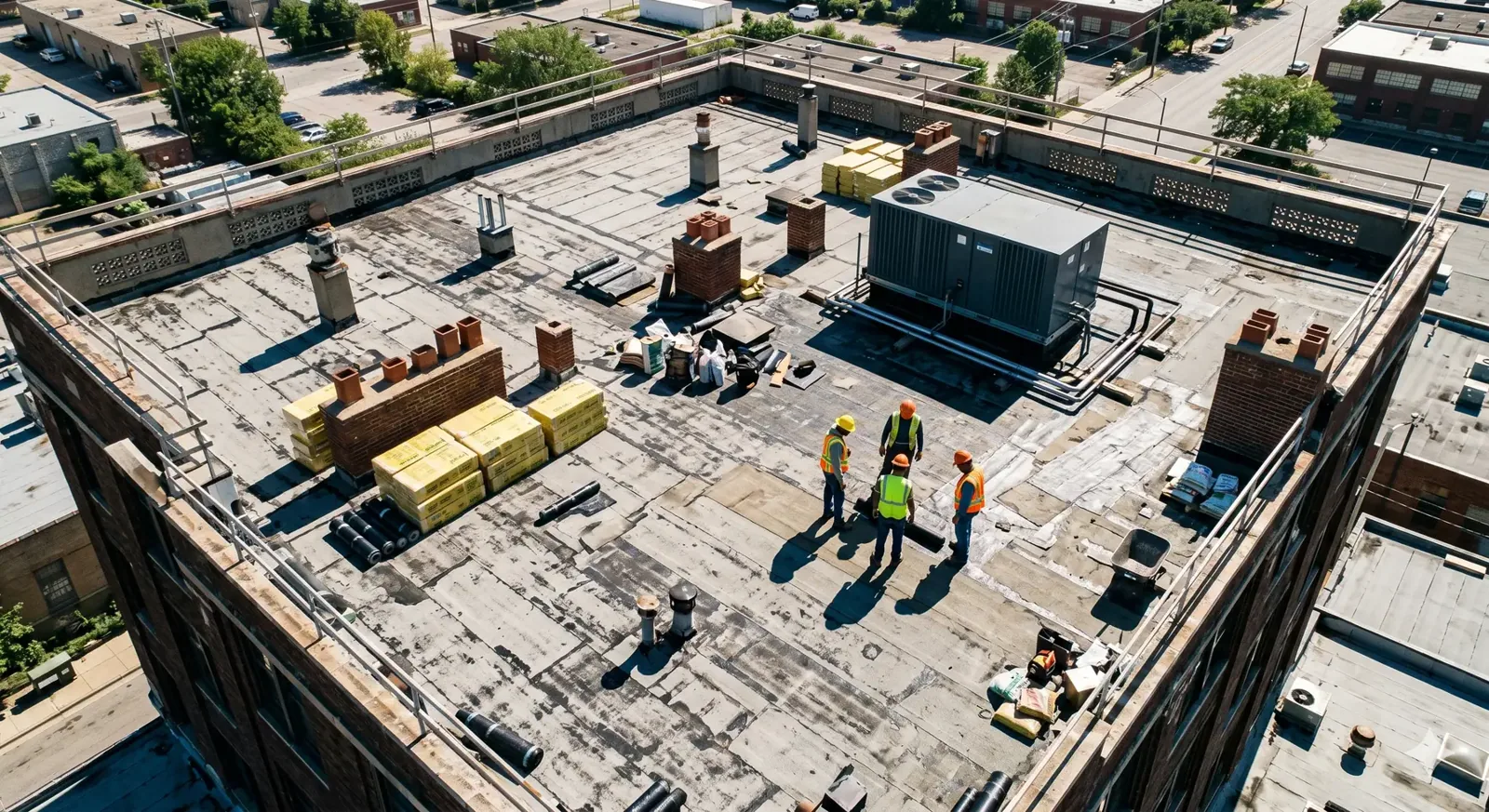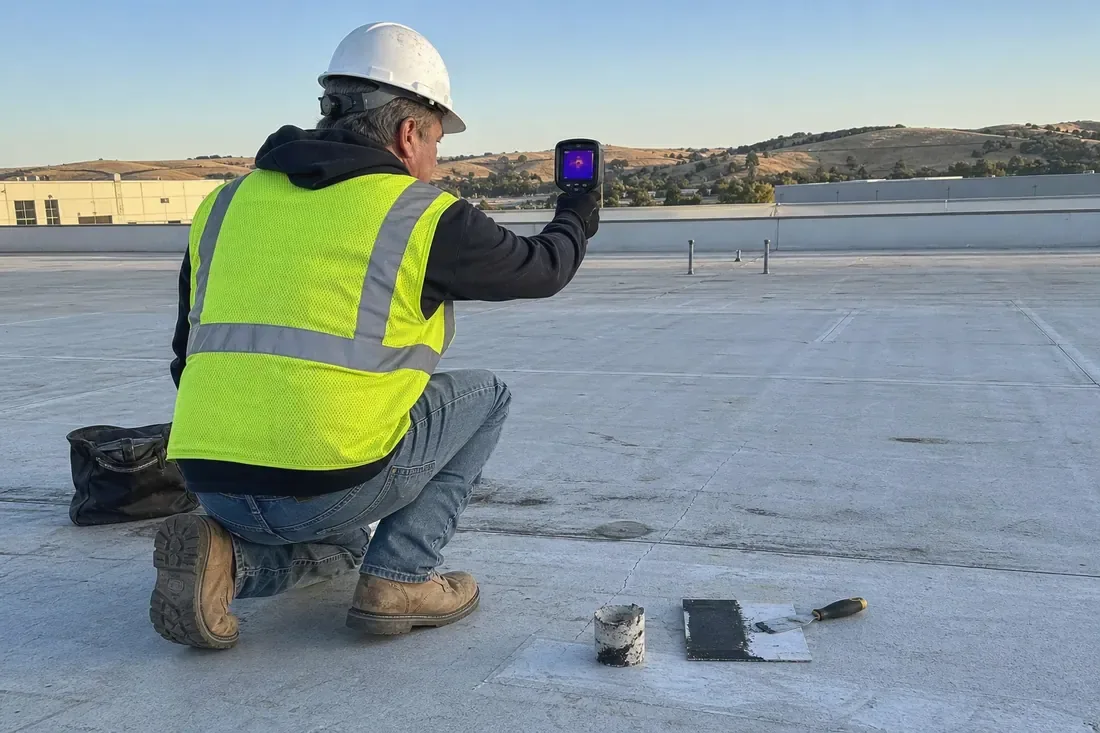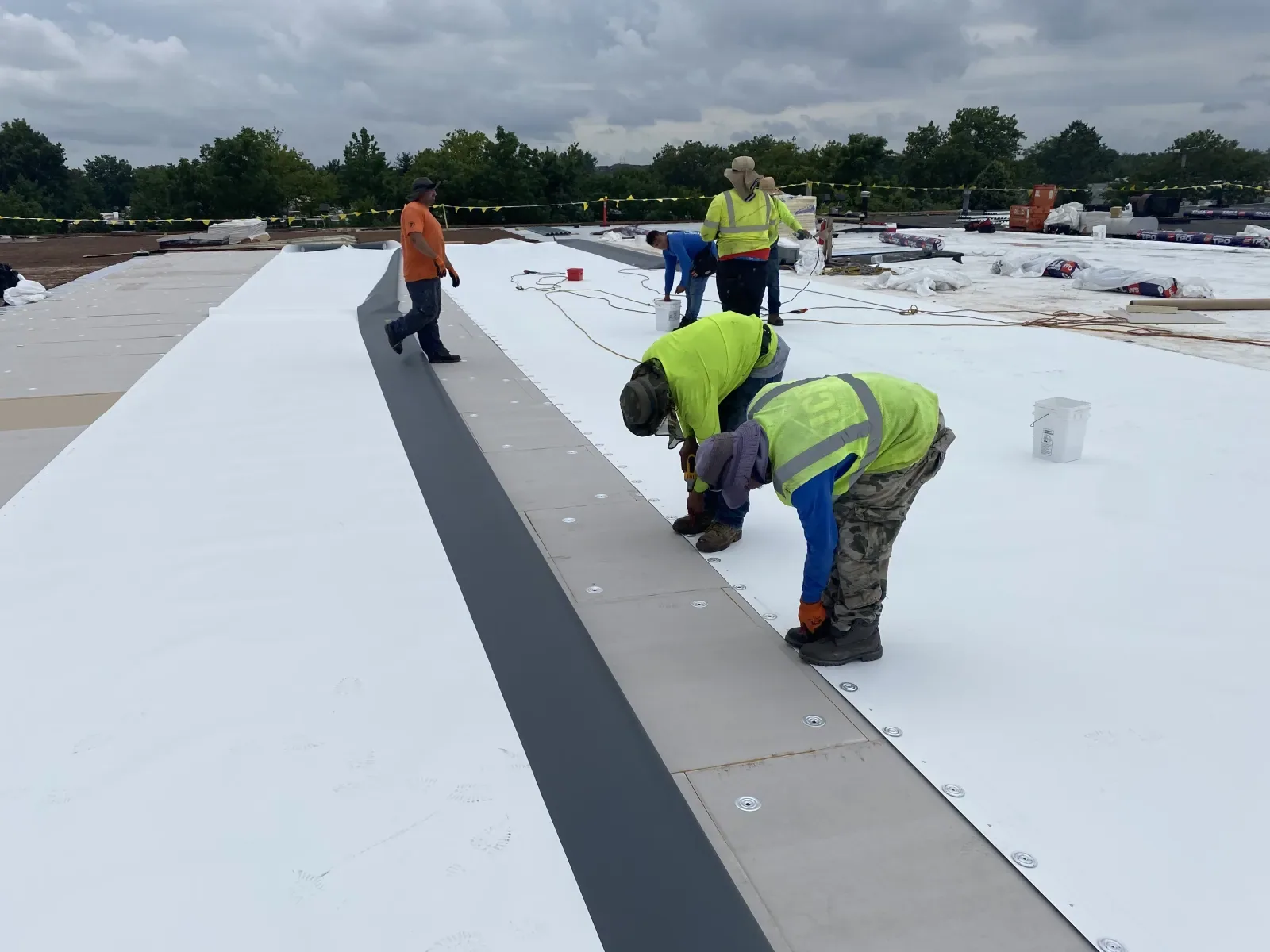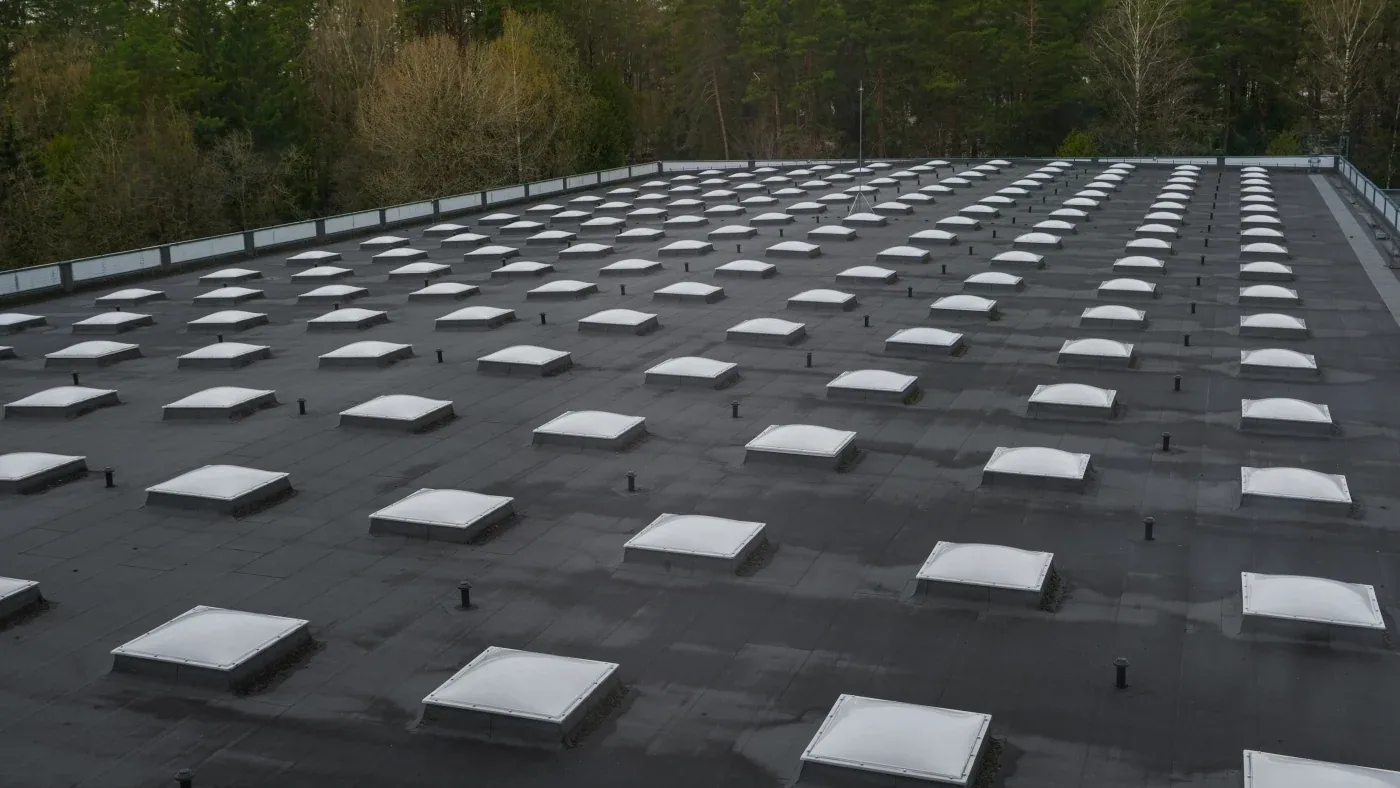
A moisture survey is useful when the budget question is how far a wet area extends, not whether one dark roof patch looks unusual. Infrared scanning can identify temperature patterns that deserve closer review, then targeted test cuts can confirm the layers beneath selected locations. The survey maps the evidence, explains its limits, and helps set a repair or replacement boundary. In Waterbury, CT, the 2021 hazard plan discusses increasing extreme precipitation and hotter summers for Connecticut and reports a NOAA Atlas 14 rainfall estimate for the city. We connect the survey to the assembly, weather conditions, and capital window, then state which areas need testing before a scope is priced. An inspection walk and a written condition report sit alongside the scan, so the owner can review findings by section.
Choose the Survey Conditions Before Scanning
Infrared work depends on the roof surface, the building's construction, recent weather, access, and the temperature difference available during the survey window. We review the roof type and note factors such as shading, rooftop equipment, standing water, or recent repairs that may affect the thermal pattern. The scan follows a planned route so each roof section can be located later. If conditions make a reliable reading unlikely, we say so and reschedule or recommend a different test rather than fill the map with weak signals.
Waterbury's municipal plan describes summer conditions as warm and wet and winters as freezing, based on WeatherSpark analysis from 1980 through 2016. The same 2021 plan identifies hotter summers and increasing extreme precipitation as projections for Connecticut. Those dated observations help frame the survey date and possible roof cycles; they are not a current weather station reading. We record recent rainfall and the conditions present during the scan, because those details affect how a thermal pattern should be interpreted. The survey should be tied to the date and accessible roof area, with any shaded or blocked zone marked.
Read Temperature Patterns as Leads for Testing
A warm or cool pattern can result from several causes. Retained moisture may behave differently from dry insulation, but equipment, sunlight, reflective surfaces, repair patches, and roof construction can also create temperature differences. We compare adjacent areas and building details, then mark patterns that justify further investigation. The map is a survey finding, not a statement that every highlighted area contains water. The report explains what made each zone notable and what test would confirm it.
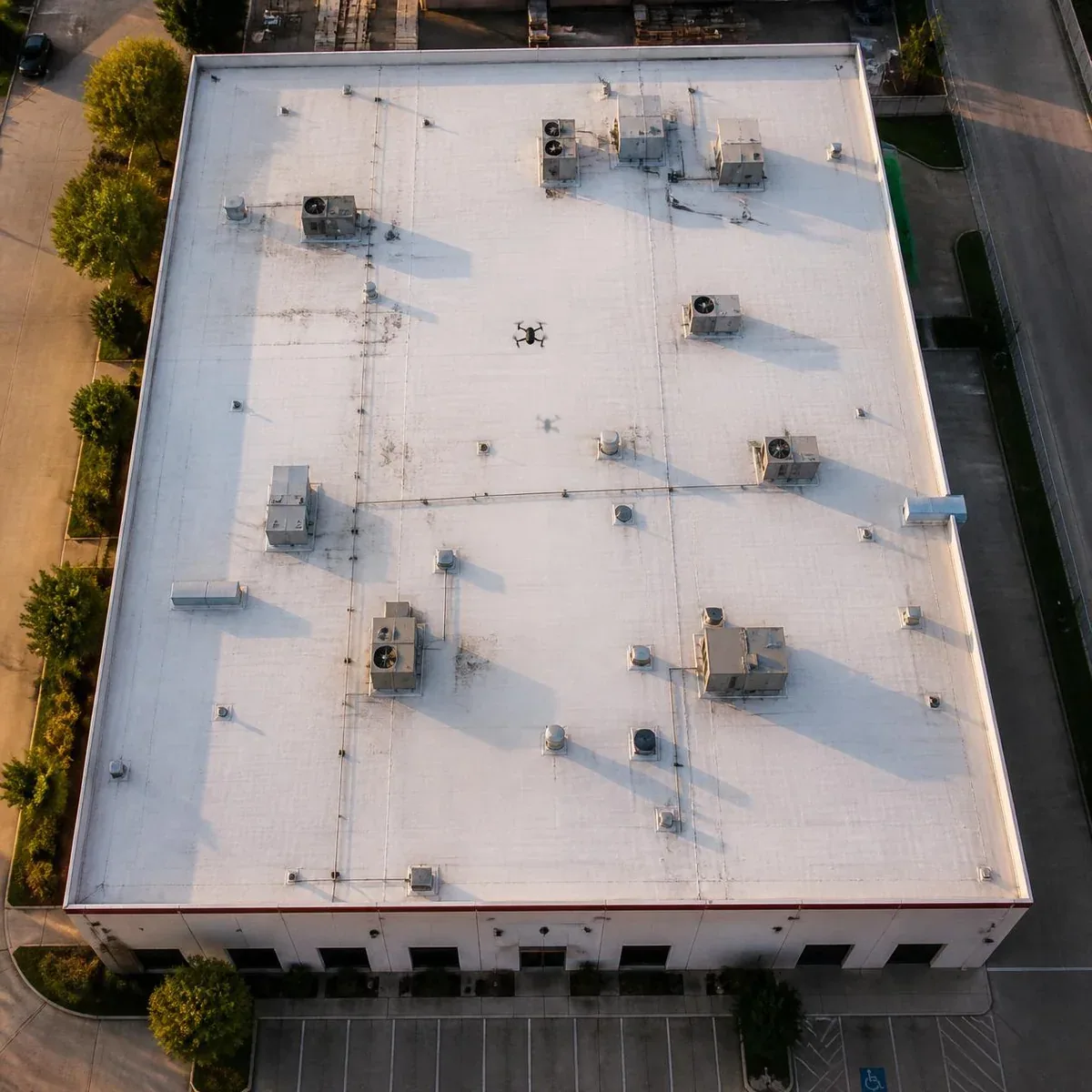
The city's land-use plan distinguishes older industrial tracts beside the Naugatuck River from a separate southeastern district; downtown is described through civic, financial, health-care, and educational activity. Section labels and property records let an owner compare results across a portfolio, and we inspect the actual roof system before selecting test points. A drone image set can help map visible obstructions on a large roof, while infrared scanning answers a different question about surface temperature patterns. Neither replaces confirmation through a hands-on roof review or approved test opening.
Confirm the Areas That Could Change the Scope
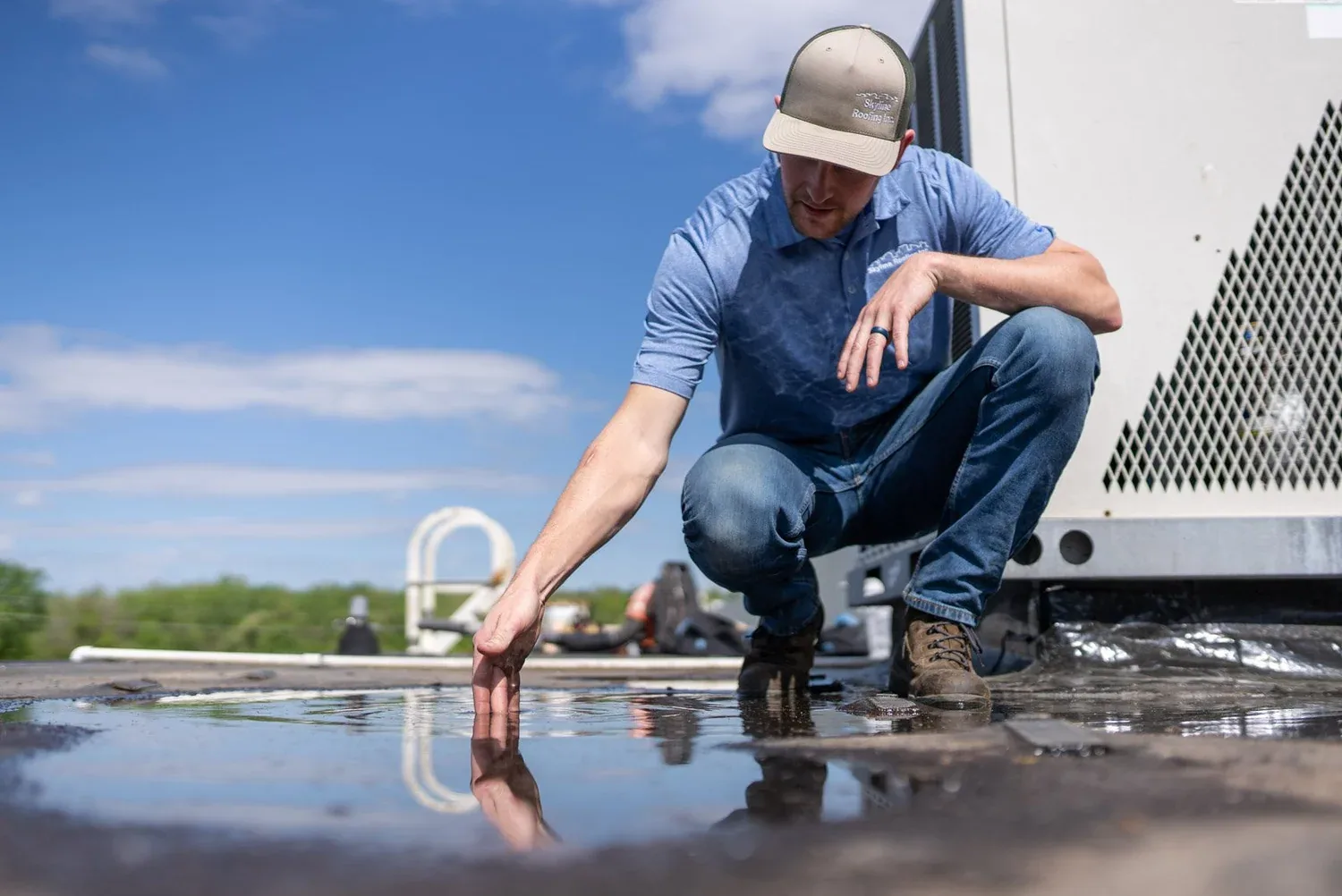
After reviewing the scan, we select test-cut locations with the owner to confirm what lies beneath the membrane. A cut can show layer count, insulation type, moisture condition, and deck surface at that point. The sample confirms only its location; additional cuts may be needed if the pattern varies across a large field. We photograph and label each opening, record the material found, and identify areas that remain untested. If the deck is damaged or moisture extends farther than expected, the estimate can show a measured change rather than assume the entire roof needs removal.
The city's draft plan places industrial parks including Reidville, Brookside, and Waterbury Industrial Commons in Waterbury, while the compact downtown lies near I-84 and Route 8. On each building we identify the roof section and relation between scan pattern and test location. The owner can compare the confirmed samples with a replacement boundary or a recover option where the layers, moisture, deck, and code review allow it.
Turn the Moisture Map into Separate Scope Options
The report can distinguish areas that require removal, locations where repair may be enough, and zones where additional testing is prudent. For each area, we state the thermal observation, the confirmed sample if one was taken, the repair or removal boundary, and what remains uncertain. A portfolio manager can then weigh a local repair against phased replacement without treating a color map as a quantity survey. If several roof sections share a system, label them separately so the capital request matches the actual tested area.
East Main and South Main are two named corridors in the city's mixed-use inventory, which also includes North Main, Highland Avenue, and Willow Street. Access and work timing can matter as much as the test results, especially where a roof repair happens above active space, and the property's operating contact sets those conditions. A capital plan can compare sections and proposed timing, while a measured repair scope can address confirmed localized damage. Thermal images and test-cut photos stay together with the report so the next review can trace each recommendation.
Keep the Survey Conditions with the Record
A useful survey record names the date, roof areas covered, weather and surface conditions, scan limitations, test-cut locations, and findings. We include annotated images that identify each zone and show where follow-up is still needed. If the survey excluded an area because access or equipment prevented a view, we list that gap. The asset manager can use that information when comparing later scans, but only if the next survey uses compatible conditions and the same section labels.
Interstate 84 and Connecticut Route 8 converge near Waterbury's central business district, while passenger rail runs on the Waterbury Branch. The city's 2025 draft plan also describes Freight Street as a former manufacturing area beside the rail line and highways, planned for a mixed-use extension of downtown. When a roof sits in a changing commercial area, the capital record should state what was tested now and what work remains for a later project. A Waterbury roof review starts from the building's access rules, prior repair notes, and intended budget window, so the survey findings support a practical next decision.
Commercial Roofing Questions
Does infrared scanning prove that a roof area is wet?
No. A thermal pattern points to a location for review, but it can have other causes. We interpret the image against roof construction and survey conditions, then use test cuts where confirmation could change the scope. The report labels suspected patterns and confirmed samples separately.
What weather is needed for an infrared roof survey?
The scan needs suitable surface and temperature conditions for the roof being evaluated. Recent rain, cloud cover, shade, surface materials, and equipment can affect the pattern. We review the forecast and site conditions before scheduling, record them during the survey, and identify any zone that did not produce a useful reading.
How many test cuts will you recommend?
The number follows the size of the roof, the range of patterns, and the decision the owner needs to make. A sample confirms only its own location. We identify why each proposed cut matters and can add testing where results vary enough to change the removal boundary or recover choice.
Can the survey identify the exact roof replacement quantity?
For budgeting, combine mapped patterns with confirmed samples and visible boundaries. The infrared scan does not establish every material layer or deck condition across the roof, so the measured scope must identify what remains an allowance until the assembly is opened.
When should we order infrared testing instead of a visual walk?
Infrared testing is most useful when moisture extent could change the repair or replacement decision and the roof conditions support a scan. A hands-on walk remains useful for seams, flashings, drains, and transitions. We can combine the methods so the map leads to specific test locations and roof details are checked directly.
Test the Moisture Pattern Before Setting Quantities
Provide roof plans, repair history, access rules, and your capital window. We will review survey conditions, map possible moisture patterns, recommend targeted test cuts, and separate confirmed findings from areas that still need investigation.