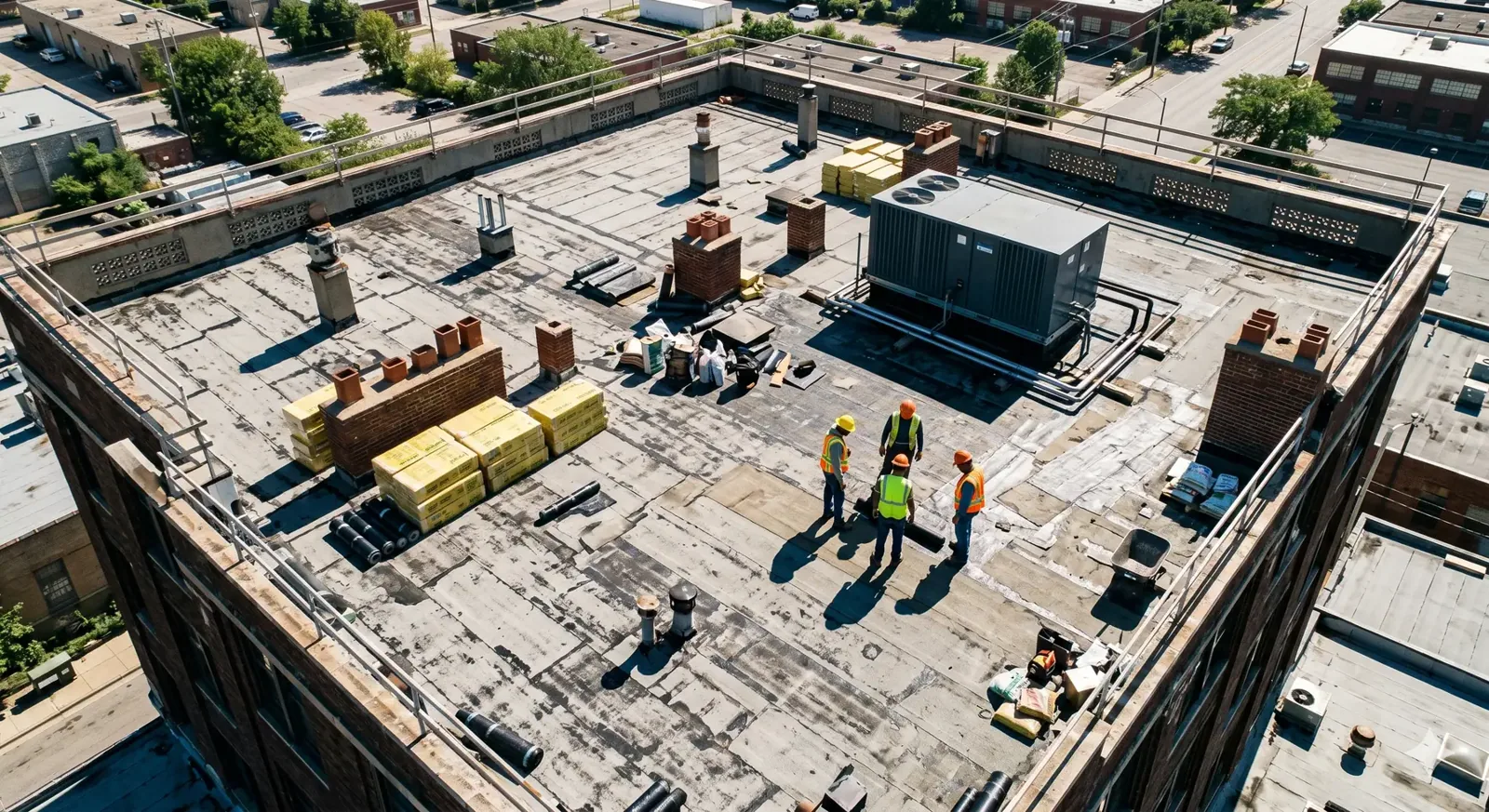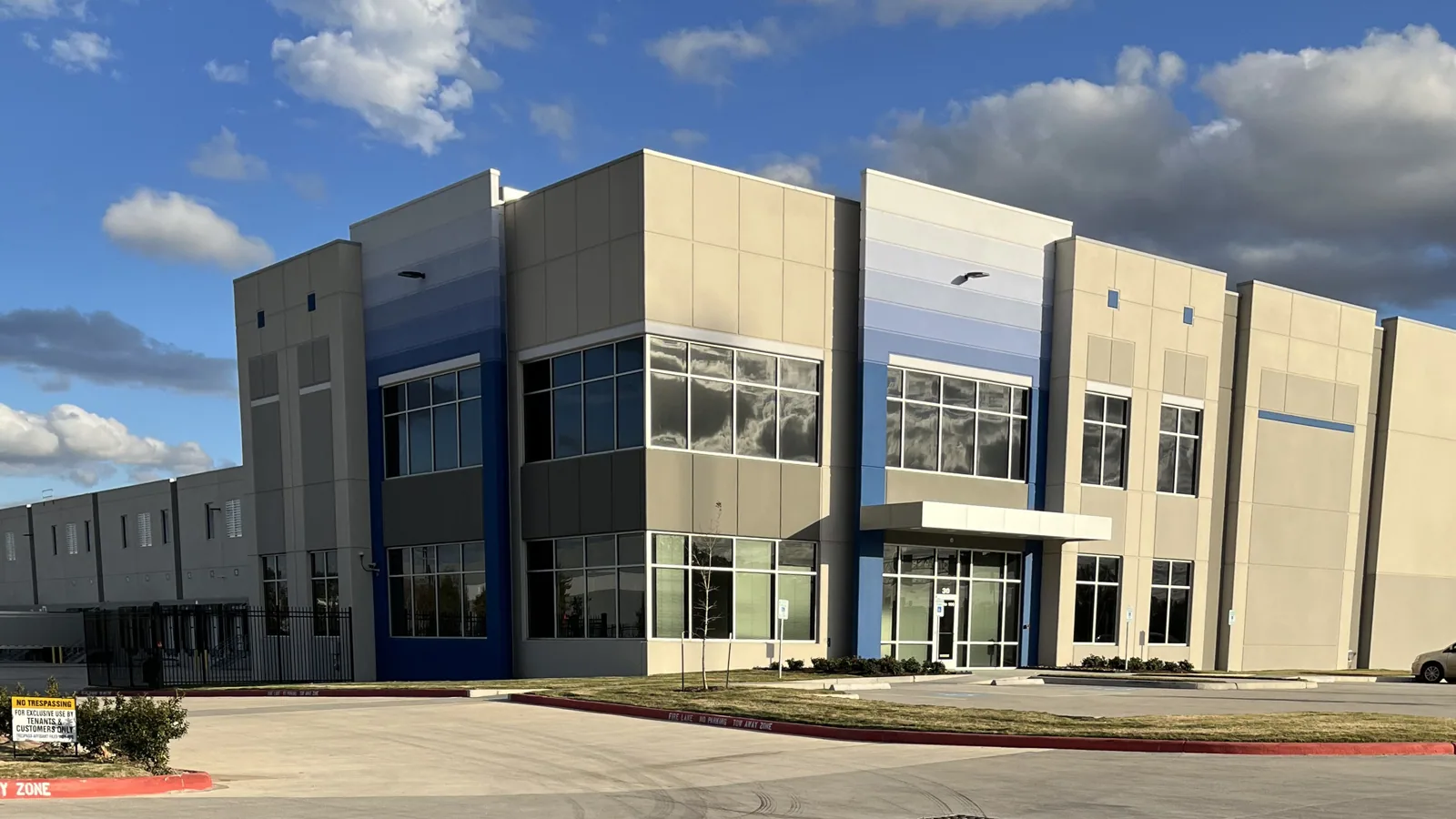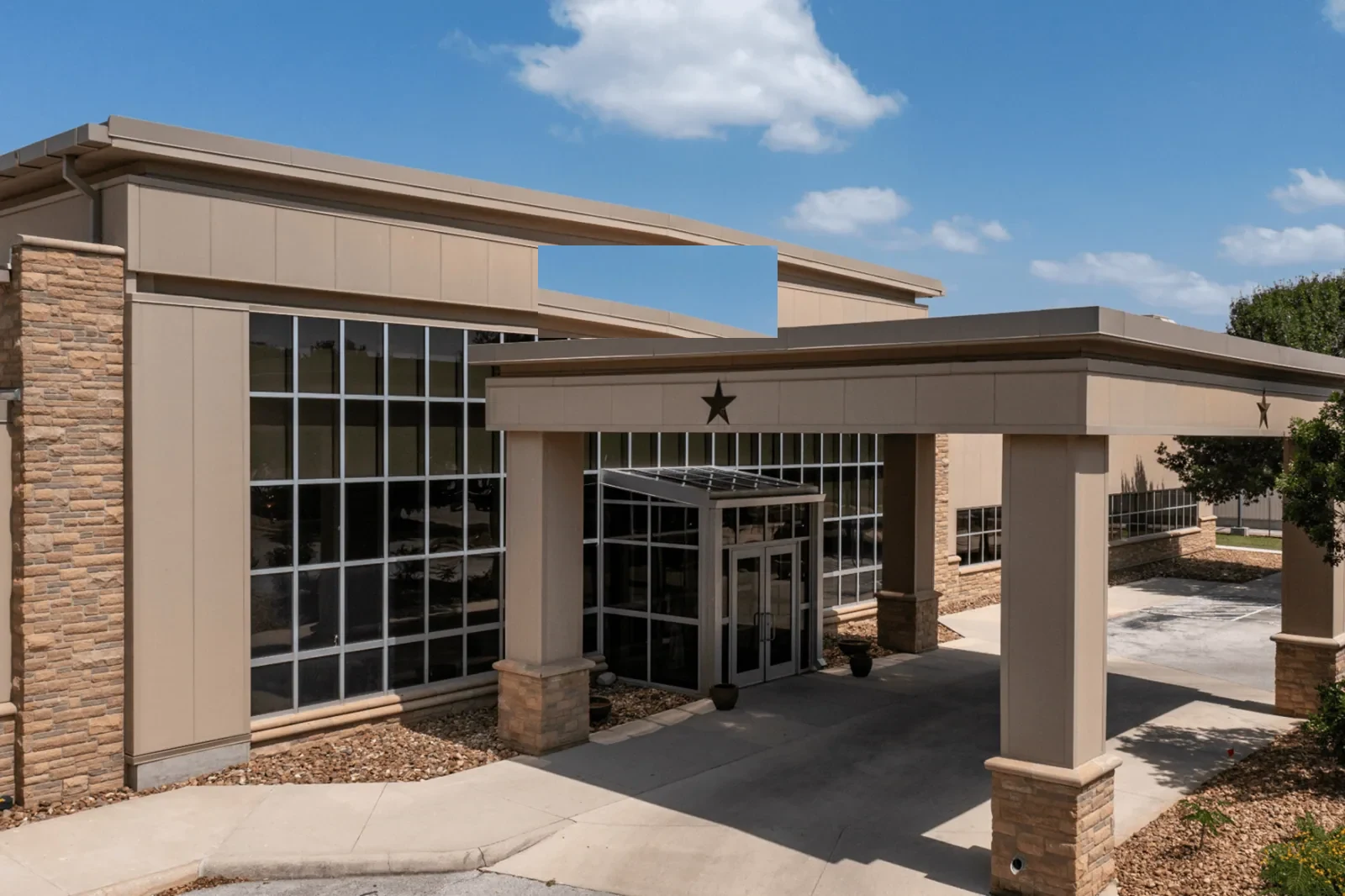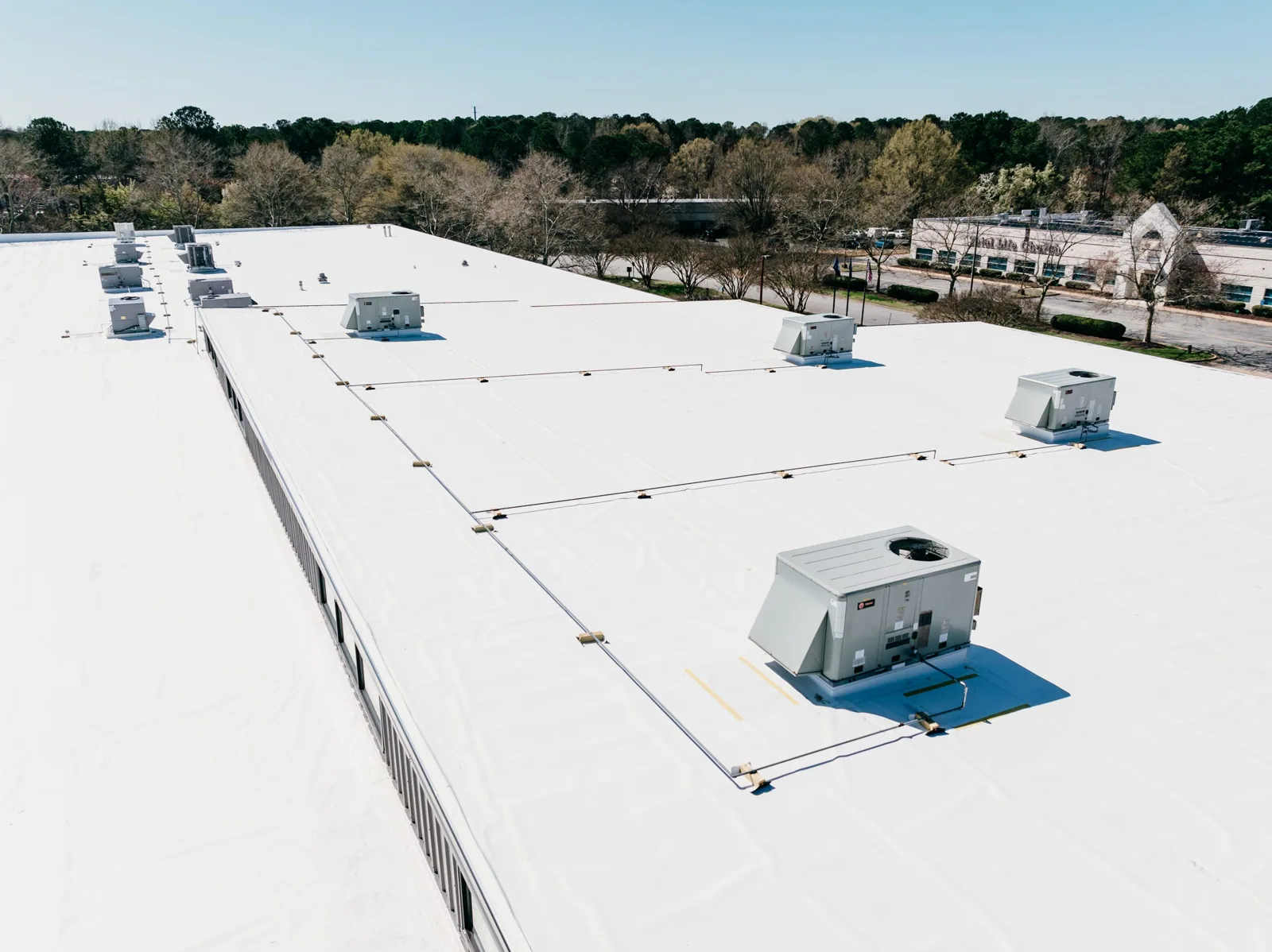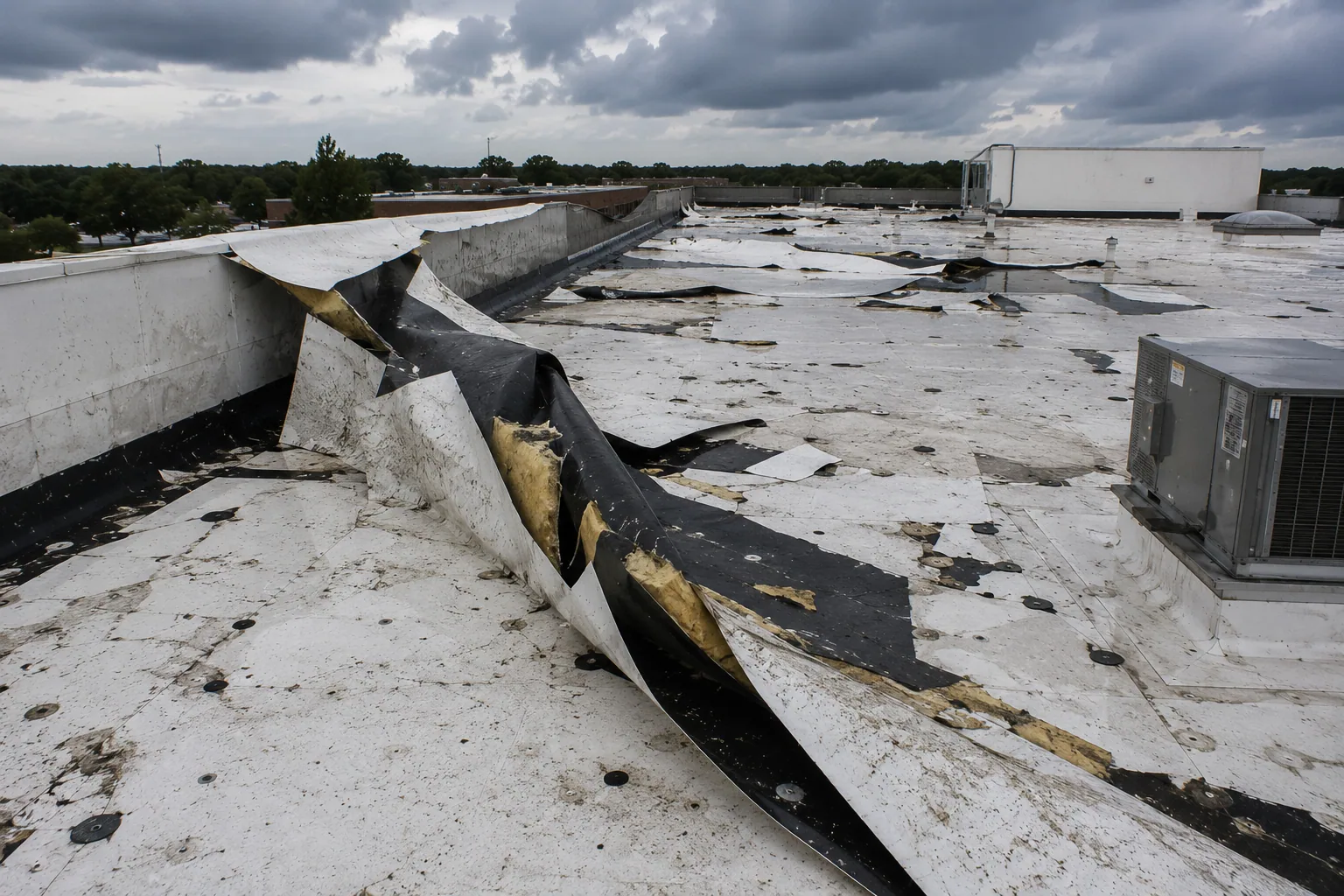
A sort window, a loading plan, and a leak report all compete for time when a distribution roof needs work. We map conveyor runs, dock positions, drains, penetrations, and active roof sections, then identify the least disruptive repair boundary that the condition supports. A distribution building often has multiple shifts and a high cost to interrupt movement of goods, but we confirm the actual operating pattern before setting sequence. Waterbury's commercial activity sits near the I-84 and Route 8 junction, while nearby Bristol connects I-84 with Routes 72, 6, and 69. Those corridors shape mobilization choices; site rules decide the dock plan.
We trace moisture, inspect seams and equipment bases, and check whether a local repair can hold or the roof condition calls for larger work. Waterbury's winter storm exposure and summer storm risk also affect dry-in windows. A condition survey can locate the current concern, while work coordination near Bristol can be tied to that property's access needs.
Map the Roof Around Goods and Conveyor Flow
Start with the building plan and the path goods take from receiving to storage and outbound staging. We mark roof sections above conveyor equipment, sort lanes, offices, and any sensitive material. A leak over a control panel or active conveyor may need a different response than water at a low-use perimeter bay. We verify reported locations from above and below, then draw the roof boundary so operations can plan around the actual repair area.
Delivery gates, tractor-trailer queues, dock appointments, and the availability of interior aisles affect lifts and debris removal. We ask which routes stay open during each shift and where materials can be staged without blocking dispatch. A warehouse roof plan centers on storage zones, while a manufacturing plant adds production equipment and process exhaust. Each building use changes the questions we put in the work schedule.
Trace Leaks Before They Reach Controls or Stock
Water may travel from a roof penetration or seam before it reaches a visible ceiling point. We inspect membrane laps, rooftop unit curbs, conduit supports, skylights, edge terminations, and drain bowls above the reported area. Interior observations help confirm the path, but do not set the repair boundary on their own. If moisture could extend beneath the membrane, a test cut or targeted survey can show whether the insulation is dry and attached.
Naugatuck's commercial and institutional uses follow Route 63, the Naugatuck River, and Route 8. This corridor context is useful when planning a service call, but the roof assembly remains specific to each building. We label test locations and compare each finding with conveyor, storage, and electrical areas below. A drainage inspection can identify a backed-up outlet or slope issue, while wind-damage assessment can document lifted perimeter material after a storm.
Check Curbs, Penetrations, and Roof Traffic
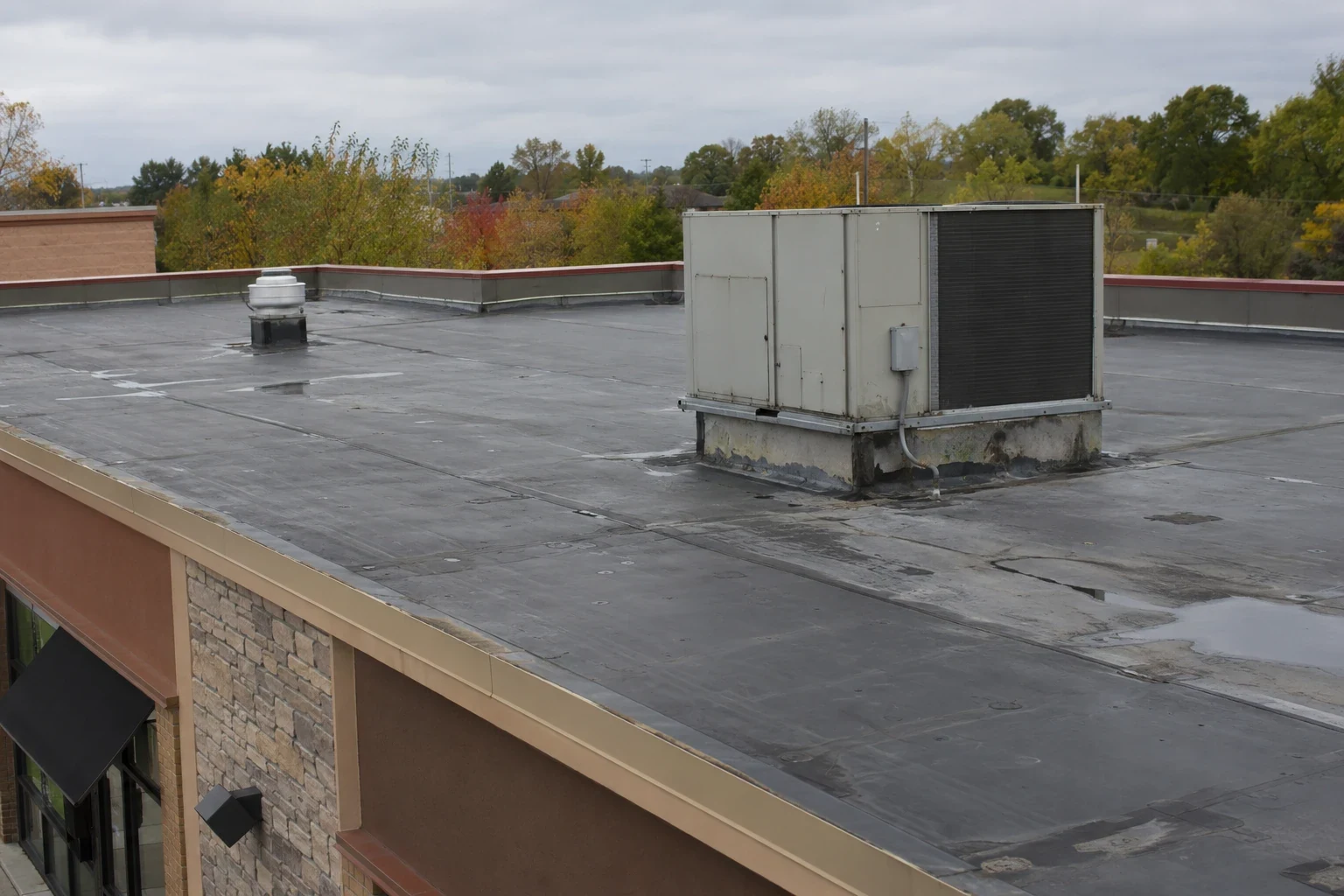
Distribution roofs can carry a mix of units, exhausts, vents, supports, cable routes, and maintenance paths. We inspect each penetration for secure flashing and check whether service traffic has worn a walking route or opened a seam. Where equipment is scheduled for replacement, we coordinate curb dimensions and temporary protection before the unit is lifted. A new unit should not leave a mismatched opening or unfinished membrane transition for another crew to resolve.
For a building exposed to Waterbury's winter storms, ice and snow can complicate roof access and make drainage details more important to inspect before a planned project. We look for backed-up water paths, displaced flashings, and areas where rooftop equipment traps debris. A curb and pipe-support scope can coordinate that work with mechanical crews. If the roof has repeated openings or separate sections, a TPO replacement option can be considered against the existing assembly and operations plan.
Fit Production Work into Dispatch Windows
We phase the roof so tear-off or preparation remains within a shift's safe work window. Each segment has a starting point, material route, protection method, and closure condition before the next segment opens. The plan identifies noise or equipment shutdowns, dock areas affected, and whether a lift must share space with active deliveries. If the crew finds wet insulation or deck damage, the opened area is secured while the owner decides whether to expand that section.
Bristol acts as a transportation junction for nearby Plymouth and Burlington, and Waterbury's industrial land extends along the Naugatuck River. A busy corridor does not tell us when a particular dispatch center can accept trucks, so we confirm the operating calendar and delivery restrictions with its manager. A repair scope can be scheduled by roof zone, and each distribution property keeps its own work record. For an urgent interior leak, emergency response remains available around the clock, weekends and holidays included.
Compare Cost by Section and Work Window
The estimate separates membrane area, insulation, flashing, edge metal, drainage correction, equipment coordination, temporary protection, and repeat mobilization. Access restrictions or a narrow dispatch window may add setup time, while damaged substrate or extra tear-off can change the quantity after opening. We identify what is measured, which items are allowances, and what test or field observation would resolve each unknown. That lets the owner compare a repair phase with a larger replacement without treating every roof zone as identical.
In Waterbury's compact business district, the I-84 and Route 8 junction is near a mix of civic, financial, health-care, and education uses; industrial districts occupy other parts of the city. Those settings call for property-level logistics review, while the selected roof scope follows actual conditions. The report ties each amount to an area, condition, and operating constraint, so management can prioritize work before the next peak shipping period.
Close Each Phase with a Section Record
Before returning a roof zone to normal use, we photograph seams, drains, penetrations, tie-ins, and the finished boundary. The closeout records materials, test findings, repairs, and any section left under observation. A maintenance worker can use the map to avoid stepping on repaired details or staging equipment over an unresolved area. If a later shift will reopen an adjacent section, the tie-in location is identified so the roofing crew can reconnect the assembly without guessing at the prior endpoint.
Dispatch calendars, roof plans, prior leak calls, access rules, and repair records go into the asset file, and the next peak operating dates and any dock limits are settled before pricing. We will inspect the affected sections, document what the roof can support, and return options that show how work, cost, and business interruption relate to one another.
Commercial Roofing Questions
Can roof work be limited to a few dock areas?
We map the leak and roof condition first, then define whether a section repair can be isolated from adjacent membrane. Dock activity, lift placement, and the tie-in point determine the feasible work zone. If testing finds broader moisture, we document the change before expanding quantities.
How do you protect conveyor controls during a repair?
We identify controls and sensitive equipment below the roof area, then coordinate interior protection and any required shutdown with the site's operations contact. The work plan names the area exposed, the temporary cover, and the time required to close the section before the next shift relies on it.
What roof details are most likely to affect a distribution schedule?
Drains, equipment curbs, skylights, penetrations, and perimeter tie-ins can require different crews or materials. We inspect those details before mobilization and flag items that could extend a shift or interrupt dispatch. A phased plan shows where each detail falls in the sequence.
When should we test for wet insulation?
A recurring leak, soft surface, blister, or moisture reading may justify a test cut when the result would change repair versus replacement. We identify the location and purpose, then report what each opening confirms. A visual stain alone is not used to estimate the full wet area.
What affects reroofing cost at a fulfillment building?
Tear-off, insulation, roof access, drain and curb details, staging, temporary protection, and how many shifts are available can change the estimate. We separate roof quantities from dispatch controls and repeat mobilization so the manager can compare alternatives with their schedule assumptions visible.
Align Roof Work with Dispatch
Send the roof plan, leak locations, shift calendar, dock restrictions, equipment schedule, and access rules. We will map the work zones and price the repair or replacement sequence by section.