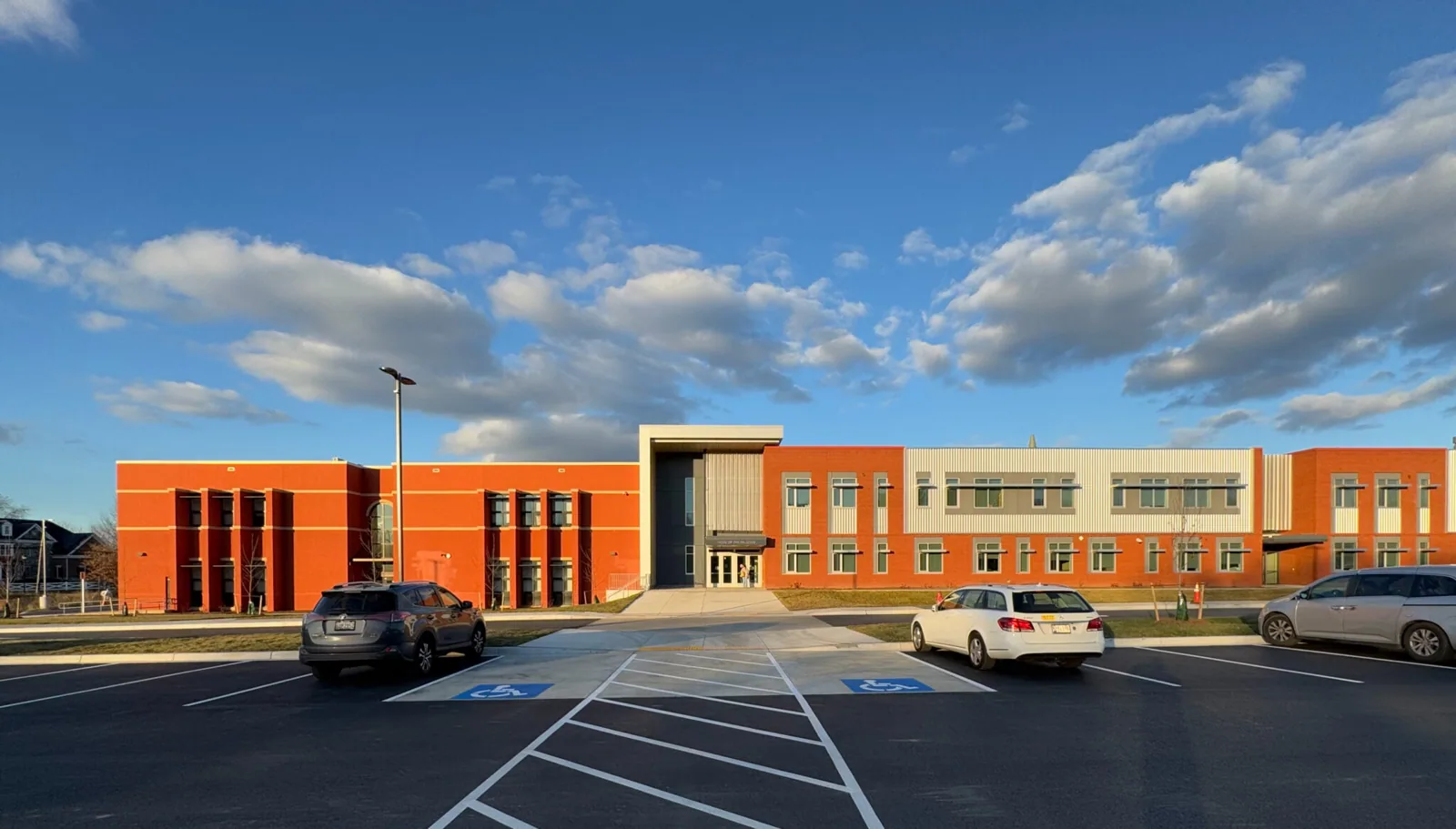
A roof decision at a health-care property starts with two constraints: keep the building dry and keep essential rooms available. The useful scope may be a repair around one curb, a test of wet insulation, or a larger replacement line; the right choice depends on what inspection can confirm and when a safe work window exists. In Waterbury, health care is part of the city's economic base, and downtown uses include health-care services among civic, financial, and higher-education activity. We connect roof findings to access, protection, and phasing so a facilities leader can weigh cost against service continuity instead of treating the whole building as one work zone.
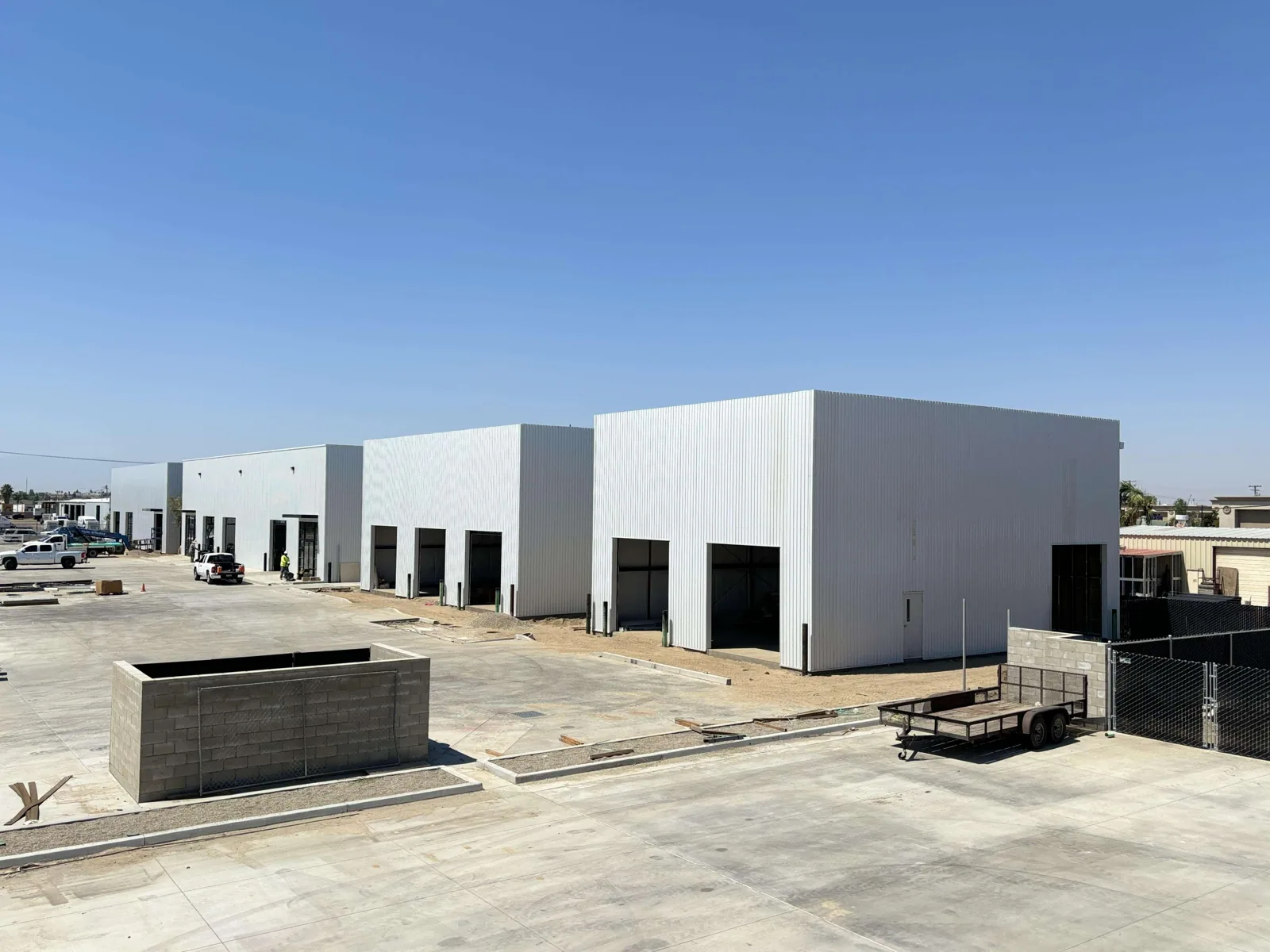
Set the decision around service continuity
Start with the rooms and systems beneath the reported leak. A stain above a waiting area, imaging room, records space, or mechanical zone has different consequences, even when the roof opening looks similar. Mark the interior location, the time water appeared, recent rain or thaw conditions, and any equipment or finishes at risk. That chronology helps the inspection team compare the report with roof penetrations, drain paths, seams, and prior repairs. The outcome should identify what can be stabilized now and what evidence is needed before a larger capital request.
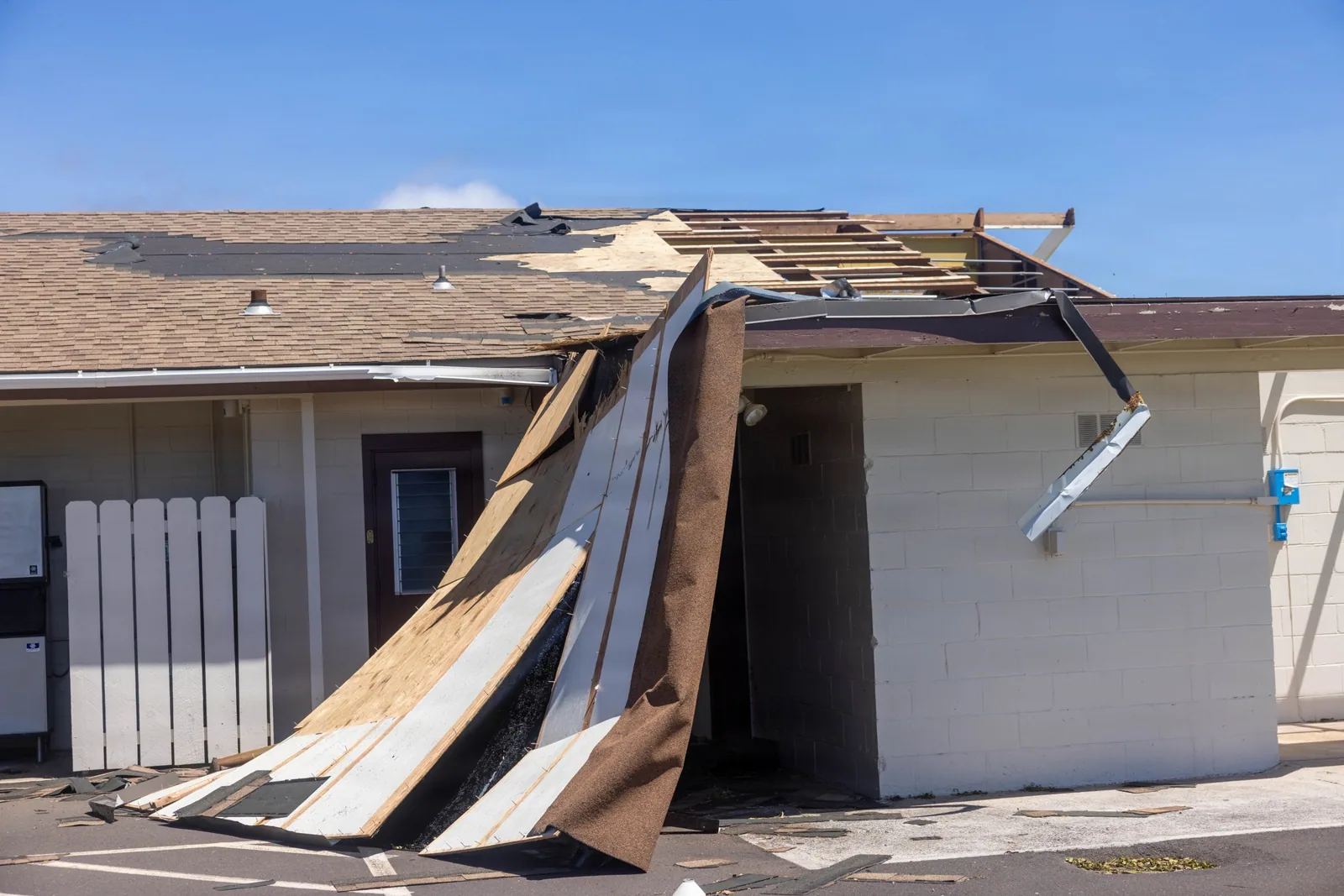
Care sites often have round-the-clock activity, separated departments, controlled doors, and limited places to stage materials. Before estimating, confirm which roof access point is available, whether escorts are required, what areas below need protection, and who can authorize a concealed-condition repair. Those facts affect crew sequencing, lift placement, and the time a roof opening can remain active. If an active leak needs prompt stabilization, emergency roof repair can define a bounded response while the longer-term scope is reviewed.
Trace the condition before choosing a system
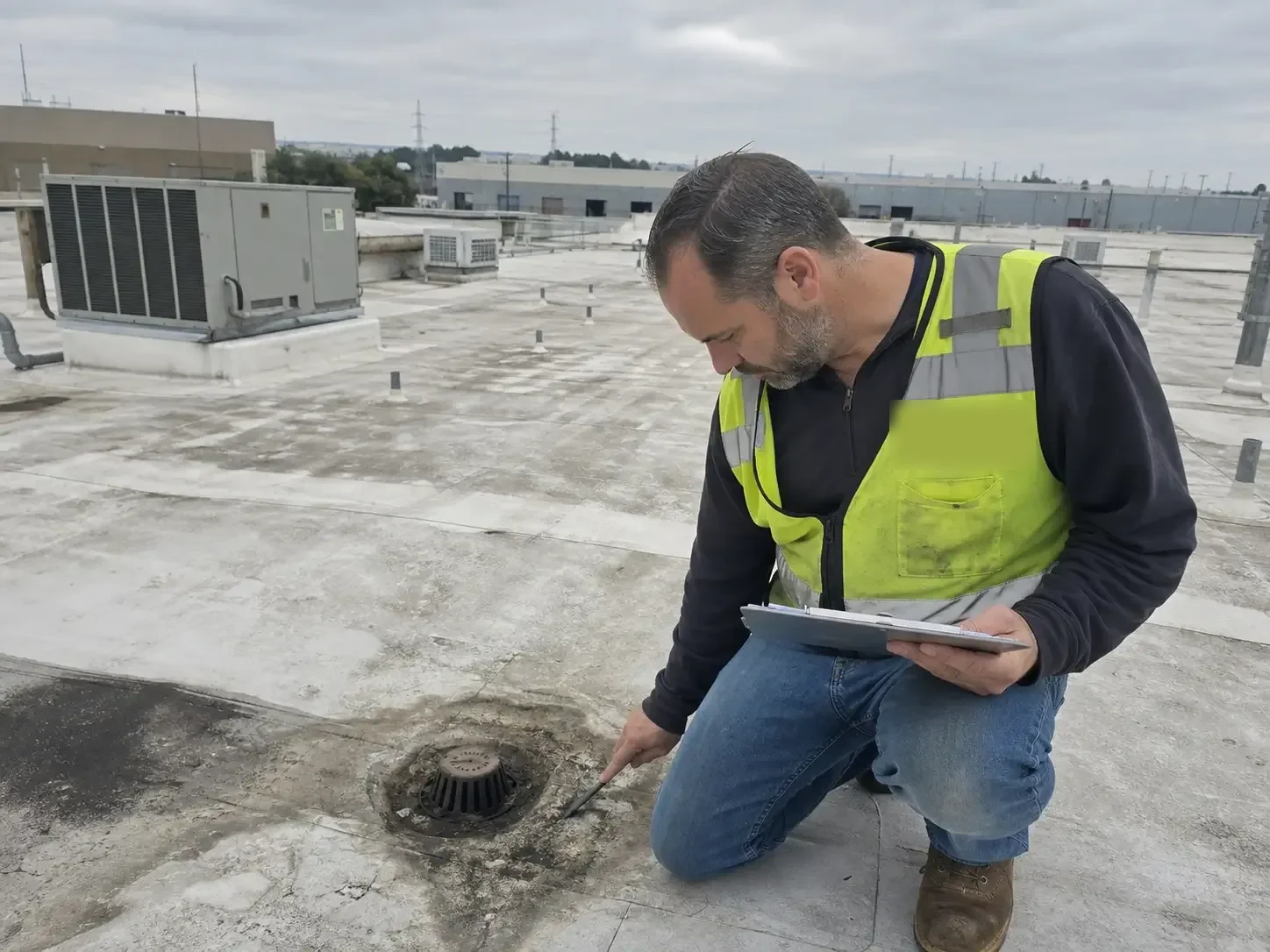
Inspection should move from the symptom to the roof assembly. We map the affected roof section, check membrane seams and transitions, examine flashing at curbs and penetrations, review edge metal, and follow visible water paths toward drains and scuppers. Interior observations can help locate the route, but water may travel before it appears at a ceiling. Photos should identify the roof zone and the observed defect, not imply that a single mark describes every section.
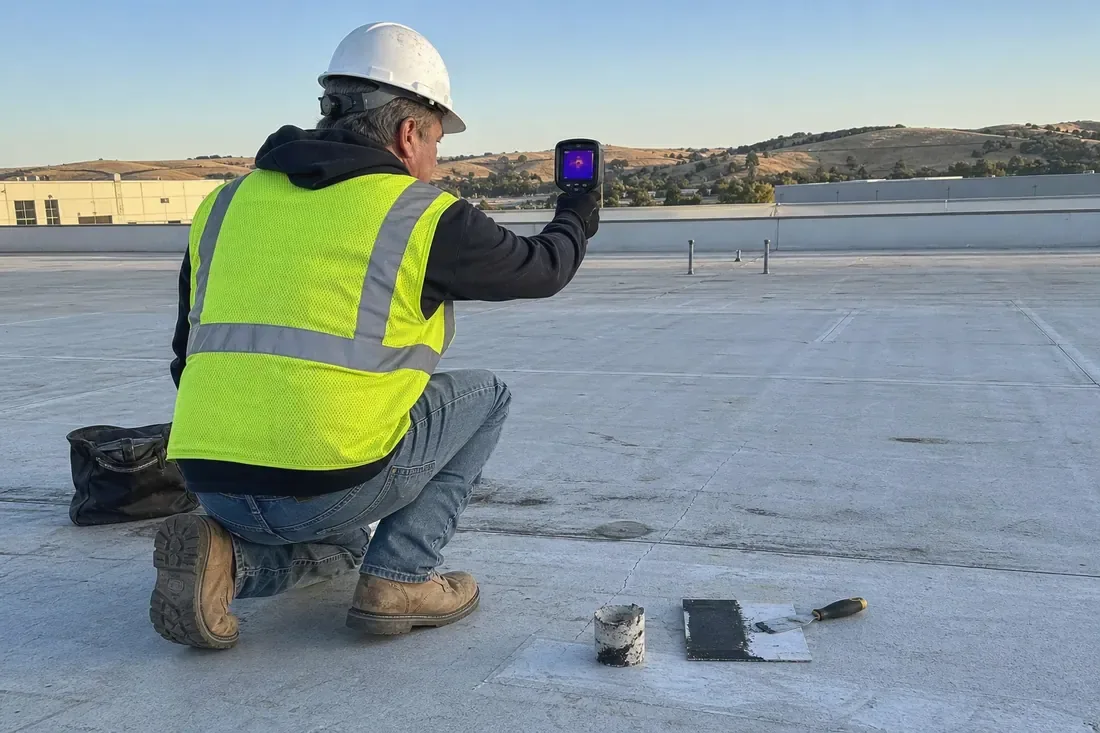
Where the surface does not settle whether insulation is wet or attachment is sound, a test cut or targeted moisture survey can change the recommendation. We record the sample location, what it showed, and any limits on access. That lets the facilities team compare the repair boundary with a recover or replacement option without paying for a broad assumption. A written roof condition report can organize the observations, photos, open questions, and next actions for facilities, finance, and leadership.
Plan drainage and dry-in for Waterbury conditions
Waterbury has citywide exposure to winter storms, including snow, ice, sleet, nor'easters, and blizzard conditions; summer storms and tornadoes are local hazards as well. For a care facility, those conditions make the drain path, overflow route, edge details, and safe snow-season access useful inspection subjects. Weather exposure does not diagnose a particular roof. The inspection still has to establish whether a drain is blocked, a seam is open, or an edge detail has failed.
Waterbury's 24-hour rainfall estimate for an event with a 10-percent annual chance is 5.54 inches. Use that figure to frame questions about outlet capacity and overflow review, not as a forecast or proof of system performance. The city's compact business center sits near where I-84 meets Route 8, and downtown activity includes health-care uses. If a facility has recurring ponding or backup, a drain and scupper review should record visible blockage, discharge conditions, and the roof areas that need follow-up.
Compare repair, recover, and replacement lines
A repair is a sound choice when the leak path is identifiable and nearby membrane, insulation, and attachment remain serviceable. Define the work by roof zone and list adjacent conditions that will remain for monitoring. A recover option needs a different set of checks: existing layers, moisture, attachment, drain height, perimeter details, and the added load must be suitable for another assembly. Replacement becomes more defensible when deterioration crosses several zones, wet materials are widespread, or repeated repairs no longer produce a reliable boundary.
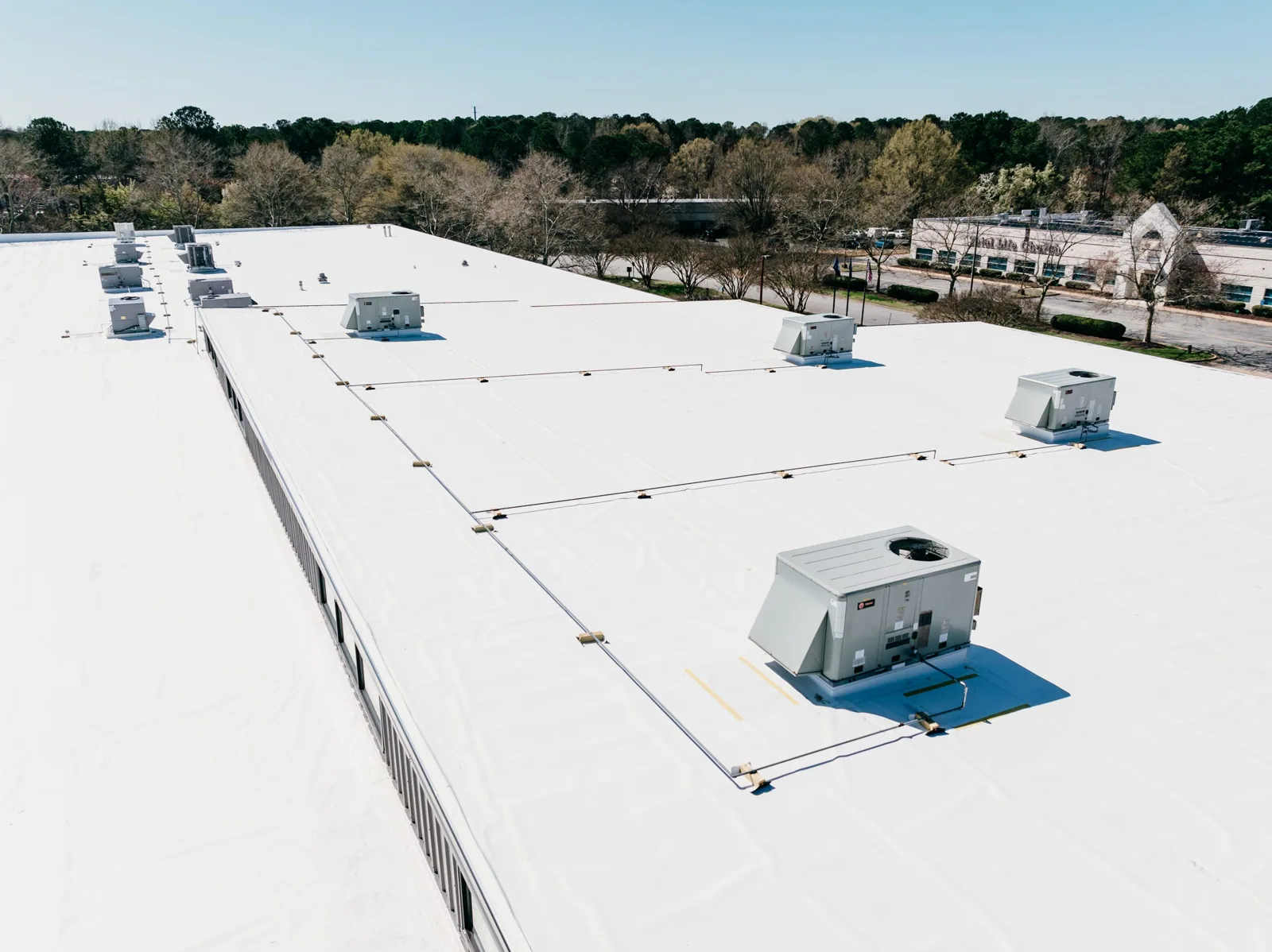
Each alternative should separate confirmed work from allowances. Show removal depth, possible deck repairs, insulation replacement, edge metal, protection below, disposal, and access equipment as cost drivers. If an opening or test could change price, identify the decision point and how it will be approved before proceeding. For an occupied clinic or support building, phased reroofing can sequence sections around department schedules, interior protection, and a planned dry-in point. The roof assembly and observed condition set the replacement line; the building's medical use informs how crews reach it.
Coordinate crews around care operations
Before mobilization, the facilities contact should confirm infection-control or clean-area rules that apply to the planned work, route restrictions, security procedures, equipment shutdown approvals, and the person who can release each roof zone. The roofing scope should state where materials may be staged, when loud or disruptive tasks can occur, how debris moves off the roof, and who receives a daily status update. Do not rely on a general “after hours” note: identify the approved window and how the crew will protect an unfinished area if work pauses.
Break the job into sections with a clear start condition, temporary protection method, and dry-in checkpoint. Coordinate with mechanical, electrical, and fire-protection contractors before disturbing rooftop curbs or service lines. If a concealed condition appears, pause at the agreed boundary and document the change for approval; this avoids leaving an opening exposed while cost is debated. Healthcare systems can align that communication with restoration claim teams when a covered event is involved, while the building owner retains control of operational decisions. For school properties with similarly restricted occupancy windows, education facility teams may use a comparable phasing conversation.
Leave a record the next shift can use
Closeout should let a facilities manager answer four questions without relying on the foreperson's memory: which roof section was worked, what material or repair was installed, what condition remains open, and when the next review is due. Include dated photographs from consistent viewpoints, a marked roof plan, the repair boundary, test results where applicable, and limitations on what was accessible. Separate completed work from recommended follow-up so a future leak report is not confused with a condition already addressed.
Keep permits, inspection results, product documentation, change approvals, and warranty paperwork with the same building record. When maintenance staff rotate, this history makes a recurring issue easier to compare and a capital request easier to explain. Facilities teams seeking Waterbury roof service can provide the roof plan, access rules, leak chronology, and target work window before the visit. We return a defined next step: repair, test, monitor, or price a larger scope.
Commercial Roofing Questions
Can roof work proceed while a care facility remains open?
Often, with a site-specific work boundary, access approval, interior protection, and agreed work windows. The facility contact should identify controlled areas and any shutdown or escort requirements before mobilization.
What should we do when a leak appears over an active department?
Protect the area below, record when and where water appeared, and request an inspection that can stabilize the opening. Keep the roof-zone finding and interior impact together so the next scope addresses the cause and the operational risk.
When is a test cut useful?
Use one when the visible surface cannot show whether insulation is wet, layers are suitable for recovery, or the deck needs repair. Record its exact roof zone and result; one sample should not be treated as proof about untested areas.
How do you compare a repair with a full replacement?
Compare the confirmed repair boundary, surrounding material condition, moisture findings, attachment, drainage, and recurrence. A replacement alternative should show its own tear-off and deck assumptions, not simply extend the repair estimate.
What should the closeout package include?
A marked roof plan, dated photos, installed materials, completed and open items, test results, access limitations, approvals, and a recommended review date give facilities and finance teams a usable record.
Set the roof decision within the care schedule
Share the roof plan, access rules, leak chronology, and capital window. We will inspect the affected sections, document repair or replacement choices, and identify the evidence that could change scope.