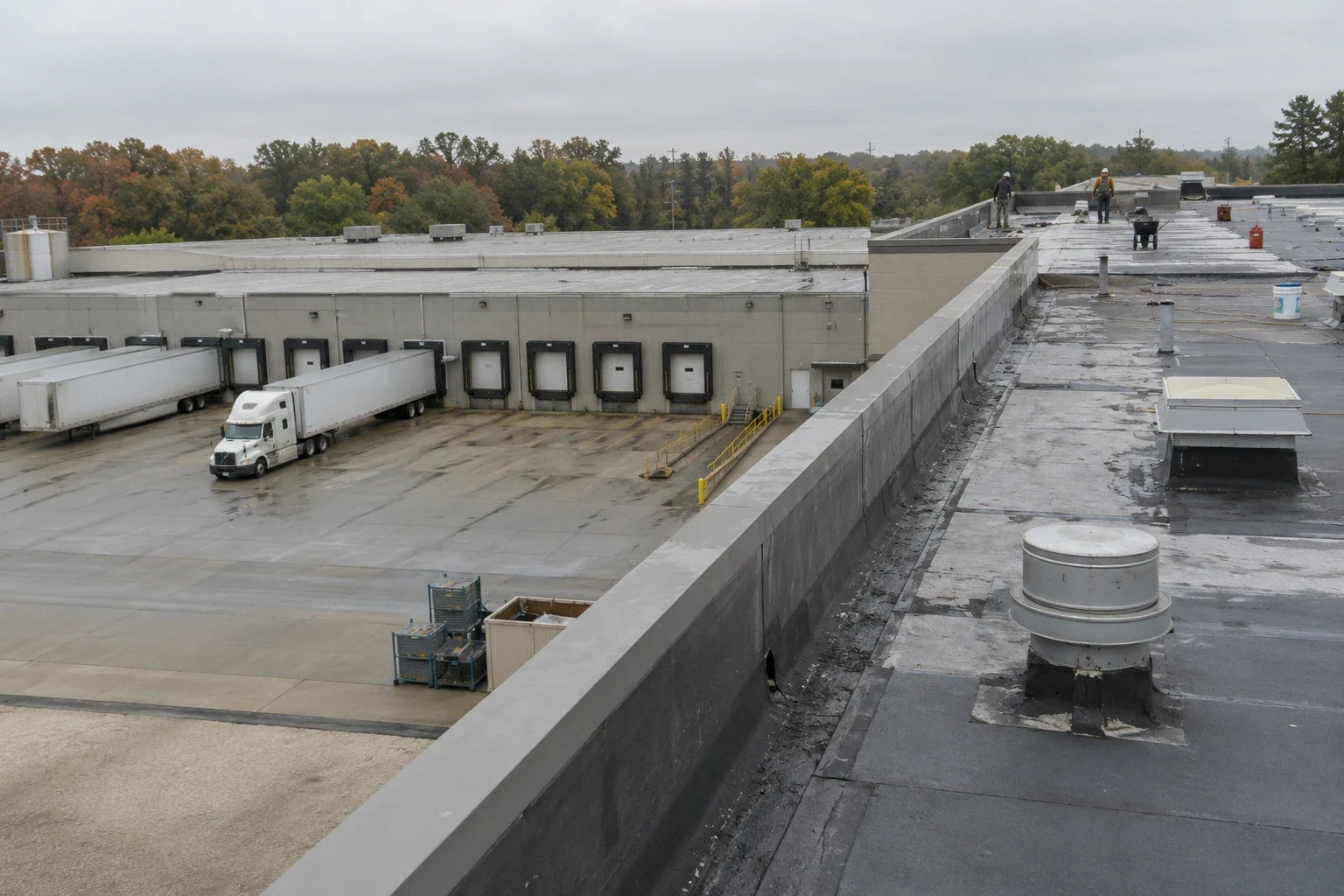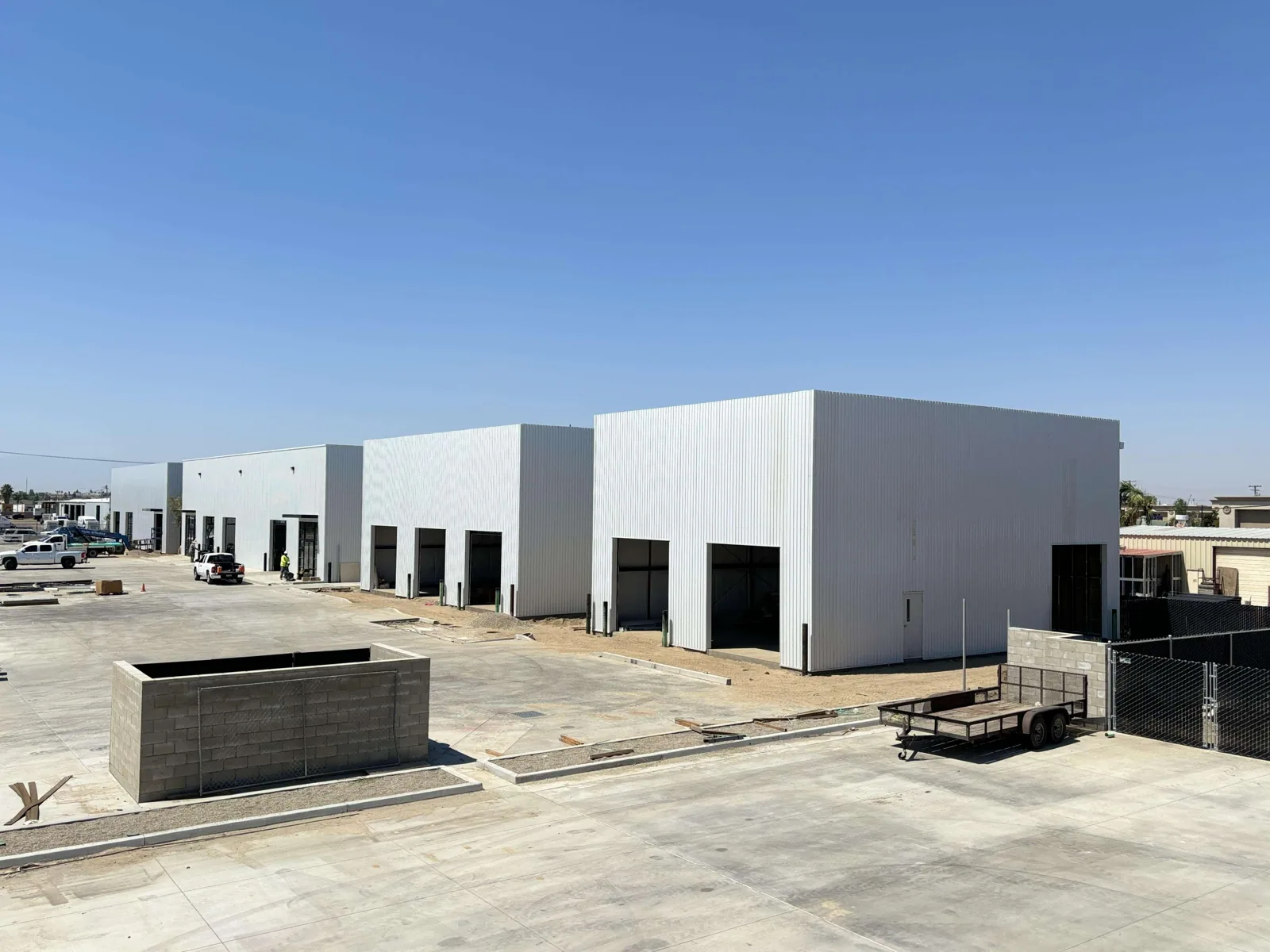
A plant manager rarely asks for a new roof; the request starts when water reaches a production line, a control panel, or a finished-goods aisle. By then the question is no longer cosmetic. It is which roof section to protect first, whether production can stay up while the work is done, and how much of the roof has to change before the leaks stop. We handle manufacturing roofs in Waterbury, CT by tracing each leak to a roof section, ranking the sections by what sits below them, and pricing the work in lines that can be approved against a shutdown calendar.
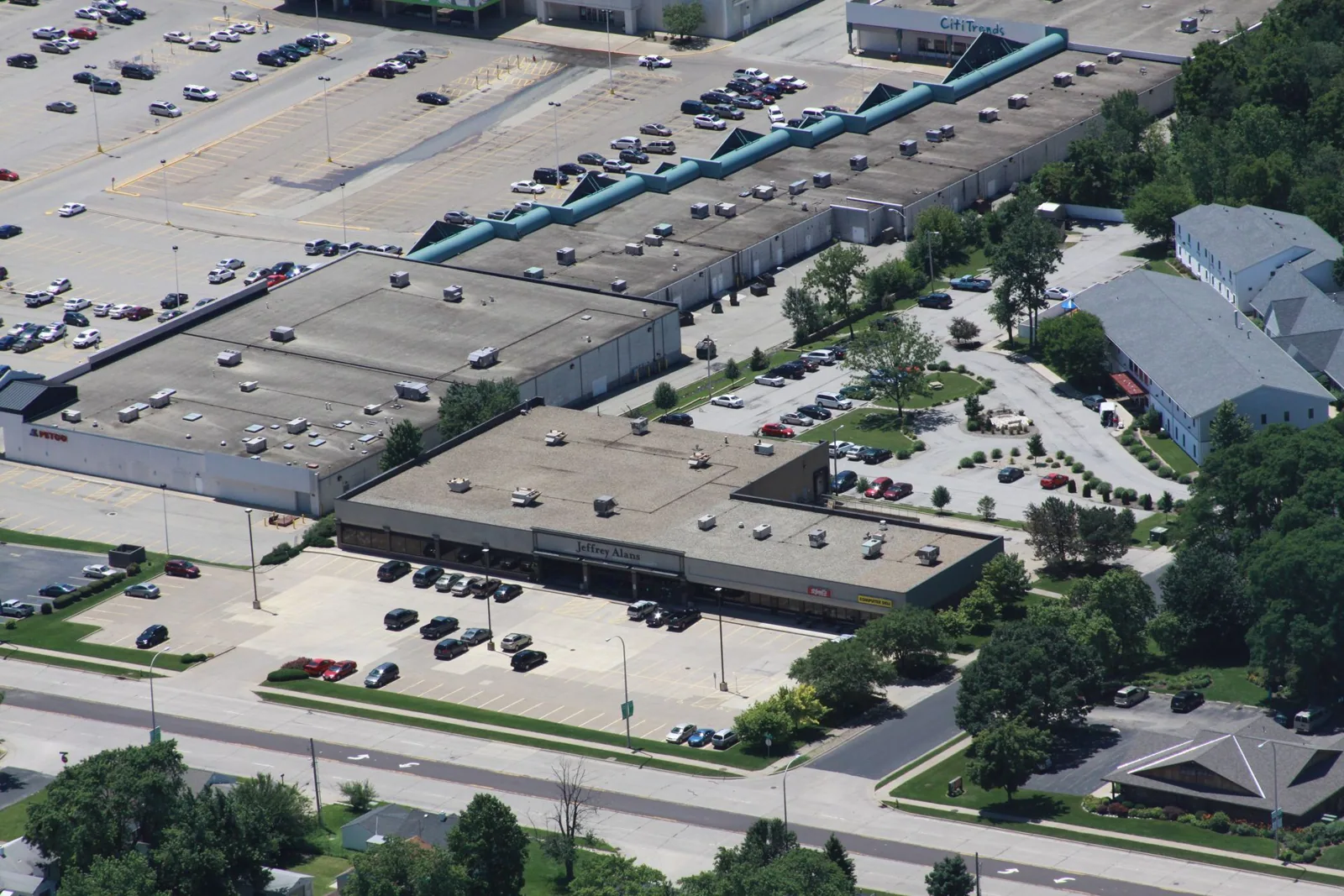
Older industrial lands follow the Naugatuck River, another industrial district sits in the southeast, and Reidville, Brookside, and Waterbury Industrial Commons are named industrial parks; the 2025 draft plan lists manufacturing among the pillars of the local economy.
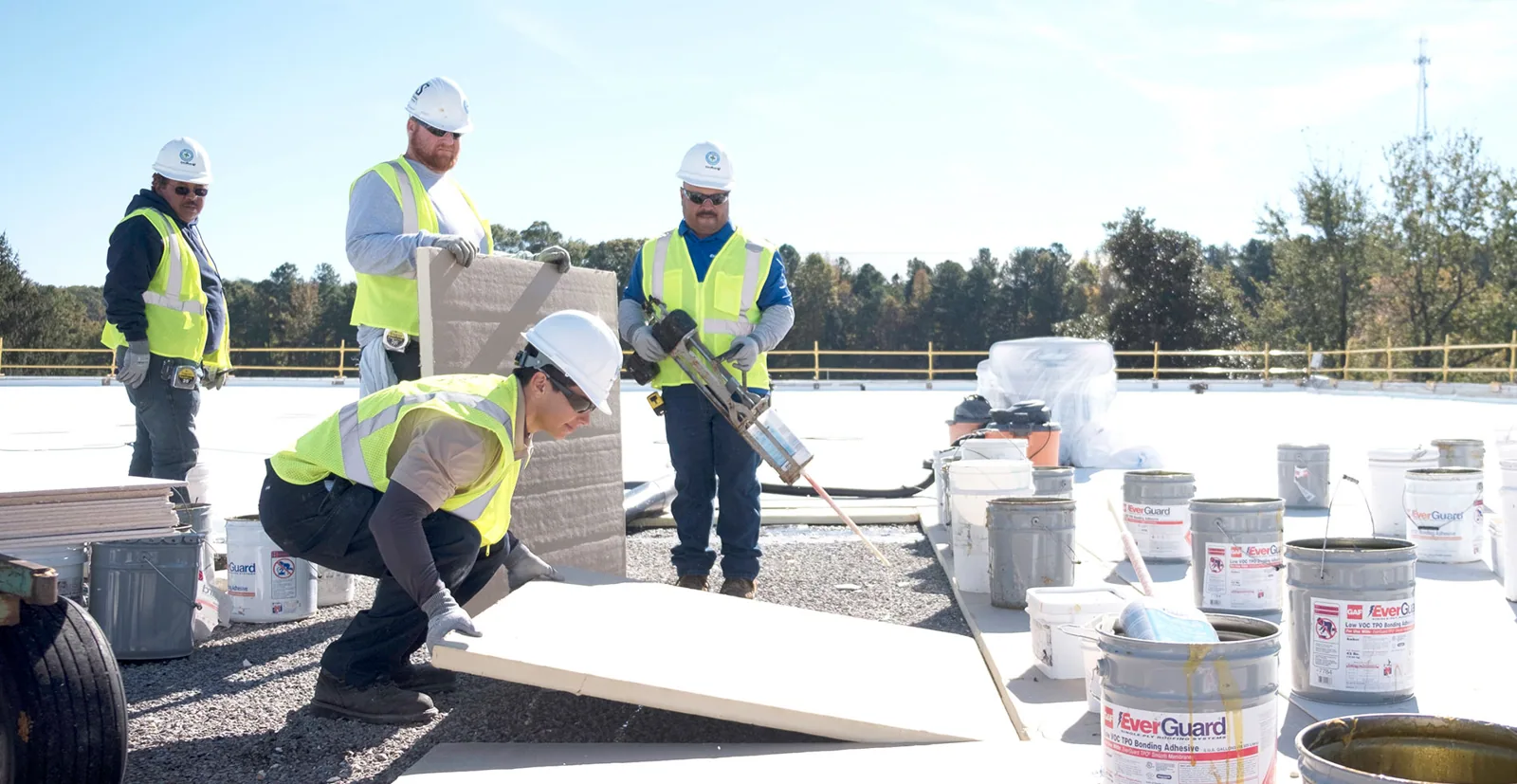
Rank roof sections by what the water would reach
Water above a bare warehouse bay costs housekeeping. Water above a CNC machine, a paint line, an electrical room, or a clean assembly area costs production. We ask the plant manager for the layout and the process map, walk the roof section by section, and rank each section by the equipment beneath it, so a small repair over a critical area is scheduled before a larger repair over a storage bay.
Process roofs have their own failure points. Exhaust stacks, make-up air units, dust collectors, and vents each penetrate the membrane, and the flashing at each is a possible entry. We list the penetrations, check which are abandoned, and recommend removing abandoned ones instead of flashing around them again. Each removed curb is one fewer seam to maintain, and the deck opening is closed with a proper patch before the membrane goes over it.
Plan the work around production windows and shutdowns
Many plants run on a shift pattern with a planned shutdown, such as a holiday week, and a roofing scope that fits inside it is worth more than a cheaper scope that does not. We lay the reroof against the calendar: which sections can be torn off during normal production with protection below, and which sections need the shutdown because the equipment under them cannot be covered.
Noise, dust, and fumes are also scheduling items. Some processes cannot tolerate dust or adhesive odors near air intakes, so we identify intakes before material is chosen and move the staging away from them. A reroof around live production depends on those details more than on the membrane.
Read the roof of an older industrial building as layers
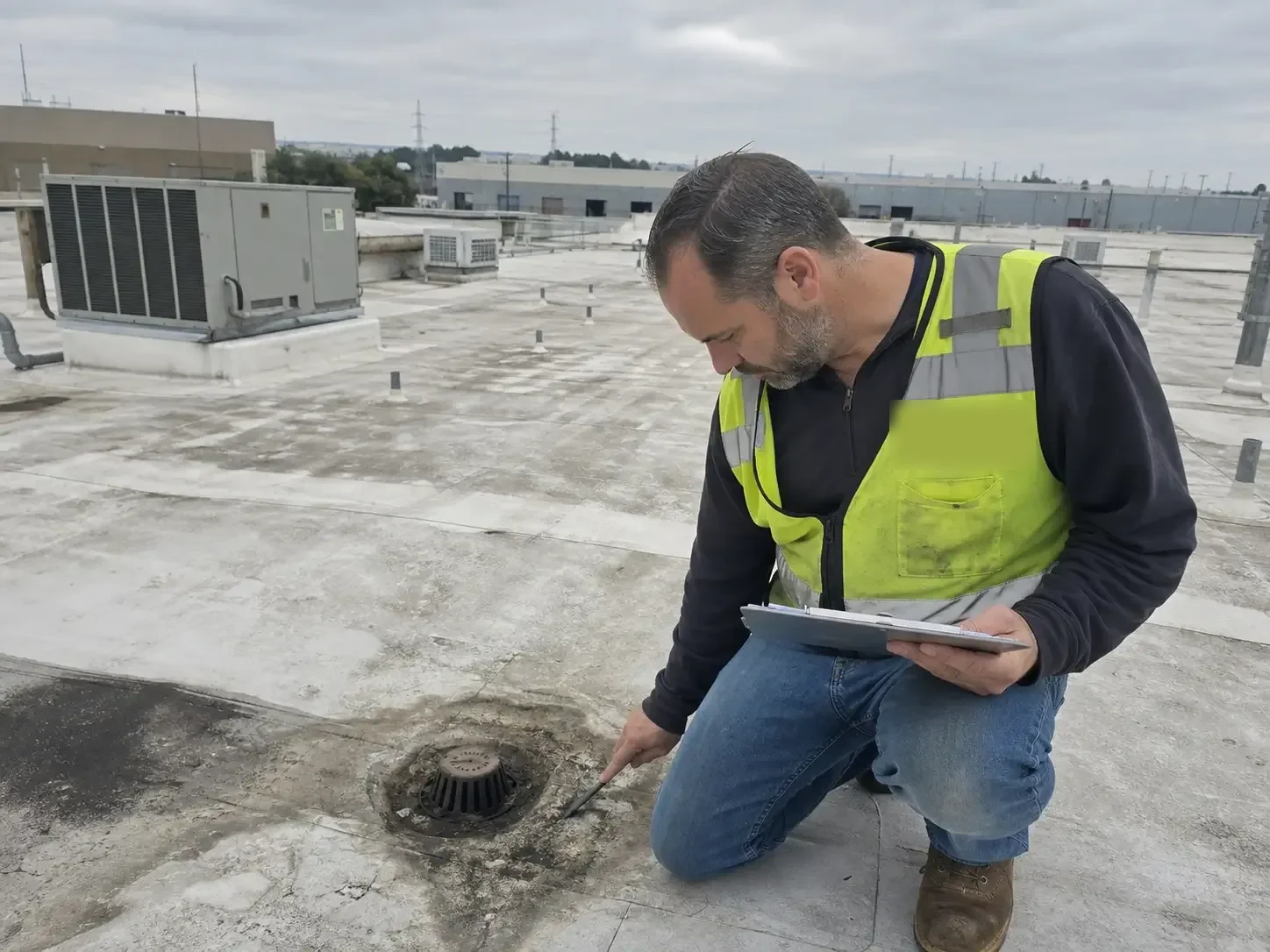
A plant in an older industrial area can carry many rounds of change: additions, raised sections, tie-ins to earlier roofs, and equipment added over time. The age of the building does not tell us the age or the type of the roof, so we open it. Test cuts show how many layers sit on the deck, whether insulation is wet, and whether a recover is realistic. Where an older built-up system is present, the built-up roof can often be repaired by section, and a replacement is only drawn when the evidence supports it.
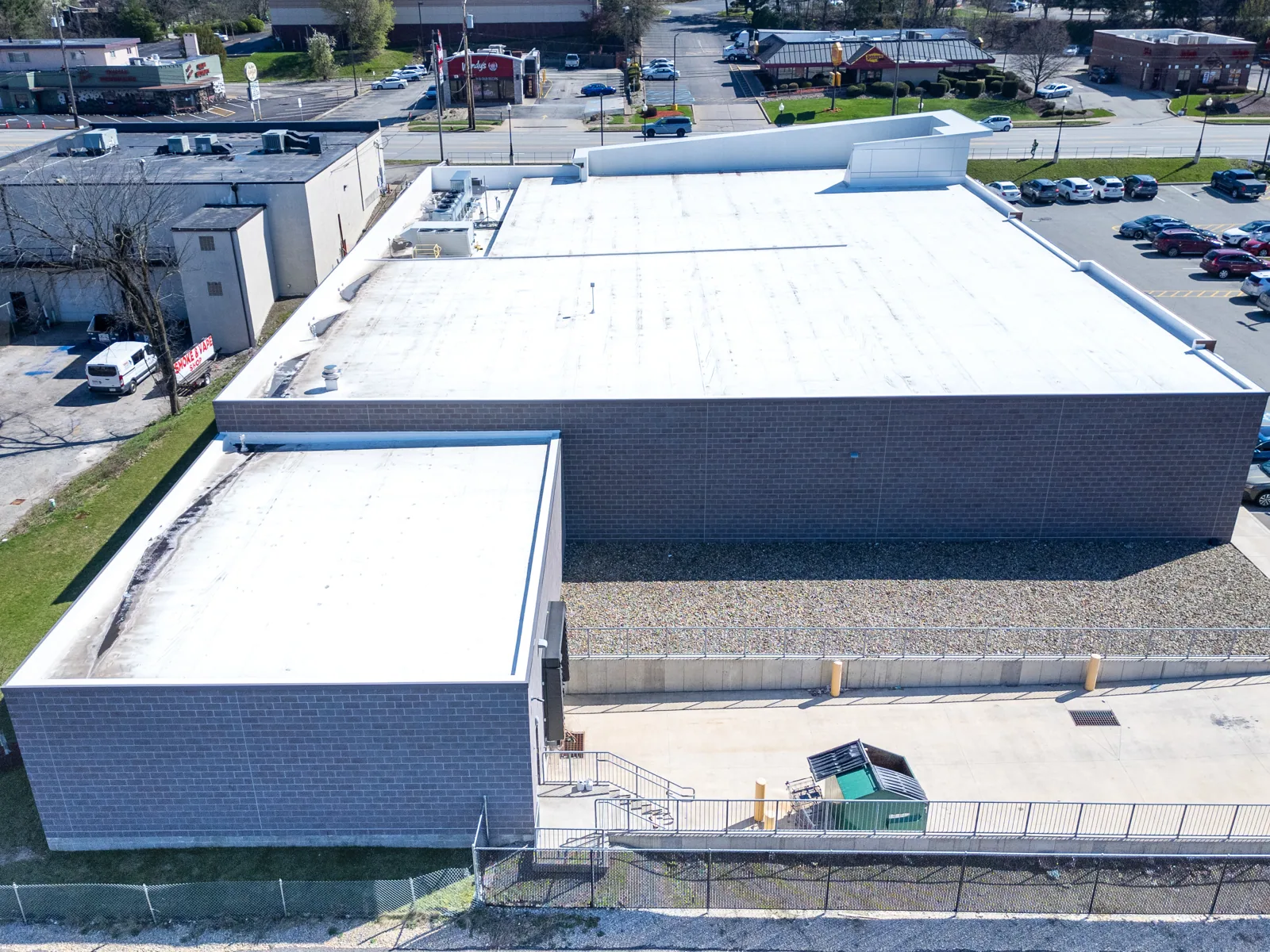
The city plan calls Waterbury Industrial Commons the former Chase Brass site, redeveloped for modern industrial uses that include King Industries and Luvata. A redeveloped site and an older plant beside the river may need different treatment, so the inspection starts at the roof of the building in front of us.
Account for snow, ice, and storms in the drainage plan
Snow, ice, sleet, nor'easters, and blizzards can reach any part of Waterbury under the hazard plan, which also lists summer storms and tornadoes locally. A long manufacturing roof collects snow behind parapets and around rooftop units, and the meltwater must reach a drain that is open. We check outlets, scuppers, and overflow paths before the cold season.
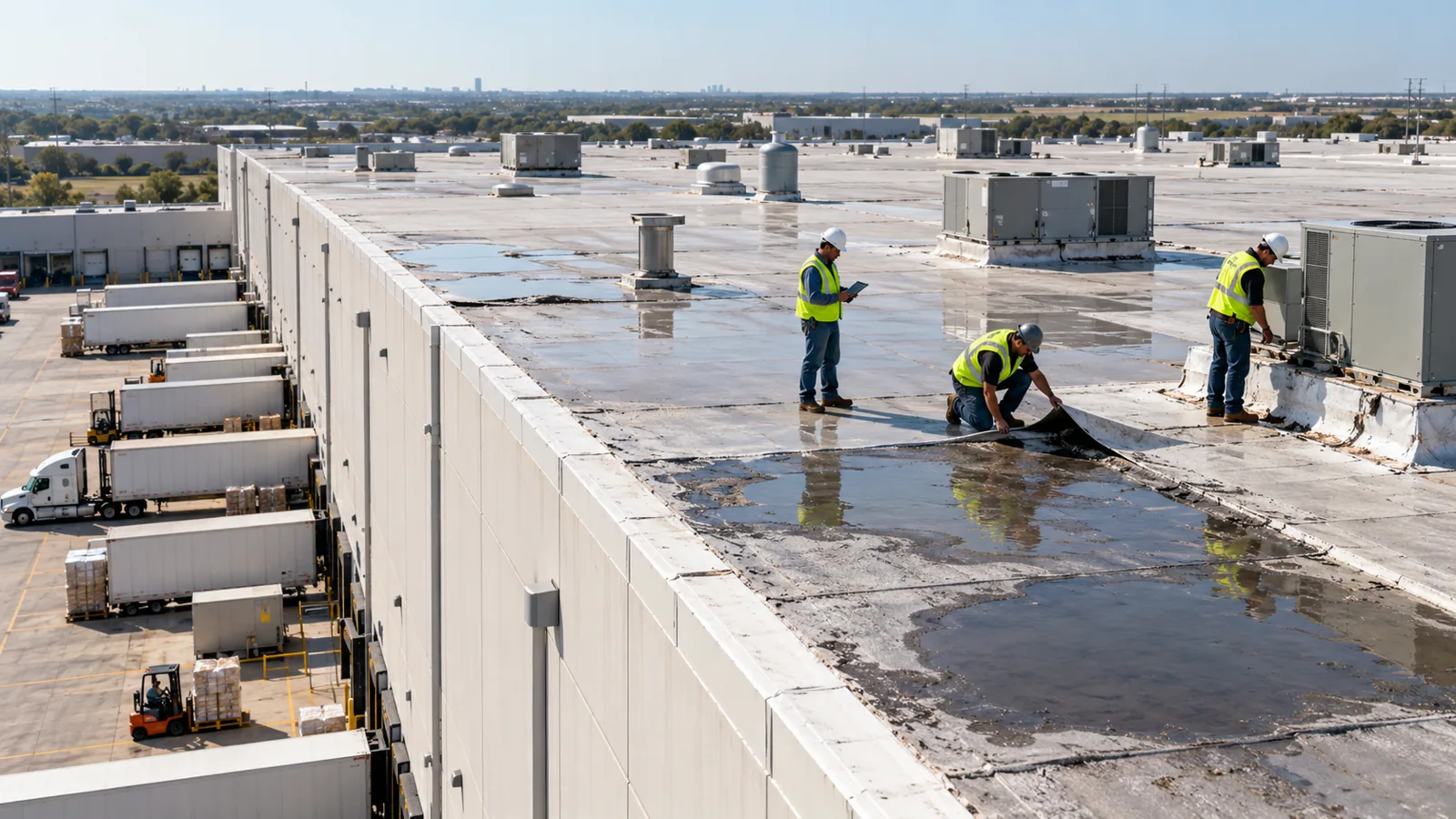
Ponding on a low-slope plant roof stresses seams and adds weight. A ponding water repair may be as simple as adding a drain or resloping with tapered insulation, and it is usually cheaper than another round of seam patches. We measure the depth and location of each pond and tie it to the cause, whether that is a clogged outlet, a low spot in the deck, or insulation that has compressed.
Separate repair, recover, and replacement lines with evidence
A repair is appropriate when the leak path is found and the surrounding membrane is sound. A recover needs dry insulation and a deck that can take another layer. Replacement belongs in the budget when wet core is widespread or the patches no longer hold. We price all three and show the test cut results under each, with an allowance for deck repair that is released only when the tear-off proves the need. If the permit date or the material lead time falls after the shutdown, the estimate says so and offers a temporary measure that holds until the next window.
Capital-minded plant managers also ask about service horizon: how long a repair will hold before the section has to be replaced. We give a condition-based range from the inspection and do not promise a number of years, since the roof's future depends on drainage, maintenance, and traffic, and we flag the conditions that would shorten it, such as repeated equipment service over unprotected membrane. A roof capital plan places those horizons beside the plant's investment calendar.
Hand over a closeout file that production and finance can both use
The closeout file lists the roof sections worked, the materials installed, dated photographs, test results, and open items. Maintenance staff use it to schedule inspections, and finance uses it to support the capital request for the next section. For plants that share a building with a warehouse operation, logistics tenants can use the same file to track their own exposure.
If a contractor is managing a plant expansion, the roofing scope should be coordinated with the general contractor so the new roof ties into the existing roof with a detail both parties have approved. A plant in Wolcott, where the largest industrial concentration lies along Wolcott Road at the Waterbury line, receives the same file, with its own review date.
Commercial Roofing Questions
How do you keep production running during a reroof?
We divide the roof into sections, protect the equipment below each open section, and move noisy or dusty work away from sensitive processes. The sequence is written against the shift calendar, and any section that cannot be protected waits for a shutdown. Production supervisors receive a daily status so they know which bays are under an open roof.
What happens if a leak lands on electrical equipment?
De-energize and protect first, then call for emergency response, which is available around the clock, holidays included. We stabilize the opening, document the entry point, and price the permanent repair once the cause is clear.
Can abandoned rooftop equipment be removed during the reroof?
Often yes, and it is usually the better choice. An abandoned curb or pipe is a possible leak path, and removing it before the new membrane goes down costs less than flashing it twice.
When does a plant roof justify a recover instead of tear-off?
When test cuts show dry insulation, a sound deck, and a layer count the structure can support. Production benefits too, since a recover creates less debris and a shorter open-roof period, but it only makes sense when the evidence allows it.
What should I bring to the first roof walk?
Roof drawings if they exist, the process layout, the leak log, the shutdown calendar, and any past repair invoices. If the drawings are missing, we map the roof during the walk.
Send the shutdown calendar and the leak log
Share the process layout, the shift pattern, the equipment you must protect, and any drawings. We will walk the roof, rank the sections, and price repair, recover, and replacement against your production calendar.