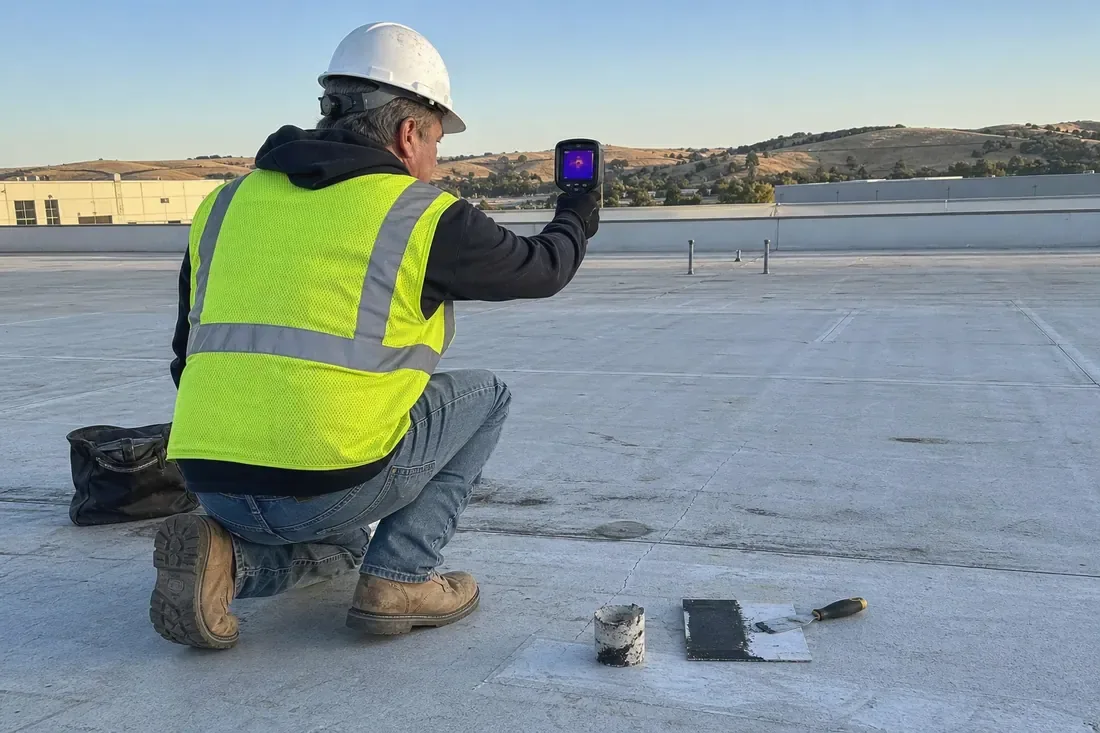
Budgeting a Wolcott, CT roof begins with one question: is the leaking section cheap to mend, or has it soaked up too much water to keep? A test cut and a moisture survey settle it before any recover is priced, and the answer moves the dry-in date as much as the cost. The repair, recover and replacement scopes are laid out separately on paper, each resting on the same findings.
Wolcott's commercial roofs sit in a few clear places: a compact district around the Wolcott Road and Center Street intersection, more commercial sites strung along Wolcott Road, and the town's largest industrial concentration in its southwest corner at the Waterbury line.
Start With the Center Street Intersection
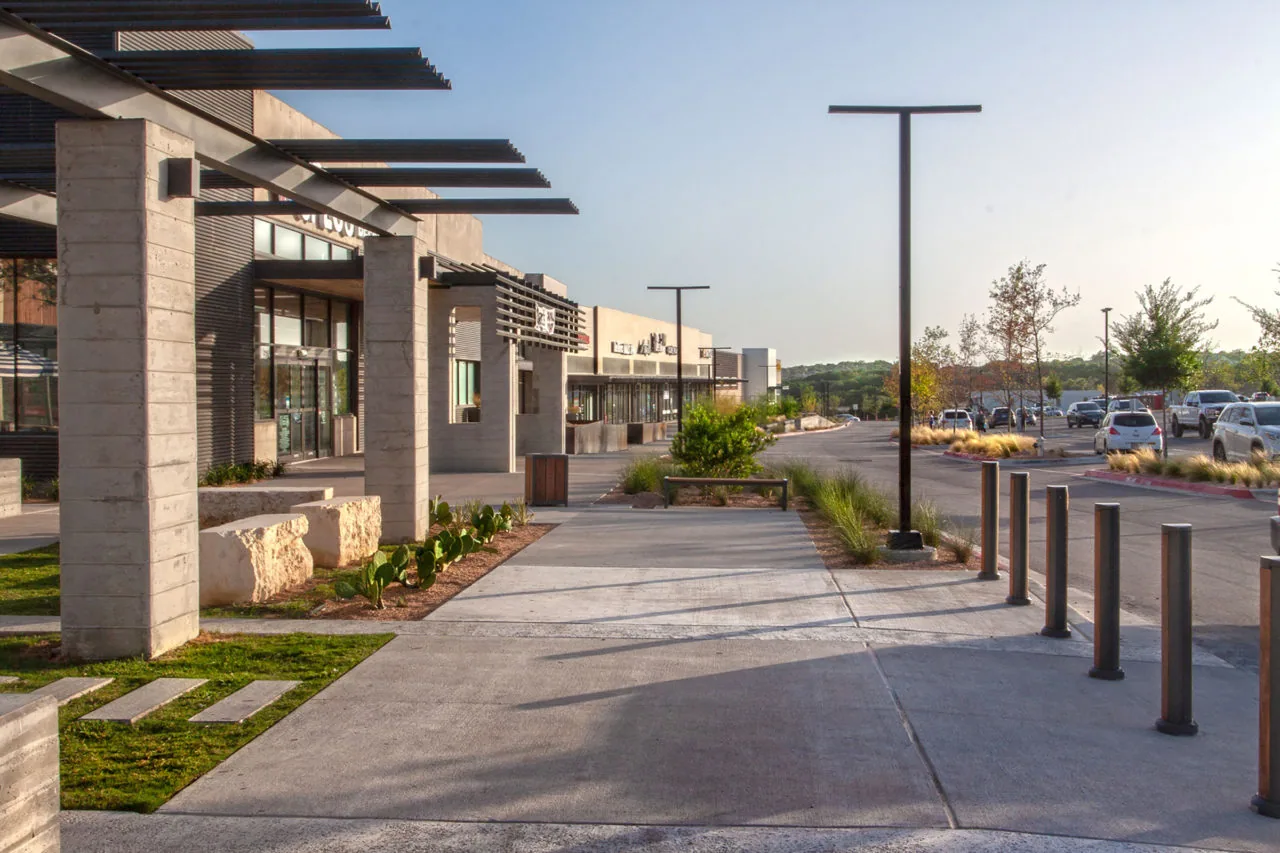
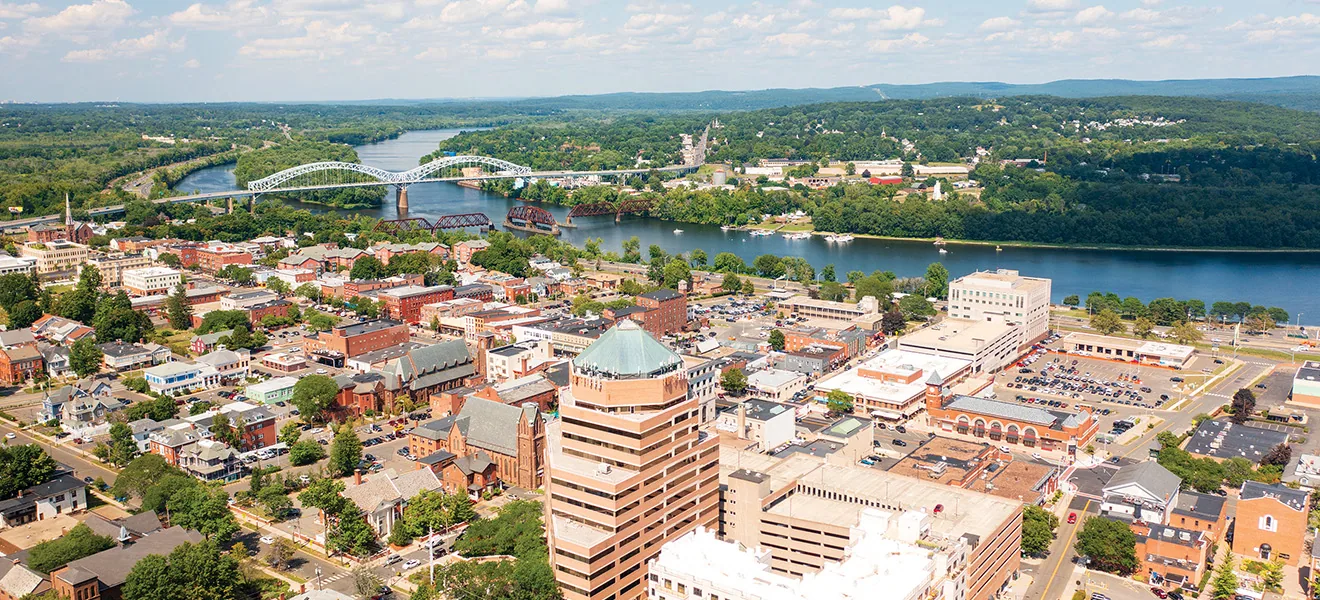
A compact commercial district puts buildings close together, and close buildings mean shared walls, shared drainage and little room to stage material. Before a tear-off boundary is priced near the Wolcott Road and Center Street intersection, we find out where a lift can sit, how many parking spaces tenants can spare and when storefront traffic thins out. We also look at the points where one roof meets a neighbor's wall, since flashing at those tie-ins often fails first and is easy to miss from the ground.
On a compact site the allowance tilts toward protection: covered walkways, debris chutes, and a daily closeout that leaves a morning's opening watertight before the lot fills up.
Signage, canopies and rooftop mechanical units in a compact district are often tied into the roof edge. We check how each one is fastened and flashed, and we list the ones that must be removed and reset during a recover so the mechanical or sign contractor can be scheduled in the same window.
Price the Wolcott Road Frontage by Roof Section
Commercial sites extend along Wolcott Road beyond the central district, and roofs strung along a corridor rarely share one age or one system. We do not assume a roof type from the address. Every building is walked end to end, with sections outlined, seams and flashings probed and a core taken wherever moisture readings are suspect. A shopping center roof can then be phased bay by bay, with each section dried in before the next is opened, while a single-tenant building can usually be handled in one mobilization.
Corridor sites also differ in how they drain. One building may shed water to a lot behind it, another to a public street, and a third to an interior drain that runs through the tenant space. We trace each path before pricing, because a drain that has to be replaced adds work inside the building as well as on the roof, and the owner should see that cost before approving the scope.
Treat the Southwest Industrial Corner as Its Own Scope
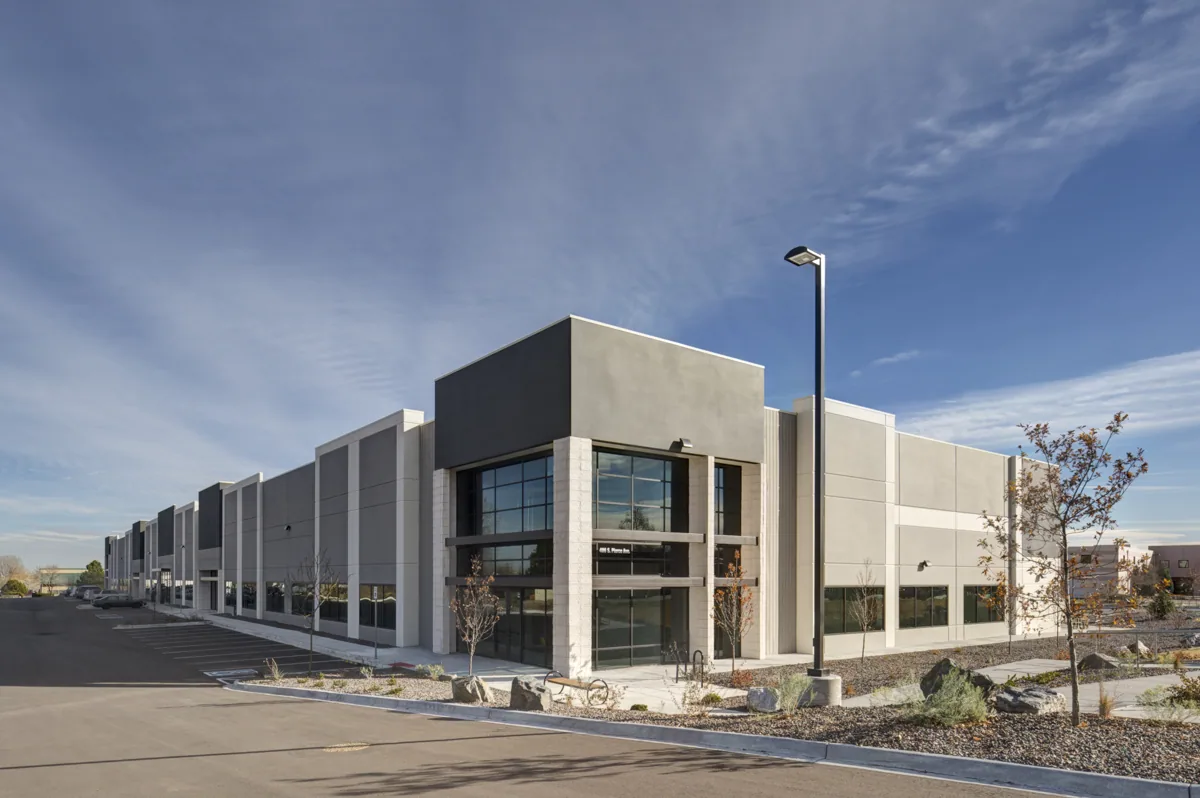
Wolcott's heaviest concentration of industrial land runs along Wolcott Road where the town meets Waterbury. Big drainage areas, rooftop equipment and operations that cannot halt for a roof crew come with the industrial territory. A flex industrial building can put offices, a shop and storage under one roof line, so protection is graded by use. Held against the floor plan, the roof shows where a leak would cost the most in stock or machinery, and that ranking goes straight into the work sequence.
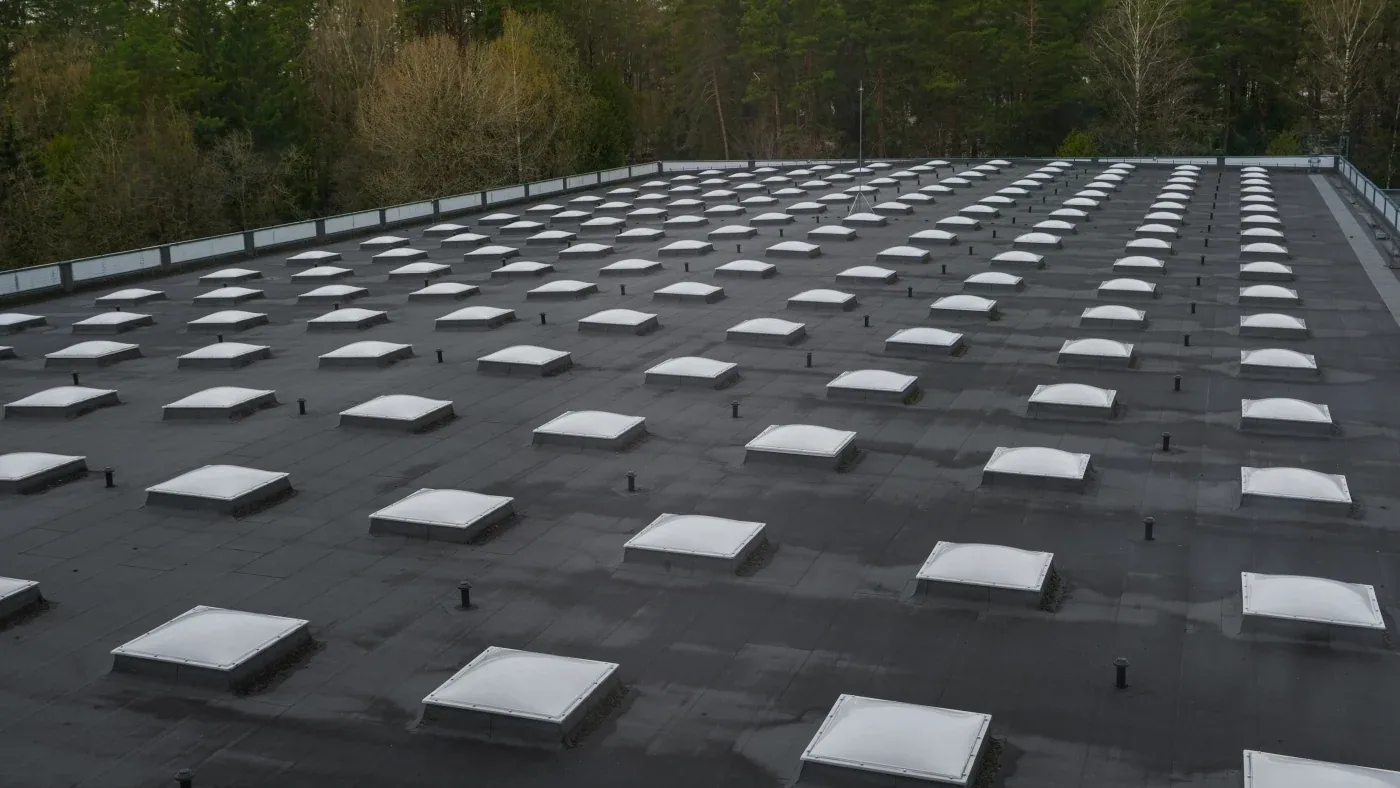
Curbs, vents and fans are inspected individually; a curb flashing that has failed is among the likeliest ways water enters a large low-slope roof.
A roof built up from several systems gets its boundaries drawn on the plan. An addition at one end, a recover at the other and an original section between them each call for their own repair method, and the seams where they meet are where moisture usually slips in.
Read the Hills Before Pricing Access
Wolcott's municipal hazard plan describes a hilly town where steep slopes and water features limit development along parts of its eastern and western borders. On a hilly site, we check how trucks reach the building, where material can be staged and whether the ground near the building is level enough for a lift. Runoff from a slope above a building can load a lower roof edge, and a drain path that discharges toward a slope needs a plan for where the water goes. These are access and drainage questions, and they show up in the estimate as allowances for hoisting, protection and drain work.
Delivery on a slope has its own hazards. A loaded truck on a steep driveway, a lift on soft ground or a hoist swinging near a hillside needs a plan, and that plan is part of the quote. We walk the approach, note grade changes and soft spots and decide whether material goes up by lift, by crane or by hand before the first load is ordered.
Test Drainage Before Pricing a Recover
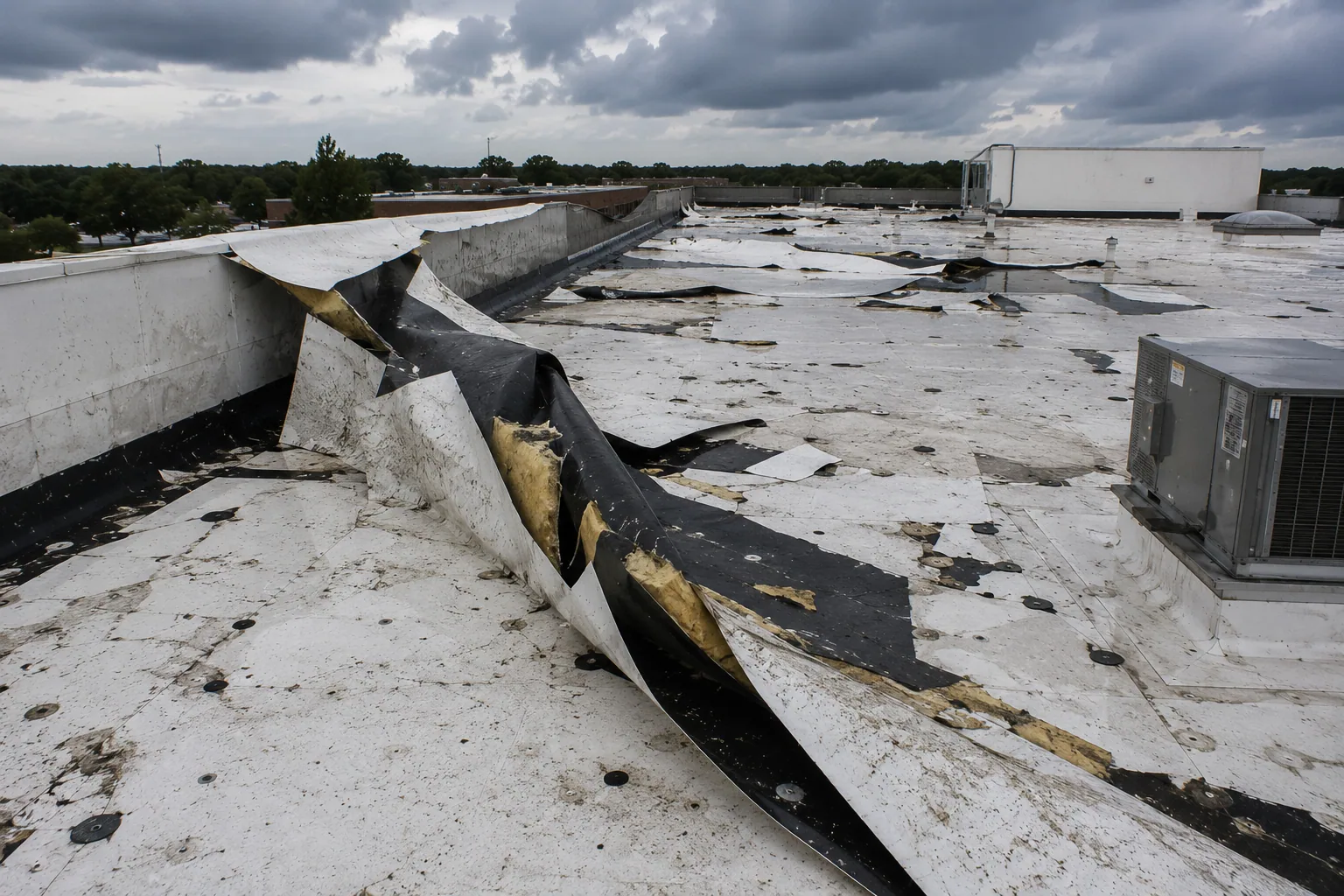
Next door, the hazard plan covering Waterbury leaves the whole city open to snow, ice, sleet and nor'easters and names summer storms and tornadoes as local hazards. Taken as regional background for a Wolcott roof, that argues for tracing every drain path, clearing strainers and hunting for low spots that hold ice or water. A roof recover enters the discussion only if the old roof is dry, solidly attached and able to carry one more layer, with drain heights that still work afterward. A snow and ice damaged roof is inspected for split seams and displaced flashing before the field.
Leave a Record the Next Owner Can Use
Applications filed from October 1, 2022 fall under the 2022 Connecticut State Building Code, adapted from the 2021 International Codes, so a recover or tear-off starts from a permit date and counts back to the dry-in date. The finished job leaves photographs, test results and each repair's limits keyed to a marked roof plan. That roof condition report shows the next owner what was found and what remains under observation, and it gives a facilities manager in neighboring Waterbury or elsewhere a model for ranking roofs across several sites.
Owners who also hold property in Prospect or elsewhere nearby can ask for the same report format on each building, which lets the capital plan rank the roofs against one another.
Commercial Roofing Questions
How do I decide between a repair and a recover on a Wolcott Road building?
Start with a moisture survey and one or two test cuts. If the insulation is dry across most of the roof and the membrane still has service life, a repair or a recover can be priced side by side. If wet core appears in several areas, the recover option usually fails its check and the replacement line becomes the comparison that matters.
What changes for roof work in a compact commercial district?
Staging, access and tenant hours drive the schedule more than the membrane does. We plan lift location, walkway protection and debris handling first, and the roof is split into sections that can each be made watertight in one shift.
Can industrial operations continue during a reroof?
Yes, in most cases. The plant's production calendar sets the pace. Machines and inventory below the opening are shielded, each opened area stays small enough to seal before dark, and the building's priorities fix the order, with the weather free to reshuffle it.
What does a hilly site add to the cost?
Usually allowances for staging, hoisting and drainage. A building on uneven ground may need a different lift position or longer material runs, and we state those costs separately so the owner can see which items come from the site.
Which records should I gather before an inspection?
Anything that documents the roof: plans, repair invoices, notes on past leaks with dates and places, warranty papers. Add the access rules and your decision deadline, and the written report will follow your capital or permit calendar.
Set Up a Wolcott Roof Inspection
Send the access rules, the roof records and your capital or permit window. We will inspect, separate the repair, recover and replacement scopes, and deliver a report with photographs, test results and clear allowances.