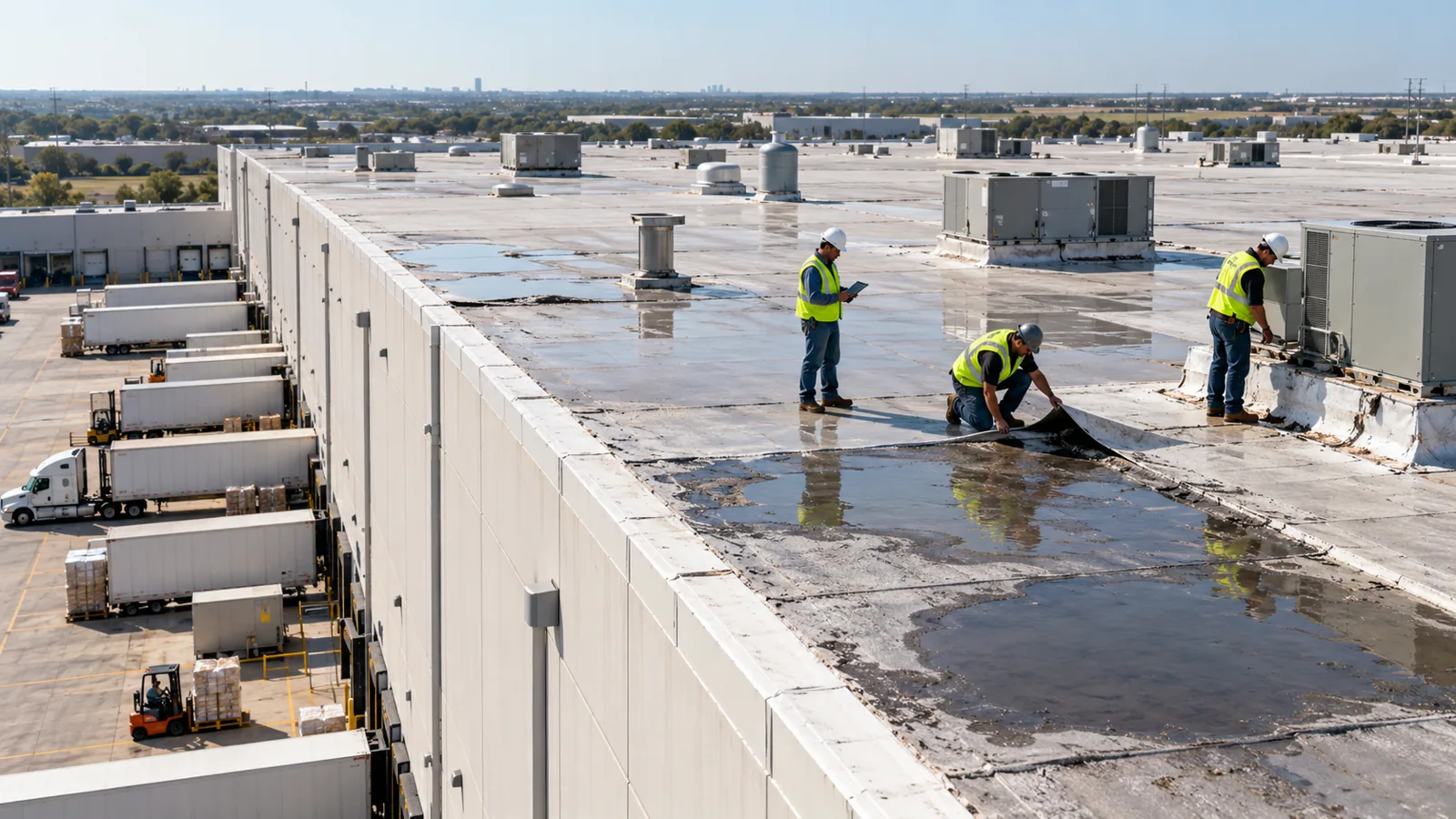
Budget season in Watertown, CT usually starts with a stain and ends with a decision about how much of a roof to keep. The deciding evidence is a test cut: dry insulation under a worn membrane supports a repair or a recover option, while wet core points to full replacement and the permit date and dry-in order that come with it. We price all three paths from one inspection so the owner can see what each costs and what each risks before the capital window closes.
Watertown combines an elongated urban core with suburban areas that extend northwest into rural countryside, and its commercial zoning generally follows Routes 63 and 73. The town also keeps a solid industrial base, so large low-slope roofs are part of the picture.
Inspect the Elongated Core as a Series of Roof Blocks
A long urban core strings buildings along a line, and the roofs along that line tend to differ in age, size and construction. We do not carry a finding from one block to the next. Each building is walked on its own: sections outlined, drains followed, seams probed, wall and equipment flashings inspected. Where buildings share a wall, the junction gets extra time, since flashing at a party wall is both a common failure point and easy to miss from the ground.
Access in a core is limited by sidewalks, parking and traffic, so we plan lift position and material staging before pricing and list those items as separate allowances.
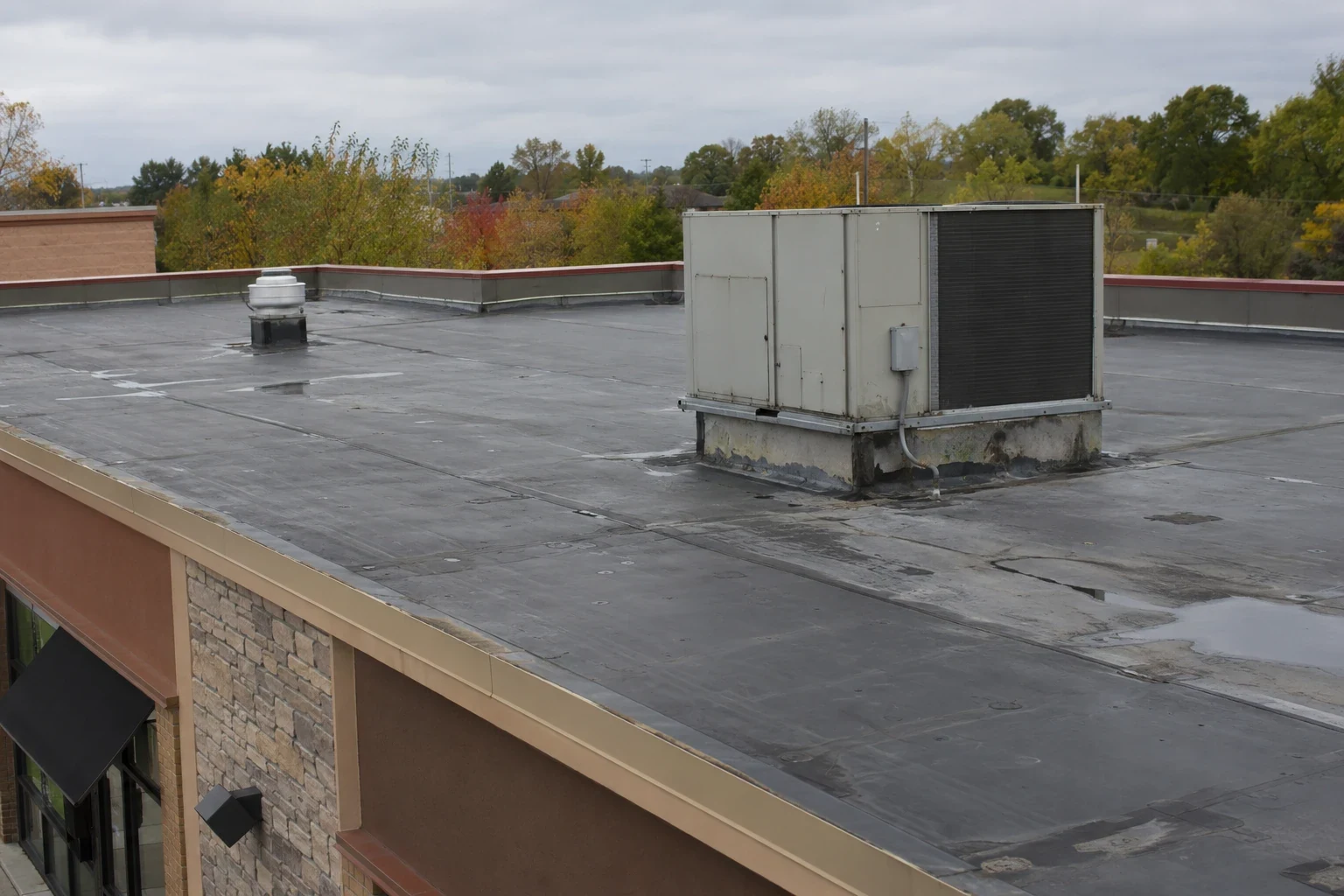
Older buildings in a long core may also carry rooftop additions, such as mechanical units or signs, that were installed after the roof. Each addition is a place where a penetration was cut or a curb was set, and we check the quality of those details first. A well-made curb with sound flashing protects the roof for years, while a hurried one is often the real source of a leak blamed on the membrane.
Price the Route 63 and Route 73 Zones With Tenants in Mind
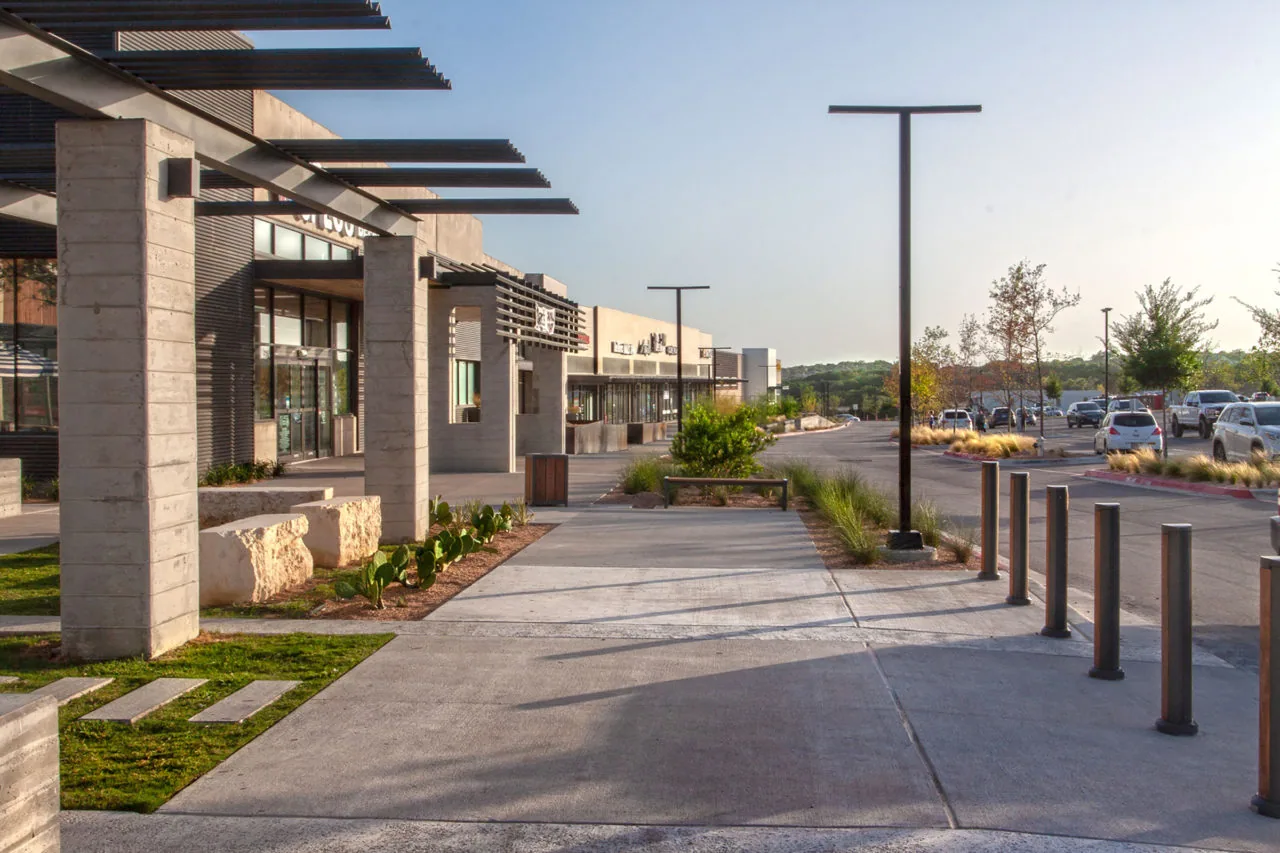
Commercial zoning along Routes 63 and 73 puts stores, offices and service businesses on roads with steady traffic. Roofs there belong to owners who need the doors open and the parking lot usable, so the work is phased. A shopping center roof can be divided by tenant bay, with each section dried in before the next one opens. A restaurant roof needs particular care around exhaust fans and grease, which can attack some membranes and complicate flashing. We list each rooftop unit and exhaust and mark the ones that need curbs rebuilt or flashing replaced.
Traffic on a state route also affects delivery. Trucks bringing insulation and membrane need a place to stop, and a lift that blocks a drive aisle costs the tenant business. We agree on delivery windows, flaggers where needed and a staging area that keeps the customer entrances clear, and we list those items in the estimate so the owner can see them.
Plan Industrial Roofs Around the Production Floor
The town retains a solid industrial base, and industrial buildings carry wide drainage areas, plenty of rooftop equipment and operations that keep running while the roof crew works. Setting the roof beside the floor plan reveals which areas sit above machines or stock, and those zones receive protection first. A manufacturing plant roof sometimes combines systems from different years, and the plan draws the lines between them so every section gets the method that suits it.
Each curb, vent and exhaust fan is checked on its own, because curb flashing that has failed is high on the list of reasons large low-slope roofs leak.
Skylights and smoke vents in an industrial roof deserve a separate look. Their glazing seals and curb flashings often give out before the membrane does, and fixing them while the crew is already on site is cheaper than going back to a finished roof. Each unit is listed in the report with its condition and a recommendation.
Coordinate Business Park Roofs With Their Owners
Watertown's economic development office reports business-park occupancy and supports current commercial and industrial development inquiries, which suggests buildings in such parks are in active use. Active use shapes the work. Tenants need notice, shared drives need traffic control and a roof section opened for repair has to be closed again before the shift ends. We agree on the work zone, the debris path and the daily closeout with the property manager, and we record the agreement in the scope so a change in plan is also a visible change in cost.
Shared drainage is a frequent issue in parks. When two tenants' roofs drain to a common line, a clogged outlet on one roof can flood the other, and responsibility for the fix becomes unclear. We trace shared drains and mark them on the plan, which gives the property manager a clear basis for assigning the work.
Test Drainage Against Regional Storm Data
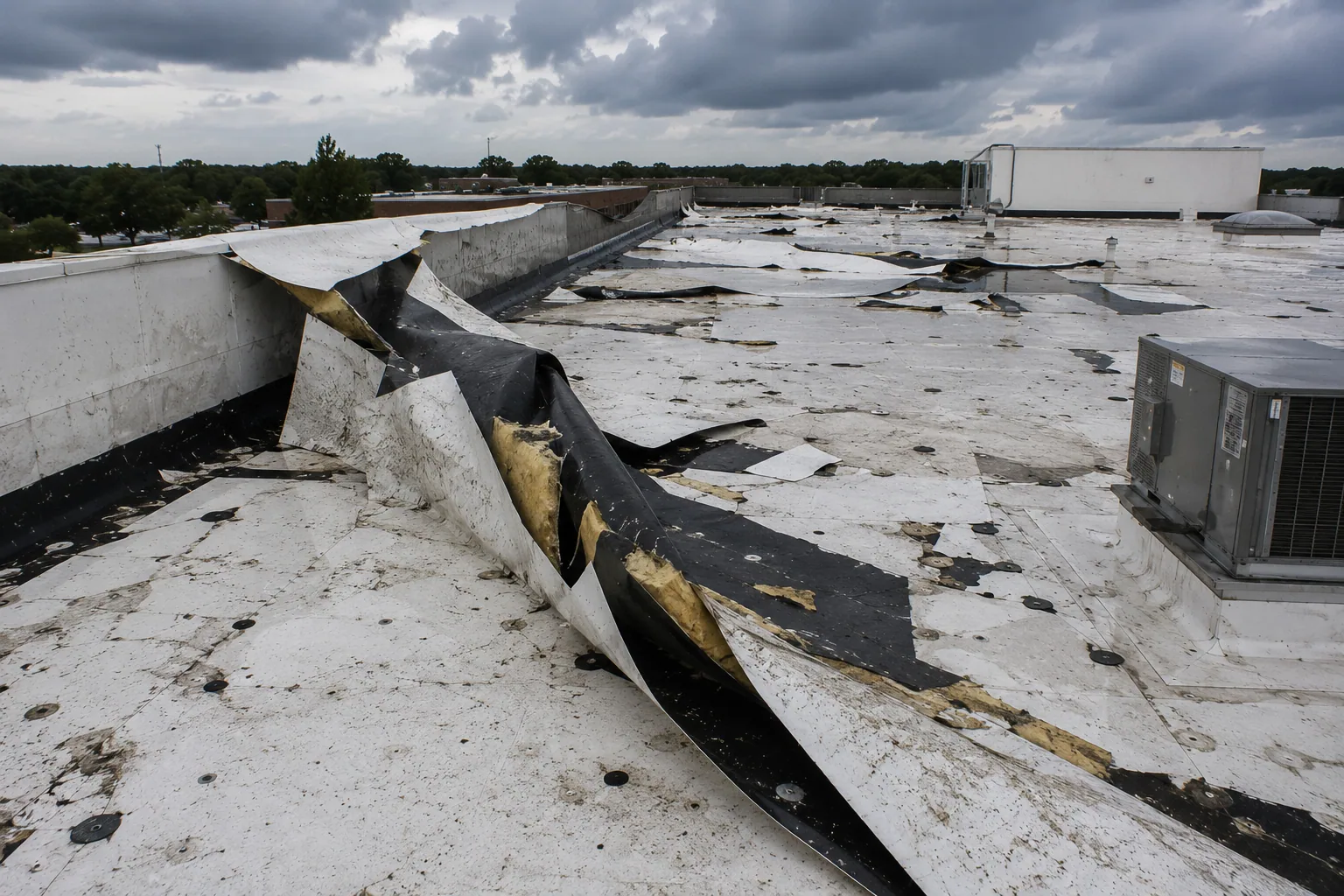
Neighboring Waterbury's hazard plan leaves no part of that city free of snow, ice, sleet, nor'easters or blizzards, ranks summer storms and tornadoes as local hazards and gives its 24-hour design rainfall as 5.54 inches, a figure with a 10 percent chance of occurring in any year. The sensible response for a Watertown roof is to open the drains, trace overflow routes, mark low spots and examine edge metal, since wind starts lifting a roof at its perimeter. A wind damaged roof is inspected at its edges and corners before the field.
Heat matters as well. The same plan projects hotter summers for Connecticut, and a membrane that spends more days at high surface temperature ages faster at its seams and flashings. We write a service horizon into the report for each roof section, so the owner can decide whether a repair now or a larger project later makes more sense.
Close Out With Evidence and a Permit Trail
The 2022 Connecticut State Building Code, which grows out of the 2021 International Codes, governs permit applications from October 1, 2022 onward, so every recover or tear-off begins with a permit date. When the work ends, photographs, test results and repair limits are keyed to a marked plan, and that record supports a roof capital plan and lets an owner compare a Watertown building with one in Waterbury or Thomaston.
Lead times for material shape the calendar, so orders go in only after scope, permit route and funding are settled. The crew then arrives equipped, and no roof stands open while a delivery is tracked down.
Commercial Roofing Questions
What should an owner expect from a test cut?
A small opening, a look at the layers and the insulation, a moisture reading and a same-day temporary patch. The result goes into the report with a photograph and a note on how it changes the scope, because a dry core and a wet core lead to very different estimates.
How are tenants protected when a shopping center roof is replaced?
The roof is split into sections small enough to be made watertight in one shift. Entrances and walkways stay covered, loud tasks are set with the tenants, and photographs mark each section finished before the next starts, so no bay is left exposed overnight.
Can an industrial building keep producing during a reroof?
Usually. Production sets the schedule, equipment and stock under the work zone are covered, and each opened section stays small enough to seal within a day. Operating priorities decide the order and the forecast adjusts it.
Why does restaurant exhaust matter for a roof?
Grease and heat can attack some membranes and loosen flashing near fans. We check the surface around each exhaust, clean what can be cleaned, replace what cannot and recommend protection such as walk pads or grease containment.
Which records help most before an inspection?
Whatever documents the roof's past: plans, earlier repair invoices, a record of leaks and dates, warranty papers. With the access rules and your decision date, the report can be fitted to your capital or permit window.
Plan a Watertown Roof Inspection
Send the access rules, the roof records and the capital or permit window. We will inspect, separate repair, recover and replacement scopes and provide a report with photographs, test results and allowances.