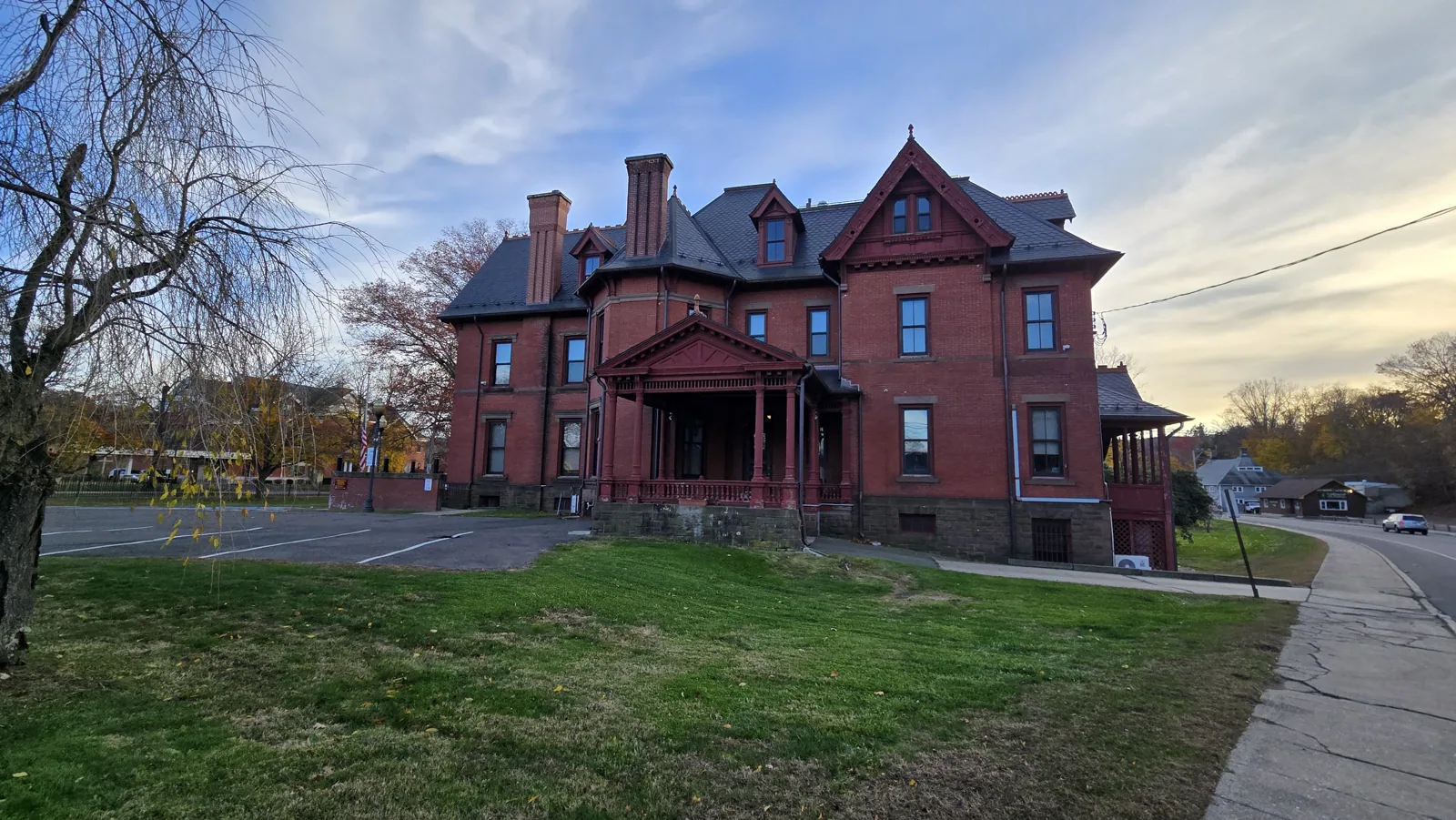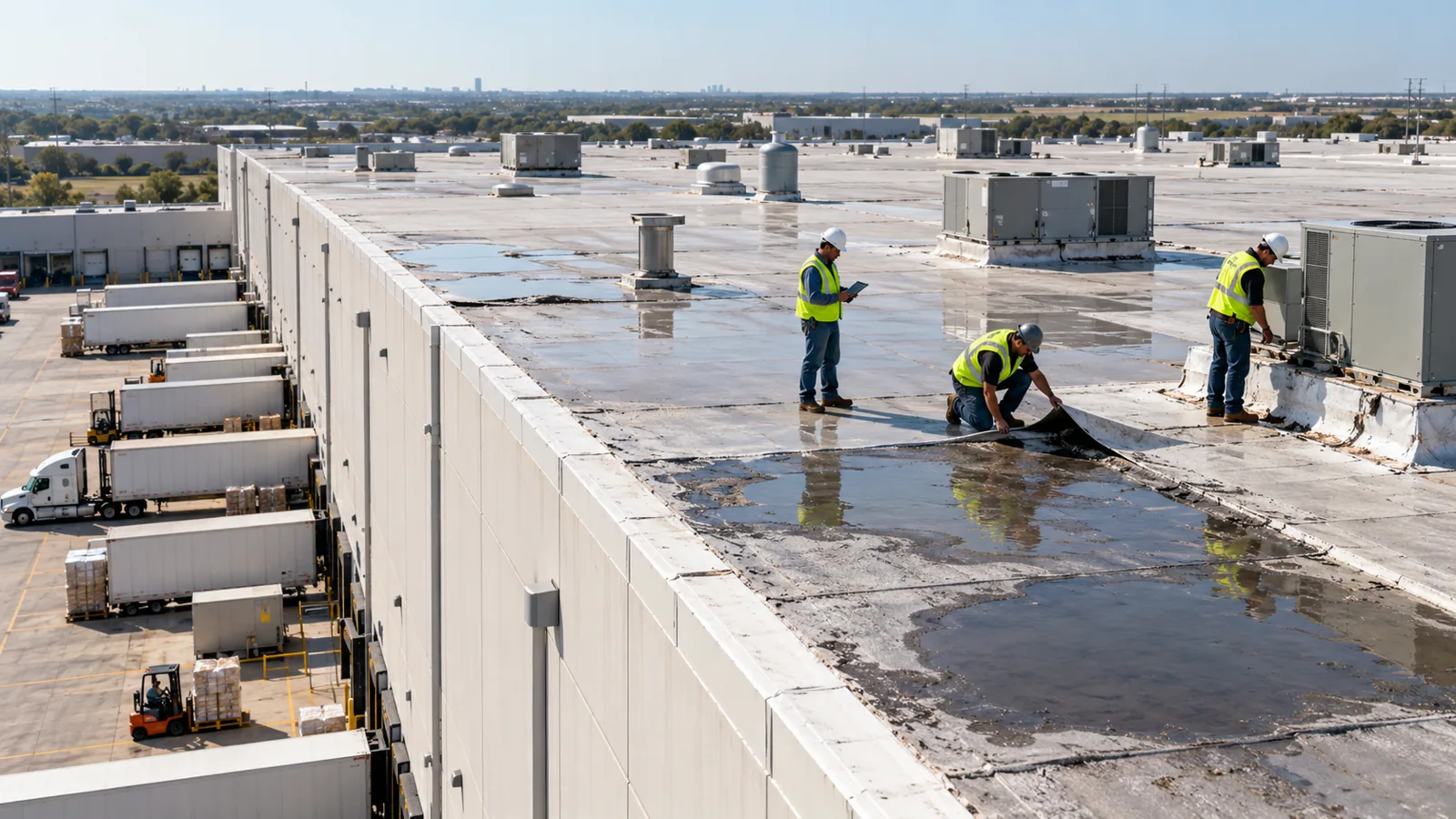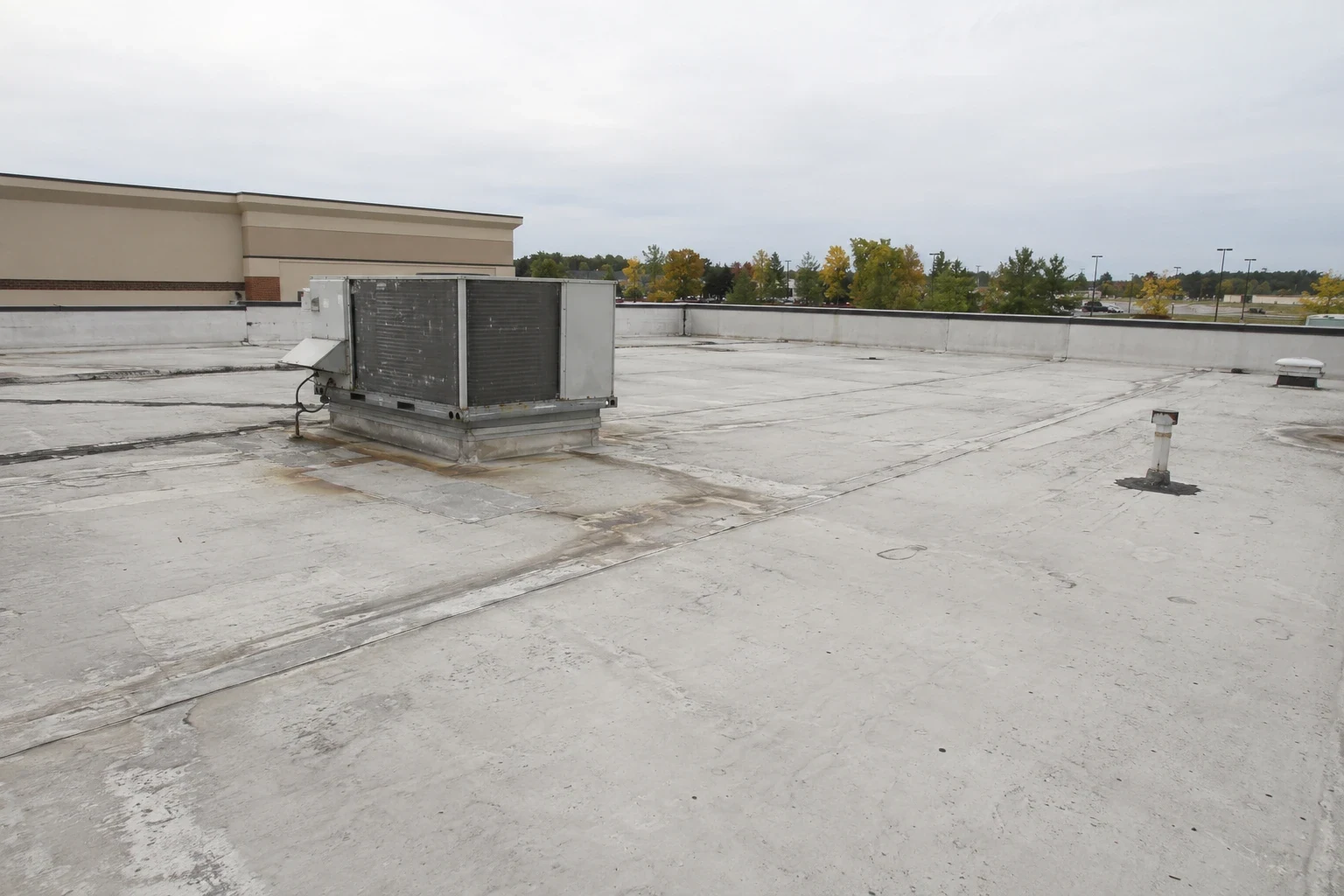
A dozen roofs managed one leak at a time leave the owner buying repairs without a ranking, and a program only fixes that if it has a common record, a common set of details, and a schedule that keeps crews moving between sites without losing dry-in dates. An owner with buildings in Waterbury, CT and the surrounding towns faces a specific choice: keep sending individual quotes for each leak, or invest once in a survey that ranks every roof section across the portfolio and sets the order of work. The survey finding that could change the plan is how many roofs are on the replacement line this year rather than the repair line.
We build programs for owners of retail, school, office, industrial, and healthcare property who need consistent records and predictable budgets.
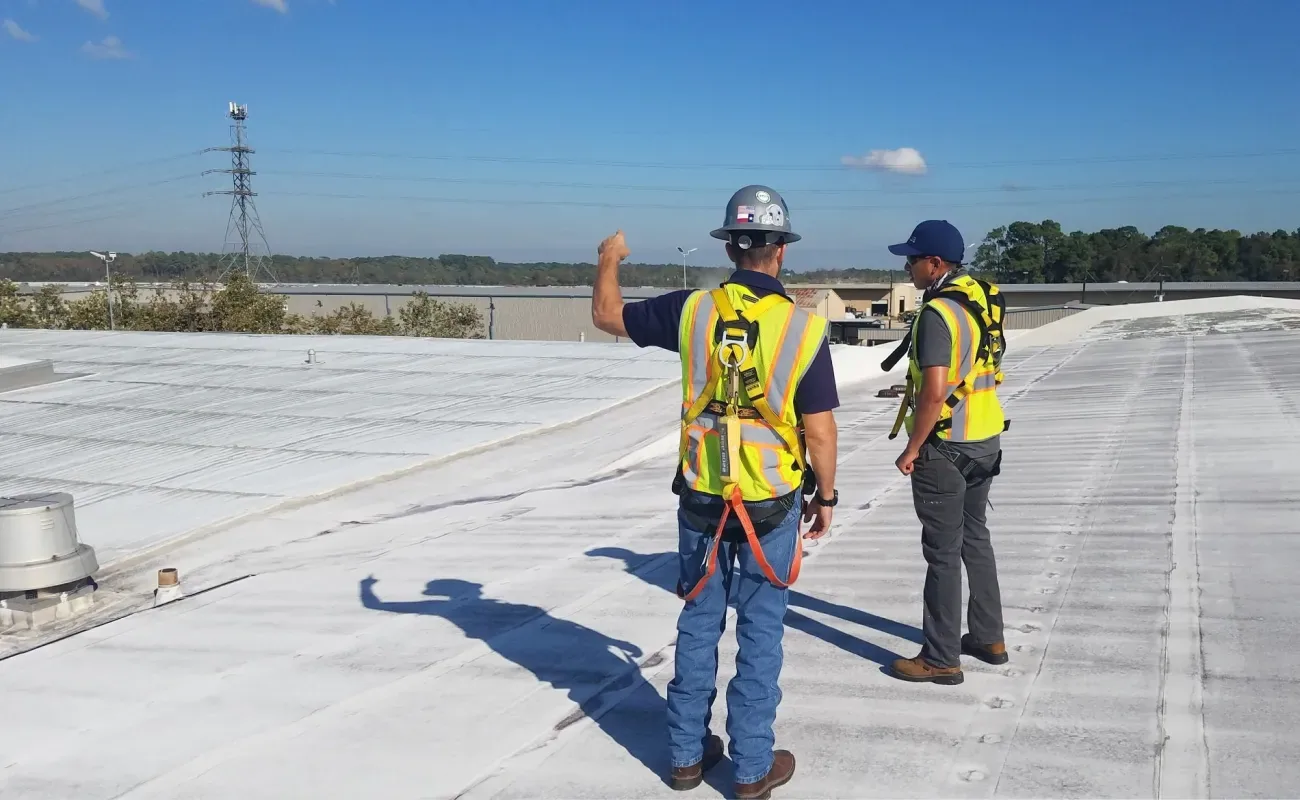
Survey Every Site in the Same Format
A program starts with a uniform survey. Every site gets numbered roof sections, fixed-position photographs, the same condition scale, the same list of fields for assembly, attachment, drains, and penetrations, and the same moisture-testing rules. Uniform format is what lets an asset manager compare a downtown office to a corridor retail unit and a river-valley industrial building, and it lets a finance reader sort the whole portfolio by urgency or cost.
The survey also flags which sites share a design, a contractor, or a warranty, since similar roofs tend to fail in similar ways. A repair detail that fails on one prototype building should be checked on the others before it fails there. The result is a portfolio matrix: site, section, condition, action, window, and cost range.
Sequence Work by Geography and Operating Season
Midway between Hartford and Danbury on I-84, Waterbury also has Route 8 running through the Naugatuck Valley. A program covering Waterbury, Naugatuck, Bristol, Wolcott, and towns farther along those routes can group work by corridor, so crews and equipment move from one site to the next without long hauls. Bristol, for instance, connects Routes 72, 6, and 69 with I-84, which makes it a convenient link back to the I-84 route.
Seasonal limits shape the order. The municipal annex describes warm, wet summers and freezing winters, and the hazard plan places the whole city in the track of winter storms. Large replacements are best placed in the warmer months, repairs and dry-in work fill the colder ones, and the plan reserves a cushion for storm response. A school roof is scheduled for the break, a retail roof avoids the holiday weeks, and a healthcare roof follows the facility's own rules.
Standardize Details Where Roofs Are Alike
When many roofs share a membrane type, a curb design, or an edge condition, one approved detail can serve all of them. A standard detail for a rooftop-unit curb, a pipe boot, a drain retrofit, or a parapet termination reduces submittal time, speeds review by the owner's engineer, and makes workmanship easier to check. The program keeps those details in a shared file with photographs of the finished work, so a facilities manager can compare a new install to the approved example.
Standardization has limits. Where a site has a different substrate, a different assembly, or an older layer that does not match, the program does not force the standard detail. The record flags those exceptions and states why, so the owner does not mistake uniformity for suitability.
Track Cost by Site, Section, and Year
The program carries a budget table that rolls up from the section level. Each action has a cost range, a year, and a status. As work is completed, actual cost replaces the estimate, and the difference is logged with a reason, such as wet insulation found at tear-off. Across a portfolio, those differences show where allowances run low and where they are generous, and the next year's estimates improve.
Owners with a multi-year capital window can set annual caps, and the program sequences work to meet them, deferring only items that can wait without widening scope. The capital plan and the asset record are the base documents, and the program adds the scheduling and the reporting.
Fit the Program to the Owner's Portfolio
Different owners have different needs. A chain with stores along several corridors needs quick leak response and holiday-aware scheduling, the way retail and restaurant chains work. A school district needs summer windows and consistent records for board reports, and school districts follow the same logic. A health system needs infection control and phased work near patient areas. A property manager with several clients needs a record per owner and per building. We set up the program to match, keeping the common format underneath.
Programs also help during acquisitions. A newly acquired building enters the program after a due diligence survey in the same format, and joins the schedule without a separate start-up.
Plan Storm Response Across the Portfolio
Summer storms and tornadoes appear in the city's hazard plan next to its winter storm exposure, and the plan expects heavier extreme rain ahead. For a portfolio, that means that a single event can hit several buildings at once, and the response order matters. The program keeps a triage list: which sites have the most sensitive interiors, which have open sections awaiting work, which hold stored product or critical operations, and which carry temporary repairs awaiting follow-up. After an event, the list tells the crew where to go first.
Each response visit produces the same record: dry-in, photographs, section entry, and notice under any warranty. The owner receives a single status sheet for the event, with each site's status. Insurers receive the dated before-and-after photographs for every affected site in a consistent format, which speeds review and lowers the volume of follow-up questions.
Between events, the program uses the downtime for drain and edge checks at the sites most exposed, scheduled before the cold season and after the first major storm. Those visits are short and cheap, and they catch the clogged drain or loose coping that would otherwise show up as a leak call.
Report in a Way Each Reader Can Use
Facilities staff want the next action by site. Finance wants the table by year. Executives want a one-page status. Insurers want dated photographs after an event. The program produces each from the same data: a quarterly status, an annual condition summary, a budget variance table, and a storm-response log. Because every entry traces back to a numbered section and a photograph, questions can be answered without a new site visit.
Commercial Roofing Questions
How many buildings justify a roof program?
Two or three roofs in different towns are enough to benefit from one format and one schedule. The benefit grows with the count, because sequencing, standard details, and shared records save more as sites multiply.
What does the first survey cost relative to individual quotes?
Price depends on the number of sites, roof sizes, and tests, and the survey replaces repeated site visits for separate quotes. The survey exposes which sites carry the largest cost, so the owner can direct money to those first.
Can a program include sites in several towns?
Yes. We group by corridor, so a Waterbury, Naugatuck, and Bristol sequence follows the I-84 and Route 8 routes, while farther sites are scheduled in blocks.
What happens when an emergency leak occurs at a site?
The program includes a response path: dry-in first, photographs, section entry, and notice under any warranty. The permanent repair is then slotted into the schedule.
How are exceptions to standard details handled?
They are flagged in the record with the reason, so the owner sees where the roof differs and why the standard detail was not used.
Does the program lock the owner into one contractor?
The records belong to the owner and are written so another contractor could read them. The program is useful because the format is consistent, not because the data is held back.
Send the site list and the budget calendar
Send the addresses, any roof records, the access rules per site, and the capital or fiscal calendar you are working to. We will propose a survey in one format across the sites, rank the roof sections, and return a program schedule with the evidence behind each line.