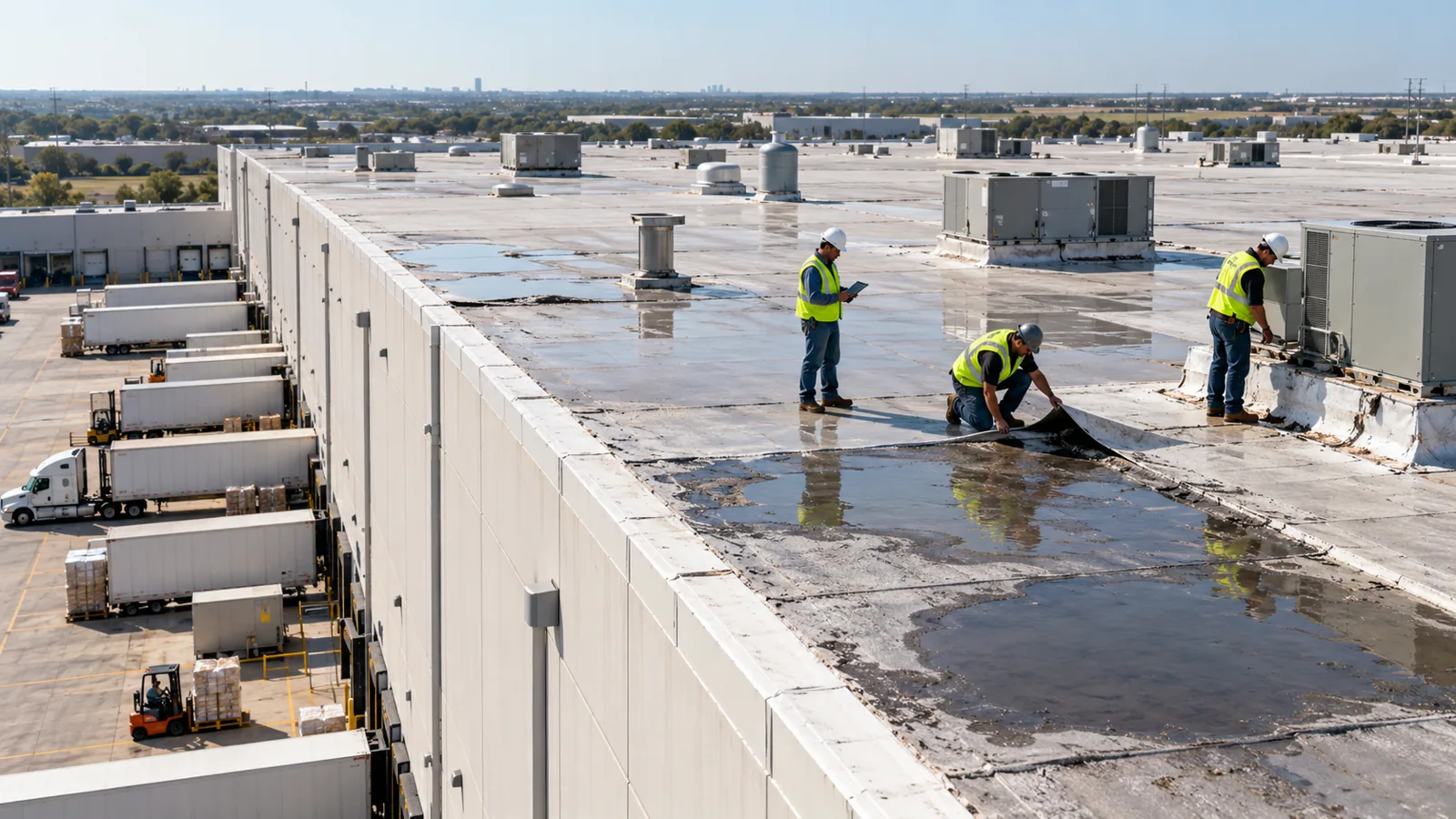
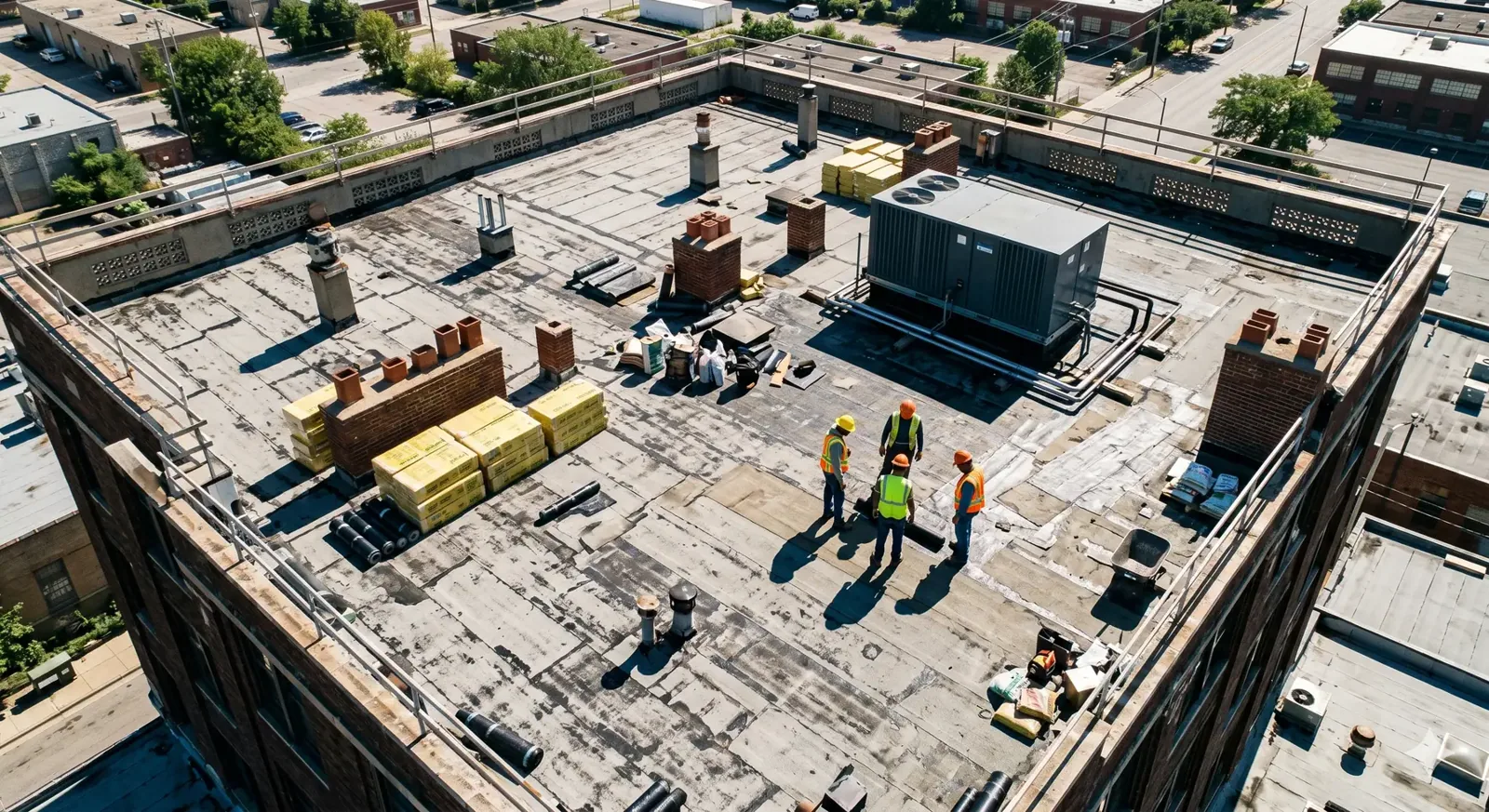
A compact downtown, a river valley of older industrial buildings and a ring of mixed-use corridors give Waterbury, CT three different roof budgets, and the first inspection finding usually decides which one applies. A wet core found at a test cut can move a repair into a recover option, and a recover option that fails its moisture check can move into a replacement line with a permit date attached. We open every Waterbury engagement by separating those scopes on paper, so the asset manager can compare cost, dry-in date and disruption before anything is ordered.
The city's hazard plan treats every part of Waterbury as exposed to winter storms, and it also lists summer storms and tornadoes as local hazards, so the drain path and the temporary dry-in plan are priced as part of the roof, not added afterward.
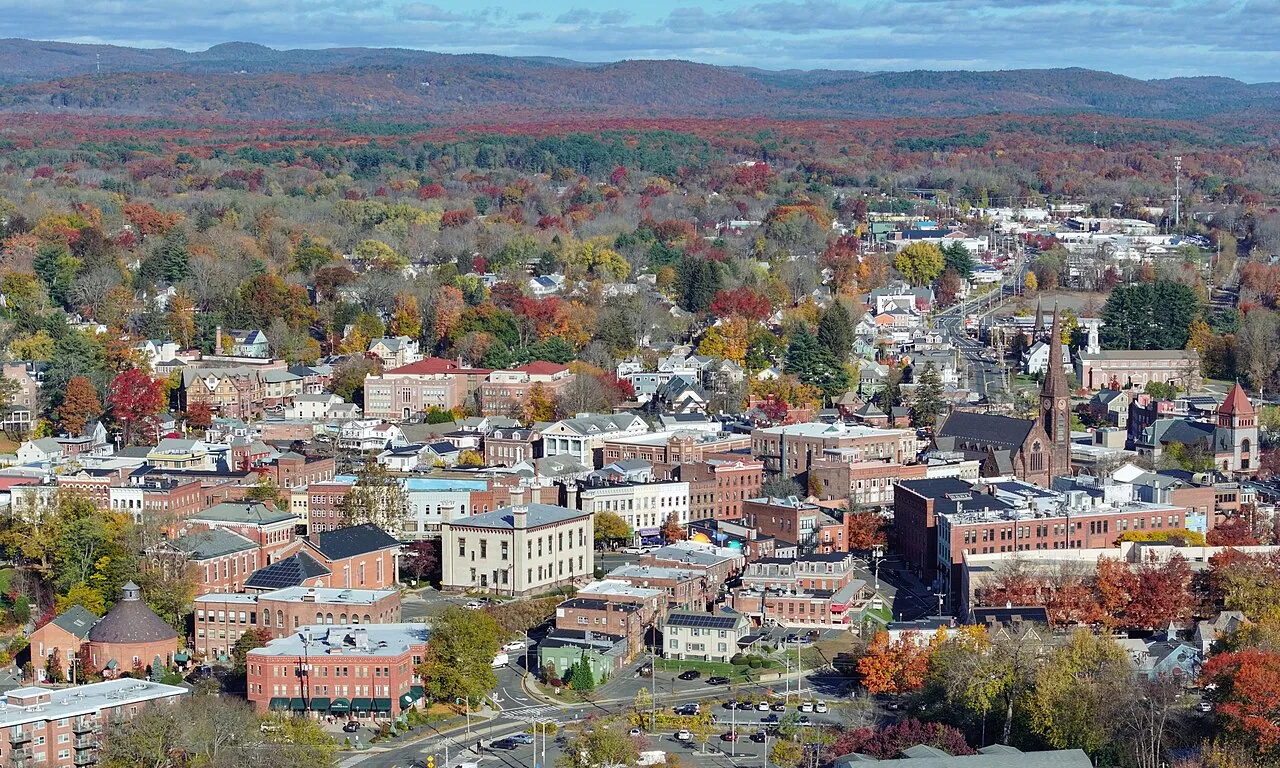
Plan Access for the Downtown Core
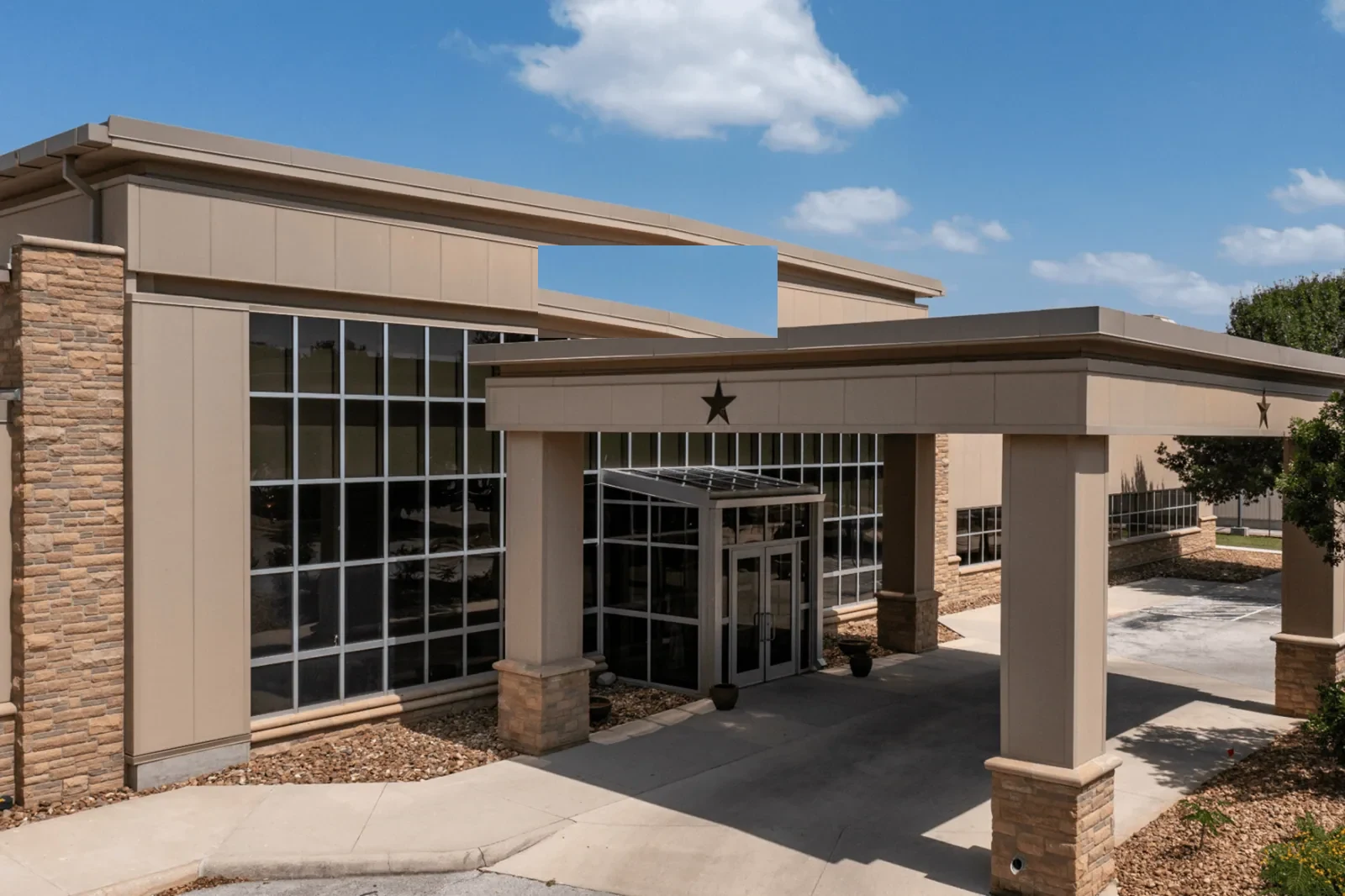
The city's planning documents describe a compact central business district near the junction of I-84 and Route 8, and they name City government, St. Mary's Hospital, UConn Waterbury, Post University, MacDermid Alpha and Webster Bank among the major downtown employers. A compact core means tight staging, shared streets and building occupants who keep working while the roof is open. Before we price a tear-off boundary downtown, we ask where a lift can stand, which hours are quiet, and whether a crane pick will need a street closure. Those answers change the schedule allowance as much as any membrane choice does.
Occupied floors below the work also set the temporary protection. Any section that cannot be completed and made watertight within the shift is given a specified cover, and one named person checks the tie-in before the crew goes home.
Hospital and university buildings add another layer, since air intakes, entrances and patient or student routes have to stay protected. We agree with facility staff on the work zone, the debris path and the hours before the first test cut, and we write those agreements into the scope so a change in plan is a visible change in cost.
Size the Industrial Scopes by Roof Section
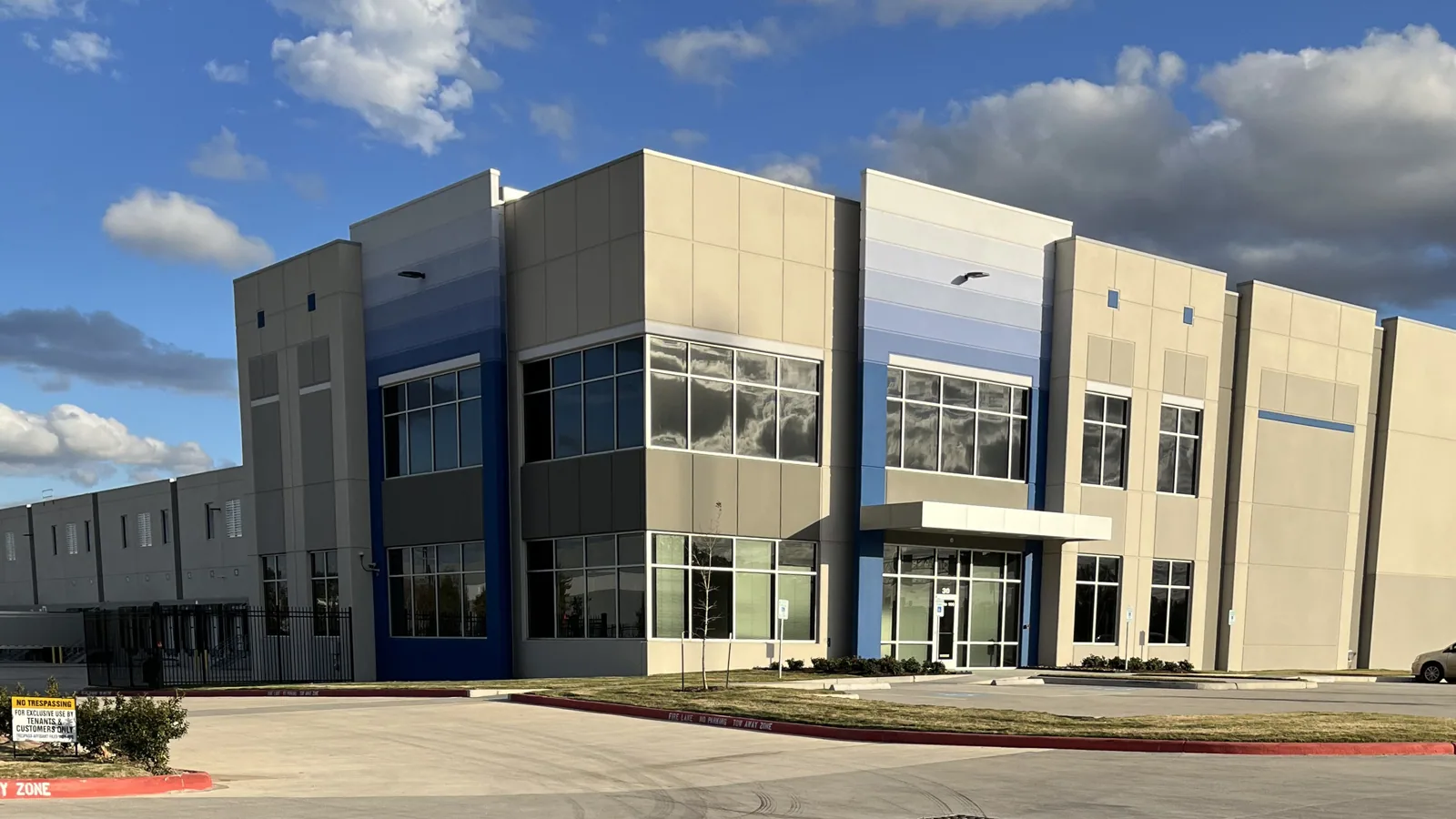
The city's industrial land tracks the Naugatuck River from end to end and is joined by a second district in the southeast; the city plan names Reidville, Brookside, Waterbury Industrial Commons and South End among its parks. We do not assume the age or roof type of any building in those parks. We map the roof into sections, probe the seams, cut test cores where the moisture survey points, and price each section on what it holds. A manufacturing plant roof often has process equipment that cannot stop, so the sequence follows the production floor first and the weather second.
A warehouse roof with active docks gets the same treatment: lift placement, trailer paths and dock hours are written into the scope before the first removal.
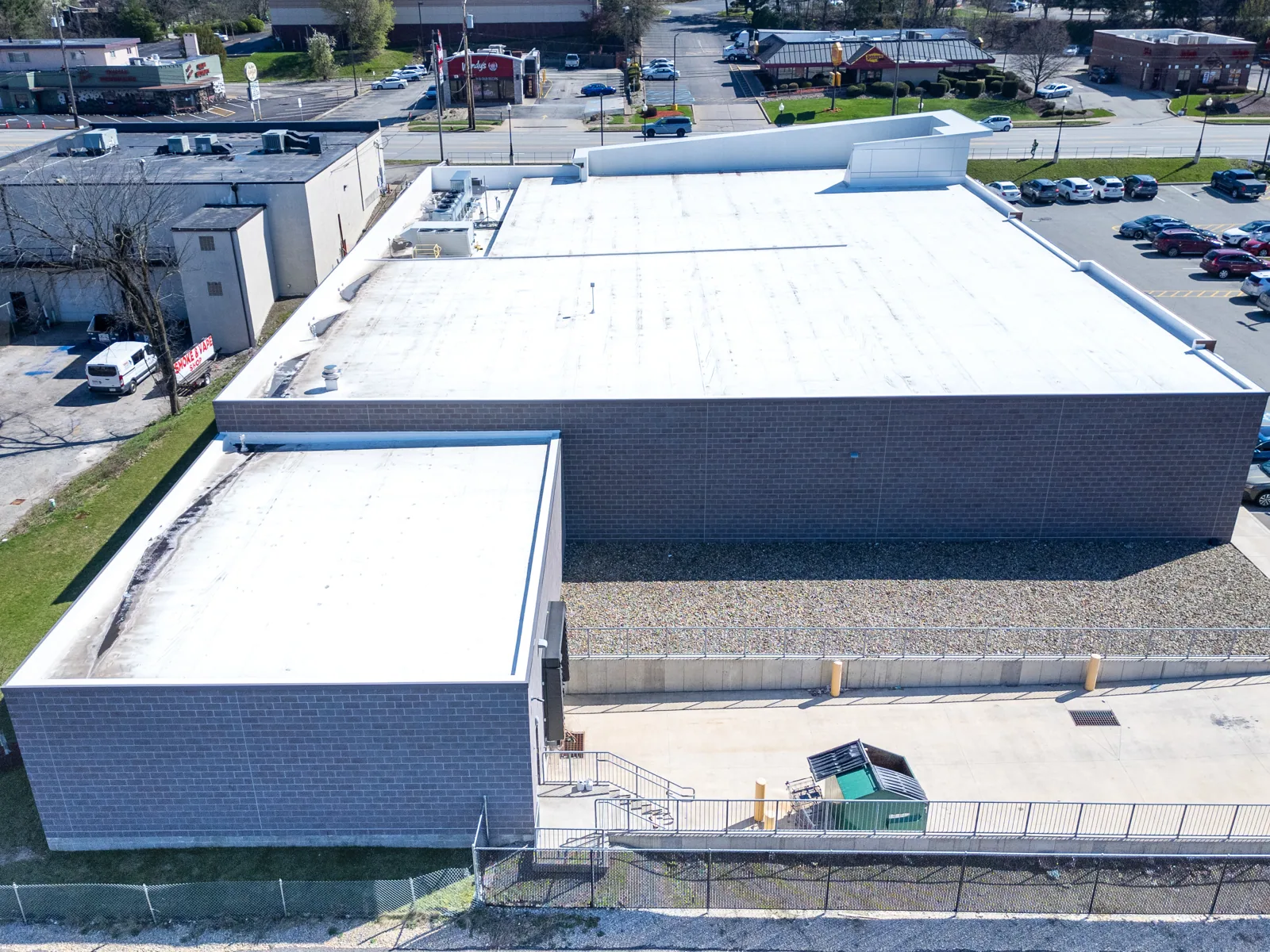
Where a plant sits near the river, we also look at how water leaves the roof. Scuppers that discharge onto a loading apron, drains tied to an aging interior line and low spots that hold water for days all change the replacement line. A ponding water repair may need tapered insulation, new drains or both, and each of those is priced separately so the owner can approve what the evidence supports.
Price Work Along the Mixed-Use Corridors
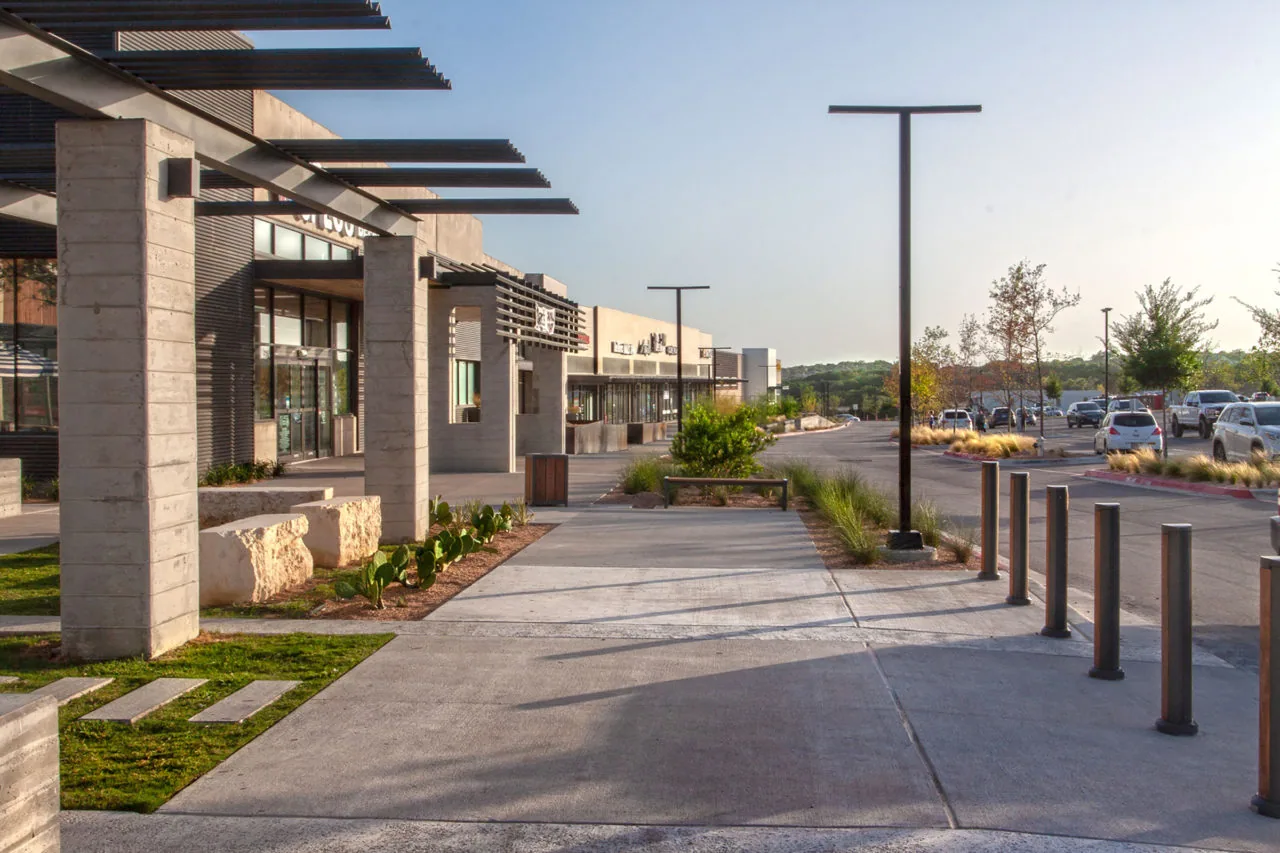
Willow Street, Highland Avenue and the East, North and South Main corridors appear in the city plan as neighborhood corridors mixing retail, services, restaurants, housing and civic uses, and it identifies Reidville Drive, East Main Street and Chase Avenue among arterial commercial corridors. Roofs on those frontages usually belong to owners who need the store open, the parking lot usable and the leak fixed before the next storm. A shopping center roof can be phased by tenant bay so one section is dried in before the next is opened. Restaurant exhaust and rooftop units add flashing details that deserve their own line in the estimate.
Parking lot and sidewalk protection matter more on a busy corridor than on an industrial lot. Material goes up by lift or hoist at set times, debris comes down by chute, and the tenant knows in advance which entrance is closed and for how long. Those details cost little to plan and avoid the disputes that follow an unannounced closure.
Budget for Winter Loads and Summer Storms
Under the hazard plan, no part of Waterbury escapes snow, ice, sleet, nor'easters or blizzards, and the 24-hour rainfall that has a 10 percent chance each year is put at 5.54 inches. That figure does not diagnose any single roof, but it is a reason to test drains, overflow scuppers and low spots before a recover is priced. The same plan projects heavier extreme precipitation and hotter summers for Connecticut, which affects how long a seam or a coating has to perform between inspections. We write a service horizon into the report so the capital window reflects the evidence, not a guess.
Set the Permit Date Before Material Is Ordered
Permit applications filed on or after October 1, 2022 follow the 2022 Connecticut State Building Code, an adaptation of the 2021 International Codes. For a recover or tear-off, layer count, insulation and wind and fire details are checked before pricing, because a requirement found late shifts the scope allowance. The permit date fixes the earliest start, and the dry-in date is counted backward from there. Where a city plan document is still in draft, such as the 2025 draft that describes Freight Street as a former manufacturing area planned for mixed-use extension of downtown, we treat it as planning context and not as a schedule for any owner's roof.
Close Out With Photos That Support the Next Decision
The closeout file lists the sections repaired, the test results, the limits of each repair and the conditions left under observation, with photographs tied to a marked roof plan. For owners with several buildings, that record supports a roof capital plan that ranks sections by evidence. For a single building, it shows the next facility manager where water entered, what was fixed and which inspection trigger comes next.
Owners with buildings in neighboring towns such as Naugatuck or Watertown can use the same record format across sites, which makes it easier to compare roofs and set the order of capital spending. A building in Waterbury and one a few towns away then sit on the same evidence scale.
Commercial Roofing Questions
How should an asset manager compare a repair, a recover and a replacement on one Waterbury roof?
Ask for the three scopes priced from the same evidence: a moisture survey, test cuts and seam probing. Each scope should state its tear-off boundary, the allowance for wet insulation, the permit date and the dry-in sequence, so the capital window can be set from numbers that share a basis.
What does a downtown reroof need that an industrial park roof does not?
Downtown work needs a plan for staging, street access and occupied floors, and the schedule often depends on quiet hours. An industrial park roof usually has more room for lifts and material, and its constraints come from production, docks and equipment instead.
Can a Waterbury roof be repaired in winter?
Temporary dry-in work goes ahead whenever the weather permits, and emergency leaks are handled at any hour. A lasting seam, flashing or coating needs a dry, workable surface, so the stopgap is logged and the permanent repair waits for a fit window.
What should be on the table before an inspection?
Plans, repair invoices, leak locations with dates, access rules and the budget window all help. A rough sketch of where the leaks appeared is enough to aim the first test cuts and sharpen the first estimate.
How is a mixed-use corridor building handled when tenants stay open?
The roof is divided into sections that can each be finished and dried in during a shift. Entrances and parking stay covered, loud tasks are timed with the tenants, and every section is photographed as finished before the next one opens, so the tenant sees steady progress and never an open roof.
Compare Your Waterbury Roof Scopes
Send the access rules, the roof records and the capital or permit window. We will inspect, separate the repair, recover and replacement scopes, and give you a written report with photographs, test results and allowances.