A Prospect, CT building owner who asks for a roof number should get a range with its test attached: a repair allowance if the core is dry, a recover price if the roof can carry another layer, and a replacement line if the insulation has taken on water. We build those three numbers from the same moisture survey and the same test cuts, so they can be compared without guessing which assumptions differ. The comparison also carries a dry-in date and a permit date for each path, which is often what decides the choice.
Commercial activity in Prospect concentrates along Route 69 north of the town center, close to the municipal facilities at Routes 68 and 69, and the town's largest industrial land-use concentration lies about a mile west of the center on Route 69.
Walk the Route 69 Frontage Before Setting a Budget
A commercial strip that follows one state route can hold buildings of different ages, sizes and uses, so a finding on one lot says little about its neighbor. Each building gets its own survey: sections outlined, drains followed, seams probed, wall and equipment flashing examined and a note of where a lift can stand. Delivery access along a state route needs planning too, since trucks entering a shared drive have to avoid customers, and the schedule often depends on which hours the lot is quietest.
In the estimate, staging, protection and traffic control sit apart from roofing material, so the owner can read the roof's price without the site's complications mixed in.
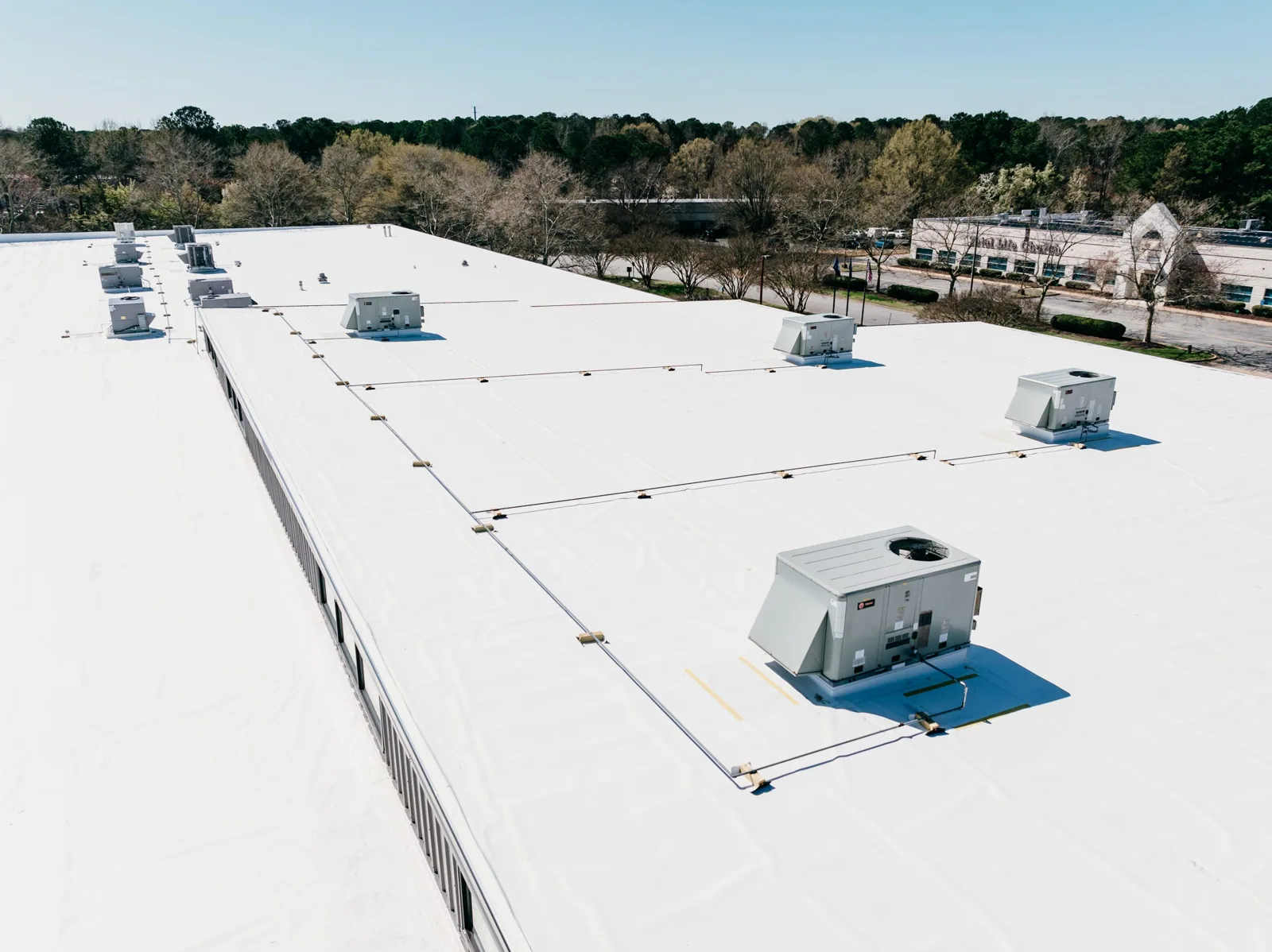
Rooftop units on a strip building often serve several tenants, which means a curb replacement needs warning and an agreed shutdown window. The work plan names each unit to be lifted, who will set it back and how long it stays off, so the mechanical trade and the roof crew do not collide.
Plan Around Municipal Neighbors and Shared Hours
Commercial properties near the municipal facilities at Routes 68 and 69 may share roads and driveways with public traffic. A reroof there has to account for events, meetings and daily use that the owner does not control. We ask about the calendar early, schedule noisy tasks outside peak periods and keep walkways and entrances open and protected. A government building roof has its own approval chain and procurement timeline, and we adapt the schedule and the paperwork to it.
Parking and drive aisles take wear from lifts and delivery trucks. We protect pavement near the work zone with mats or plywood, mark the pickup point for debris and agree on where material can be stored overnight. Those steps cost little and prevent damage claims later.
Treat the Industrial Land West of Center as a Separate Scope
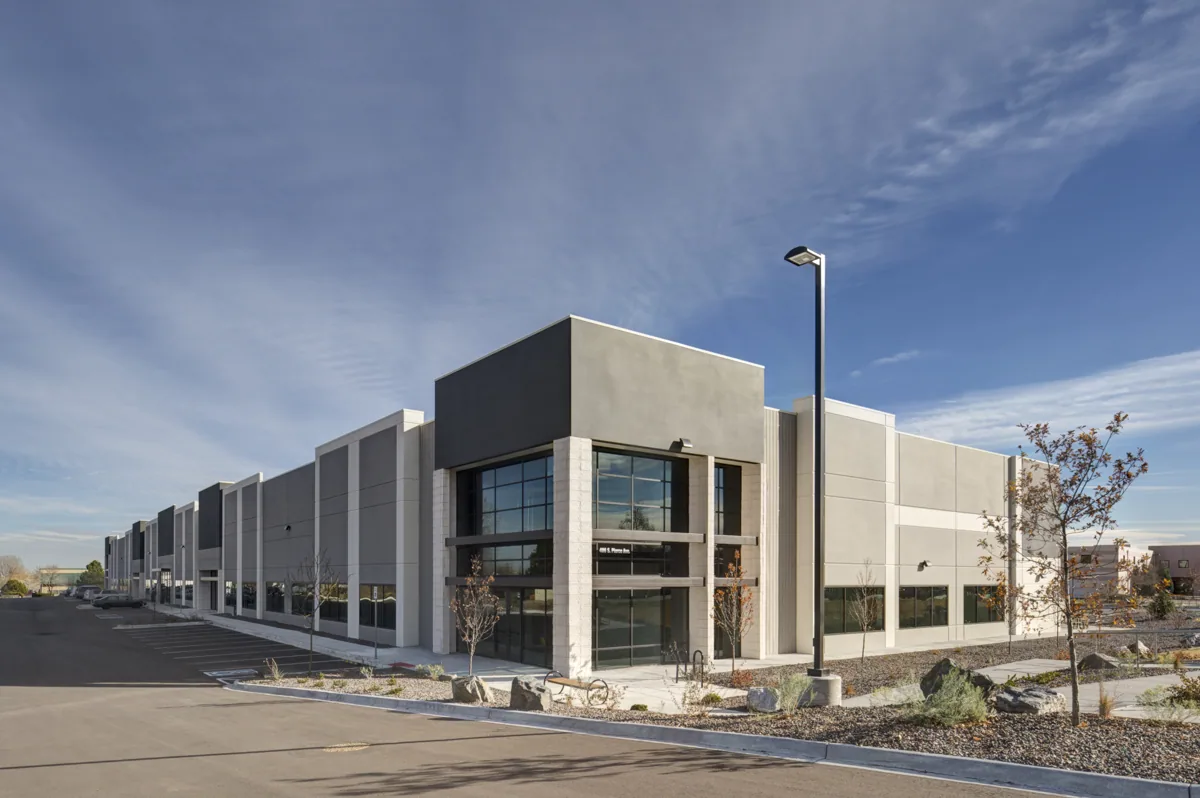
Wide drainage areas, heavy rooftop equipment and a floor that keeps producing define the industrial job. Under one roof line, a flex industrial building can hold offices, a shop and storage, and a leak costs a different amount in each. Overlaying the roof on the floor plan shows where water would do the most damage, and that is where protection goes first. Curbs, vents and fans are examined individually, since curb flashing is where large roofs most often start to leak.
If the roof has more than one system, the boundaries are drawn on the plan so each section gets the repair method that suits it.
Large industrial roofs also deserve a conversation about roof traffic. Maintenance staff who service equipment walk the same paths every week, and a worn path across a membrane tells us where walk pads belong. Adding them during a repair costs far less than replacing a punctured section a year later.
Check the Edges Where Commercial Land Meets Open Land
The planning document describes Prospect's commercial areas as bordered by low-density residential districts and agricultural operations. Buildings at the edge of developed land can see more wind across the roof, and a loose edge metal run or a lifted termination bar can open a field to uplift. We check copings, edge metal and perimeter fasteners at the start of every walk and record their condition, since a secure perimeter protects the rest of the roof. Long driveways and rural approaches also affect material delivery, so we confirm the route before ordering.
Price Drainage and Winter Loads Into the Scope
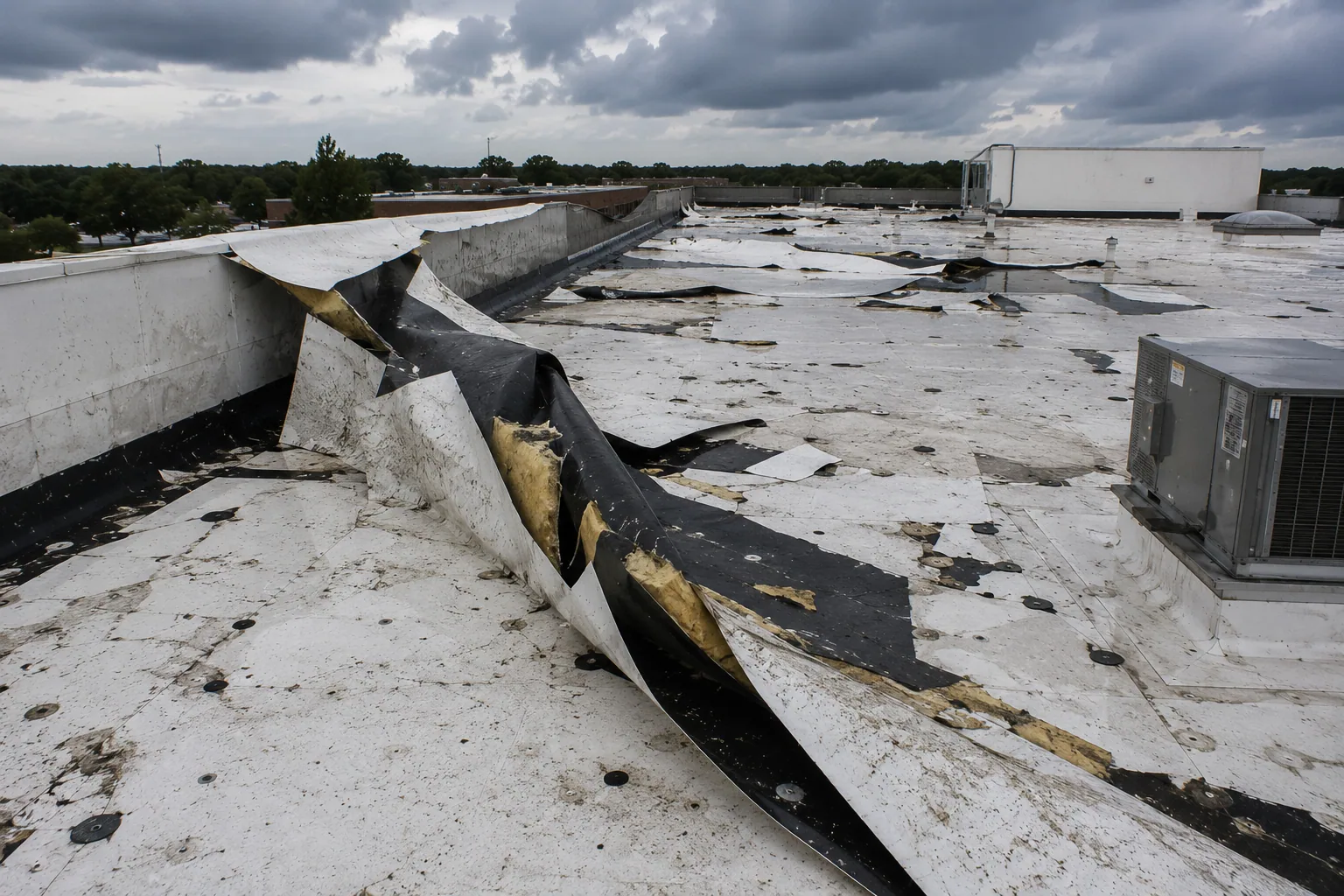
Winter storms of every kind, plus summer storms and tornadoes, are on the hazard list for Waterbury, whose plan also gives a 24-hour rainfall of 5.54 inches at a 10 percent annual chance; the routine that follows is simple: open and test the drains, trace overflow routes and find the low spots where ice collects. A cracked roof drain, or one sitting above the membrane, goes straight onto the repair list, and a snow and ice damaged roof is checked for split seams before the field.
Spring thaw exposes much of what winter did. A seam split under ice might not leak until the first warm rain, and an early-spring walk finds such openings when they are small. Dated photographs of each give any later claim or warranty discussion something solid to rest on.
Lock the Permit Date Before Ordering Material
The 2022 Connecticut State Building Code, built from the 2021 International Codes, governs permit applications dated October 1, 2022 and later. Before pricing a recover or replacement we check layer count, insulation, and wind and fire details against it; the permit date then fixes the earliest start. Ordering waits until the scope and permit path are firm, so nothing sits open on the roof waiting for a truck. The photographs, test results and repair limits we hand over, pinned to a marked plan, let an owner set this building beside ones in Waterbury or Wolcott.
The report also states a service horizon for each roof section, which is the period over which the evidence suggests the section can perform with normal maintenance. That horizon is a planning figure the owner can use to set a capital window and to decide whether a repair now makes sense or whether the money belongs in a larger project.
Commercial Roofing Questions
How do I get a repair, recover and replacement price that can actually be compared?
Ask for all three scopes to be built from one moisture survey and the same test cuts, each with its tear-off boundary, allowance for wet insulation, permit date and dry-in sequence. When the evidence is shared, the differences between the numbers come from the work and not from different assumptions.
What changes when a building sits near public facilities?
Shared roads and driveways, public events and fixed hours can limit when a lift can stand and when noisy tasks are allowed. We learn those limits early and schedule around them, with walkway protection and a daily closeout in place.
Can an industrial roof stay in service during a reroof?
Usually. We divide the roof into sections that can be finished and dried in within a shift, protect equipment and stock below the work zone and follow the building's operating priorities. Weather adjusts the sequence when it must.
Why do you check the roof edges first?
Wind lifts a roof from the edge, and a loose edge metal run or a failed termination bar can open the whole field to uplift. Securing the perimeter first protects every other repair and keeps a small defect from becoming a large one.
What should I gather before an inspection?
Whatever you have on the roof's history helps: plans, earlier repair invoices, a log of leaks with dates and places, warranty papers. Tell us the access rules and when you must decide, and the report will be written to your capital or permit calendar.
Request a Prospect Roof Assessment
Send the access rules, the roof records and the capital or permit window. We will inspect, separate repair, recover and replacement scopes and report with photographs, test results and allowances.