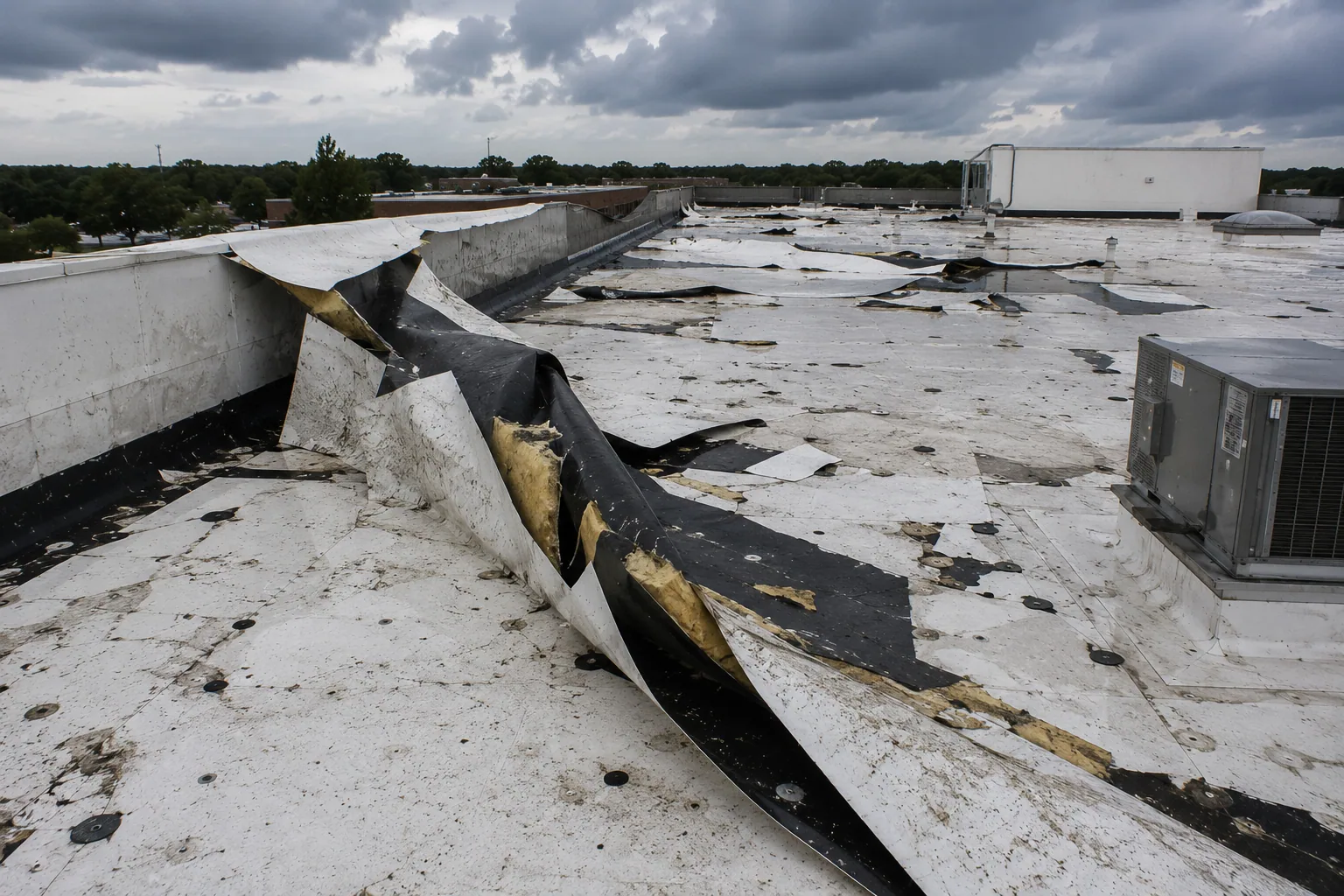
A leak call has two clocks: the time needed to protect the space below and the time needed to identify the roof detail that failed. We first establish where water is active, which equipment or inventory needs protection, and how roof access can be made safely. Then we trace the path through seams, penetrations, drains, curbs, and wall transitions. In Waterbury, CT, the municipal hazard plan names summer storms and winter weather among local risks. A ceiling mark after rain still does not tell us which part of the roof let water in. We record the evidence, make a safe temporary measure where needed, and scope a permanent repair with a boundary the building manager can review. An uncertain entry point starts with a roof inspection; active water that needs immediate control gets our emergency response.
Protect the Interior While the Entry Is Traced
Before anyone crosses the roof, we need to know where water is moving inside. The property contact can isolate affected equipment, clear a safe path, and place a container only where it will not create a slip or electrical hazard. We inspect accessible areas above the leak, check nearby drains and penetrations, and note the weather and operating conditions at the time. If water is still entering, a temporary cover or controlled dry-in may reduce further exposure until a lasting repair can be completed.
We keep that short-term step separate from the permanent repair. A tarp or temporary seal is meant to limit current entry, not to substitute for tracing the route or checking wet insulation. The visit record should state what was protected, what was opened or covered, and when the crew expects to return with materials or more access. If interior damage affects an operating space, we coordinate the roof work with the manager and keep the affected section as small as conditions permit. The Waterbury service area includes commercial districts and industrial uses, so access arrangements need to match the specific building.
Follow the Roof Details Back from the Leak
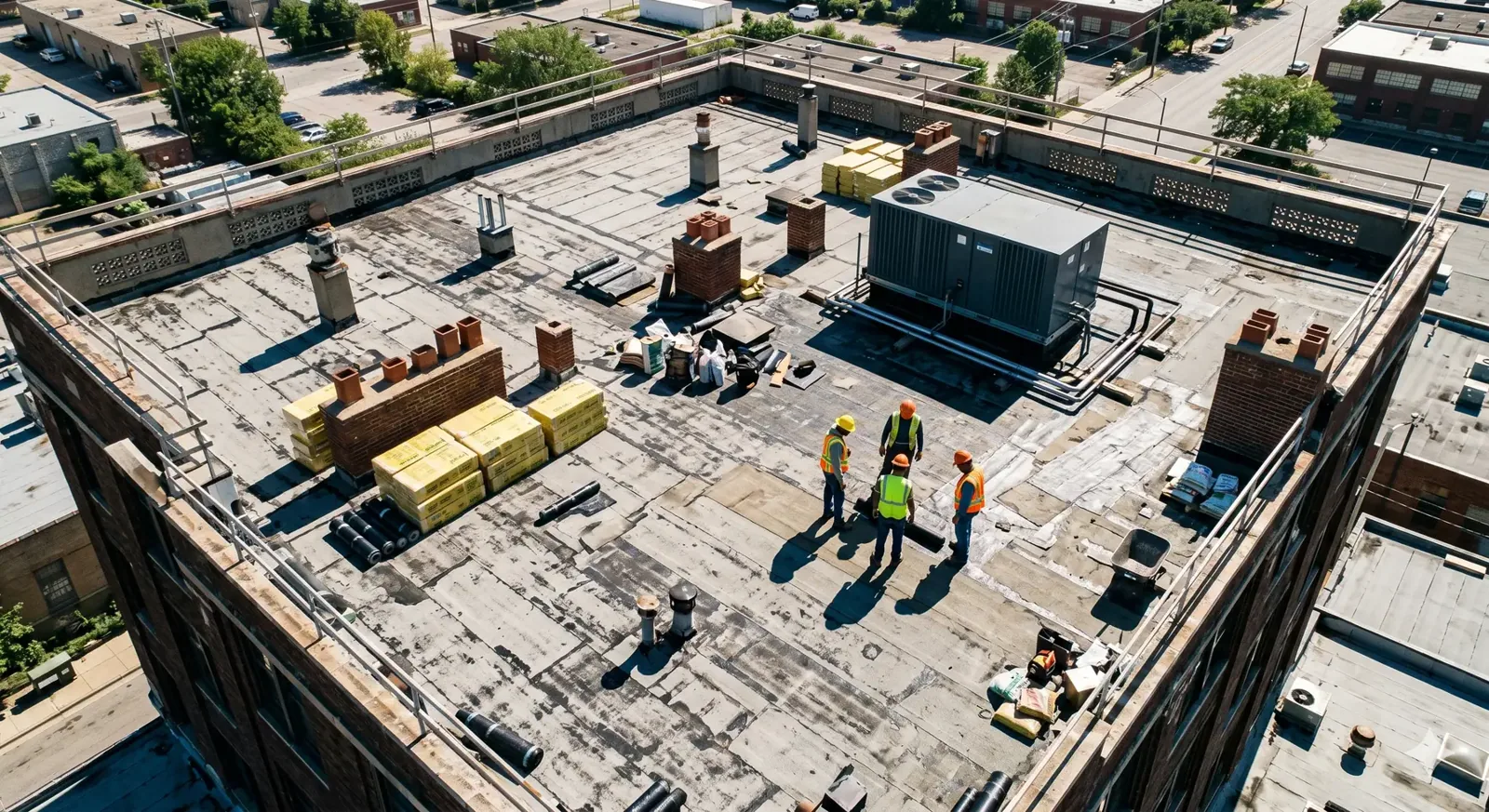
Water may travel sideways before it reaches a ceiling. It can follow a deck flute, insulation facer, seam, or framing member, then appear far from the opening. We inspect the area above and around the stain, looking for open laps, failed sealant, punctures, loose counterflashing, curb details, drain connections, and changes in roof slope. Where the path remains uncertain, we describe the next test or opening needed. That keeps a visual clue from being presented as a confirmed source.
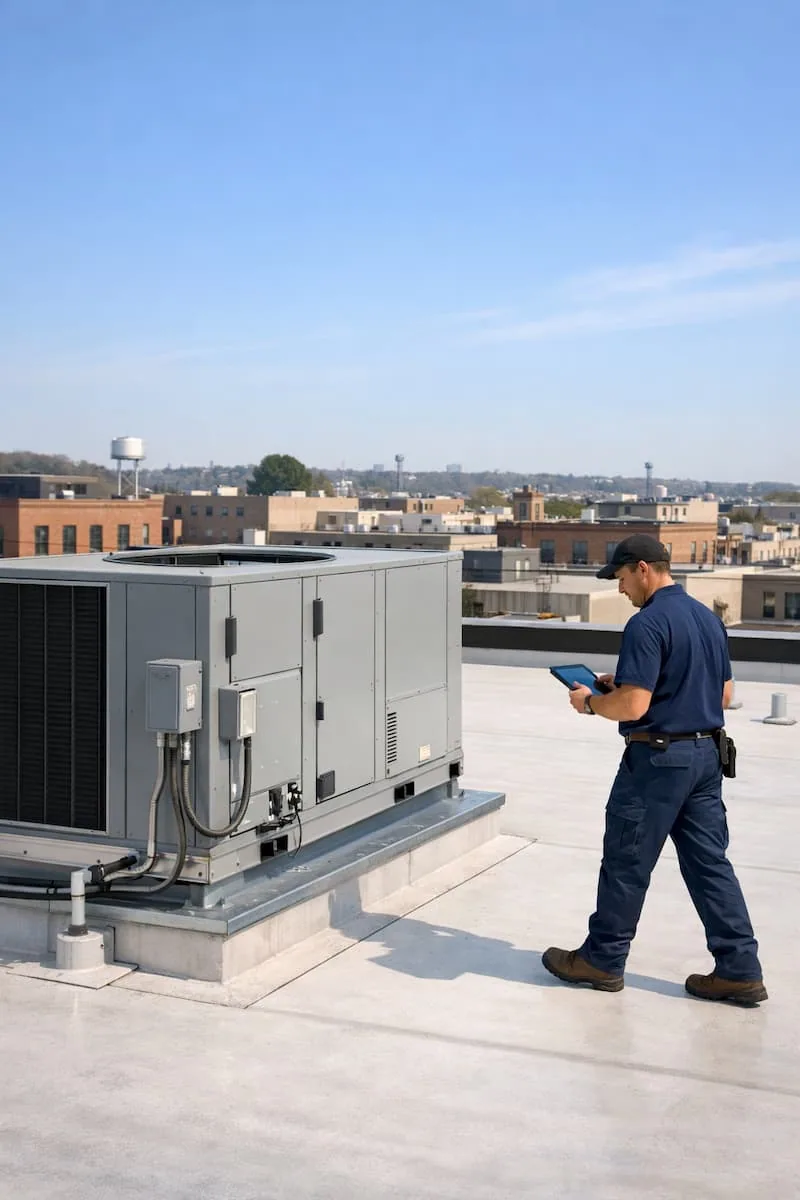
Waterbury's compact central business district is near the I-84 and Route 8 junction, and the city's industrial land follows the Naugatuck River north to south. These are different commercial settings, but neither tells us how a particular roof is assembled. We use the actual building, section, and detail to trace the leak. On roofs with busy equipment areas, a curb can have multiple flashing edges and conduit supports to check. Where water appears near rooftop units, we check the equipment-curb details first, and we look at drain work when the path begins near an outlet or scupper.
Choose a Permanent Fix That Reaches Sound Material
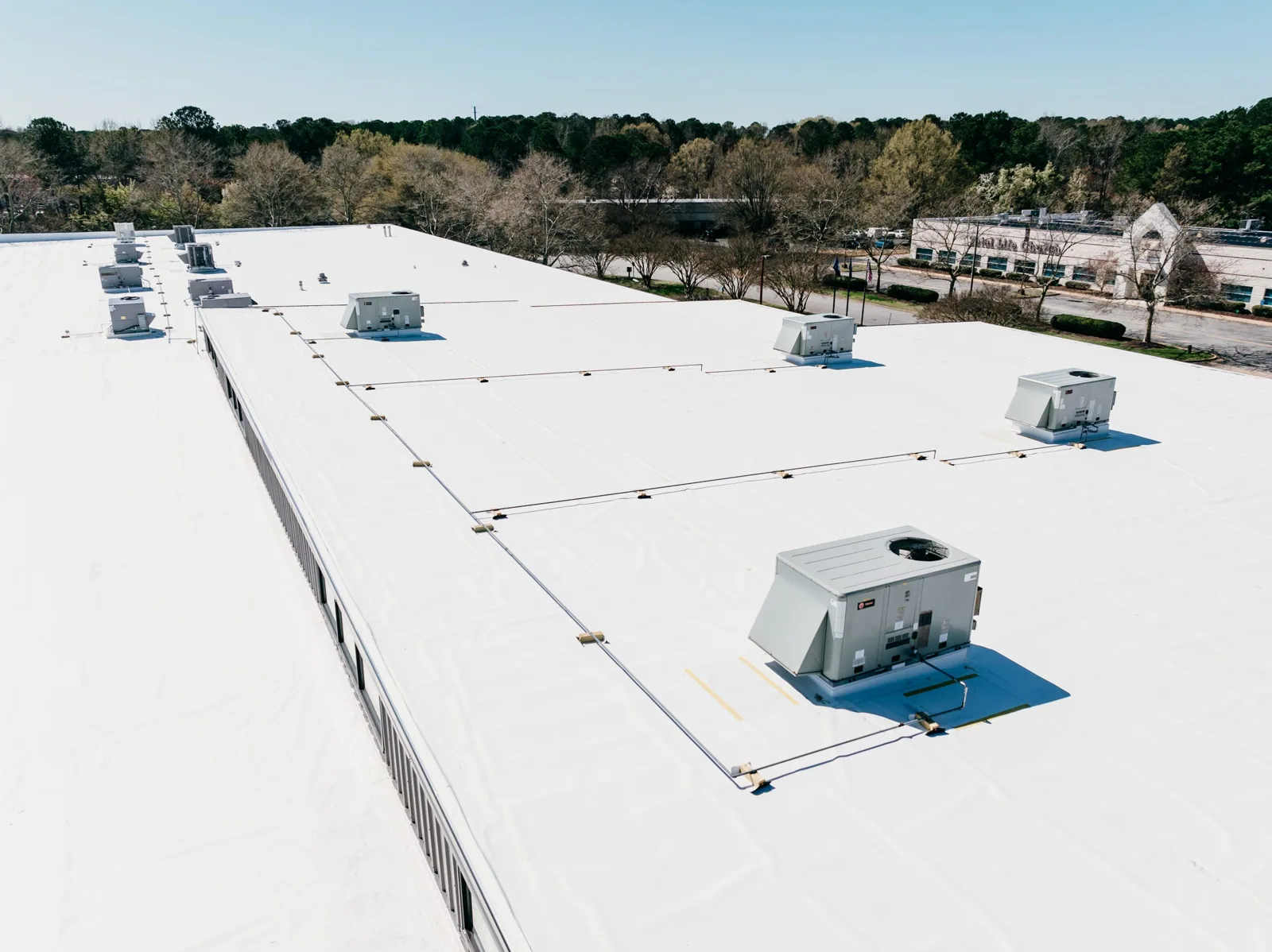
Once the entry detail is identified, we check whether the membrane around it is sound enough to receive a repair. Loose or contaminated material may need removal. A seam repair may call for cleaning and new welding or adhesive, while a flashing repair may require rebuilding the termination rather than spreading sealant over a failed edge. If water reached insulation, we measure the affected area and determine whether it can dry or must be removed. The repair scope should define material, preparation, termination, and any tested condition that remains concealed.
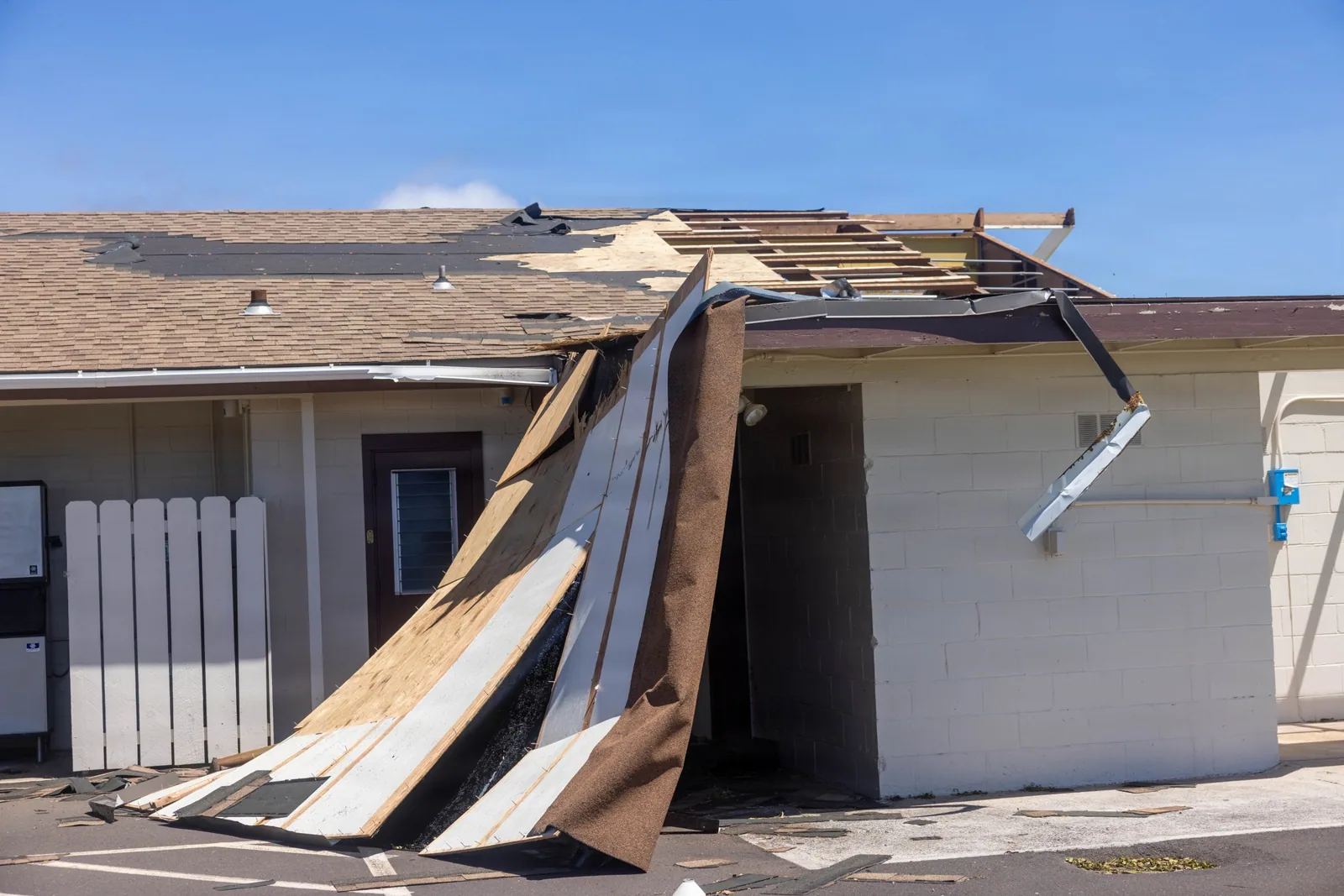
Waterbury's hazard plan reports tropical-storm wind and rain, summer storms, and winter storms, while describing historical tropical-cyclone damage in the city as most often associated with flooding. These hazards support checking drainage and edges during diagnosis; they do not establish that the current leak is storm damage. If inspection reveals lifted metal or opened seams, a wind-related repair assessment can document those conditions. If the membrane has repeated failures beyond the local detail, compare the repair with a replacement evaluation before spending on another patch.
Set the Repair Visit Around Access and Dry-In
Repair timing depends on roof access, surface conditions, preparation, and the hours available before the building must be secured. Rain, cold, or a wet substrate can delay permanent work even after temporary control. We explain the first task, the condition needed for the lasting repair, and whether an interior area should remain protected until closeout. For occupied office, retail, or production areas, we coordinate noise and movement with the manager.
East Main and South Main are among Waterbury's mixed-use corridors, where retail, services, restaurants, housing, and civic functions share the street fabric. We consider entrances and business hours but use each property's rules. An office may need different interior coordination than a warehouse or plant. We confirm staging and roof entry before dispatch. When moisture is not visible at the surface, photos and written findings help separate immediate leak work from broader capital needs.
Leave a Record of What Stopped the Leak
After work, we photograph the repair, nearby seams and flashing, and any interior area involved in the report. The note identifies the entry detail, area opened, materials installed, and unresolved conditions. If a test cut found wet insulation, the record says what we removed and what remains covered. If the source was not isolated, we state what evidence would justify another opening. The manager can file this with the work order and compare it with later inspection photos by roof section.
Repeat visits show whether a leak is tied to one detail or a broader section. We compare repair history and inspect nearby transitions before extending the scope. Interstate 84 and Route 8 meet near the central business district, where occupied space may sit below a complex roof. A scheduled maintenance visit can revisit repaired seams and drain paths.
Commercial Roofing Questions
Can you stop water before the permanent repair is ready?
We can assess whether a temporary cover or controlled dry-in can limit current entry, then plan the lasting repair when the surface and materials are ready. The visit record separates that immediate measure from permanent work. The manager should keep protecting sensitive contents until the repair is complete and the affected area has been checked.
Why does the ceiling leak appear away from the roof opening?
Water can move along the deck, insulation, framing, or a seam before it reaches the interior. We compare the stain with roof details above it and trace the likely route instead of repairing only the visible mark. If the path remains uncertain, the inspection identifies what access or test would confirm it.
When does a leak repair need insulation removal?
The condition of the insulation and deck determines whether material can dry or needs to be removed. We record what a test cut reveals, measure the affected area, and check whether surrounding layers remain sound. If moisture extends beyond the opening, the scope shows the added boundary before more roof is removed.
What changes the price of a commercial leak repair?
Access, roof height, required preparation, membrane type, amount of wet material, and interior protection all change the work. We list the repair detail and boundary, then separate any condition that cannot be confirmed until material is opened. That helps compare a lasting repair with a temporary seal or a larger section replacement.
Trace the Entry Before Expanding the Repair
Tell us where water is active, what space needs protection, and how roof access works. We will inspect the entry path, set any immediate dry-in measure, and document the permanent repair boundary and remaining questions.