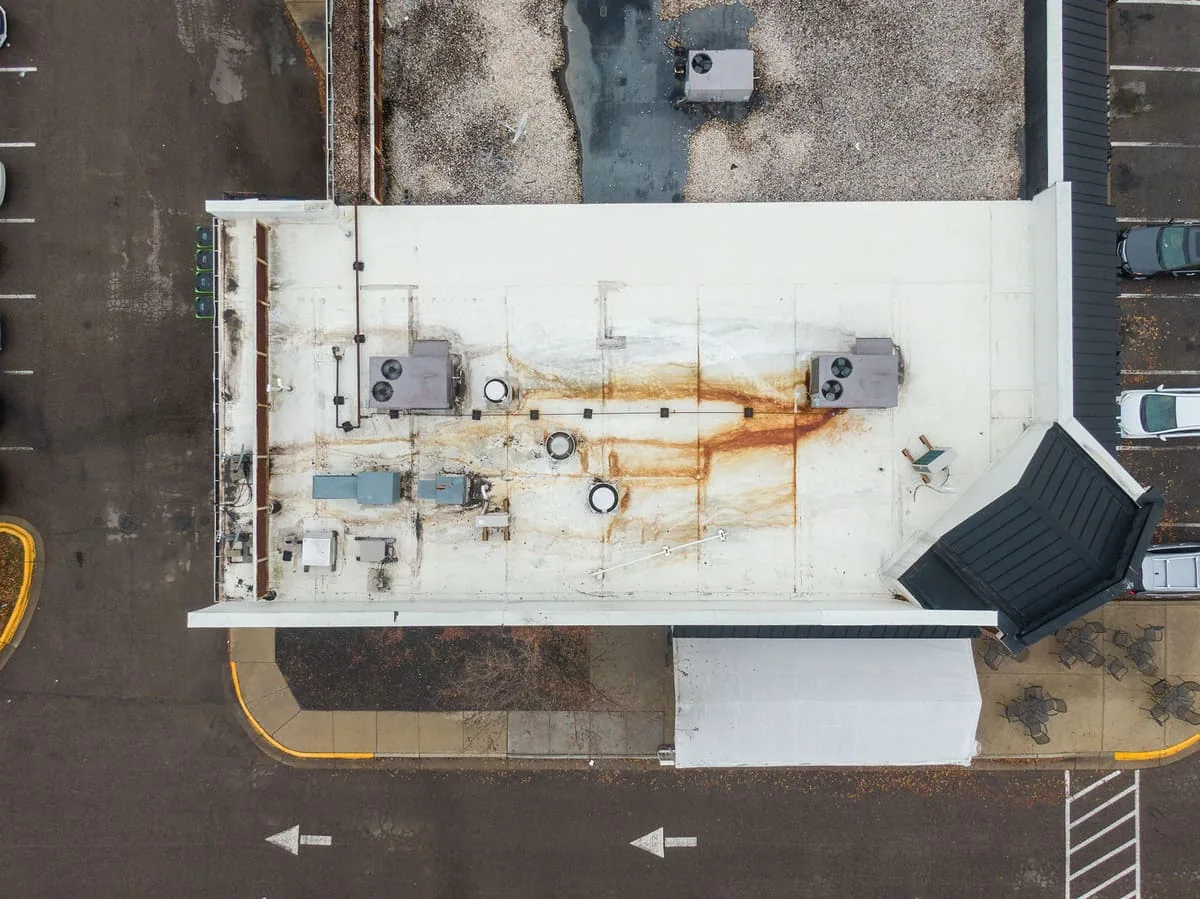
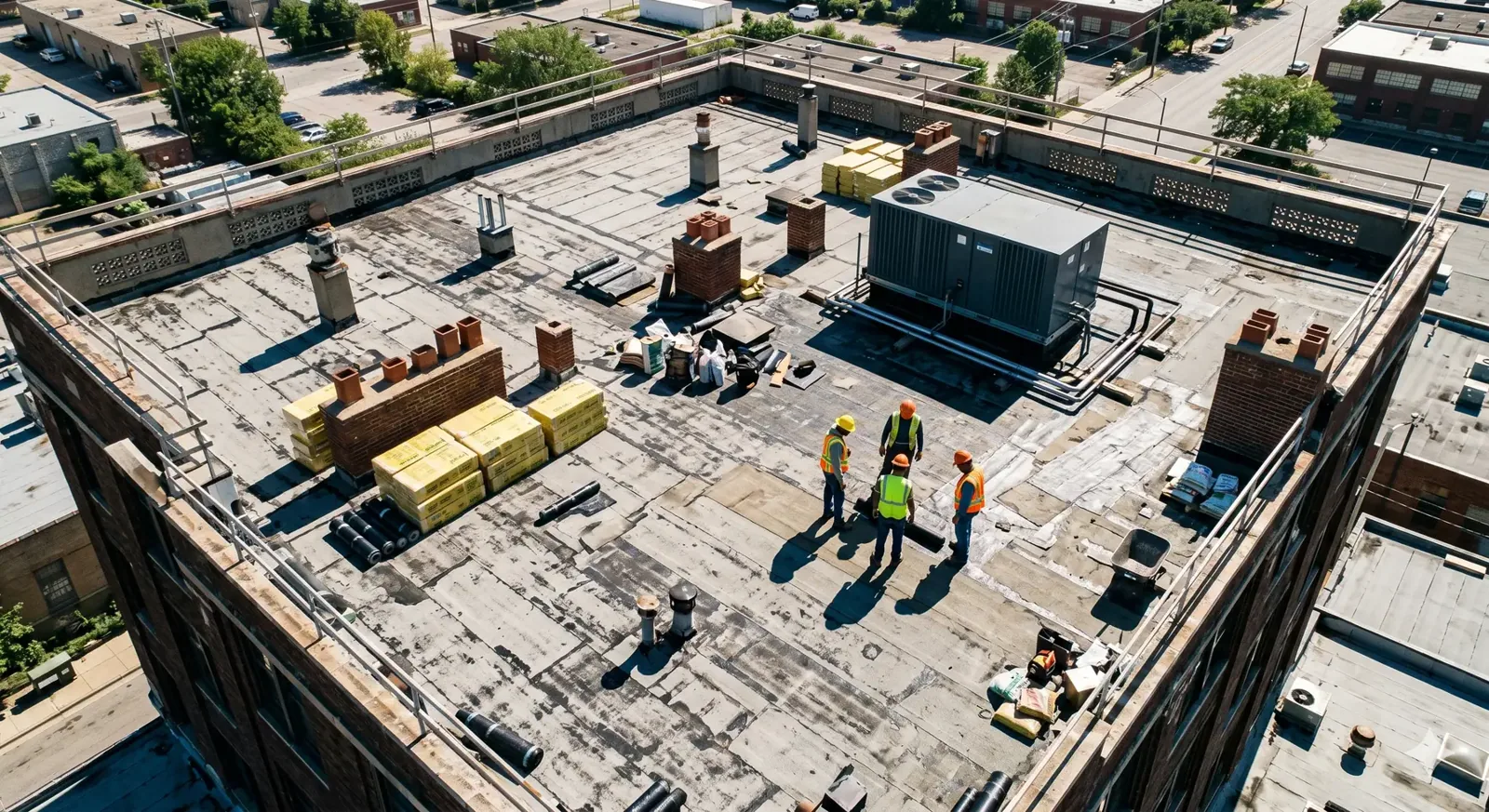
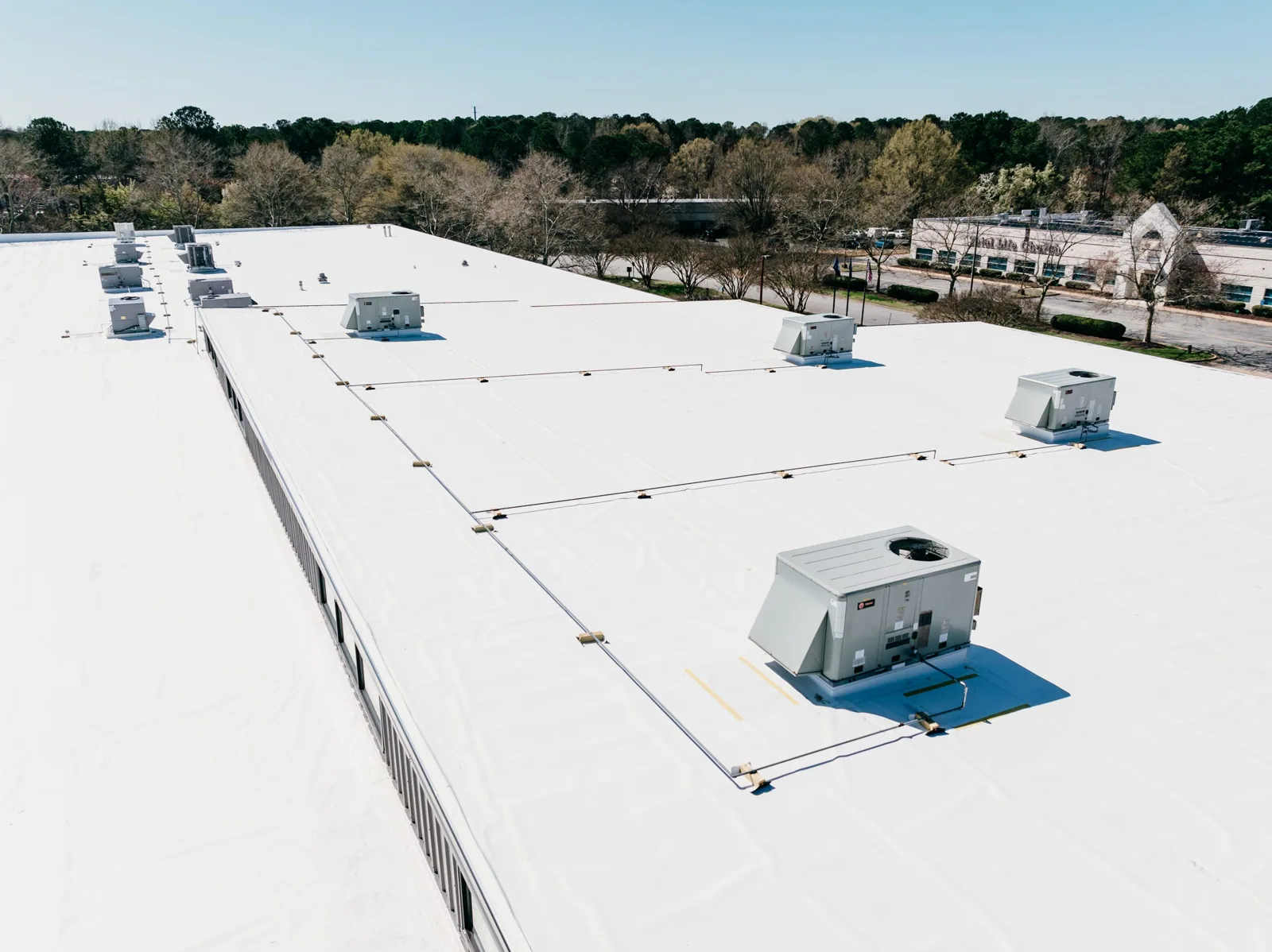
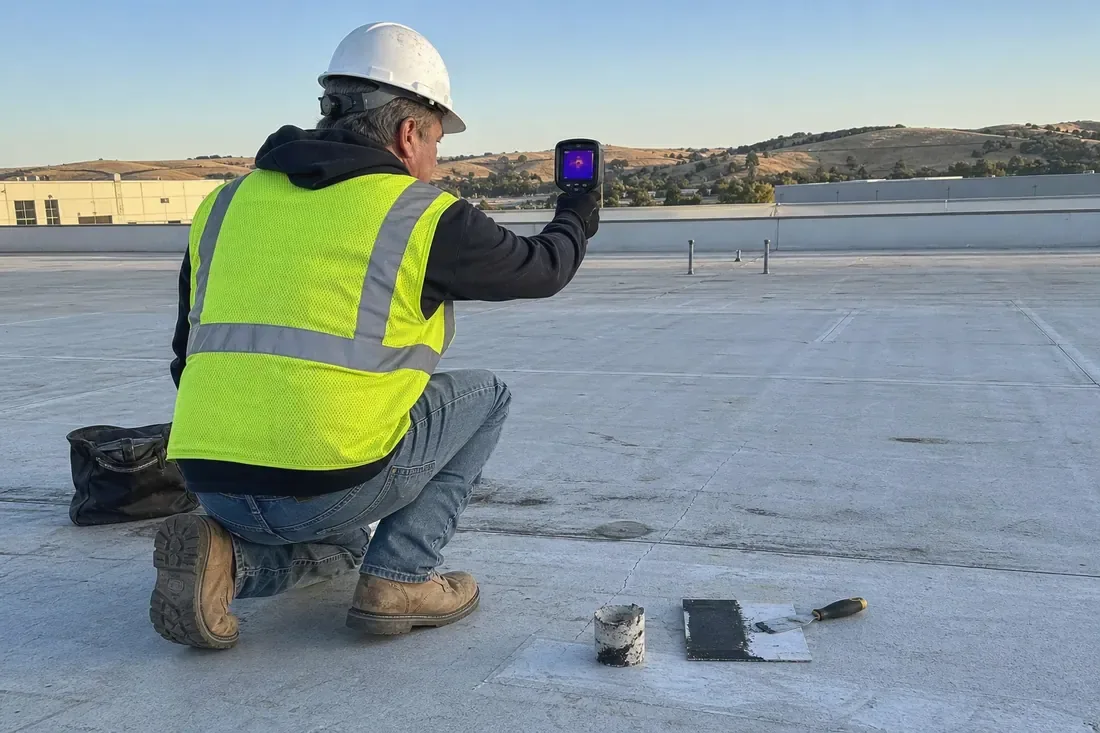
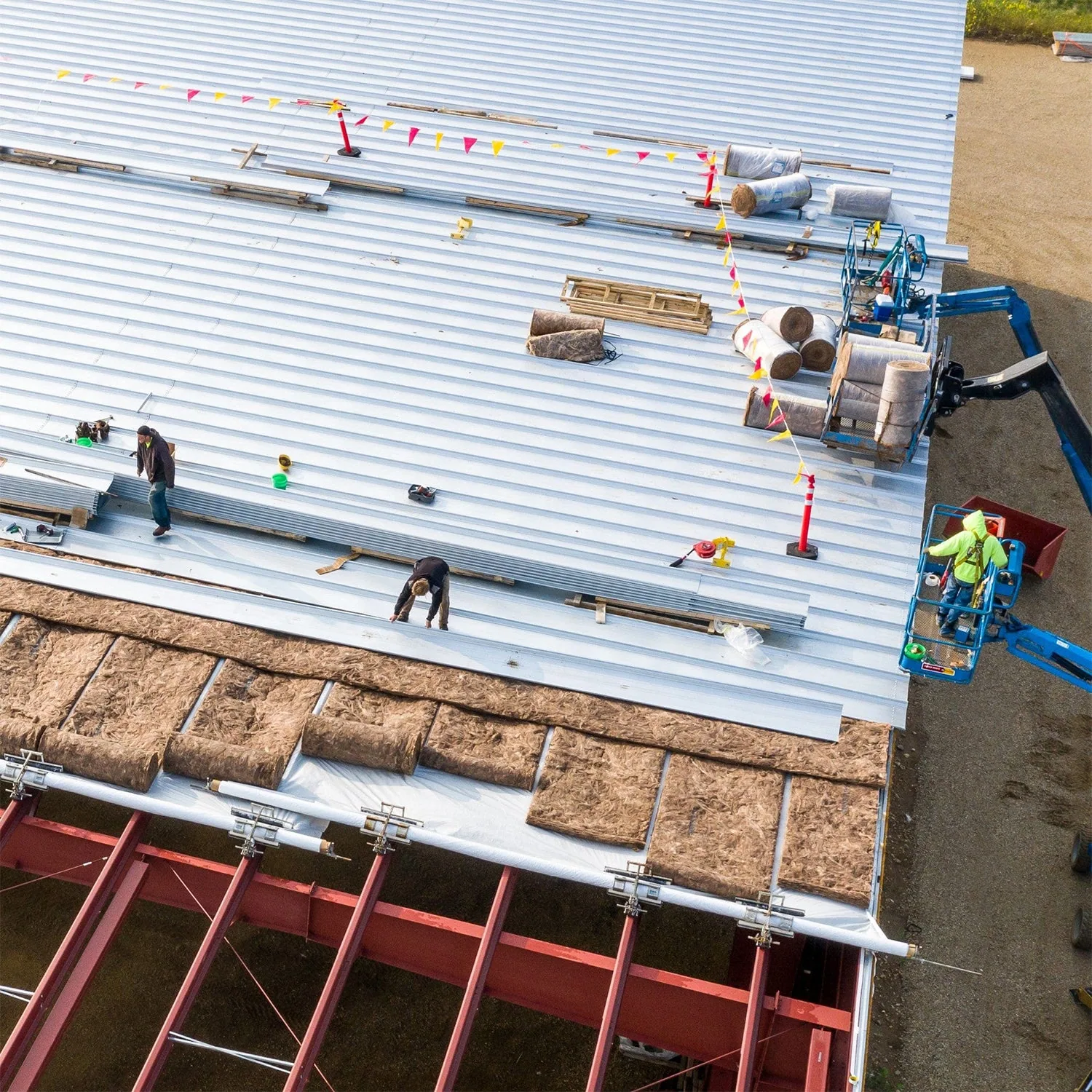
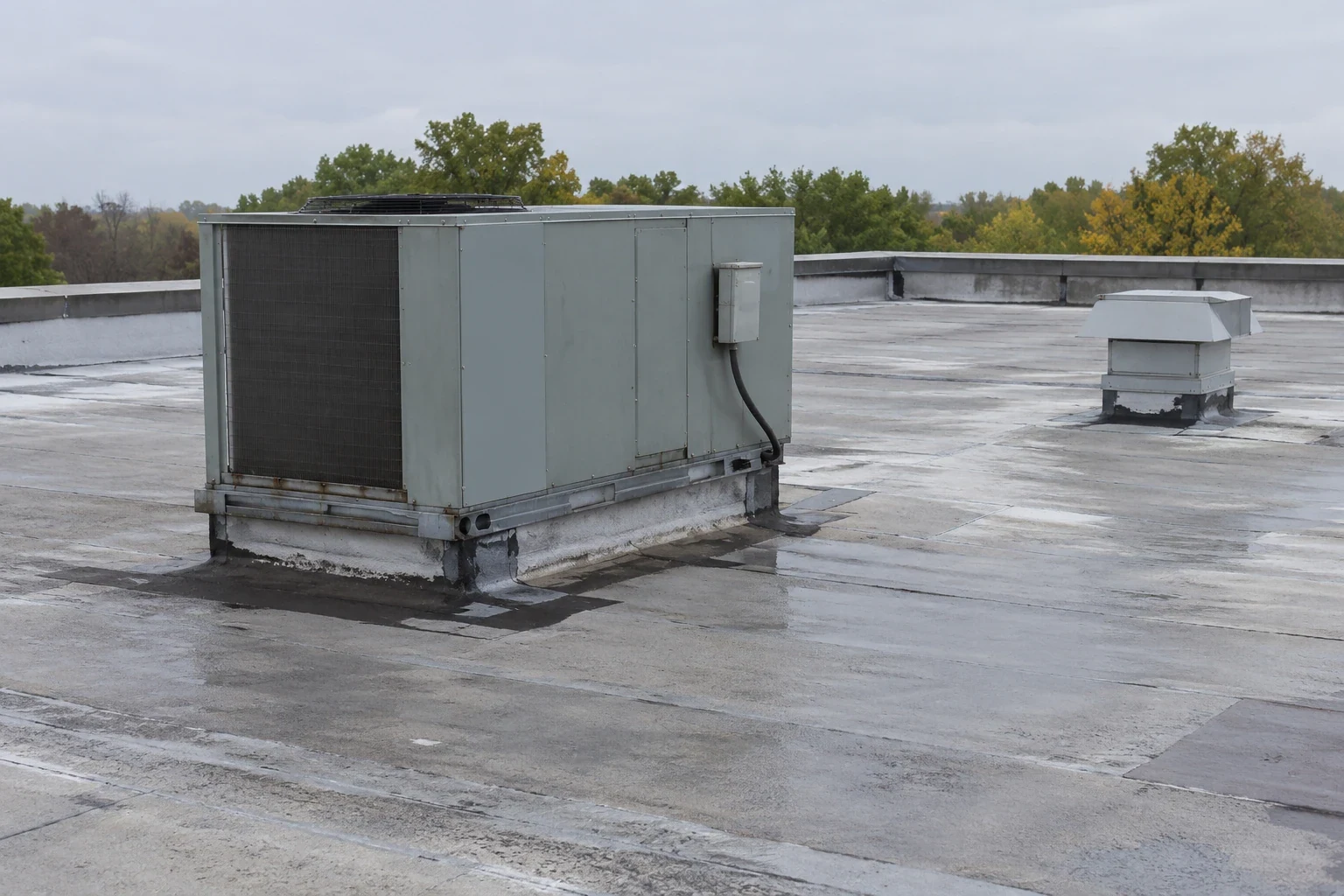
An active roof opening calls for a controlled response: protect people and contents, identify the safest access, and limit water entry until permanent work is ready. Our emergency line is answered around the clock, every day of the week, holidays included. We ask where water is active, what operations are affected, and who can authorize roof access. In Waterbury, CT, the local hazard plan includes summer storms and tornadoes as well as widespread winter exposure to snow and ice. Those conditions can make a dry-in urgent, but they do not reveal the failure point on their own. We inspect the roof when access is safe, photograph what we find, and state what the temporary measure can address. The permanent scope follows through commercial leak response or a follow-up roof inspection.
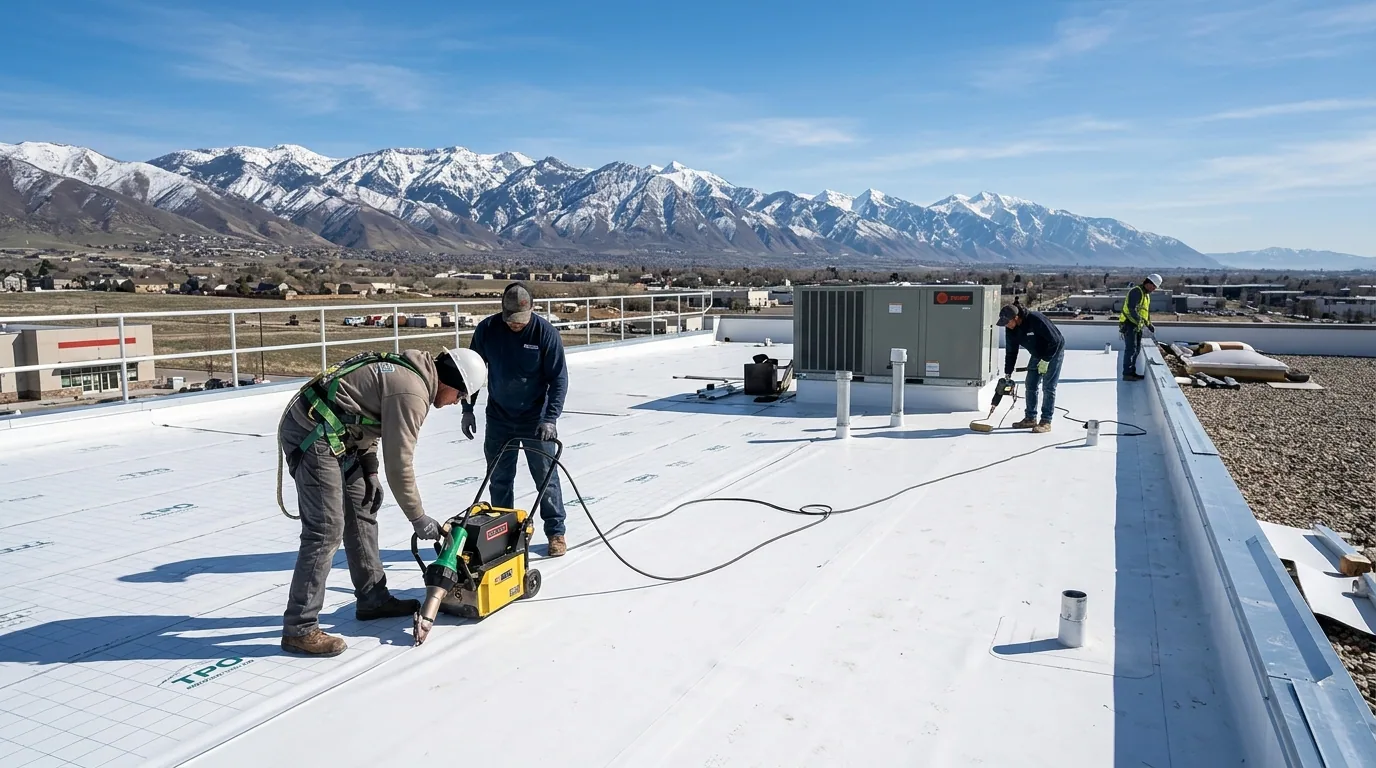
Give the Crew the Facts Needed to Mobilize
When you call, provide the building location, the active leak or opening, the affected room or equipment, and the best contact for roof access. Tell us whether the interior has electrical equipment, stored goods, or people who need to leave the area. If water is near electrical systems, keep staff away and follow the property's emergency procedures. We confirm the access route and any site restrictions before sending a crew. A roof cannot be approached safely in every storm condition, so the first step may be to protect the interior while waiting for safe roof access.
That information also helps us bring the right temporary materials and avoid delaying the first visit for missing access details. Waterbury lies near the I-84 and Route 8 junction, but the site entrance, loading rules, and roof hatch are specific to the property. We verify those with the contact rather than assume a route or staging area. For a building with production, retail, medical, or office activity, we also confirm the affected space and any operational limits. A temporary measure should be sized to the opening we can reach and checked before the crew leaves.
Control the Entry Before Pricing the Permanent Fix
The first visit focuses on active water and safe containment. We identify the apparent opening, check nearby seams and flashing, and use a temporary cover or dry-in method appropriate to the conditions. We do not call a tarp a repair. Temporary protection is meant to reduce further exposure while the roof dries or access becomes available for a permanent detail repair. We note the limits of that protection, including areas we could not safely reach, concealed moisture, and any interior space that should remain protected.
Waterbury's 2021 municipal hazard plan lists the whole city as exposed to winter storms, including snow, sleet, ice, nor'easters, and blizzards. It also treats summer storms and tornadoes as local hazards. If wind has lifted edge metal or opened a seam, we photograph that condition and mark the affected area. If the opening is near a drain or scupper, we check whether water is backing up at the outlet. A drainage repair scope may be needed when the outlet detail is part of the entry path.
Document What the Crew Could Confirm
Photos help the property manager separate visible damage from the next questions. We record the roof section, failed detail, temporary measure, nearby membrane condition, and any water path seen inside. If the roof could not be reached safely or the leak could not be isolated, the record says so and identifies the next inspection step. We do not convert a stain into a claim about the whole assembly. The report should show what changed the immediate risk and what evidence is still needed before a repair or replacement quantity is approved.
Waterbury's compact central business district is near the crossing of I-84 and Route 8. The city also includes older industrial land along the Naugatuck River and industrial property in the southeast. For either setting, the response report should identify its actual roof section and access points rather than assume one emergency pattern for the whole market. A photo-based condition report can capture the emergency findings for an asset file. If the owner needs a claim packet, our insurance documentation can organize the observed damage and repair records without promising a coverage decision.
Return for the Permanent Repair When Conditions Allow
Permanent work begins after the surface, access, and material conditions support a lasting repair. We remove temporary protection as needed, prepare the affected surface, and rebuild the failed seam, flashing, edge, or penetration detail to a defined boundary. If wet insulation is found, we measure the area and record what must be removed. If the exposed deck is weak or damage extends beyond the initial opening, we show the added boundary and obtain approval before increasing the scope. The owner sees the temporary work and permanent work as separate steps.
Waterbury's city plan names East Main and South Main among mixed-use corridors with retail, services, restaurants, housing, and civic uses. An active leak over an occupied building may require protected paths, interior coordination, and a staged return visit. An industrial location can have different loading and operating rules. We confirm these details with each property manager. For conditions that cannot be closed in one visit, a measured permanent repair should include the work boundary, preparation, material, expected dry-in, and any remaining limitation. A full replacement is considered only when inspection shows a broader assembly problem.
Keep Operations and the Repair Schedule in View
The initial response may happen outside normal business hours; the follow-up plan still needs a contact, an access window, and a clear point of completion. We coordinate when the crew can return, what equipment or material needs to arrive, and who can verify interior conditions after the repair. If a tenant or production line uses the affected area, the manager can schedule temporary protection and cleanup around the repair window. We record whether any roof area remains covered or needs another inspection before the next weather event.
After the work, the closeout includes photos and a description of the repaired detail, the temporary protection removed, and any section that remains unresolved. A scheduled maintenance check can revisit the repaired area and nearby drains. For a site in Waterbury, the citywide hazard context helps shape the roof review, while actual conditions determine next steps. If snow or ice damage is visible, a snow and ice assessment can document those specific roof conditions.
Commercial Roofing Questions
How quickly can someone respond to an active leak?
Our emergency line is answered 24 hours a day, every day, holidays included. Dispatch timing depends on safe access, current weather, and the information available about the building. We confirm the site contact and access instructions, then explain whether a roof visit or interior protection is the first safe step.
Will the first visit permanently fix the roof?
The first visit may control active entry with temporary protection. A permanent repair may require a dry surface, material, additional roof access, or a test opening to confirm the affected layers. We document what the initial measure covers and set a return scope for the failed detail once conditions allow.
What should staff do while the crew is on the way?
Keep people clear of any area where water reaches electrical equipment, ceiling materials, or an unsafe floor. Follow the building's emergency procedures and tell us which spaces or operations are affected. Identify the person who can open the roof hatch or escort the crew, and protect contents only where staff can do so safely.
Can you provide photos for our insurer or asset file?
We can document visible roof conditions, interior water evidence, temporary protection, and permanent repair work. The report states what the crew inspected and what remained concealed or inaccessible. Those records support the owner's file, but the insurer determines coverage under the policy.
What if the roof cannot be accessed during the storm?
Safety controls the roof visit. We coordinate an interior protection step when practical, keep staff away from hazards, and arrange roof access when conditions permit. The follow-up inspection then records the opening and any related damage before the permanent scope is set.
Call for Immediate Roof Response
Our emergency line is answered around the clock, including weekends and holidays. Give us the site access contact, where water is active, and which space needs protection. We will coordinate the safest response and document the next repair decision.