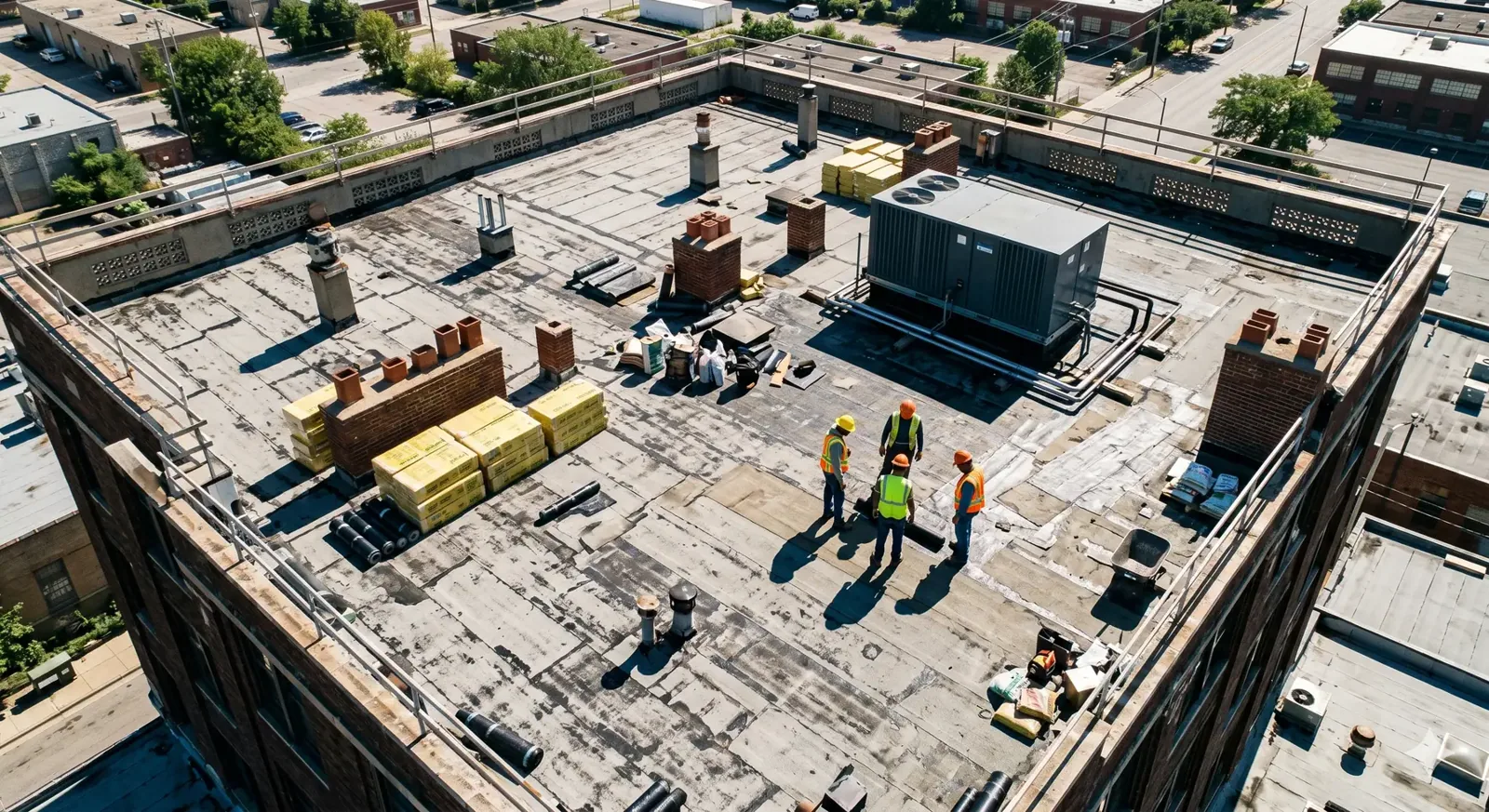
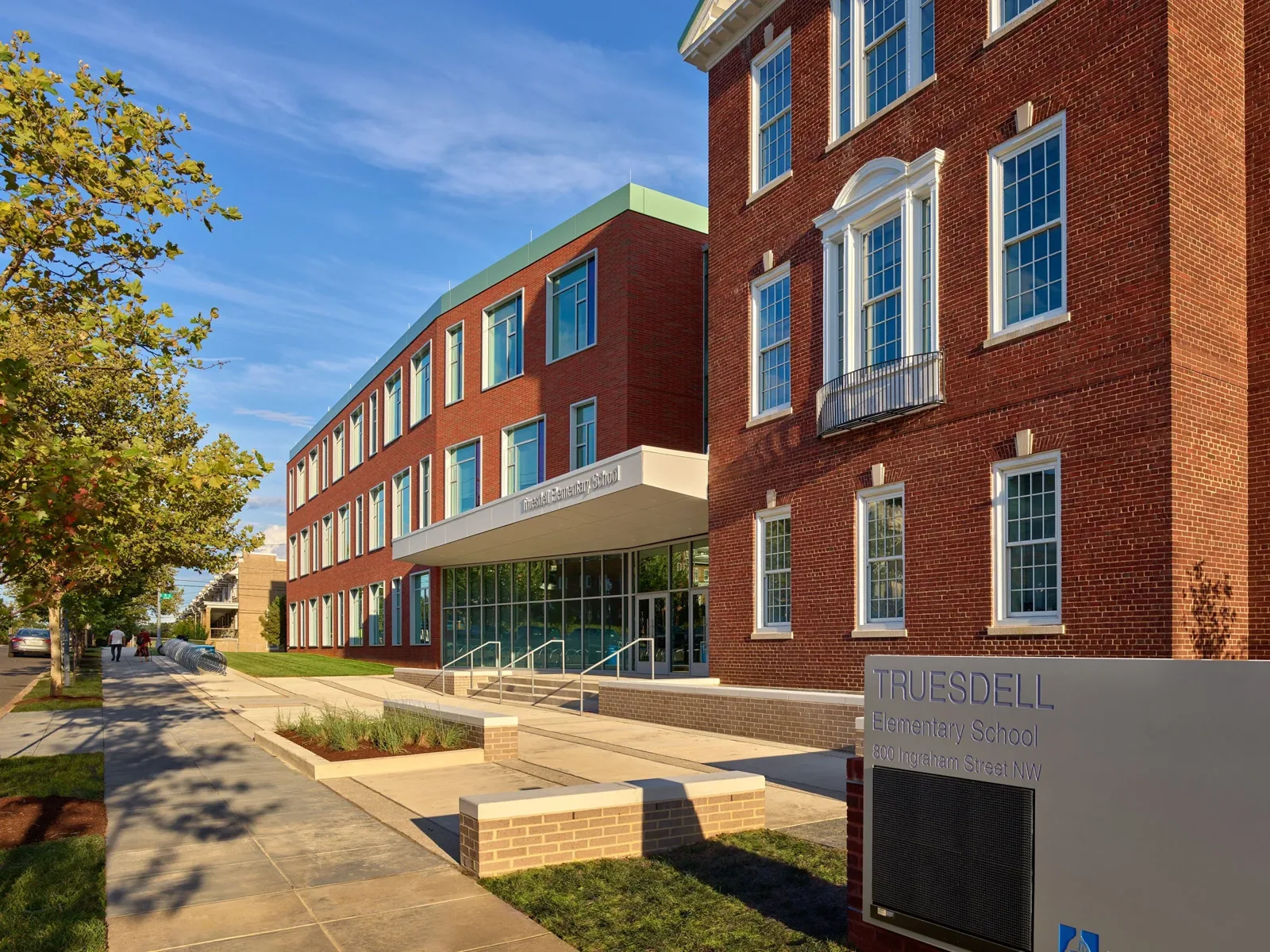
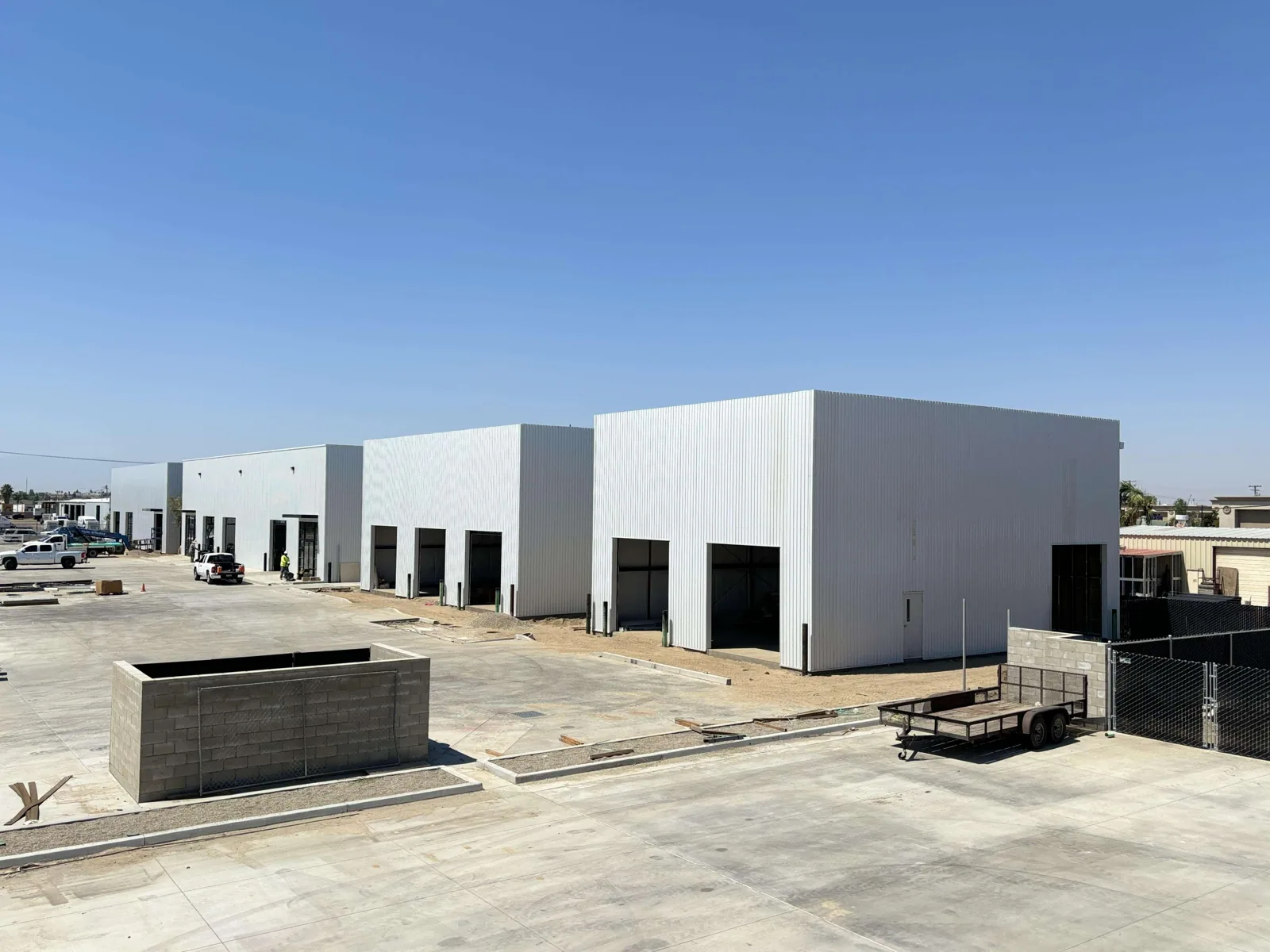
A school roof has an unusual deadline: the work that matters most has to be finished before the first day of classes, and the money for it was often approved the winter before. A district facilities director therefore decides in January what the roof will need in August, and the quality of that decision depends on what was learned about the roof in the fall. We plan school roofing in Waterbury, CT backward from the opening day, with inspections, test cuts, bid documents, submittals, and material orders placed on a calendar the board can follow.
The city plan describes industrial and medium- to high-density residential districts around a compact central business district near I-84 and Route 8, with mixed-use corridors beyond. Schools sit among neighbors in that pattern, which affects staging, noise, and the hours the crew can work.
Work backward from the first day of classes
A summer reroof has about two months between dismissal and the return of teachers, and it competes with every other district on the same crews and materials. Lead times for insulation and membrane can stretch, so orders placed in June risk arriving after the work should have started. We recommend that the scope be finalized and the materials ordered by late winter, with the roof sections ranked so the most urgent areas go first if the schedule compresses.
If a section cannot be finished in the summer, the plan includes a dry-in boundary with temporary protection that can hold through the fall. A roof opened in August and left unfinished in October is a cost and a safety risk, so a schedule that builds in that boundary is better than one that assumes a perfect summer.
Read the hazard plan as a list of roof inspection items
Under Waterbury's hazard plan the whole city is exposed to winter storms, from snow and ice to sleet, nor'easters, and blizzard conditions, and summer storms and tornadoes are local hazards. For a school building, that means snow load at parapets, ice at drains, and wind at the edges of a large low-slope roof over a gym or a cafeteria. Each of those becomes a specific item on the inspection list. The gym and cafeteria roofs get the closest look at the edges, since long spans and tall walls give wind and drifted snow more to work on.
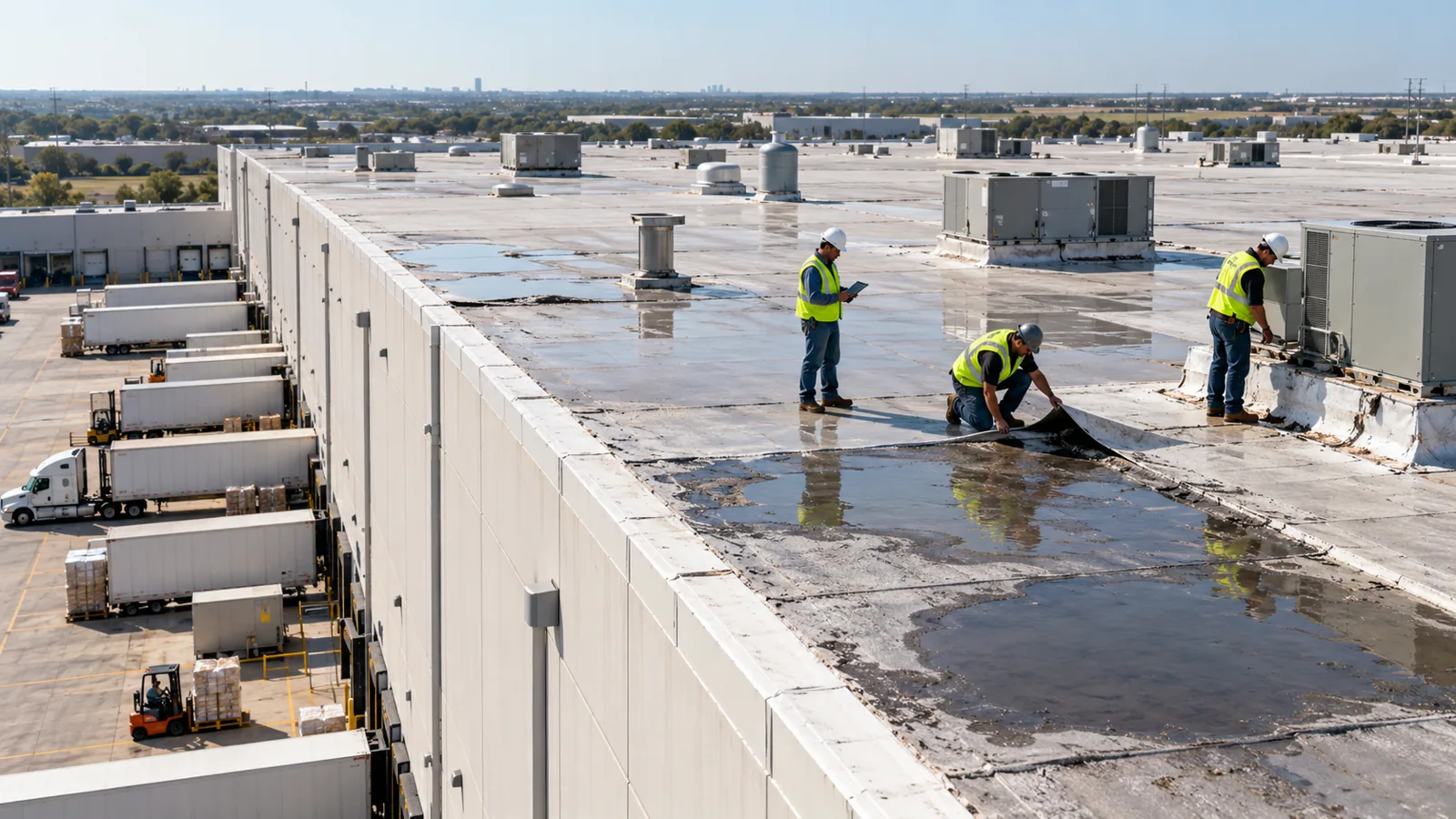
The same plan puts a 10-percent annual chance event at 5.54 inches of rain in 24 hours. Outlets and overflow scuppers that are clear in September can clog by November, so a preventive maintenance visit after leaf fall and again before the thaw protects interior spaces through the school year.
Inspect by roof area, not by building
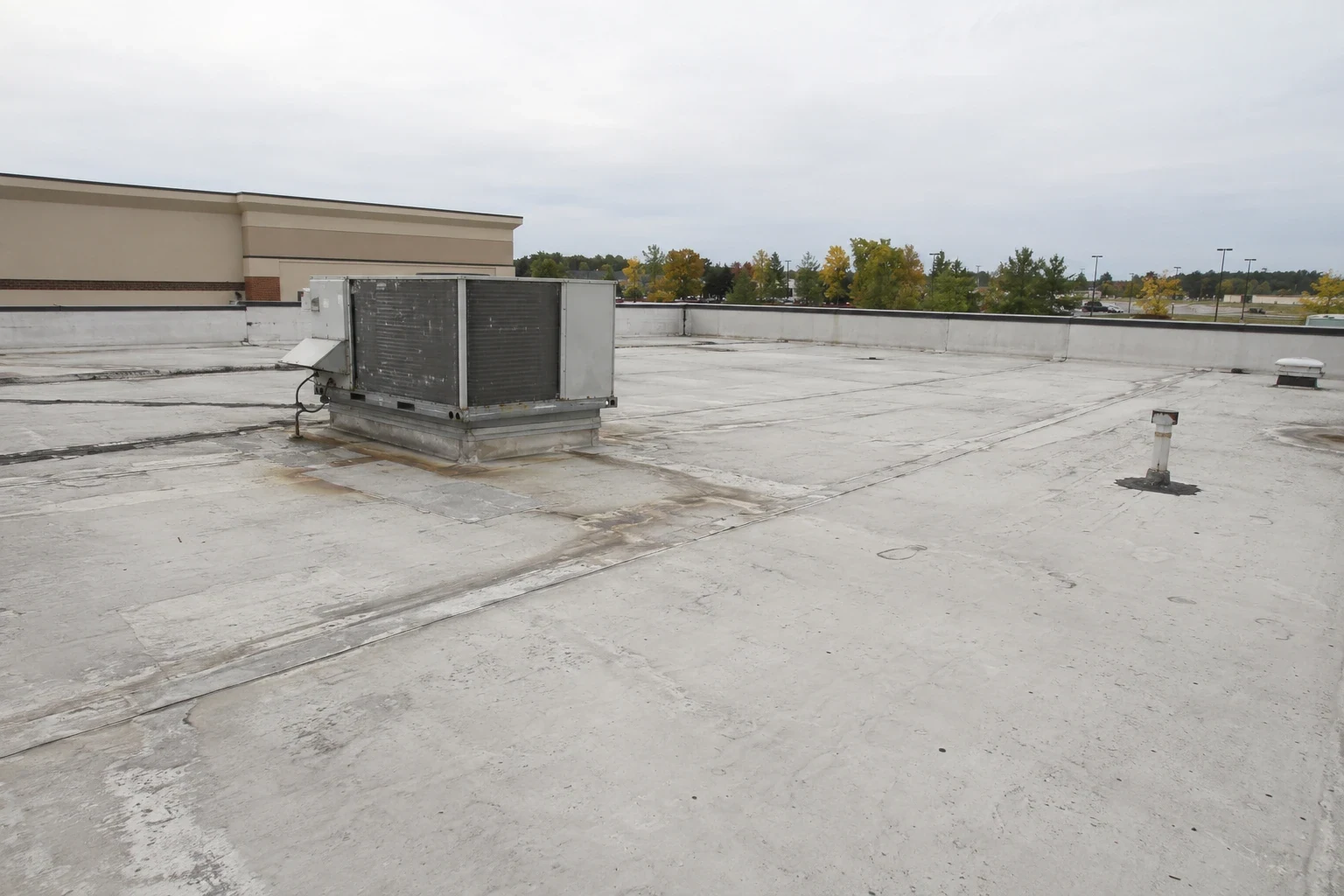
A school is rarely one roof. It is a main block, a gym, a cafeteria, a boiler room, and often an addition or two, each with its own membrane and age. We map the roof areas on a plan, label them, and grade each one separately, so the district can see that the gym needs replacement while the classroom wing needs only a seam repair.
Interior symptoms are tracked by room, because a stained ceiling tile above a classroom is reported by a teacher and a stain above a storage room may go unreported for months. We ask for the work order history from the district's maintenance system and compare it with what the roof shows. A commercial roof inspection that begins with the work orders finds the chronic leak faster.
Keep students, staff, and traffic away from the work
The sequence has to separate the roofing work from the people who use the building. The crew's material route, the hoisting area, the dumpster location, and the debris path are marked on a site plan, with fencing and a signed-off route for buses, parents, and deliveries. Roof access is controlled, and work at the building's edge is planned with the district's safety officer.
Noise and odors matter even in summer, since staff, summer programs, and custodial crews may be in the building. We identify air intakes and keep adhesive work away from them, and we schedule the loudest tear-off in the hours the principal names. A school roofing plan states those limits so the crew can follow them without asking each day. A daily closeout walk confirms that tools, debris, and materials are cleared from the staging area before students and staff return.
Present repair, recover, and replacement in a form a board can fund
A board approves numbers. We present the repair line, the recover line, and the replacement line for each roof area, with the evidence behind each: the test cuts, the photographs, and the moisture map. Contingency is given as a defined allowance with a trigger, so members see what is firm and what depends on what the tear-off reveals.
When capital is limited, the roof areas are ranked by risk to the building and by cost of delay, and a capital plan spreads them across years. A district may fund the gym this summer and the classroom wing next summer, with temporary protection and repairs holding the remaining areas. When the district hires a construction manager for a larger renovation, the roof scope joins that schedule, and the roofing dry-in date is written into the construction milestones so interior work does not outrun the roof. Colleges and universities in the same city, such as higher education buildings, follow a similar calendar logic with their own approval chain.
Close out with records that the next facilities director can find
Closeout hands the district a file of installed materials, dated photographs by roof area, test results, inspection records, received warranty documents, and open items. It is organized by building and by roof area, and a next review date is set. When a leak recurs, the director can see what was done above that classroom and when.
Where storm damage arises, the same file supports communication with a district's insurer, and coordination with public agency teams or the city's building officials is easier when the record is already organized. Facilities staff across Waterbury and its neighbors can use the same format from one school to the next.
Commercial Roofing Questions
When should a district start planning a summer reroof?
Late fall or early winter, with inspections complete by the new year, bids by late winter, and material orders placed before spring. That sequence leaves time for lead times and permit review, and it keeps the summer window for installation.
Can a school stay in session during roof repair?
A bounded repair can be done in session if the work area, the route, and the hours are set with the principal and the area below is protected. A larger reroof is better scheduled for summer, with a clear dry-in boundary.
How do you handle a leak in the middle of the school year?
We stabilize the opening with temporary protection, document the cause, and schedule the permanent repair outside class hours. Emergency response runs around the clock, holidays included, so a weekend leak does not wait for Monday.
What does a roof assessment include for a multi-wing school?
A plan of every roof area, a grade for each, photographs, moisture findings where tested, and a ranked list of repairs and replacements. The report is written so the board can fund by area.
Which code edition applies to a school reroof permit?
Permit applications filed on or after October 1, 2022 fall under Connecticut's 2022 State Building Code, which draws on the 2021 International building and energy conservation codes. Insulation and assembly choices are checked against those editions.
Send the building list and the board calendar
Share the school list, the roof plans, the work order history, and the dates the board votes. We will inspect each roof area, rank the work, and return scopes that fit the calendar before classes resume.