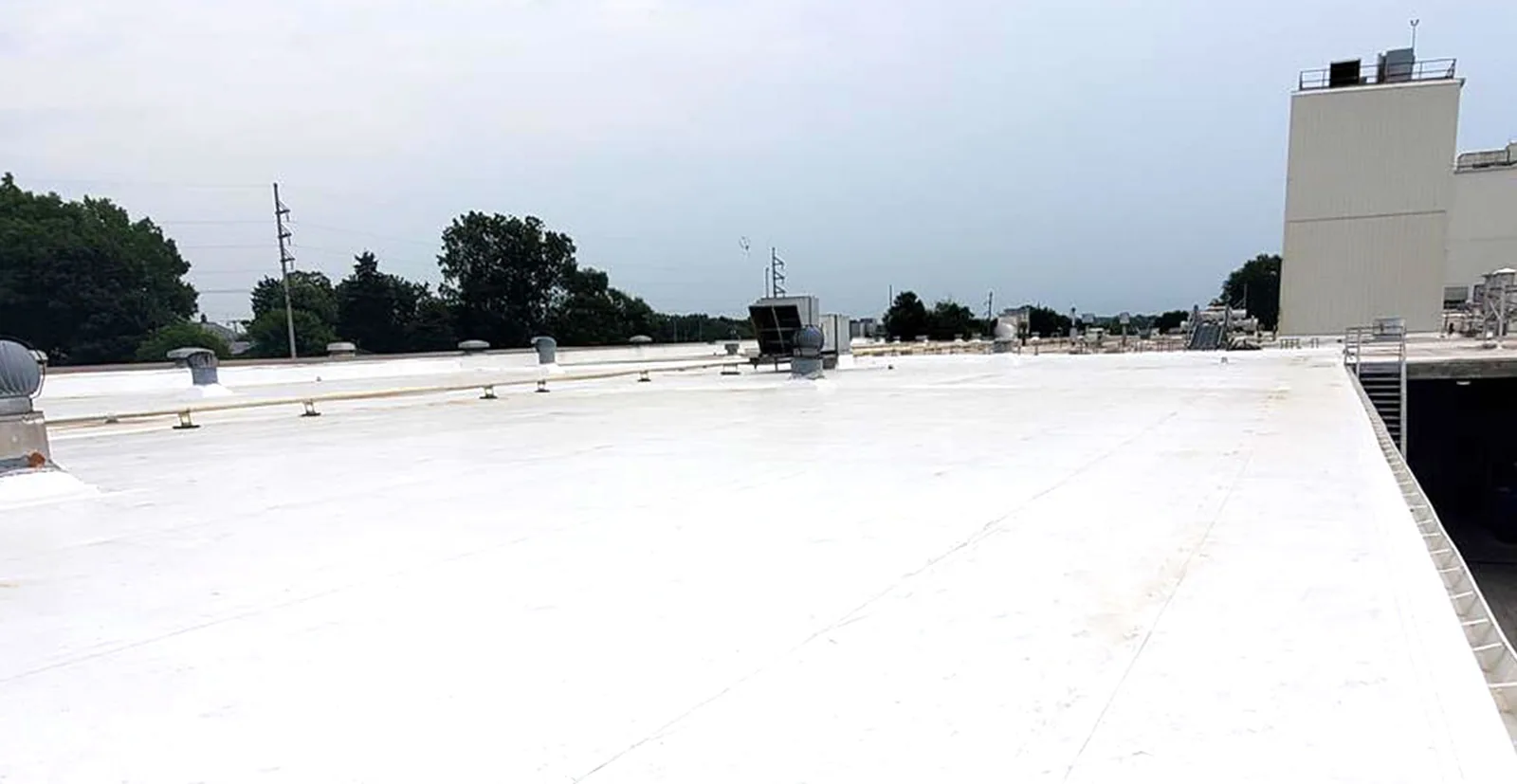
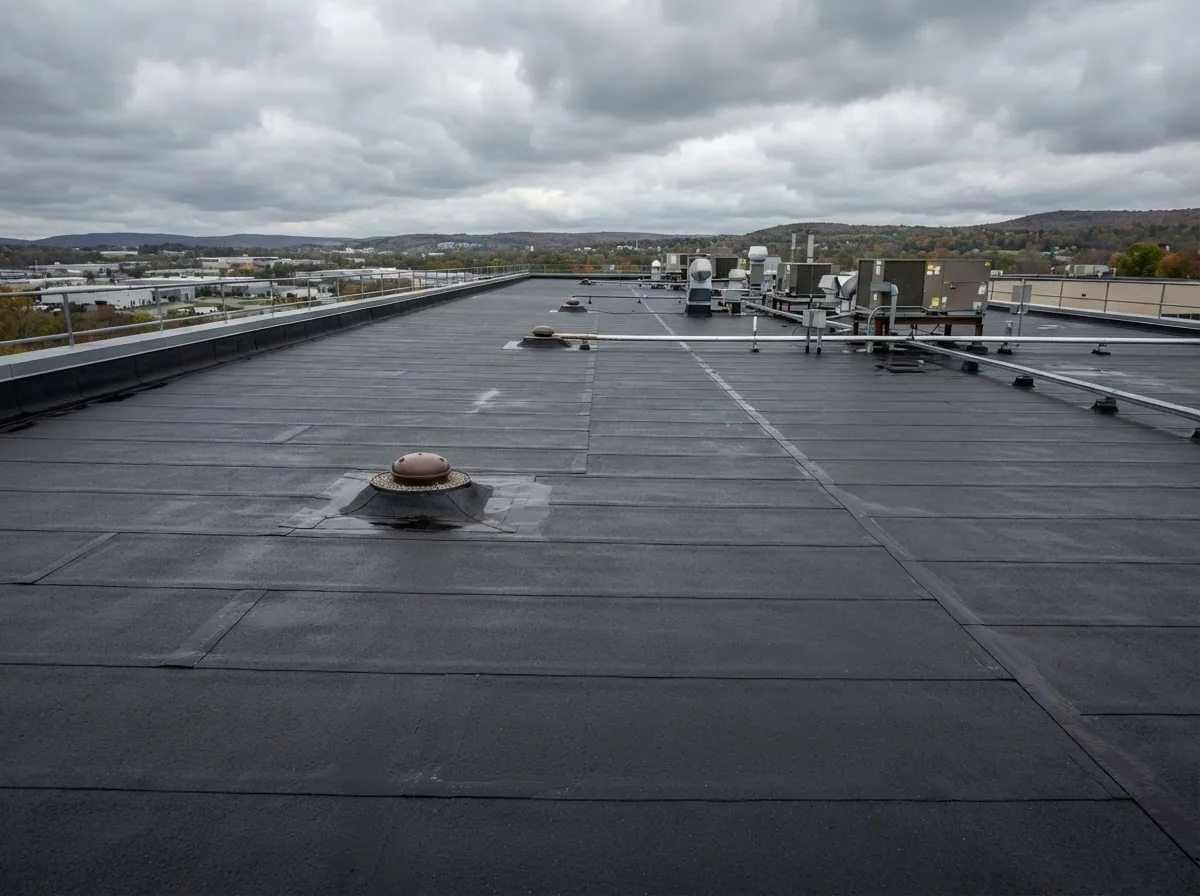
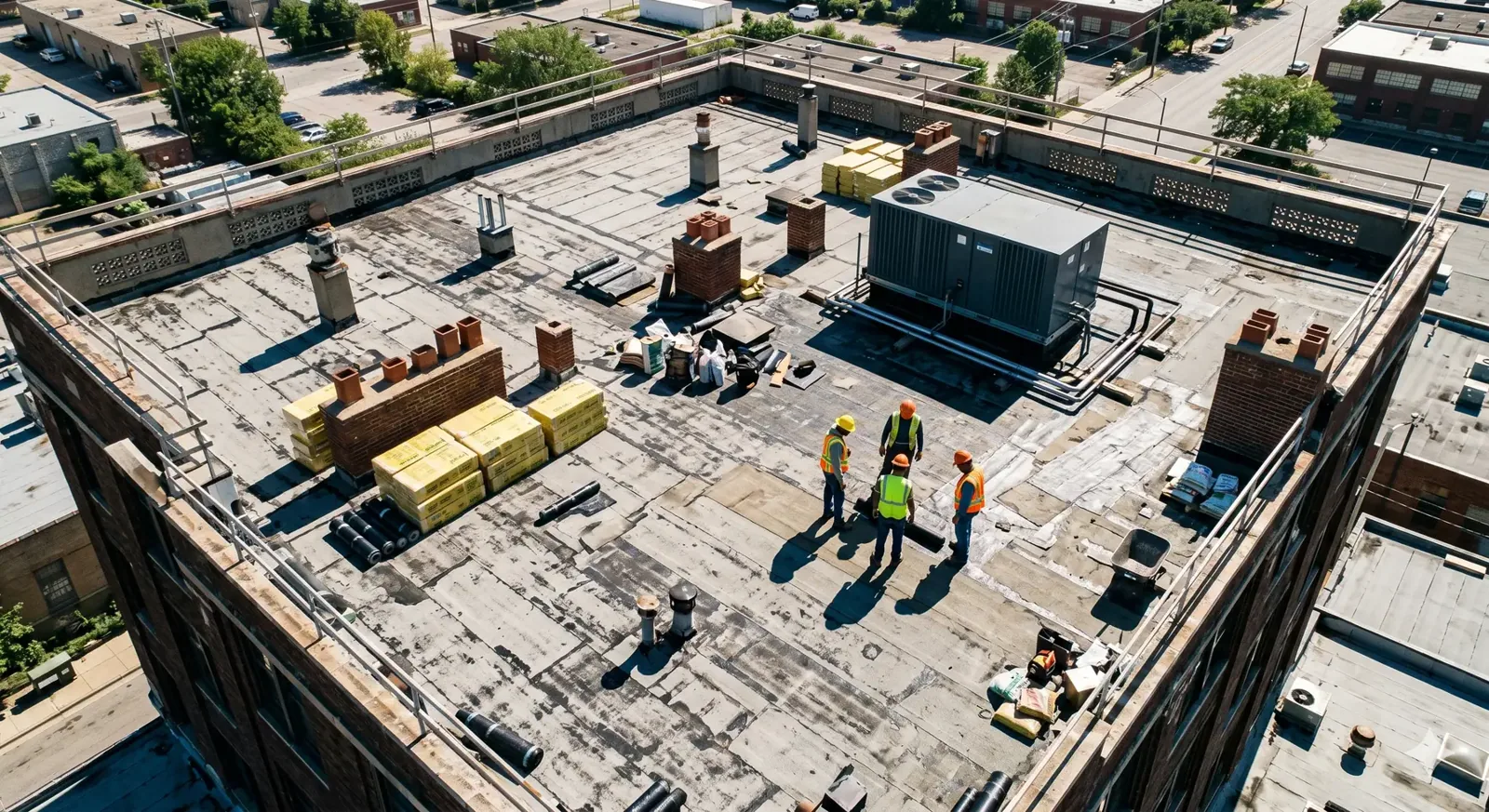
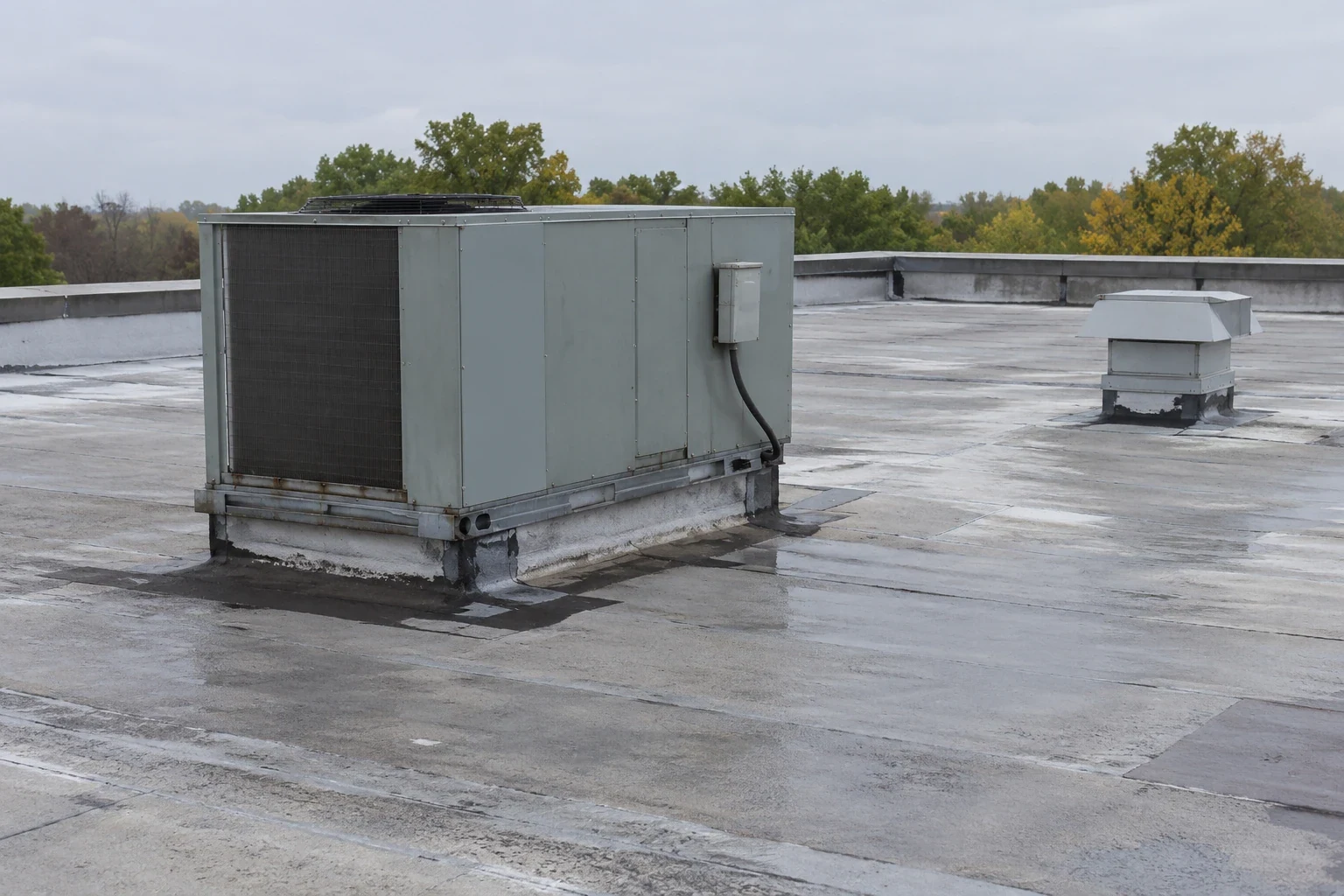
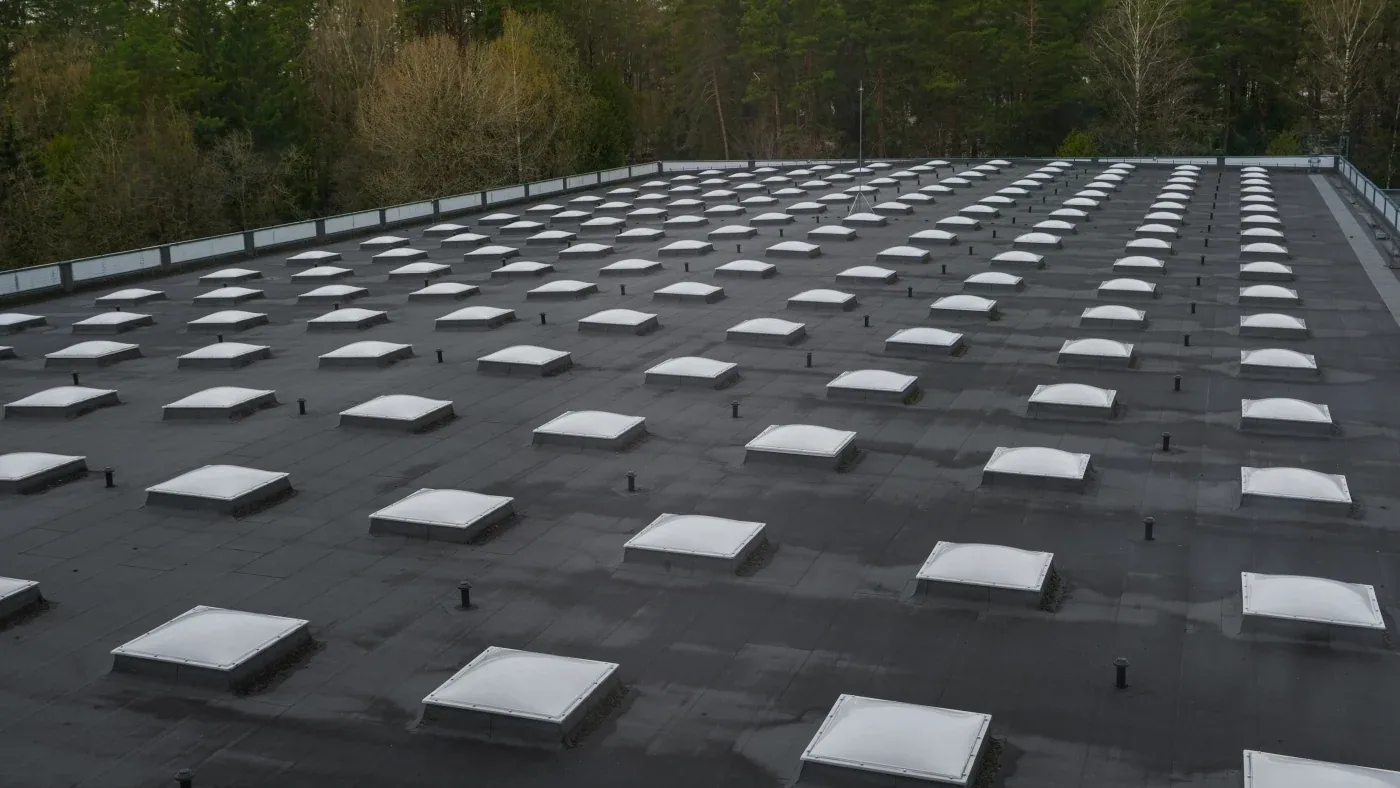
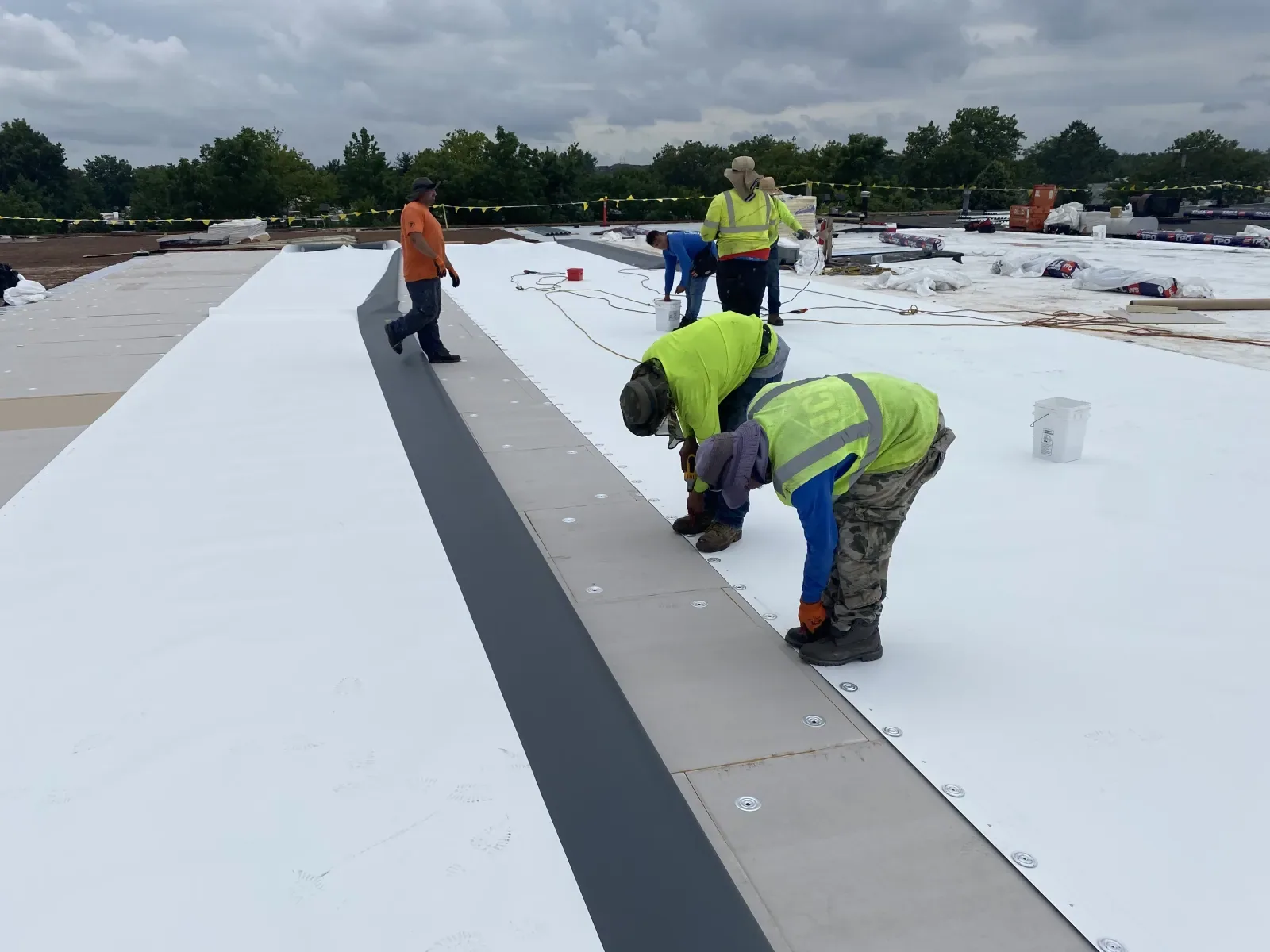
A TPO replacement line starts with the seams, insulation, and deck findings that set the tear-off boundary. We inspect the existing roof section, check attachment and drainage, then decide whether repair, recover, or a new membrane belongs in the scope. Waterbury's hazard plan identifies winter storms citywide and summer storms as local hazards. That exposure makes the dry-in date and water path part of the schedule discussion, while the assembly on the building determines the system choice. The compact downtown near the I-84 and Route 8 junction and the industrial land beside the Naugatuck River create different access conditions. We verify the roof first, then give the asset manager a written scope with photos, quantities, and open questions.
For a building that needs a new single-ply assembly, we compare TPO with PVC membrane roofing and EPDM rubber roofing using the same roof map. A hands-on inspection records the details and moisture tests that can change the capital decision.
Check the Welds Before Setting the Scope
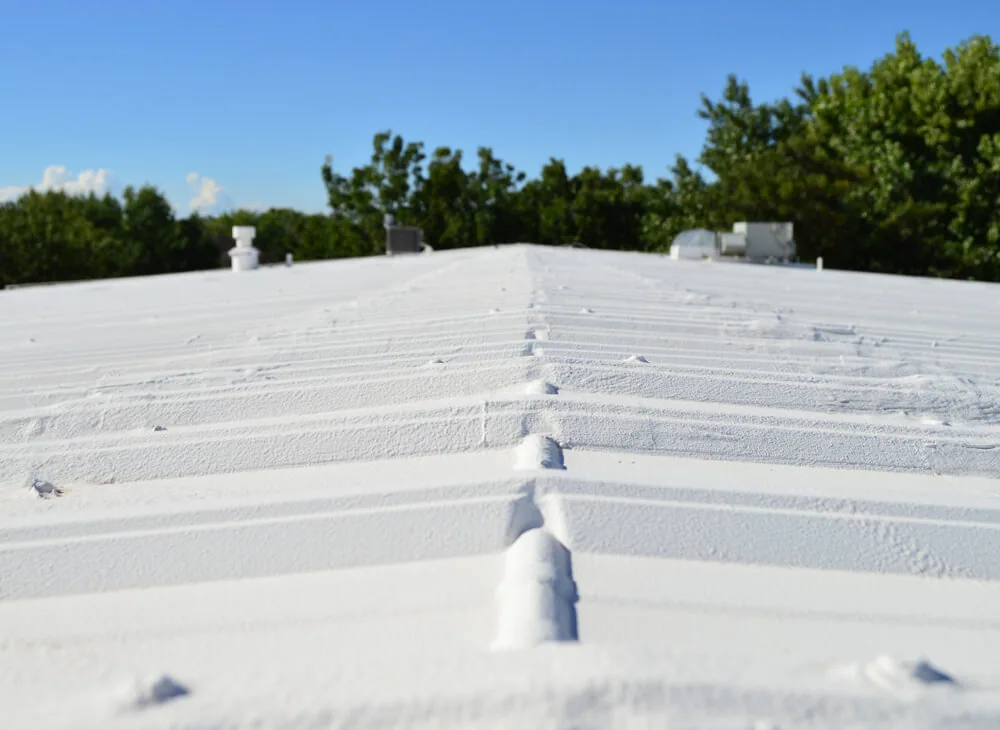
TPO field sheets are joined with hot-air-welded laps, so seam condition is a direct part of the water-control review. We look for open edges, inconsistent welds, fishmouths, patches, and details where movement or repeated repair has disturbed the membrane. A probe helps locate an open lap, but the written finding also records its extent and nearby transitions. We separate an isolated seam repair from a pattern that may indicate broader attachment, workmanship, or substrate concerns. If the surface does not explain the cause, we mark a test area rather than assigning the whole roof the same condition.
At parapets, curbs, drains, and penetrations, the membrane must connect to compatible flashing and termination details. We check whether those details remain secure and whether water can reach the intended drain path. A repair scope can address a local failure when surrounding material remains suitable. When several defects trace back to brittle or wet layers, a measured repair plan should identify what it leaves in place and which roof section needs more testing before a larger bid is set.
Confirm What Sits Beneath the Membrane
A new sheet does not resolve wet insulation or a weak deck beneath it. We review roof records, visible transitions, and existing penetrations, then use targeted test cuts where moisture or layer count could change the replacement line. Each opening should answer a stated question: what layers are present, whether insulation is dry, and what deck condition can be observed. The report maps each sample to its roof section and keeps untested areas distinct. That makes a recover option a decision supported by evidence rather than a way to carry unknown material forward.
Connecticut evaluates filing dates against its 2022 state code: applications dated October 1, 2022 or later use the 2021 International Building Code and 2021 energy code. We record the permit date and coordinate project-specific review of assembly, attachment, insulation, and existing layers before pricing a recover. If removal is indicated, the proposal sets a tear-off boundary, deck allowance, and temporary dry-in sequence. The owner can compare those assumptions with a recover evaluation and a replacement scope before procurement.
Carry Drainage and Storm Exposure into the Detail Plan
The Waterbury hazard plan names winter storms, including snow, ice, sleet, nor'easters, and blizzard conditions, and also treats summer storms as a local exposure. That planning context makes drainage, edge details, and a protected dry-in point useful items to settle before work begins. We inspect drains and scuppers for blockage, loose attachment, and transitions where a membrane repair could redirect water. If an outlet or slope condition needs separate work, the estimate identifies it instead of hiding it in a membrane quantity.
Commercial corridors such as East Main and South Main mix retail, services, restaurants, housing, and civic uses. For an occupied property, delivery windows, loading limits, and entrances can control how rolls and equipment reach the roof. We plan each work zone so the crew can close the day at a defined boundary and protect completed areas. Outlet and slope corrections are listed separately when those details affect the membrane plan, and event-specific damage is recorded before restoration is priced.
Sequence the Replacement Around the Building
Before installation, we confirm roof access, material staging, safety limits, and the operating hours below each work area. The sequence names the tear-off limit, insulation placement, membrane attachment, seam welding, flashing work, and temporary closure for each shift. Where the building remains active, we coordinate with the site contact about deliveries, rooftop equipment, and areas that cannot be blocked. A daily dry-in date is useful only when it identifies the section that will be watertight at close of work and the detail that still needs completion.
On larger roofs, phased installation can keep the project moving while preserving distinct inspection and closeout records by section. We document substrate corrections and concealed conditions as they appear, then obtain direction before work crosses an approved allowance. Waterbury's industrial and downtown areas are connected near I-84 and Route 8, but traffic access and staging still depend on the individual parcel. For warehouse operations, we plan interior protection and operating constraints; for city properties, the Waterbury service scope begins with the actual roof and site rules.
Compare Service Horizon with the Full Installed Scope
The budget comparison should include more than membrane area. Existing layers, insulation thickness, deck repairs, attachment method, edge metal, drains, penetrations, staging, and occupied-building controls all affect labor and material quantities. We separate firm scope from allowances and state the condition that would use each allowance. If the proposed TPO system changes roof height or detail geometry, we note which curbs, transitions, and perimeter components need adjustment. The estimate should also identify inspections, submittals, and closeout records needed for the project file.
TPO is not automatically the right answer because it is a single-ply membrane. We compare its seam approach, detail compatibility, insulation plan, drainage requirements, and maintenance obligations with alternatives such as modified bitumen. If an existing roof has isolated damage and a sound assembly, repair may preserve capital for another section; if moisture or deck findings cross the repair boundary, replacement may be the clearer scope. We explain the basis for each choice in the condition report and note what additional test would change the recommendation.
Commercial Roofing Questions
What determines whether a TPO roof can be recovered?
The existing assembly has to support the added system. We verify moisture, attachment, layer count, deck condition, and project-specific code requirements, then identify any limits by roof section. Test cuts can change the answer where concealed insulation or deck remains uncertain.
How do you check a TPO seam that has been patched more than once?
We inspect the lap edges and patch boundaries, probe accessible welds, and look for movement or moisture that extends beyond the repair. The report maps each finding and distinguishes a local patch from a repeat condition that may justify broader testing or replacement planning.
Does TPO need a different drainage plan in Waterbury?
The membrane does not replace drainage design. We inspect the roof's slopes, outlets, scuppers, and low areas, then include corrections where the observed path needs work. Waterbury's municipal hazard plan lists winter and summer storm exposure, which makes a documented drainage review useful when setting the work sequence.
Can a TPO replacement be phased over an operating building?
A phased sequence can be planned when access, safety, material staging, and interior operations allow workable closure points. We identify each daily tear-off area, dry-in limit, and completed section, then coordinate any delivery or equipment restrictions with the site contact.
What should the TPO proposal include beyond sheet material?
It should show insulation, attachment, edge and penetration details, drainage work, tear-off assumptions, deck allowances, and staging requirements. We include the repair boundary, permit timing, inspection record, and closeout photos so the capital file shows what was installed and what conditions were encountered.
Set the TPO Replacement Line
Share roof plans, past repairs, access rules, and the capital or permit window. We will inspect each section, test concealed conditions where needed, and document the repair, recover, or replacement scope with photos and quantities.