Heat-welded seams are the strength of a thermoplastic roof and the first place to look when one starts to leak. Sika Sarnafil is a manufacturer known for PVC-based roofing membranes, along with related flashing, accessory, and liquid-applied products. An owner in Waterbury, CT who holds a roof of this type needs to know whether the welds are sound, whether the flashings have shrunk, whether the insulation beneath is dry, and what the remaining service horizon is. Those answers set the choice between a repair, a recover, and replacement.
Probe the Welds Before Assuming the Membrane Has Failed
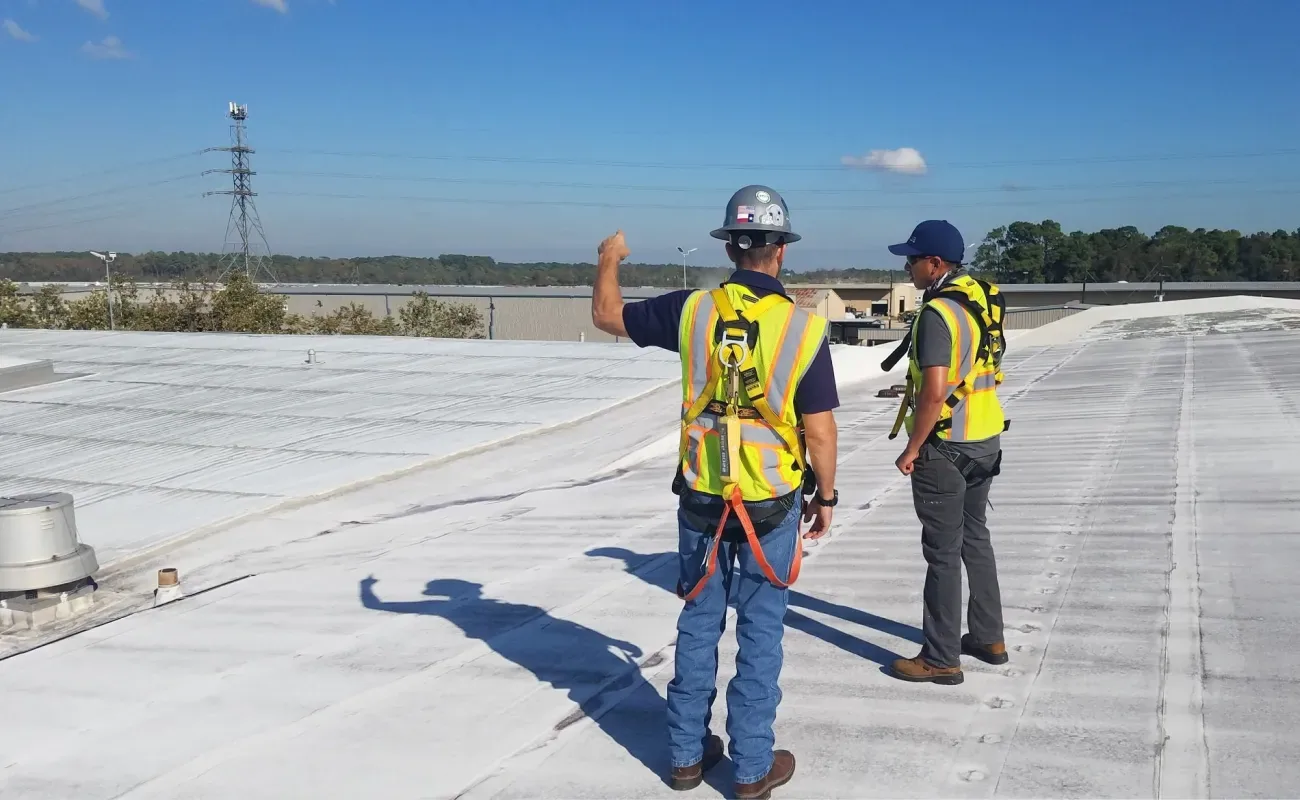
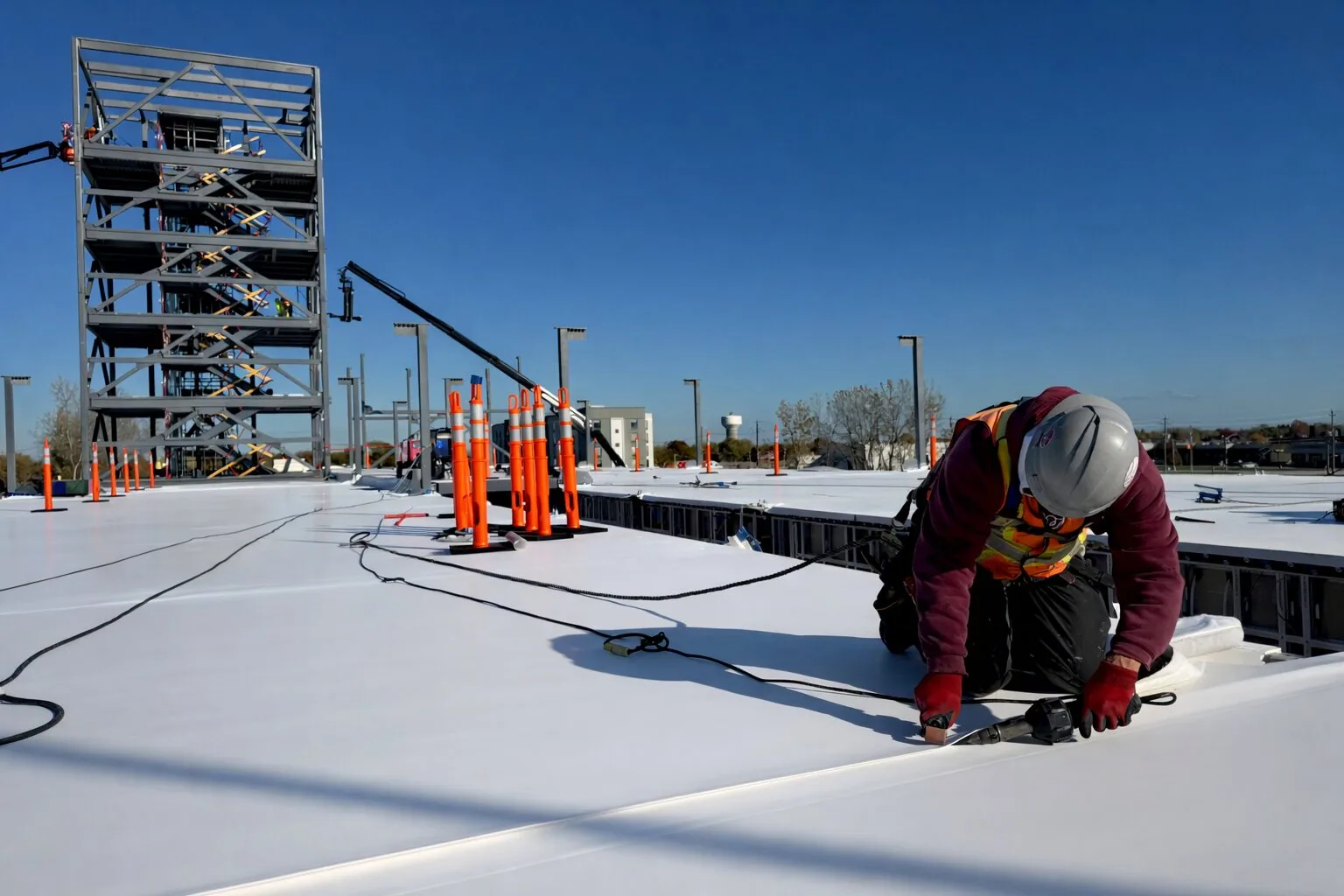
A welded thermoplastic membrane is made of sheets joined by hot-air welds, and a weld line is where we begin. With a rounded probe we run each lap, looking for areas where the weld is open, where a probe slides under the edge, or where a weld never fully fused. Open laps are cleaned and fused again or capped with a welded strip, then probed a second time and photographed. A leak at a seam is often a limited repair, not a membrane failure, and the probe record shows which it is.
Welds can also fail from contamination, from ponded water, or from movement at a transition. We note the cause on the section entry, since a repeat failure suggests the cause has not been addressed, and we list the weld temperature, speed, and ambient conditions when we make a repair, because a weld made in damp or cold conditions can look fine and still release later.
Check Flashings for Shrinkage and Detail Faults
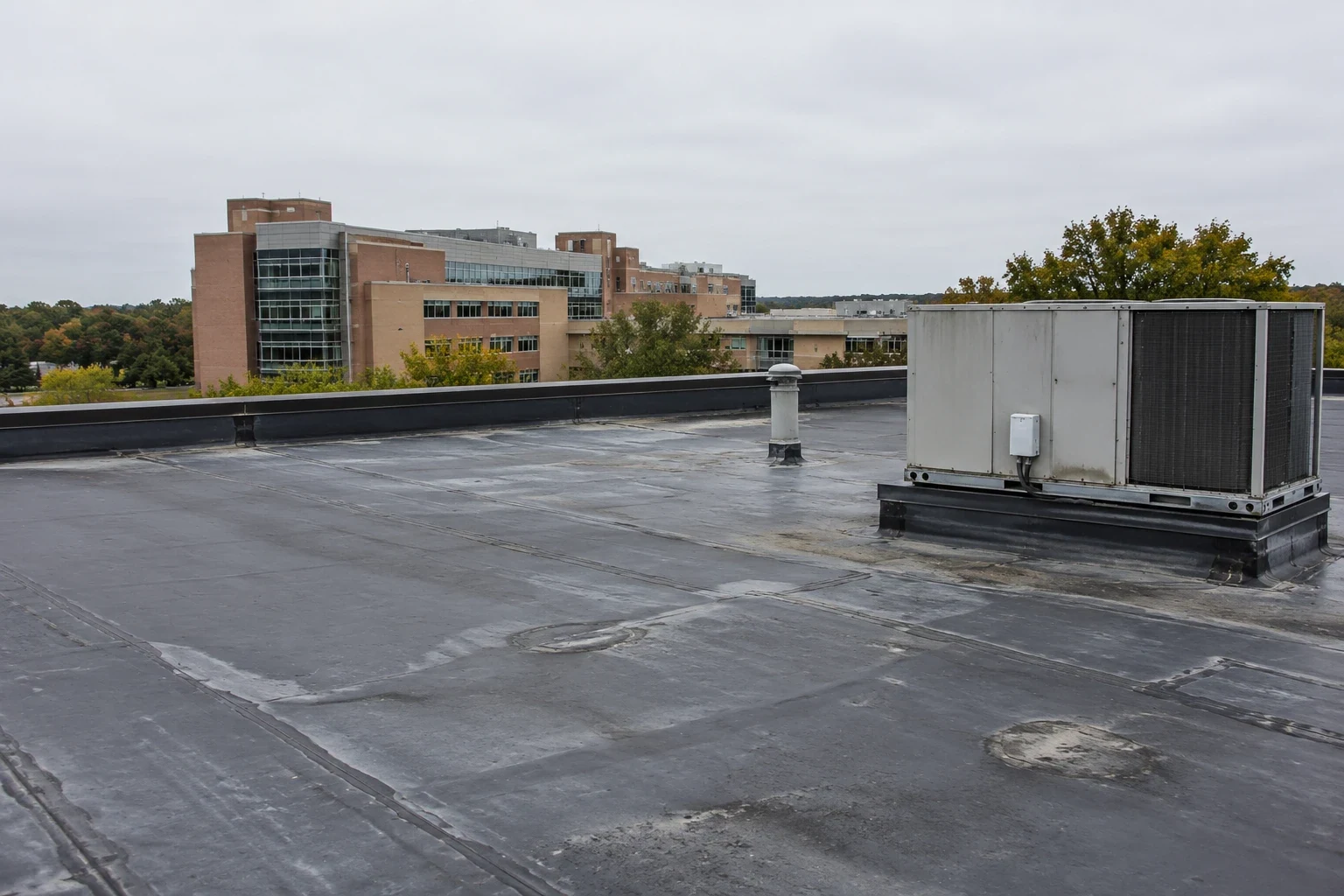
Thermoplastic membranes can shrink over time, particularly at flashings, and a flashing that has pulled away from a curb or parapet base is a common leak source. We inspect each termination, corner, and penetration. Pipe boots, drain flashings, and rooftop-unit curbs are numbered and photographed. Prefabricated corners and boots, compatible with the membrane, are used where geometry is awkward, and a liquid-applied flashing resin may be used where a prefabricated piece cannot fit.
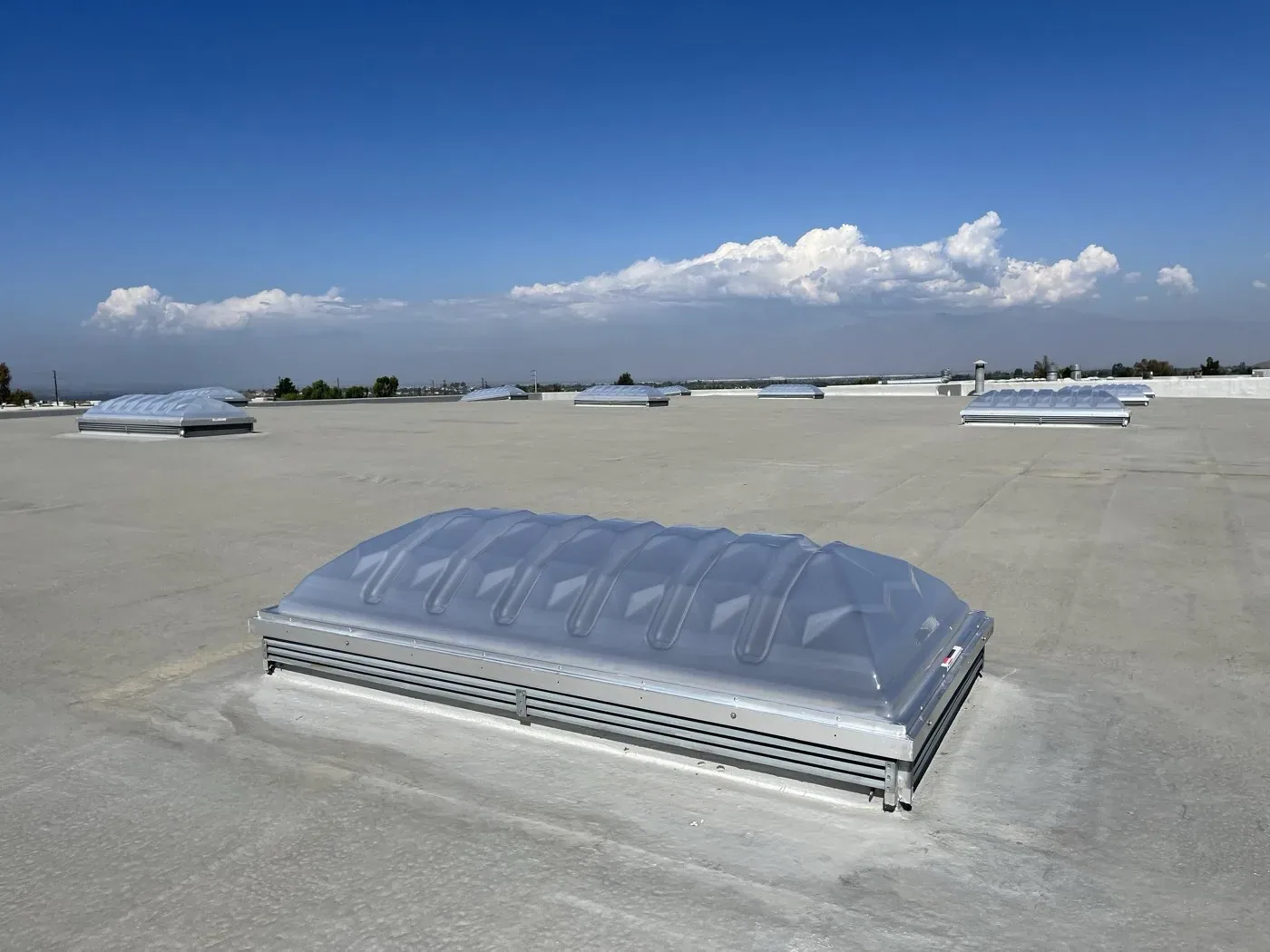
Details at the roof edge matter as well, and a loose coping cap or an unsealed edge flange can send water under the sheet where no weld will stop it. Edge metal fastened through the membrane must be sealed, and coping covers must be tight. Flashing at skylights and penetrations follows these practices, and the finished detail is recorded.
Account for the Exposure the Membrane Sees
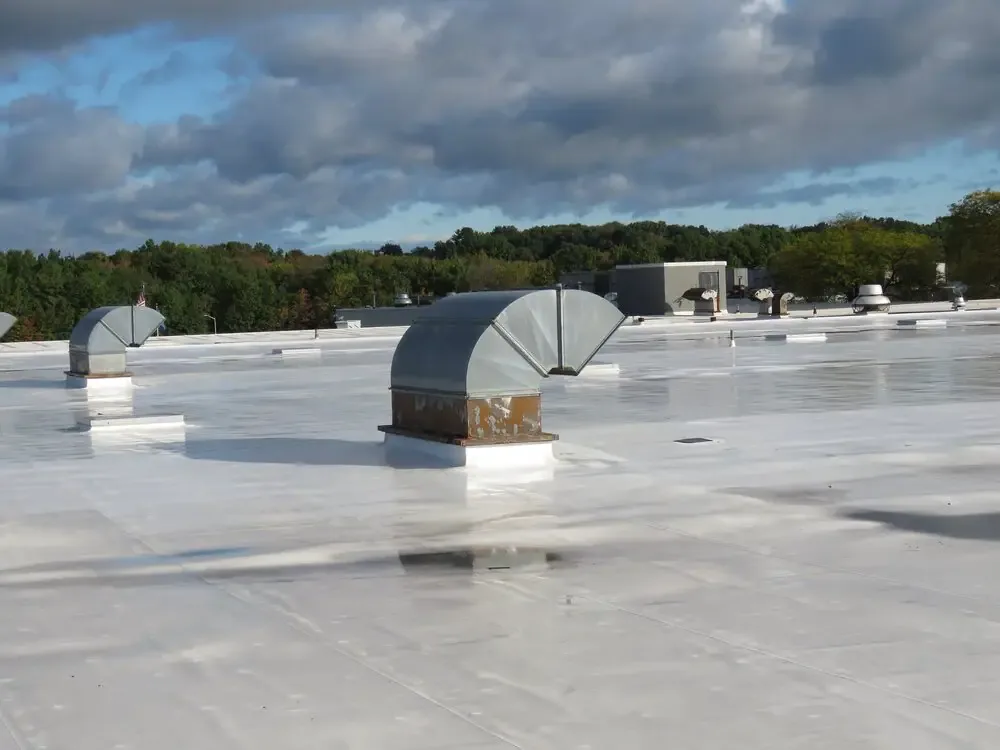
Many owners pick PVC-based sheet for its tolerance of cooking fats and chemicals, which fits restaurant exhausts and some industrial vents. That resistance is not unlimited, and the exact exposure matters. We record what discharges onto the roof, from kitchen exhaust to process vents, and check the surface near each source. Where exposure appears severe, the manufacturer's published resistance data decides whether the existing membrane is suitable and whether a protection pad or a different material is needed. A KEE-based membrane is one option for demanding exposures.
Wherever a plant's exhaust or process vent reaches the membrane, as it may in buildings along the Naugatuck River or in the Reidville and Brookside parks, this record matters.
Check Attachment and the Deck Under the Sheet
Thermoplastic membranes are attached in several ways: mechanical fasteners and plates along lap lines, full adhesion to the substrate, or induction-welded plates. Each transfers wind uplift and thermal movement differently, and each leaves its own signs when it fails. Along a mechanically attached roof, we look for fastener plates that show through the sheet, billowing between rows, and torn or pulled-through holes. On an adhered roof, we look for lifted or blistered areas and for delaminated lap edges.
The deck matters as much as the sheet. A corroded or loose deck panel will not hold fasteners, and a deck that has moved can pull a flashing off a wall. In a test cut, we note the deck type and condition, and we pull a few fasteners to check pull-out where a recover is on the table. If the attachment is weak, the recover scope adds fasteners or a different attachment method, and the cost reflects it.
Attachment patterns are set by the designer or structural engineer, not by the roofer on a repair visit. What we supply is the field condition: which sections show distress, where, and how it was photographed, so the designer works from facts.
Choose Between Repair, Recover, and Replacement on Test Results
A repair is right when the membrane is flexible, welds can be remade, and the insulation is dry. A recover can fit when the existing membrane can be left in place, a separation layer or cover board is used, and the deck and structure accept the added layers. Replacement is right when welds will not take, the membrane has hardened and cracked, or the insulation is wet. A moisture scan and cut samples supply the evidence, and a flexibility check on the sheet supplies the rest.
We lay the three options next to each other in the condition report with the costs and the allowances for what the cut might show. Staging can be tight in the compact downtown, so the plan states crane or lift position, material path, and work hours.
Plan Around Winter Storms and Heavy Rain
The hazard plan places every neighborhood in the path of winter storms and expects heavier extreme rain. For a welded membrane, that puts weight on drain capacity, overflow routes, and edge details. A weld can survive snow load but fail where ice damming or ponding keeps a seam wet. We check drain paths before any recover or replacement is priced, and we plan temporary dry-in details at each tear-off boundary. Downtown Waterbury includes health-care uses, and on a hospital roof the same drain and overflow checks apply with extra attention to what lies below.
Keep Weld Records and Warranty Notices Together
Each repair is entered by section, with the weld check result, photographs, and weather. A roof asset record tracks cumulative repairs. When a warranty applies, the file follows the practices in warranty management. Owners across Waterbury and Bristol use the same format. A prefabricated PVC alternative, such as Duro-Last, is compared on the same criteria, as is a field-fabricated roof from Versico. Where an owner has a prior repair history, those invoices are read against the roof map, so a pattern of repeat weld repairs at one transition is visible and can be priced as a correction instead of another patch.
Commercial Roofing Questions
What is the first sign that a welded seam is failing?
A probe that slides under the edge of a lap, a visible gap at the seam, or staining along the lap line. Interior stains may appear later, so we probe the laps before the leak shows up.
Can a failed weld be repaired without replacing the membrane?
Usually, if the membrane is still flexible and the surface can be cleaned. The lap is fused again or capped with a welded strip, then probed and photographed.
Why do flashings fail on thermoplastic roofs?
Shrinkage, movement at the termination, loose fasteners, or a missing detail. Inspection finds which, and the repair matches the cause.
Are PVC membranes resistant to grease?
PVC-based sheet tolerates many fats and oils, but the actual exposure matters. We check the discharge and the manufacturer's data before deciding the roof is suitable.
When does an aged membrane stop being repairable?
When it has hardened, cracked, or cannot take a clean weld. At that point patching is temporary and the plan moves toward recover or replacement.
What records do I get after a repair?
A numbered plan, photographs, the weld probe result for each repair, and a warranty note. The same file starts the next inspection.
Send the roof records and the access rules
Send warranty papers, drawings, repair invoices, the access rules, and the capital or permit window. We will probe the welds, check the flashings and insulation, and return a report that separates repair, recover, and replacement scopes.