A manufacturer warranty is a contract with conditions, and the cheapest way to lose one is a repair that nobody documented. An owner in Waterbury, CT who holds a warranty on a commercial roof usually learns its terms for the first time when a leak occurs, at which point the questions are how long ago the notice window opened, whether the last repair was made by an acceptable installer, and whether maintenance records exist. Warranty management turns those questions into a file kept ahead of time: terms read and summarized, repairs logged by section, inspections dated, and notice deadlines on a calendar.
The coverage itself belongs to the manufacturer's terms. Our part is the condition of the roof and the paper trail that lets the owner use that coverage.

Read the Terms Before the First Leak
Every warranty reads differently, and the differences matter more than the headline length of coverage. The file starts with a plain summary of each document: what is covered, what is excluded, who must perform repairs, what notice is required and by when, what maintenance the owner must keep up, and what activities void coverage. Common exclusions to look for include ponding water beyond a stated depth or duration, damage from rooftop traffic, work by others on the roof without notice, and conditions caused by building movement or mechanical equipment discharge.
The summary identifies the roof section to which each warranty applies. A building with an original roof and a later addition may have two warranties of different ages, or one warranty and an uncovered section. Placing the terms beside the numbered roof plan prevents the common mistake of assuming that a warranty applies to the whole building.
Calendar the Notice Windows and Inspection Dates
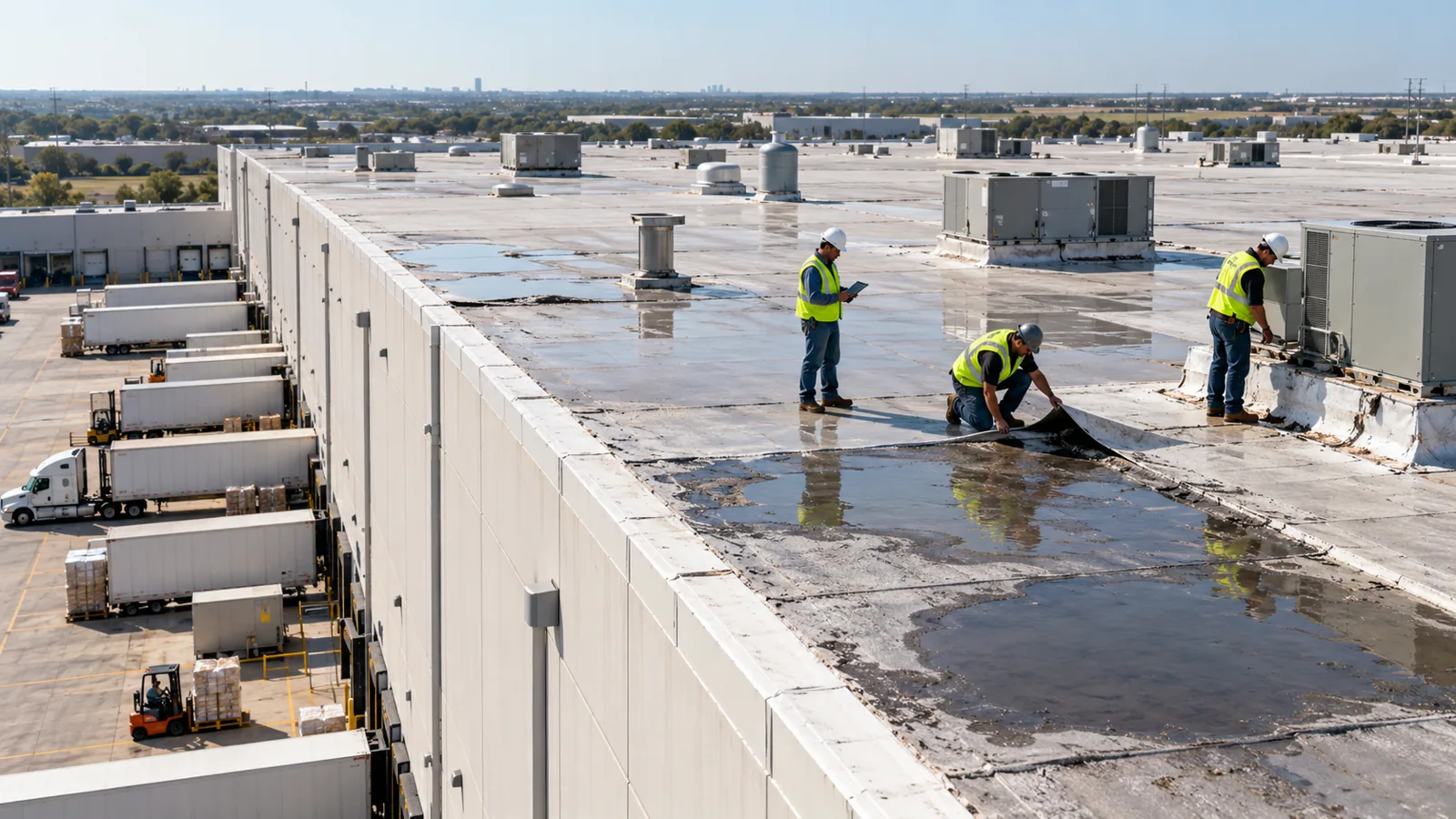
Warranties generally require prompt notice of a leak or defect, and some require periodic inspections. The file records each deadline, the person responsible for sending notice, and the form it must take. When a leak is found, the first action is to photograph, log the roof section, and send the notice before any permanent repair, since repairs made before notice can complicate a claim. A temporary dry-in that protects the interior is generally acceptable, but the file records what was done and why.
For inspections that the terms require, we schedule the visit, take dated photographs, probe seams, check flashing and drains, and write the result in the file. The record shows that the owner kept up the conditions of coverage, which is the first thing a manufacturer's representative asks to see.
Route Repairs to the Right Installer and Document Them
Who may repair a warrantied roof is often specified. Some warranties require work by an installer the manufacturer recognizes, and others allow any qualified contractor so long as the materials are compatible and the manufacturer is notified. Reading the clause before the repair avoids voiding coverage. Where a warranty names the manufacturer's own recognized contractor for repairs, the file says so, and the owner arranges that repair with our inspection record supplying the observations.
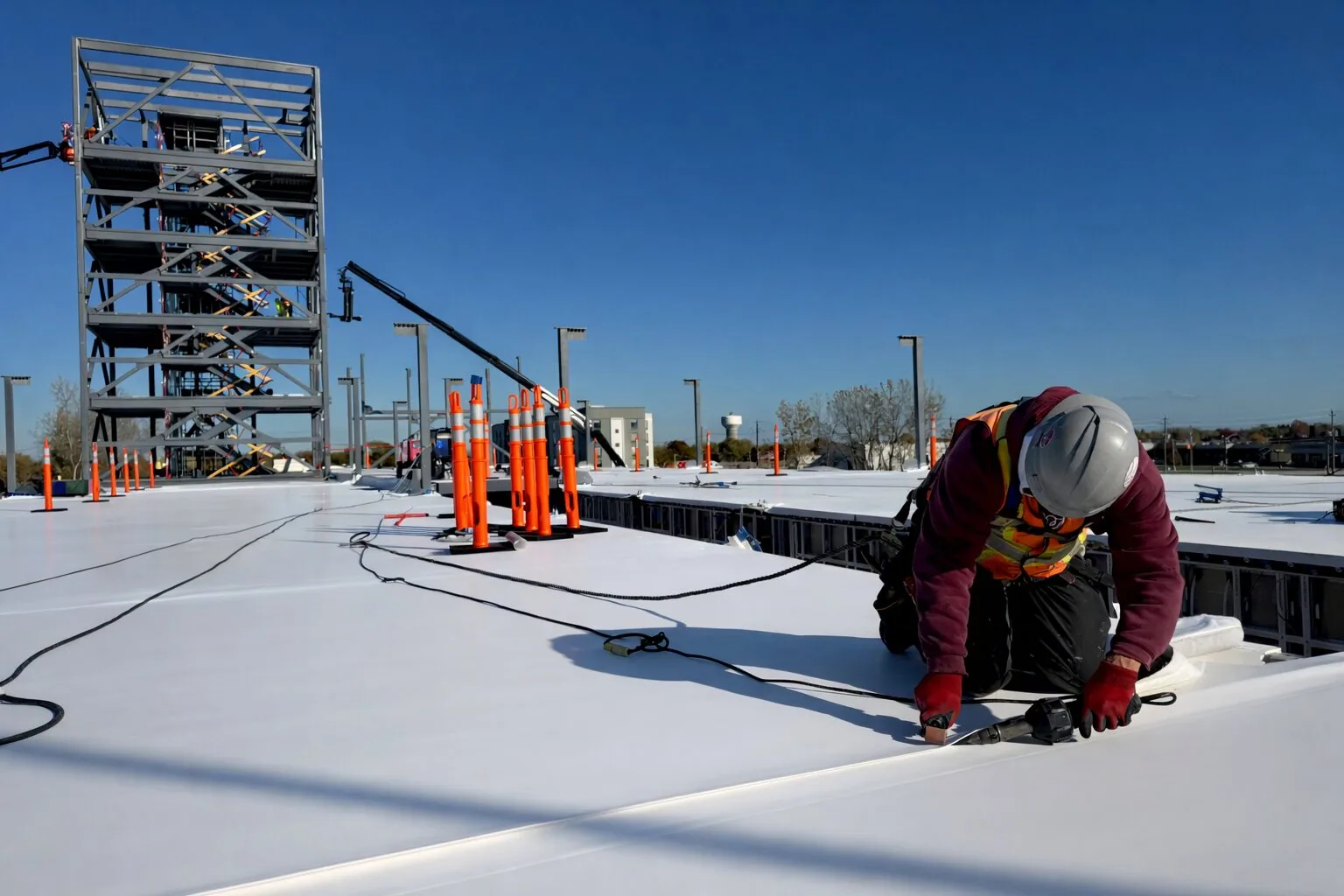
For repairs we perform, the entry records the section, the cause, the method, the materials, the weather, the photographs, and the probe or test result. If the repair touches a seam or flashing, the weld or bond check goes in the file. Over several years the log shows a pattern, and the pattern informs the decision on whether more repair is sensible or the roof is nearing the replacement line.
Keep Storm Events From Becoming Warranty Disputes
The city's hazard plan places all of Waterbury in the path of winter storms and adds summer storms and tornadoes to the list. Many warranties exclude damage from named perils such as extreme wind, hail, or fire, and treat those as insurance matters. A dated photograph set of the roof before the storm helps separate a covered defect from an excluded event. After a storm, a prompt inspection documents what changed, and the file can then support either a warranty claim or an insurance claim, depending on the cause.
That is why the inspection record is kept current. A manufacturer or an insurer will ask for the condition before the event, and a record from last month answers it better than a memory from last year.
Match Warranty Duties to the Building's Setting
Warranty conditions meet different problems on different Waterbury roofs. Downtown, where I-84 meets Route 8, tenants, mechanical contractors, and window cleaners all have reasons to be on the roof. Each visit is a chance for a puncture or an unlogged penetration, and a warranty that excludes damage by others on the roof makes access control part of keeping it in force. The file calls for a roof access log, a sign-in at the hatch, and walk pads on routes to equipment.
Aging industrial ground by the Naugatuck River and the Reidville and Brookside parks raise a different issue: process exhaust, long drain runs, and equipment changes that add penetrations over time. A warranty may exclude damage from chemical exposure or from conditions that develop when equipment is added without notice. The file records each addition, the flashing used, and the date the manufacturer was told, if the terms require it.
Corridor retail on East Main or South Main adds its own pattern: tenant turnover, signage mounts, and rooftop units that change with each lease. A log kept by roof section shows who added what, and when, which is the evidence the owner needs when a manufacturer asks why a membrane is damaged near a curb.
Match the File to the System and the Manufacturer
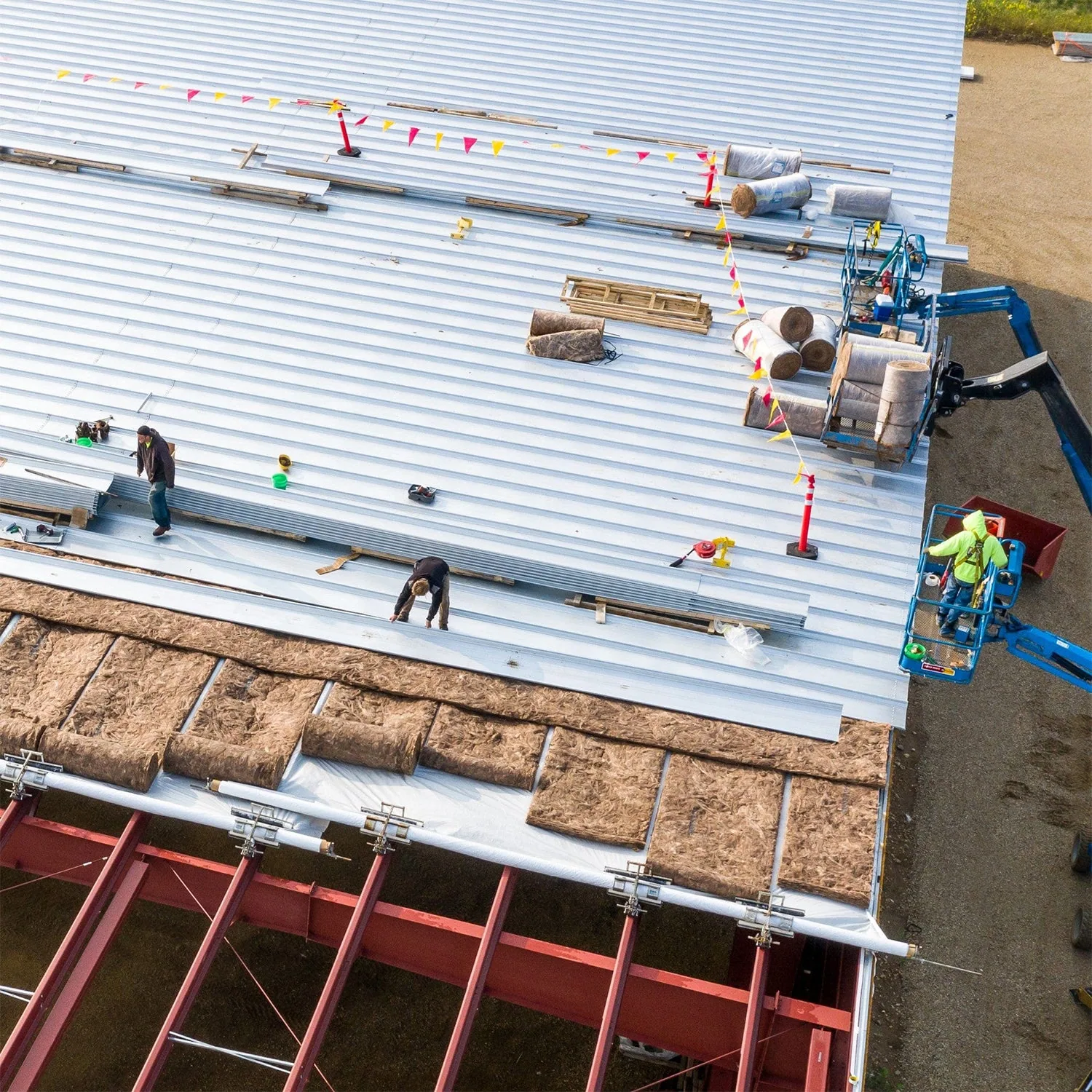
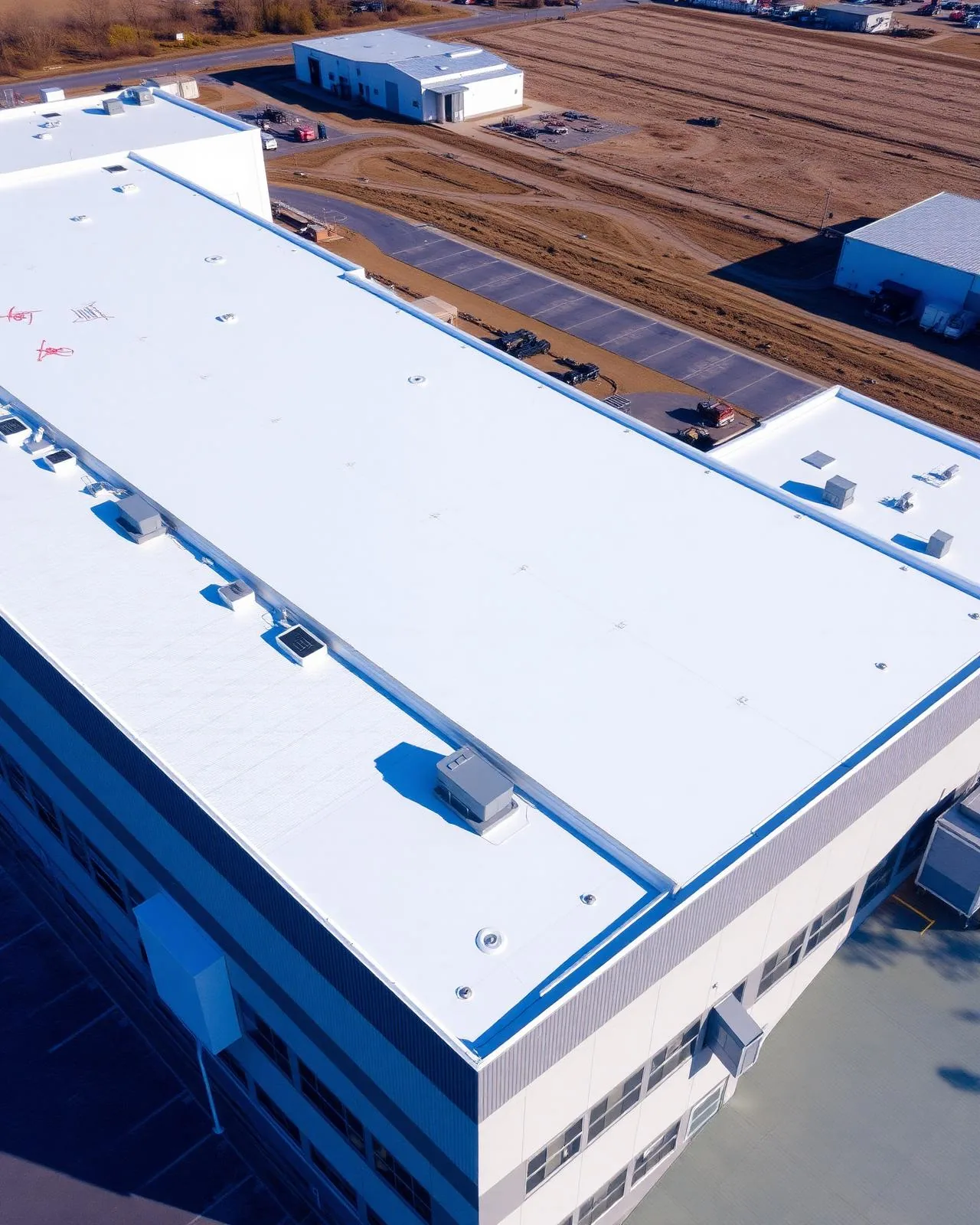
Warranty conditions follow the system. A heat-welded single-ply roof, a modified bitumen assembly, a built-up roof, and a coated roof each call for different maintenance and different repair methods, and the manufacturer's published guidance governs. We keep the relevant details in the file for roofs built with systems from GAF, Carlisle SynTec, and others. The file names the system type and layer count as found, and does not assume the system from the building's appearance.
When a building is sold, the warranty may or may not transfer, and transfer often requires notice or a fee within a window. The file lists the steps, so the seller and buyer can complete them. The same terms come up in acquisition roof surveys, where the existence and terms of a warranty are part of the finding. Owners across Waterbury and nearby towns can keep the same file format.
Commercial Roofing Questions
Can routine maintenance void a warranty?
It can if the work uses incompatible materials or is done in a way the terms prohibit. The file records what maintenance the terms require, and who performs it, so routine visits support the warranty instead of risking it.
What should be done first when a leak appears on a warrantied roof?
Photograph the area, log the roof section, protect the interior with a temporary measure if needed, and send notice as the terms require. Permanent repair waits for the manufacturer's response or the terms' allowance.
Does ponding water affect coverage?
Often. Some warranties limit coverage where water stands beyond a stated period. The file records ponded depth and the drain path, so the owner knows early whether the condition needs correction.
Who should keep the warranty documents?
The owner, with a copy in the roof file alongside the plan. We summarize each warranty by section so facilities staff do not have to reread the full document at every question.
Does a warranty transfer if the building is sold?
Sometimes. Transfer often requires notice, a fee, or an inspection within a window. The file lists the steps from the document so the transfer is not missed.
Can you perform warranty repairs?
Only where the terms permit repair by a general commercial roofer. Where they name a recognized contractor, the file says so and we hand that contractor the inspection record.
Send the warranty documents and the repair history
Send the warranty papers, installer records, and any repair invoices, along with the access rules and the dates of any pending sale or refinancing. We will summarize the terms by roof section, inspect to document the current condition, and set up a log with the notice and inspection dates.