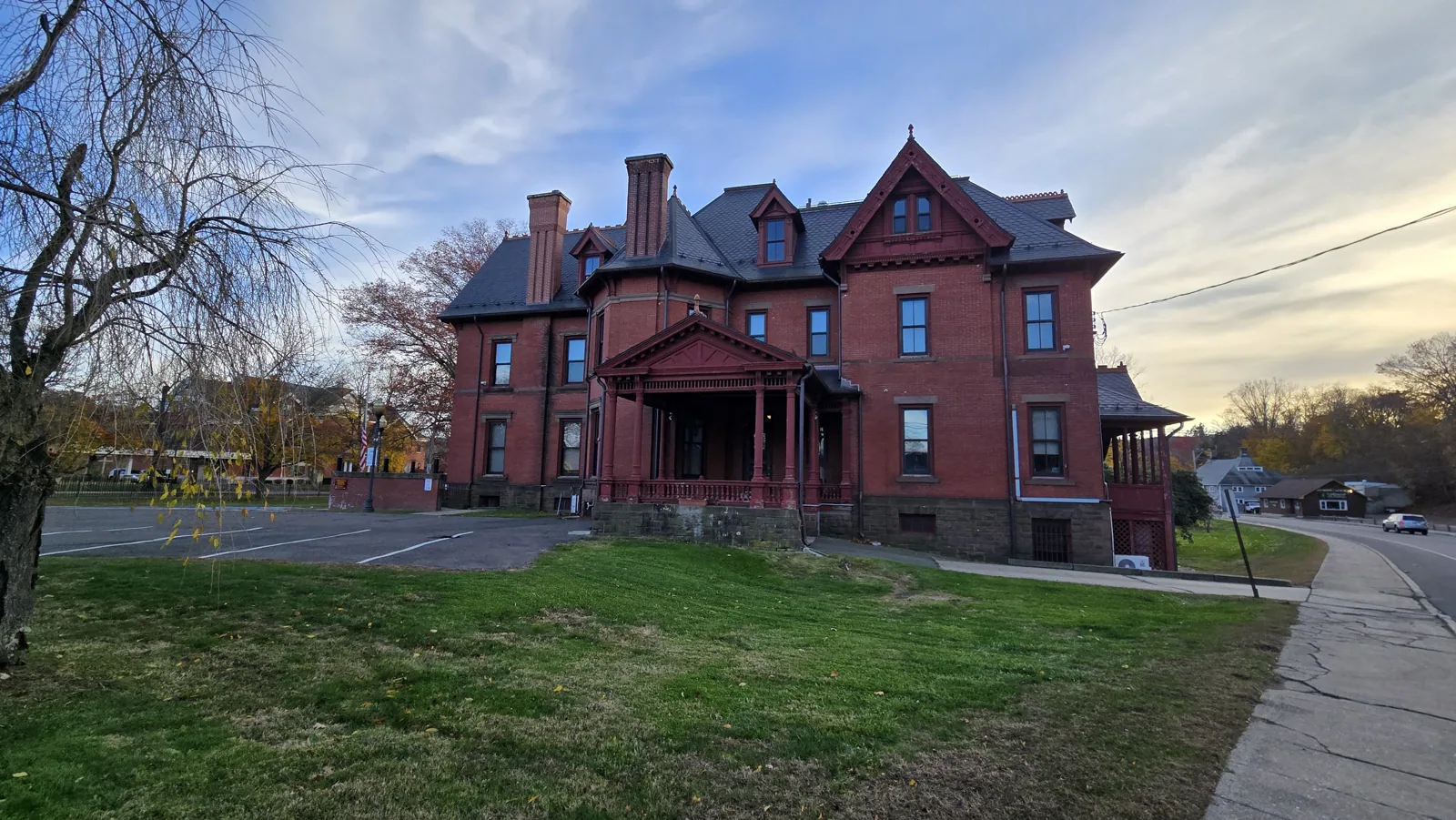
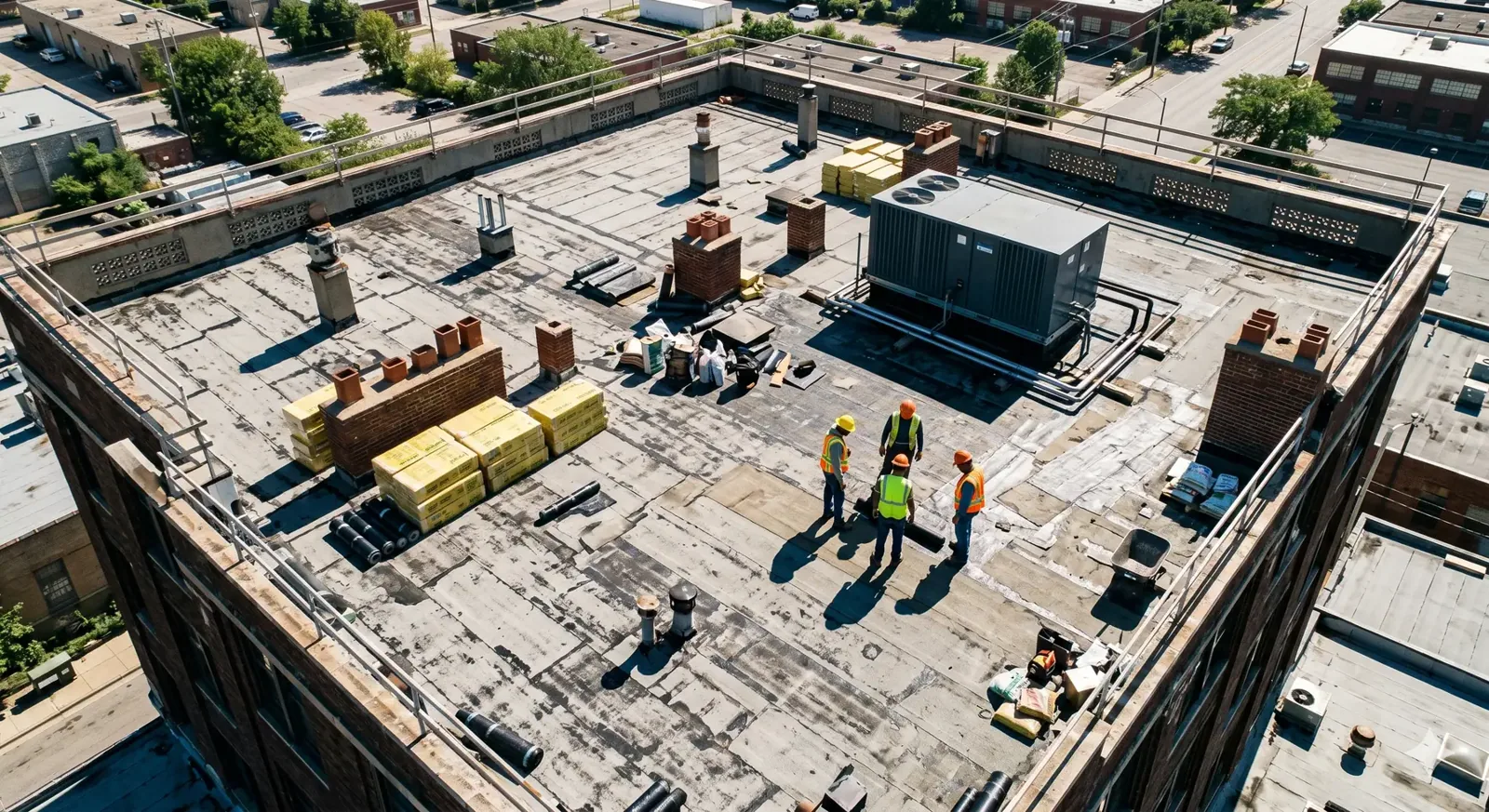
A portfolio budget goes wrong when every roof is carried at the same average cost and the same average age, because the roofs that decide the budget are the few with wet cores, failing drain paths, or sections that have already been patched twice. Asset management for roofs starts by replacing the average with a record: one entry for each roof section, showing what the assembly is, what was found on the last walk, what the next action is, and the year that action can no longer be deferred without a wider scope. For owners with buildings in Waterbury, CT, that record becomes the working document for capital requests, insurance renewals, lender questions, and tenant complaints.
We build it from field observation. The first pass is a hands-on survey with photographs and, where the surface does not settle the question, test cuts and moisture readings. The result is a ranked list that a finance person and a facilities person can read the same way.

Build the Record Around Roof Sections
The unit of record is the roof section, not the building. A single building may have an original membrane over the main span, a recover over an addition, a metal panel canopy, and a low roof over a loading area, and each of those ages and leaks on its own schedule. We number every section on a plan, photograph it from fixed points, and log the assembly type, the number of layers found, the attachment method, the drain count, the edge and flashing condition, and any record of past repairs. A year later the same photographs can be retaken, and the difference between the two sets is the evidence for the next decision.
The record also holds what is not yet known. A section whose insulation condition has not been tested is listed with that gap and the test that would close it, so nobody mistakes a visual rating for a moisture finding. When a test cut shows a wet core, the entry changes from monitor to replacement scope, and the plan states the tear-off boundary.
Rate Condition and Attach a Cost Consequence
Each section receives a condition rating based on surface, seams, flashing, drainage, and moisture, and each rating carries a consequence in plain budget terms. A sound section with minor flashing wear stays in the maintenance line. A section with open laps and ponding that has not yet wet the insulation sits in a repair-or-recover window, where a decision made this year costs less than the same decision made after the core is saturated. A section with a confirmed wet core and a record of repeated patching sits on the replacement line, and the plan shows the dry-in date the work would need.
Putting the cost consequence next to the rating changes the conversation with an owner. Instead of a list of defects, the owner sees which items protect the interior, which protect the remaining service horizon, and which can wait without enlarging the scope. A written condition report carries the evidence behind each rating.
Account for Waterbury Weather in the Inspection Cycle
Waterbury's hazard plan puts the whole city in the way of winter storms, from ice to nor'easters, and counts summer storms and tornadoes among its other local threats. The same plan cites projections of heavier extreme precipitation and hotter summers. For a roof portfolio, those exposures turn into a calendar: a drain path and edge check in the fall, a post-winter walk once the snow has gone, and an inspection after any major storm that touches the building. Each visit adds photographs to the same numbered sections, so the record shows what a winter did to a seam or what a storm did to a curb.
Planning material of this kind describes exposure, not the condition of a given roof, and the record treats it that way. It sets the inspection rhythm. The roof itself, in the field, sets the rating.
Sort the Portfolio by Building Setting and Operating Window
Waterbury's building stock is varied enough that a single policy rarely fits. The city's own description runs from a tight business core where I-84 meets Route 8, to aging industrial ground beside the Naugatuck River, to the Reidville and Brookside parks, to retail and housing strips along East Main, North Main, and South Main. A downtown office roof, a river-valley industrial roof, and a corridor retail roof share a climate but not access, tenant hours, or staging room.
We record those operating constraints beside each section: crane or lift access, rooftop equipment, tenant sensitivity to noise and dust, and the hours when work can proceed. That lets the plan sequence work by setting, and it keeps a downtown roof with limited staging from being scheduled as if it were an open industrial yard. The Waterbury service area and neighbors such as Naugatuck and Bristol each have their own mix.
Keep the Record Current Through Maintenance Visits
A record that is not updated turns into a historical document. Each scheduled preventive maintenance visit adds a dated entry: drains cleared, seams probed, flashings checked, new penetrations logged, and the photographs retaken. Small repairs are tied to the section number, so the plan shows how much has been spent patching a particular section. When the patching total approaches a stated share of what a recover would cost, the entry flags it, and the owner can make the choice with the numbers in front of them.
Annual or semiannual hands-on inspections fill in what maintenance visits do not, and they update the ratings.
Hand the Owner a Decision, Not a Binder
The product at the end is a short ranked list. Which sections get repaired now, which are on the recover option, which are on the replacement line, and what each costs in the capital window the owner has. The same data feeds a longer capital plan, supports a multi-site program when the owner holds buildings in several towns, and gives the claims team the dated photographs it needs after a storm. Property managers who report to owners can use the same record for their own reviews, and property management companies can pass it to owners alongside their regular reports.
Commercial Roofing Questions
How much of a portfolio should be walked before a budget can be built?
Walk every roof section that carries interior risk or a deferred repair, and sample the rest by age and type. The first budget can then rank sections with evidence and flag unwalked sections as unknown, with a date to close the gap.
Is a visual rating enough to put a roof on the replacement line?
Not alone. A visual rating justifies a test cut or moisture scan, and the cut or scan justifies the line. A wet core confirmed by a test is the finding that moves a section from repair to replacement.
What should an asset manager track beyond condition?
Assembly type, layer count, attachment, warranty status, repair history, drain count, access constraints, and tenant hours. Those fields let the plan price work by section and schedule it around the building's operation.
How often should the record be updated?
After each maintenance visit and each inspection, and after any storm that reaches the building. Ratings change on the section level, so the updates are by section, with photographs from the same positions.
Can the record help with an insurance claim?
Yes. Dated photographs and condition entries show the roof before the event, which helps separate storm damage from earlier wear. The insurer decides coverage; the record supplies the roof facts.
Does asset management replace a capital plan?
It feeds it. The record states condition and consequence by section, and the capital plan turns those into a multi-year schedule with permit dates, dry-in dates, and funding windows.
Send the roof list, access rules, and capital window
Send the addresses, any roof drawings or past reports, the access rules for each building, and the capital or permit window you are working to. We will start with an inspection that separates repair, recover, and replacement scopes and return a written record with photographs, ratings, and the tests that would settle each open question.