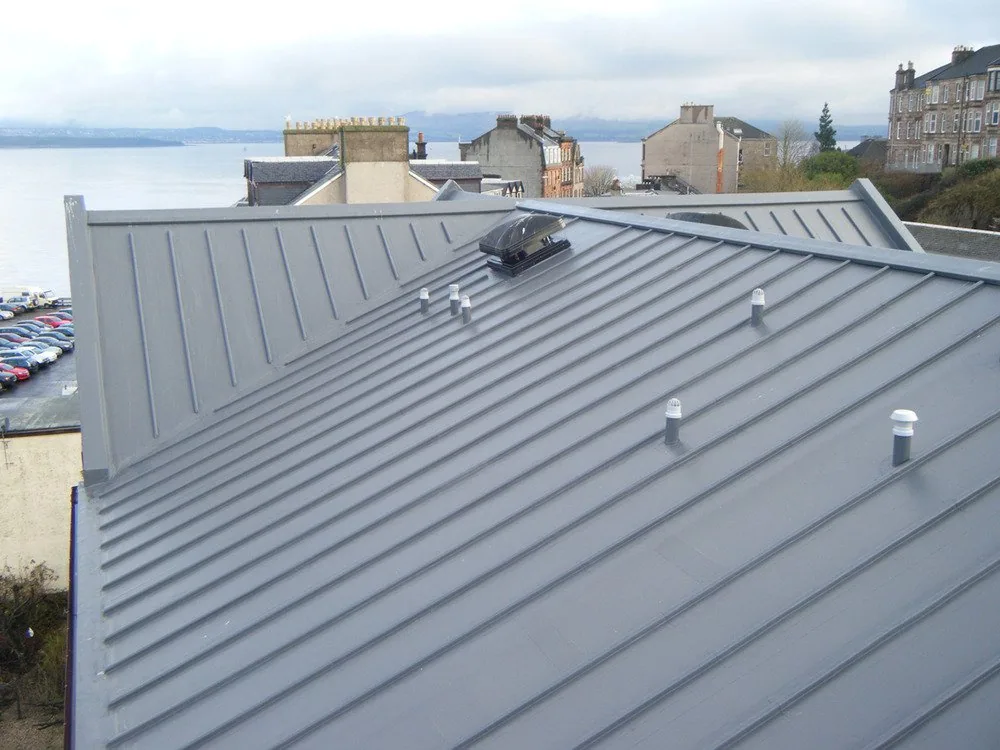
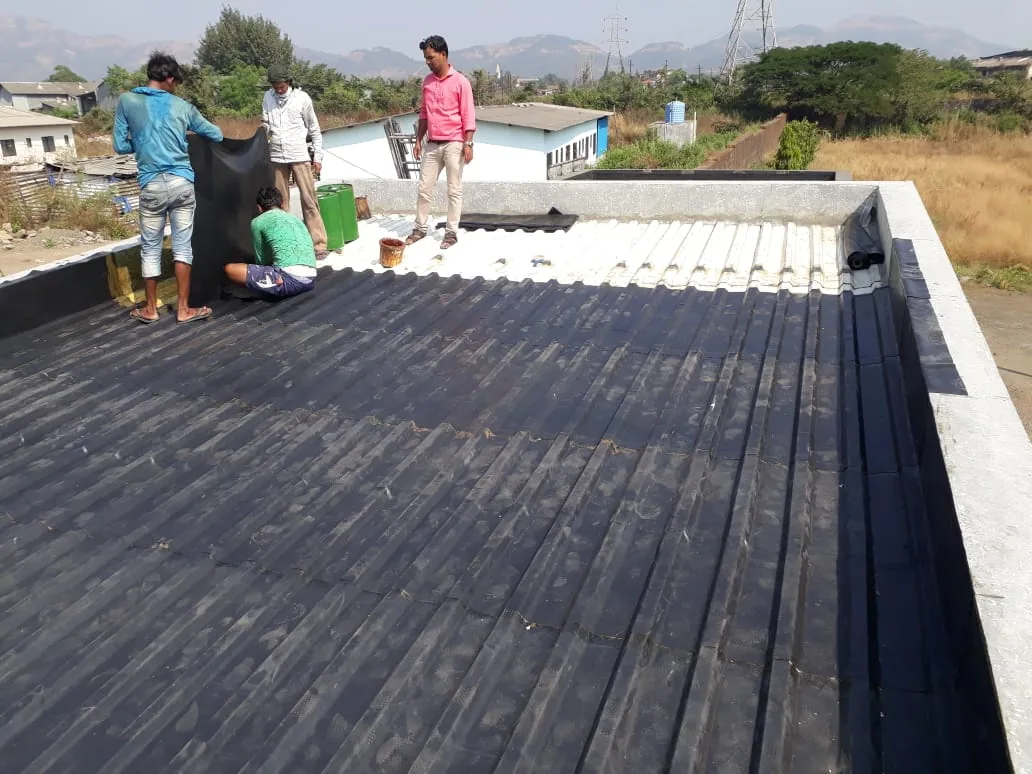
A prefabricated roof moves risk from the field to the factory, and it also changes what repair means: the panels, flashings, and accessories were made to a measured plan, and a repair has to respect that plan. Duro-Last is a manufacturer of custom-fabricated PVC roofing, where the membrane is cut and welded into panels and flashings before it reaches the building. For an owner in Waterbury, CT with such a roof, the questions are the usual ones: where are the field seams, what is the condition of the prefabricated details, is the core dry, and what does the capital window allow. We answer them in the field.
Understand What Was Built in the Shop and What Was Welded on the Roof
On a prefabricated PVC roof, many of the complex details, including corners, curb wraps, and pipe boots, were welded before delivery, and the field work consisted of joining the panels and fastening them to the deck. The result is a roof with fewer hand-welded details, but it still has field seams, perimeter terminations, and penetrations that were cut later. We map each: the panel seams, the prefabricated pieces, and anything added after installation.
The map matters for repair. A field seam and a shop-welded detail are repaired differently, and a later penetration made by another trade may have been flashed with a different material. The plan records each, with photographs, so the repair method matches what is there.
Probe Seams and Terminations Before Declaring a Panel Failed
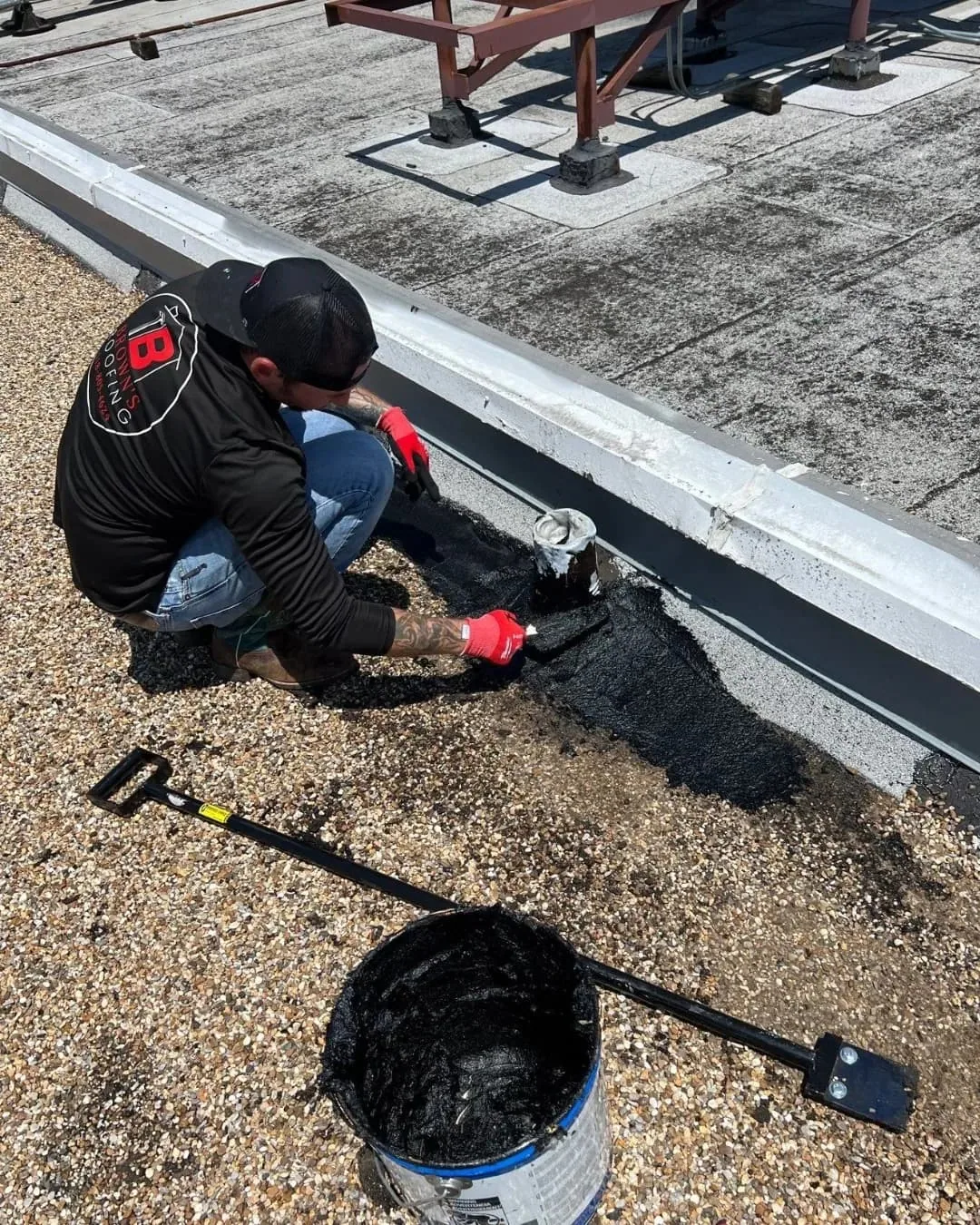
PVC membranes are heat-welded, and the weld is probed along its length. A weld that has opened gets cleaned and fused again, or capped with a compatible welded strip. Terminations at walls, curbs, and edges are checked for fastener backout, sealant failure, and shrinkage. We photograph each repair and note the weather. Where the roof has been repaired with a different material, we identify it and check compatibility, since incompatible plasticizers or adhesives can degrade a PVC sheet.
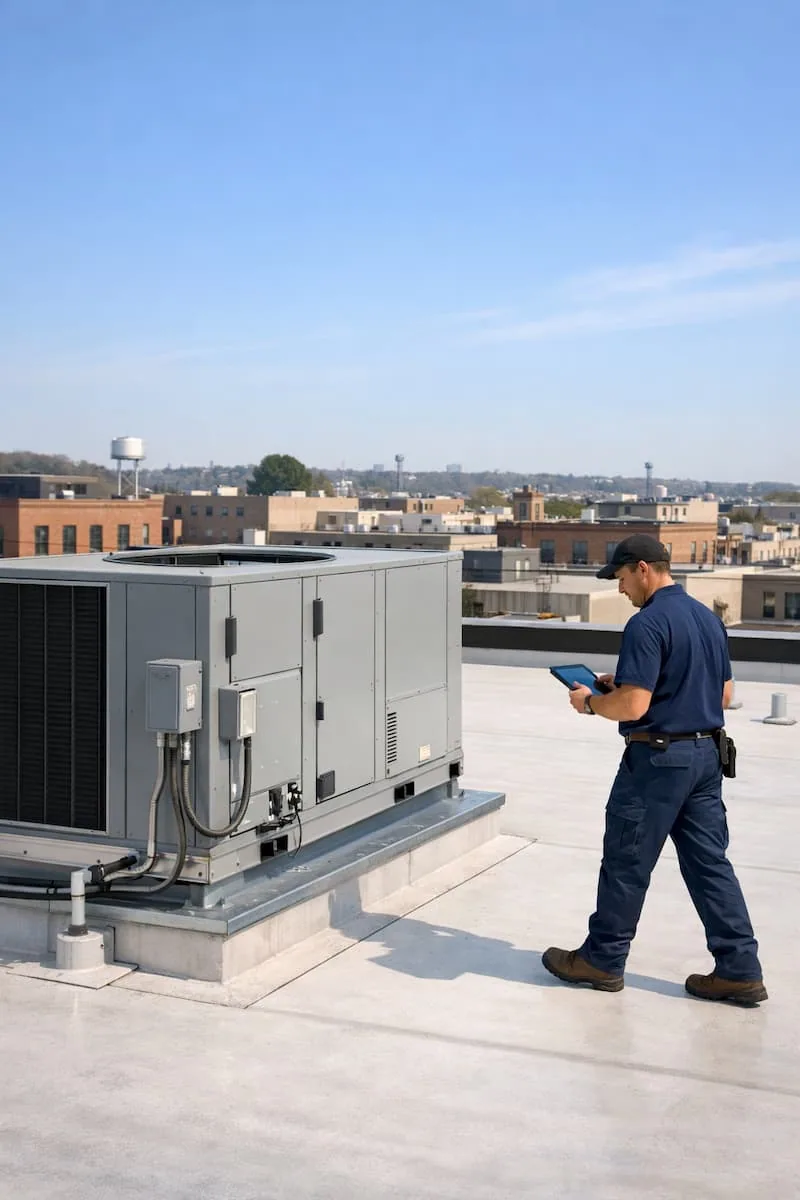
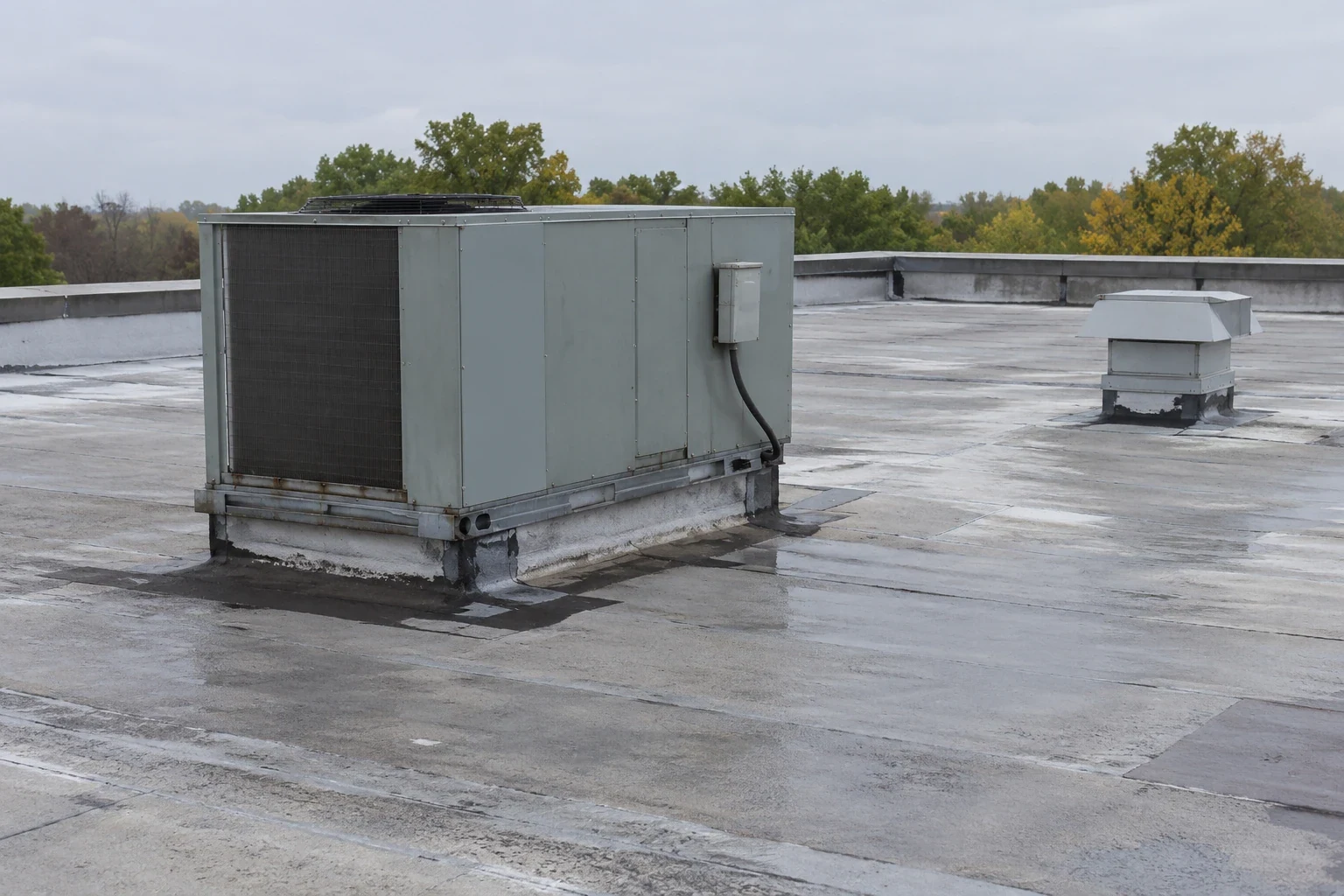
Roof-mounted equipment and foot traffic cause much of the damage on these roofs. Punctures, scuffs, and cuts near units show where the walk path is, and the repair includes a walk pad where traffic is repeated. The details around each unit, including its curb and supports, are repaired to the same standard.
Account for Panel Layout, Measurement, and Later Changes
A made-to-measure roof depends on the accuracy of the original measurements, and changes after installation can break that fit. Rooftop units added, curbs moved, or a parapet raised all alter the geometry the panels were cut for. Where a change has been made, we look at how the membrane was adapted: whether a new flashing was welded in, whether a patch was added, or whether the panel was stretched around the new object.
Stretched or distorted membrane near a changed detail is a common source of splits and pulled welds, because tension concentrates where the panel was never meant to bend. The record notes such areas, photographs them, and proposes the correction. Sometimes that is a new prefabricated piece, sometimes a field-welded wrap, and sometimes a relocation of the object.
The same logic applies at roof edges. Perimeter metal and terminations were designed for the roof's original size, and an added layer or a new insulation thickness changes the height of the edge. The plan records the edge height before and after any recover and checks that terminations still seat and seal. Owners planning a tenant improvement or a rooftop addition can use the map to see where their work will touch the membrane, and to ask for a flashing detail before the opening is cut.
Match the Membrane to the Exposure It Sees
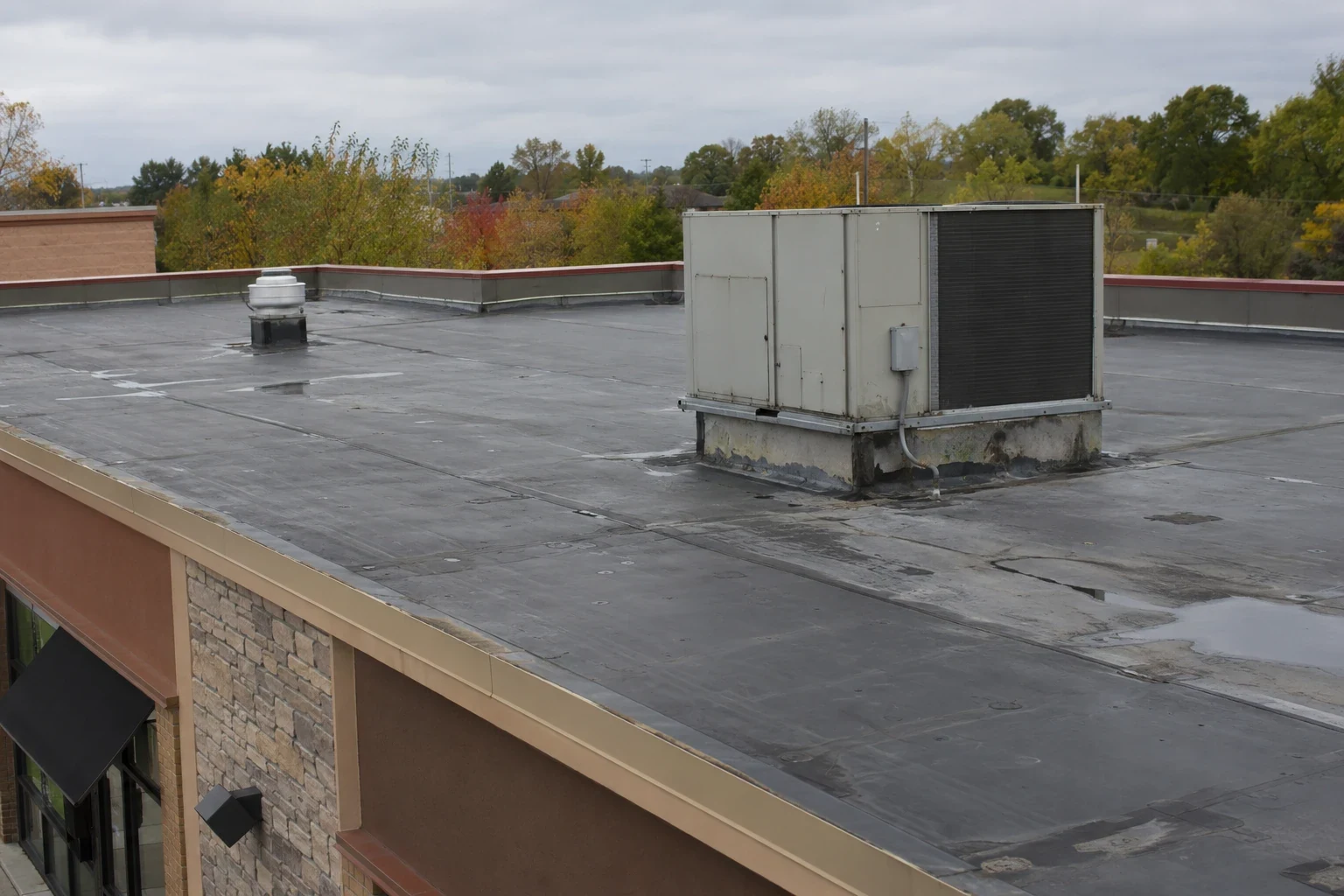
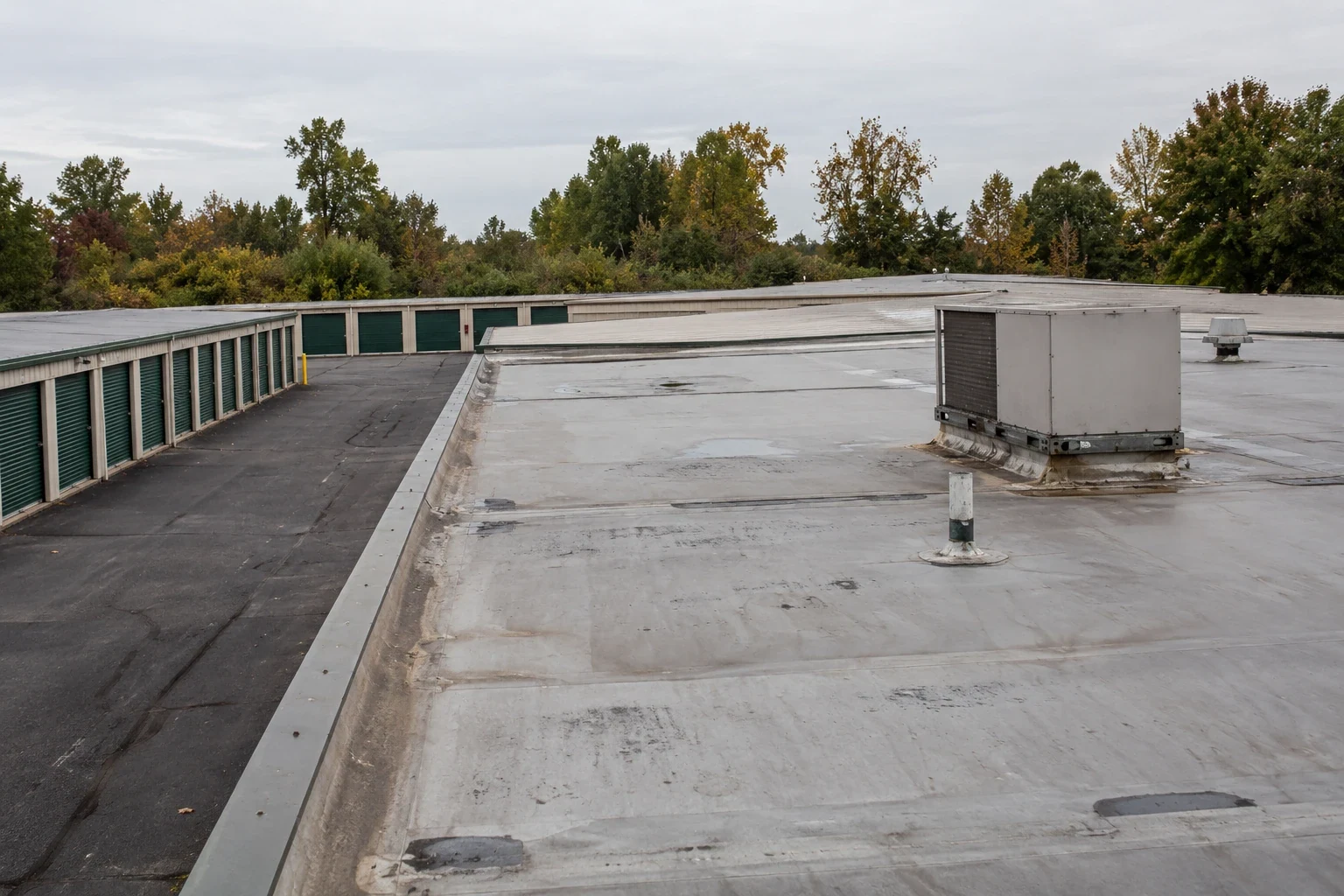
Part of the appeal of PVC is its tolerance for many cooking fats and chemicals, which is why it turns up over kitchens and some industrial buildings. The resistance is not absolute, so we record what discharges onto the roof and inspect the surface near each source. A restaurant roof with a grease discharge should have containment and a walk pad at the fan, and the membrane near it should show no softening. For a roof with an unknown exposure, the manufacturer's published data decides suitability. A restaurant roof and a self-storage roof show opposite ends of the exposure range.
The site specifics matter. Retail corridors such as East Main and South Main in Waterbury put restaurants and shops under many roofs, and the survey records each exhaust and unit as found.
Weigh Repair, Recover, and Replacement With Test Results
A limited defect on a sound PVC roof is a repair, and the scope states the boundary. A recover can add a new membrane over the old one when moisture, deck, attachment, and heights allow, and the old sheet is evaluated for compatibility with the new one. Replacement applies when the insulation is wet, the sheet has hardened and cracked, or widespread seam and flashing failure make the roof unreliable. A moisture scan and test cuts supply the evidence, and the plan lists allowances for what the cuts might show.
The repair limit is stated beside the cost in every commercial roof repair scope, so the owner can see where patching stops being the sensible choice.
Plan for Storms, Drains, and Winter Load
Winter storms reach every part of Waterbury according to its hazard plan, and tornadoes and summer storms share the local risk list. Drain paths, overflow outlets, and edge details deserve attention on any PVC roof, and a prefabricated edge detail still needs fasteners that have not backed out. After a storm, we inspect edges, terminations, and equipment bases, and we record the condition against the pre-storm photographs. The record supports either a warranty notice or an insurance claim.
In the compact downtown, street access may limit how rolled panels reach the roof, and the lift position becomes a cost line. The Reidville and Brookside industrial parks and the older industrial land along the Naugatuck River each get their staging checked on the site walk.
Compare the Prefabricated Approach With Field-Fabricated Welded Systems
A prefabricated PVC roof and a field-welded PVC roof share the same membrane chemistry and differ in where the welding happens. A field-welded thermoplastic family such as Sika Sarnafil puts the welding on the roof instead. Owners compare them on seam count, detail quality, installer availability, warranty terms, and repair access. Other single-ply makers, including Versico, are compared on the same points. A Waterbury or Plainville owner receives the comparison in the written report.
Commercial Roofing Questions
What does a prefabricated PVC roof mean for repairs?
Many details were welded in the shop to a measured plan, so the repair has to respect that geometry. We map field seams, prefabricated pieces, and later additions before choosing a method.
Can a PVC roof be repaired with any patch material?
No. The patch must be compatible with PVC. Incompatible materials can degrade the sheet over time, so we identify existing repairs and check them.
How does grease affect a PVC membrane?
PVC tolerates many fats and oils, but the actual exposure still matters. We inspect the surface near each exhaust and add containment or walk pads where wear shows.
When is a recover possible over PVC?
When the insulation is dry, the deck is sound, attachment is adequate, and the old sheet is compatible with the new one. A moisture scan plus cut samples settle it.
What do you check after a storm?
Edges, terminations, equipment bases, and seams. We compare them with the pre-storm photographs and record changes.
What records come with the work?
A numbered plan, photographs, weld probe results, and a warranty summary. Later inspections and any claim can start from that file.
Send the roof records and the schedule window
Send any warranty papers, panel drawings, or repair invoices, plus the access rules and the capital or permit window. We will inspect the roof, map the seams and details, and return a report that separates repair, recover, and replacement scopes.