A ceiling stain in a law office or a medical suite is a bigger problem than the roof repair behind it, because files, equipment and client time sit under that ceiling. Woodbridge, CT reports more than 500 businesses, including shops, restaurants and professional services such as medical care, law and finance, and that mix shapes the first decision: whether the roof can be repaired quickly enough to avoid interior damage, or whether a larger scope should be priced for the next capital window.
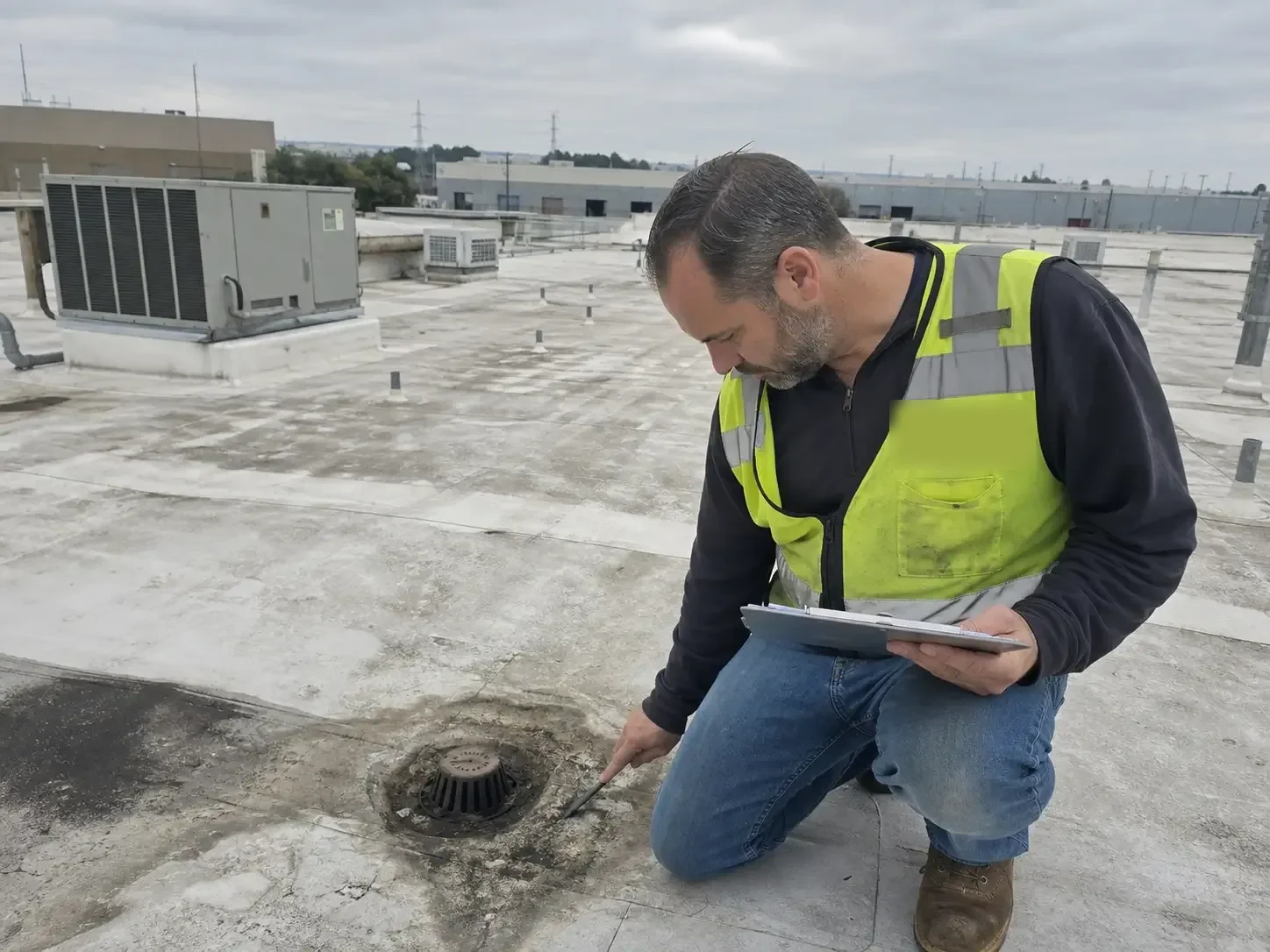
We begin with the test that could change the answer. A moisture survey tells us whether the insulation is dry, and the written result lets a property manager choose between a repair line, a recover option and a replacement without guessing.
Protect professional tenants during the roof work
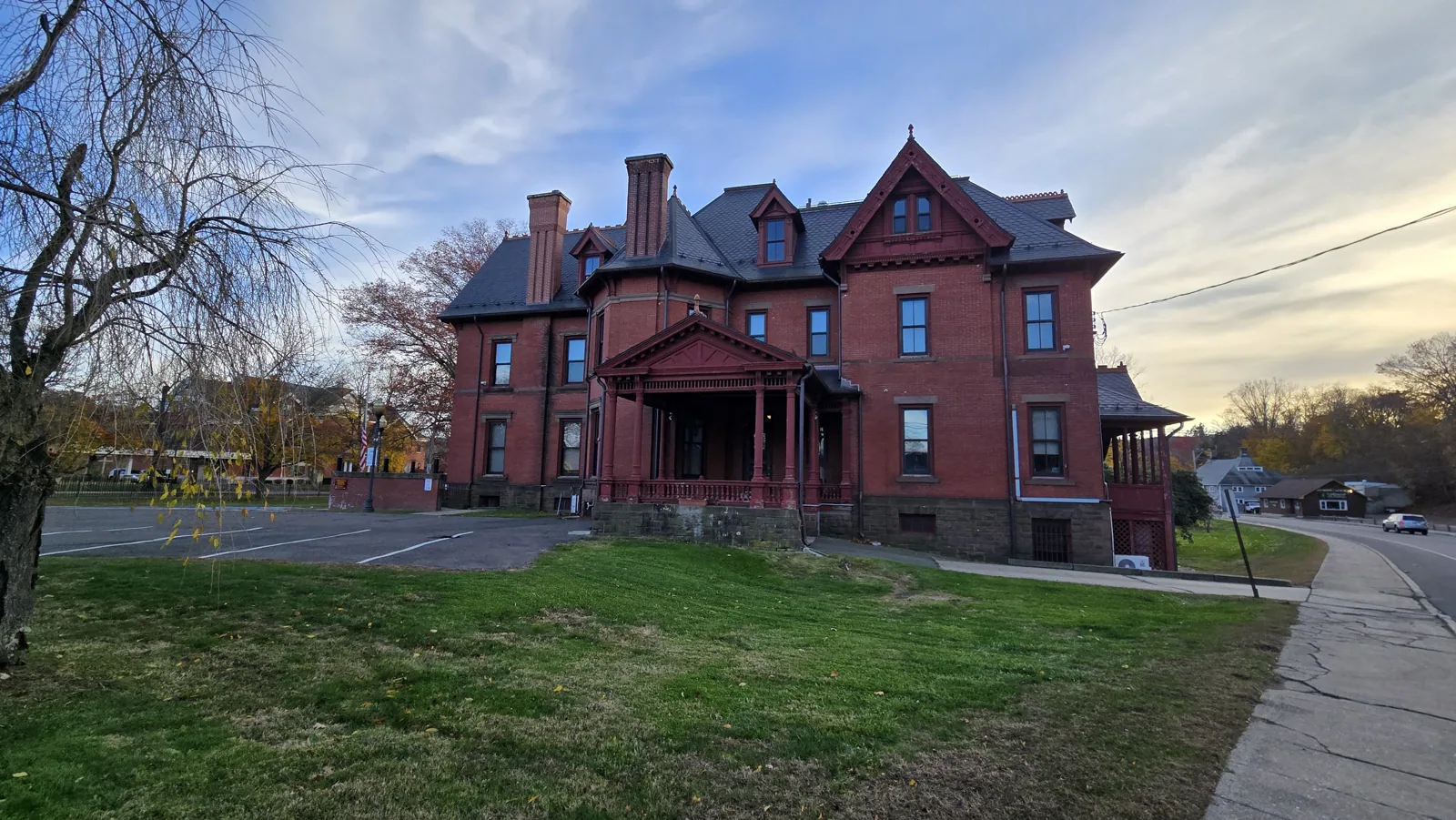
Professional offices have quiet hours, confidential records and equipment that does not tolerate dust or water. Before any roof section is opened, we ask the property manager which suites are below it, what hours the tenants keep and what protection each one needs. Covering workstations and file areas, shifting a loud tear-off to an hour when the suite is empty and setting a clear dry-in point for each day all cost little and prevent disputes.
For a restaurant or shop on the same building, the concerns are different: grease, ventilation, deliveries and customer access. A phased occupied-building scope sets work zones, protection and daily closure, and it names a contact who can approve changes if a tenant needs the schedule adjusted. If a leak is active during the project, emergency roof repair can contain it while the main scope proceeds.
Schedule the crew around I-95, I-91, the Parkways and Route 8
The town identifies I-95, I-91, the Wilbur Cross and Merritt Parkways, and Route 8 as major transportation arteries near its commercial and industrial sites. For a roofing project, that network helps with truck routes and crew travel, and it also means a delay on a major road can hold up a delivery. We schedule material drops with a buffer, confirm the property's receiving rules and keep a plan for staging if a truck arrives early.
Shops and restaurants add their own constraints, because customers and deliveries use the same lot the crew needs. We mark a protected walkway to each entrance, keep the dumpster away from customer parking where possible and schedule the loudest work for the hours when the fewest people are on site. These are small choices, but they decide whether the project reads as a minor disruption or a lost week for the tenant.
We confirm the delivery route in advance rather than assume it. The property contact should tell us if a hatch, a ladder or a freight lift is the only way to the roof, since that determines how material is lifted and how long the first day takes. An owner who also manages property in Bethany or Hamden gets a separate access plan for each roof, since a hatch, a lift and a staging area differ from one building to the next.
Account for storm wind, rain and winter loads
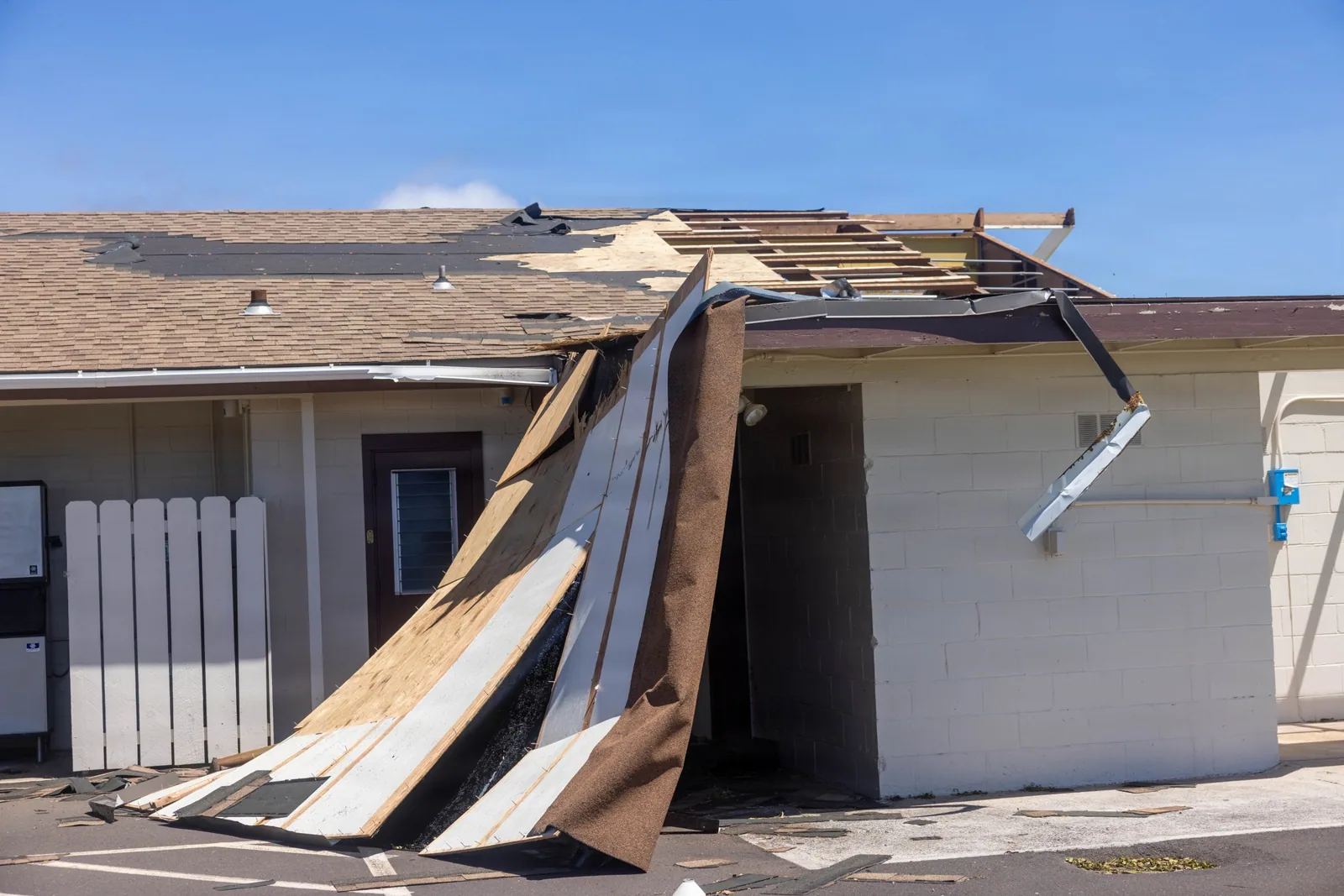
The Waterbury hazard plan names hurricane and tropical-storm wind and rain as a risk to that city, most often showing up as flooding, and lists snow, ice and sleet as winter hazards across all of it. They point to the checks any Connecticut roof should get before storm season: edge metal and coping that are tight, flashing that is sealed and drains that are open.
We look at each roof's perimeter first, because wind lifts a loose edge before it touches the field. A flashing failure repair at a wall or curb is cheap when found early and costly when water has reached the wall cavity. After a major storm, a quick walk of the roof's low areas and drains can catch ponding and debris before the next rain makes it worse. We photograph what we find so the owner has a dated record, which is useful if an insurer later asks when a condition first appeared.
Break the estimate into lines an asset manager can test
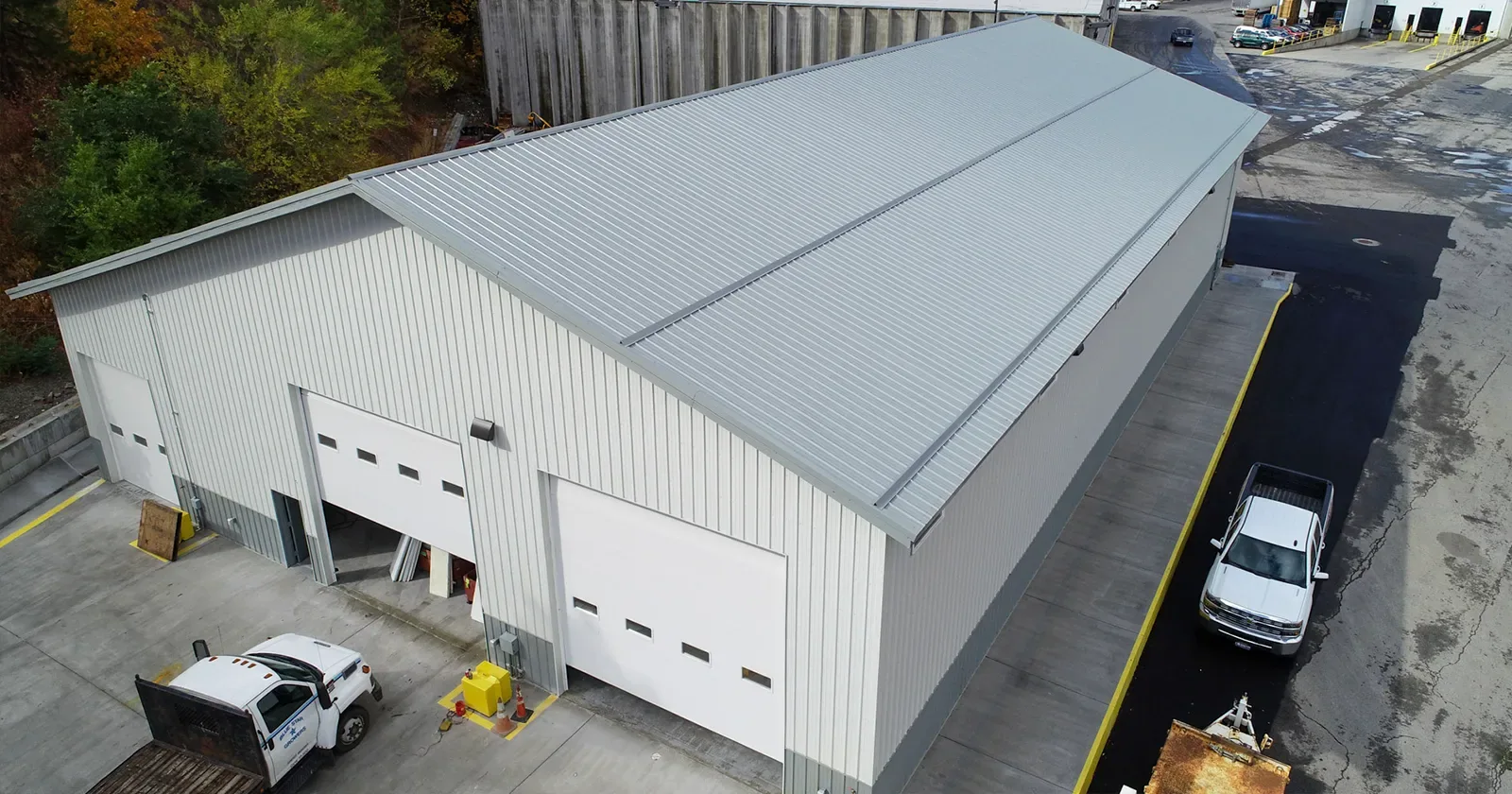
An estimate for a small commercial building should show its parts. The repair line covers the specific failed details. The recover option applies where the existing layers are dry and compatible. The replacement line covers tear-off, disposal, insulation, edge metal, flashing, drains and the final closeout. Allowances for wet core are listed as unit rates, so the owner can see what a larger wet area would add.
Permit rules come from the 2022 State Building Code, an edition built on the 2021 International Codes, and we read them before the price is firm. A written condition report with photographs keeps each finding next to the line it supports. For a property manager answering to an owner, that format shortens approval, because each cost can be traced to something seen on the roof.
Fit the roof into a longer capital plan
A roof is one item in a building's capital plan, alongside mechanical equipment, paving and interior work. We give owners a service-horizon estimate for each roof section, based on condition and not age, so replacement can be timed with other projects and tenant lease dates. Where a roof has several years left with targeted repairs, we say so and show what those repairs would cost.
An owner who also holds property in Wallingford can have the same format applied there, which allows comparison of roofs across the portfolio. Our capital planning work turns the findings into a schedule of spending by year, with the evidence behind each line, so a decision to defer or to act has a documented reason.
The same planning helps when a tenant space turns over. A new tenant may bring rooftop equipment, a kitchen exhaust or a data closet cooling unit, and each addition cuts into the roof or adds weight. We review the proposed equipment layout before the lease is signed, price the curbs, supports and flashing, and note whether the roof section below it is in a condition to take the load without a repair first. That check prevents a tenant improvement from becoming a leak.
Commercial Roofing Questions
What should a property manager tell tenants before roof work?
Give the dates, the roof sections being worked, the hours of noisy tear-off and a contact for questions. We provide a plain summary the manager can forward, and we adjust the sequence if a tenant has a critical date.
Can an office roof be repaired without disturbing the suite below?
Often yes, when the repair is limited to a seam, flashing or drain detail. The work stays outside the ceiling, and protection is placed in advance if the area below is sensitive.
What should a Woodbridge owner check on the roof before storm season?
Edge metal and coping that are tight, flashing that is sealed at walls and curbs, and drains that are open. We inspect the perimeter first because wind lifts a loose edge before the field, and we photograph the findings so the owner has a dated record.
How are wet-insulation allowances handled?
They are listed as unit rates for the area removed and replaced. If the test cuts show a smaller wet area, the final cost falls, and if they show more, the added cost is already priced.
What if a restaurant tenant's exhaust is damaging the roof?
We document the residue, check the curb flashing and recommend cleaning, protection pads or equipment changes. The report separates that cause from general wear so the cost can be assigned correctly.
Send the suite list and the roof access plan
Share the property manager's contact, the tenants and hours, any roof records and the way to reach the roof. We will inspect each roof section, test for moisture and report whether repair, recover or replacement is supported.