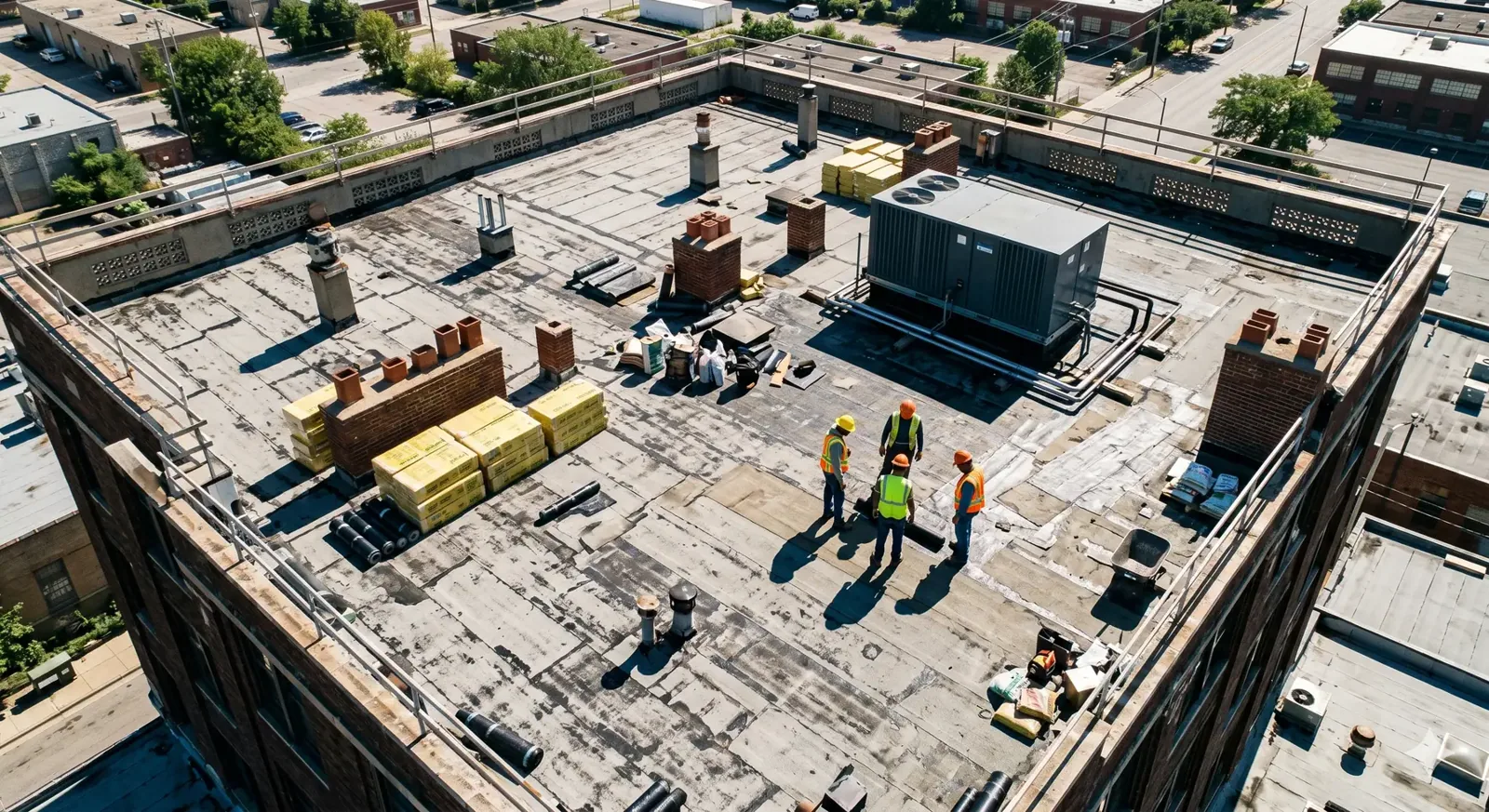
A small commercial building on a quiet road can cost almost as much to reach as to repair, so the first budget question in Bethany, CT is how many roof sections can be settled in a single visit. The town covers about 21.4 square miles of mostly wooded, residential and agricultural land with some light industry and small business, and that spread of properties means a crew often travels farther between jobs than the roof work itself would suggest.
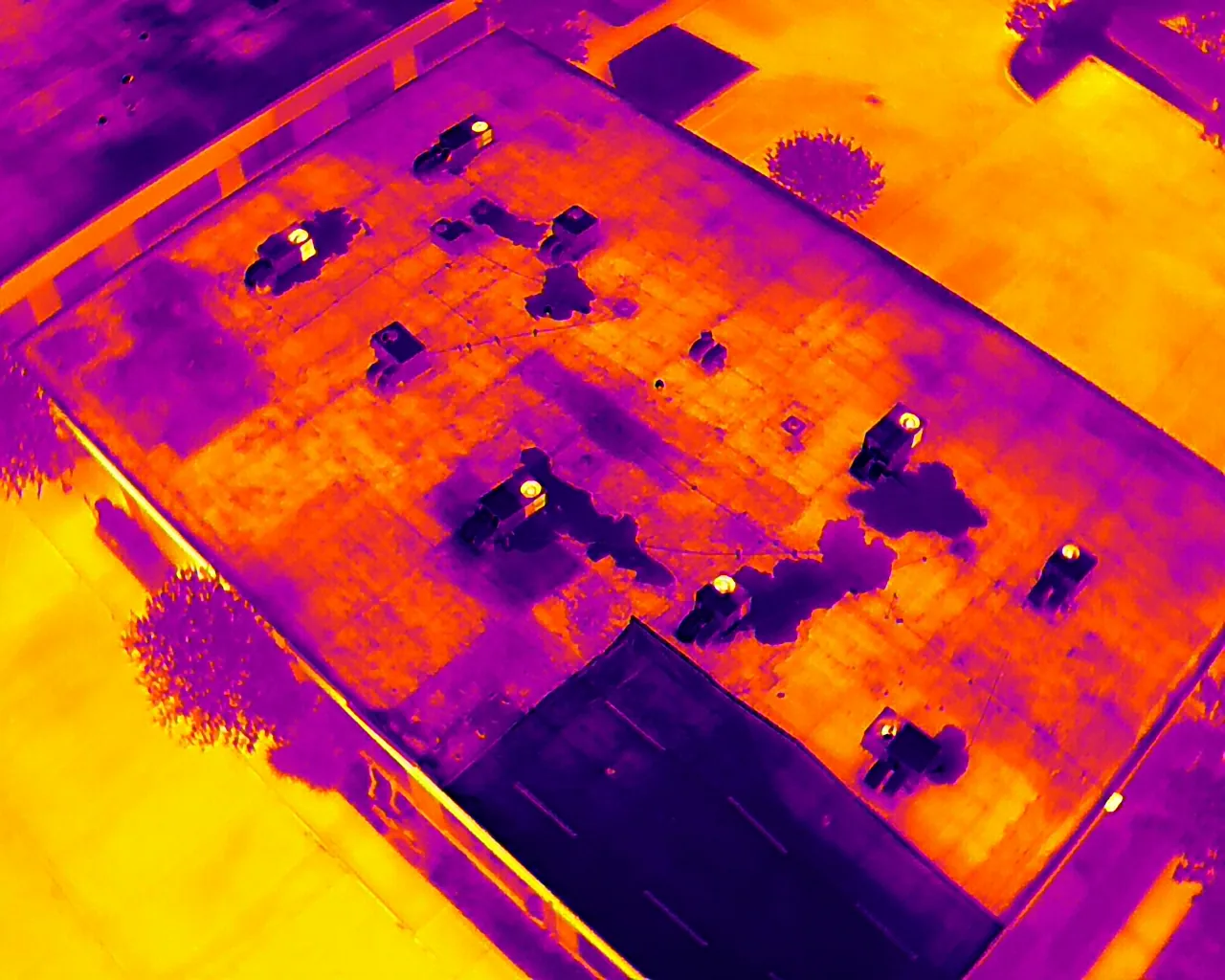
We start with the finding that could change the price: whether water has reached the insulation. A commercial roof inspection that includes a moisture check lets an owner choose between a patch, a recover option and a replacement line before material is ordered, and it lets us group the work so the trip is not wasted.
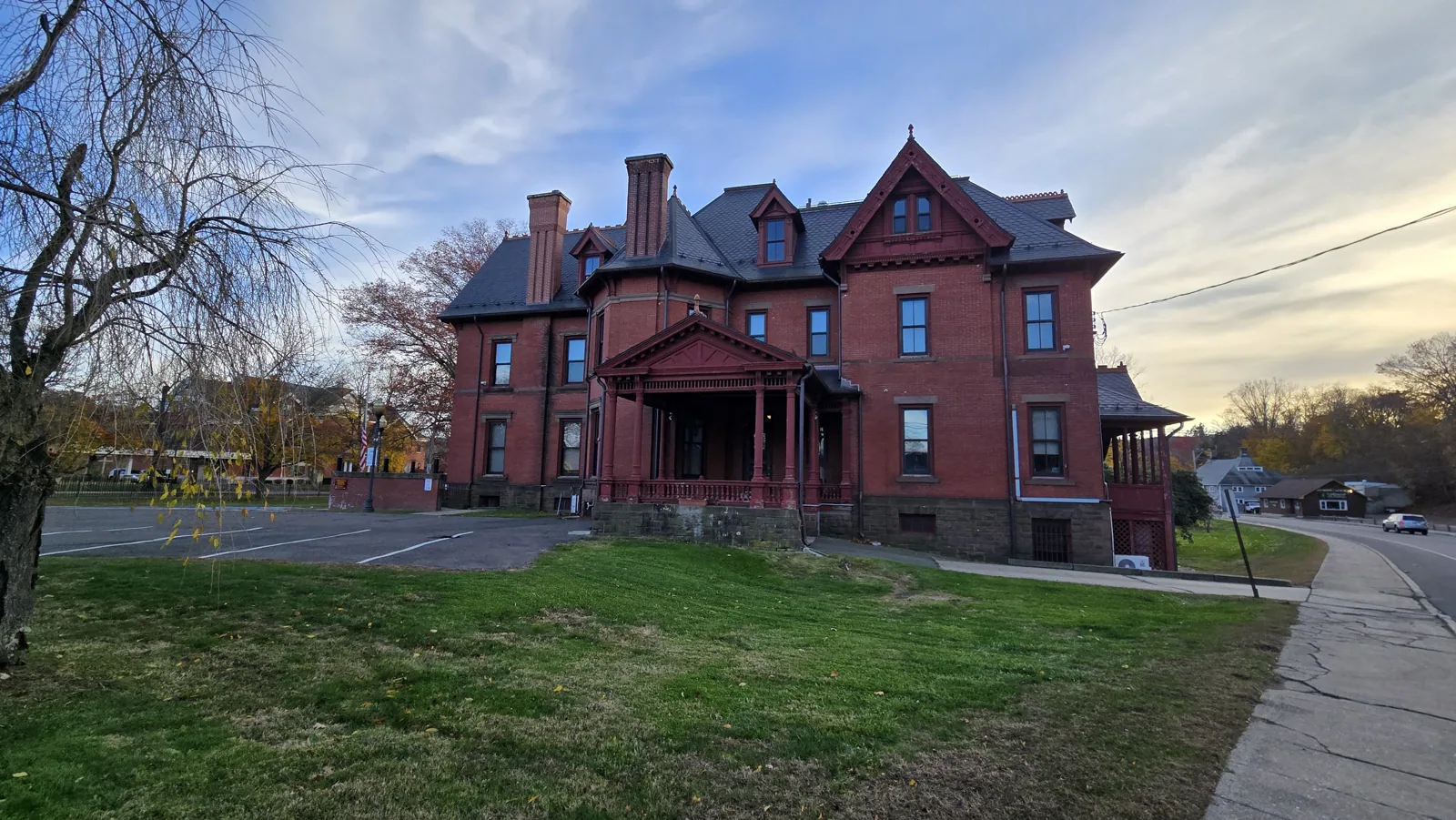
Price the trip along Routes 63 and 69
Bethany lies midway between New Haven and Waterbury on Routes 63 and 69, which puts local businesses along a regional north-south connection. For a roofing scope, that matters in two plain ways. Crews, dumpsters and material deliveries use those roads, and a property with a short approach or a narrow entry may need a smaller truck or an earlier delivery window. Neither point changes what the roof needs, but both change what the work costs to stage.
We ask the owner for the entry route, any weight or clearance limits on the drive, and where a dumpster or lift can stand without blocking a customer or an employee. An owner with two small buildings on the same parcel can often save by combining both roofs into one mobilization. Owners who also hold property in Waterbury or Prospect can have those roofs walked on the same trip, which spreads the travel line across more than one estimate.
Read a wooded site before writing the scope
The town describes its local mix as mostly wooded and residential, with some agriculture and light industry. A roof beside trees tells its own story. Leaves and needles pack into valleys and drain bowls, shade keeps a north slope damp long after the sun has dried the rest, and limbs that rub the membrane in wind leave scuffs that open into punctures. None of that is a claim about any one Bethany building, so we look for it during the walk and record what is there.
When we find debris dams at a drain or a scupper, the first line item is cleaning and a test of the outlet. If the membrane under the debris shows wear, a membrane puncture repair is priced as its own item, and the report states whether the surrounding sheet can accept a tie-in. Trimming overhanging limbs is the owner's call and often the cheapest way to extend the roof's service horizon.
Plan drainage where there is no municipal sewer
Bethany has no municipal water or sewer service, so roof water and any building services are handled on site. For a roofer, the relevant question is where the leaders and downspouts discharge. A downspout that ends in a low yard, a swale or against a foundation can send water back toward the building, and that can look like a roof leak from the inside. We trace each outlet to its end point during the walk and write down what we see.
If the discharge path is the problem, the correction may sit outside the roof scope, and we say so in the estimate instead of burying it in an allowance. If the roof itself ponds, a drain and scupper review looks at slope, outlet size and the condition of the surrounding membrane. The Waterbury hazard plan puts every part of that city in the path of snow, ice and sleet, which is a fair reason to confirm the outlets before the cold season.
Choose between repair, recover and replacement
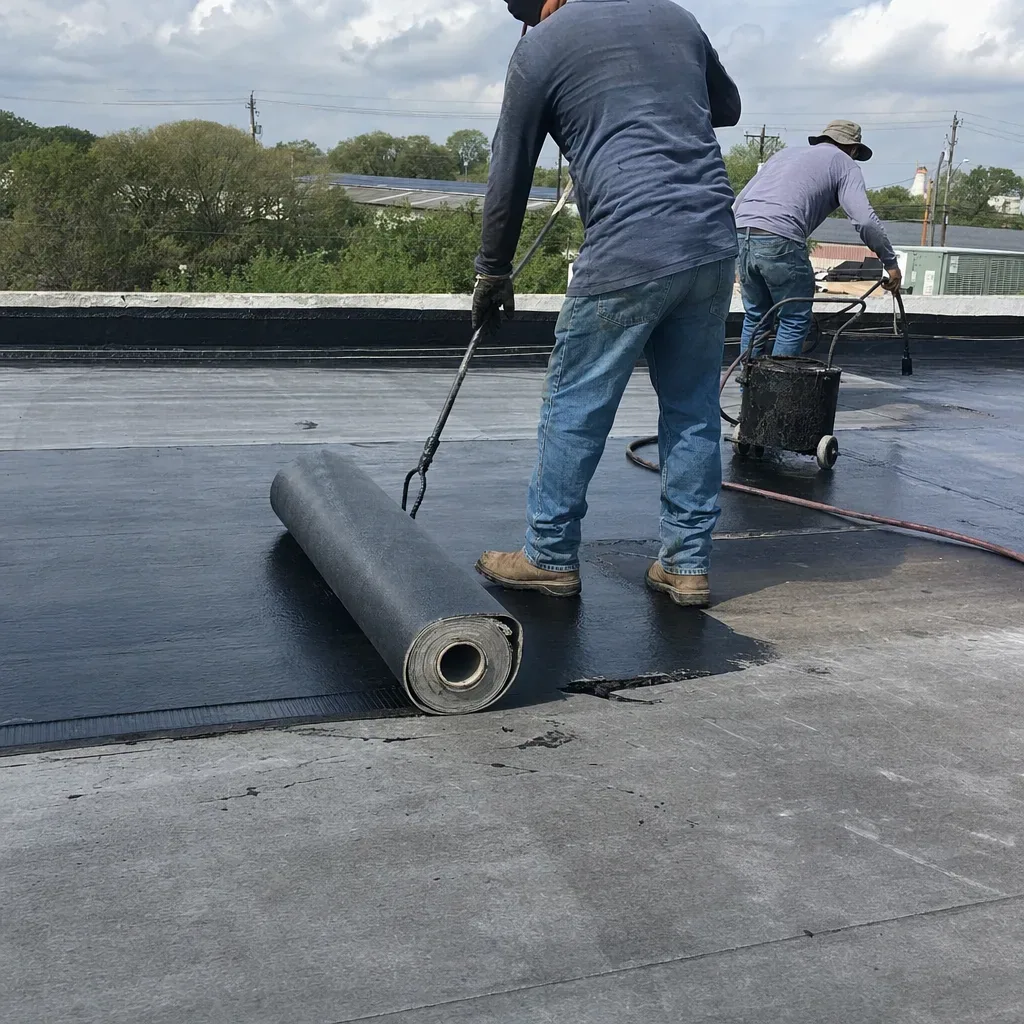
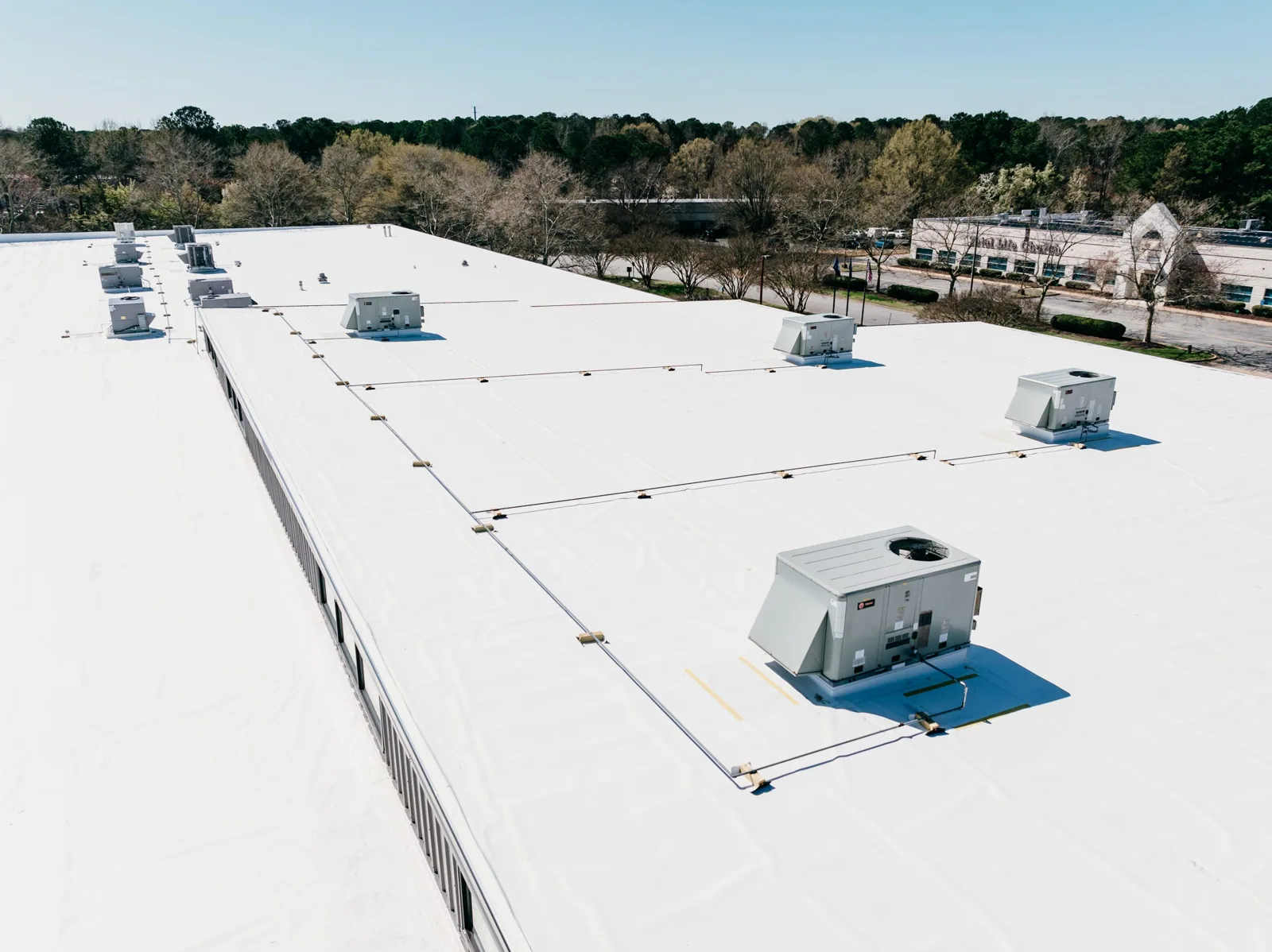
A repair fits when the failed detail is isolated and the material around it will accept a patch. A recover option needs dry insulation, a sound deck and enough height at walls and curbs for another layer. A replacement line starts when moisture has spread, when the roof has lost its ability to shed water in several sections, or when repeated patches have stopped holding. A test cut or an infrared moisture survey tells us which of those applies.
Cost follows the choice. Tear-off boundaries, disposal, edge metal, new flashing at curbs and the amount of wet core to be removed all move the number, and the estimate lists each one. Permit review comes with a full replacement, and the baseline is Connecticut's 2022 State Building Code, drawn from the 2021 International Codes, so insulation and permit terms are read before a price is firm. An owner planning a larger capital window can use the same findings to decide what to do now and what to defer.
Timing is the other cost driver. A roof that is dry today but shows soft spots under foot can often be held for a season with targeted repairs, while one with wet core spreading toward a wall should not wait for spring. The report states which category each roof section falls into and what evidence supports it, so the decision rests on readings and photographs instead of a general impression of age.
Sequence the work around the operating day
A shop, an office or a light-industrial space may stay open while the crew works above, so we agree on a dry-in date for each roof section, a protection plan for the space below and the hours when noise is acceptable. The aim is that no section is opened without a plan to close it by the end of the day.
Where the building is agricultural, access to livestock, equipment or stored materials may drive the schedule, and the owner tells us which areas must stay clear. We photograph each section before and after the work and keep the closeout photos with the matching label, so the owner has a record to attach to a lender, an insurer or a buyer. For a roof that needs urgent water control first, emergency roof repair can stabilize the leak while the larger scope is priced.
Commercial Roofing Questions
Is a small roof in Bethany worth a full inspection?
Yes, when the inspection is scaled to the roof. A small building still has seams, flashings, a drain path and an insulation layer that can be wet. A short walk with a moisture check costs little next to the cost of replacing a section that could have been repaired.
How does a rural location affect the price?
It affects mobilization, not the roof. Travel time, delivery access and staging space are priced as separate lines. Combining two roofs or two buildings into one visit lowers the per-roof share of those costs.
Does the lack of municipal sewer change roof work?
It does not change the membrane or the flashing. It does make the discharge point of each leader worth checking, since water that returns to the foundation can be mistaken for a roof leak.
Can a recover option be priced without a test cut?
A recover can be estimated, but the number is conditional until the insulation is tested. We prefer a test cut or a scan first, so the estimate does not carry a large allowance for something a short test could settle.
What should I send before the first visit?
Send the building's use, any roof records, the location of reported leaks and the access route. If tenants or animals share the building, tell us which areas need protection and what hours work best.
Send the roof records and the access route
Share the property contact, the reported leak areas, any roof records and the delivery route. We will map what can be inspected in one visit and outline whether repair, testing, recover or replacement is supported by the evidence.