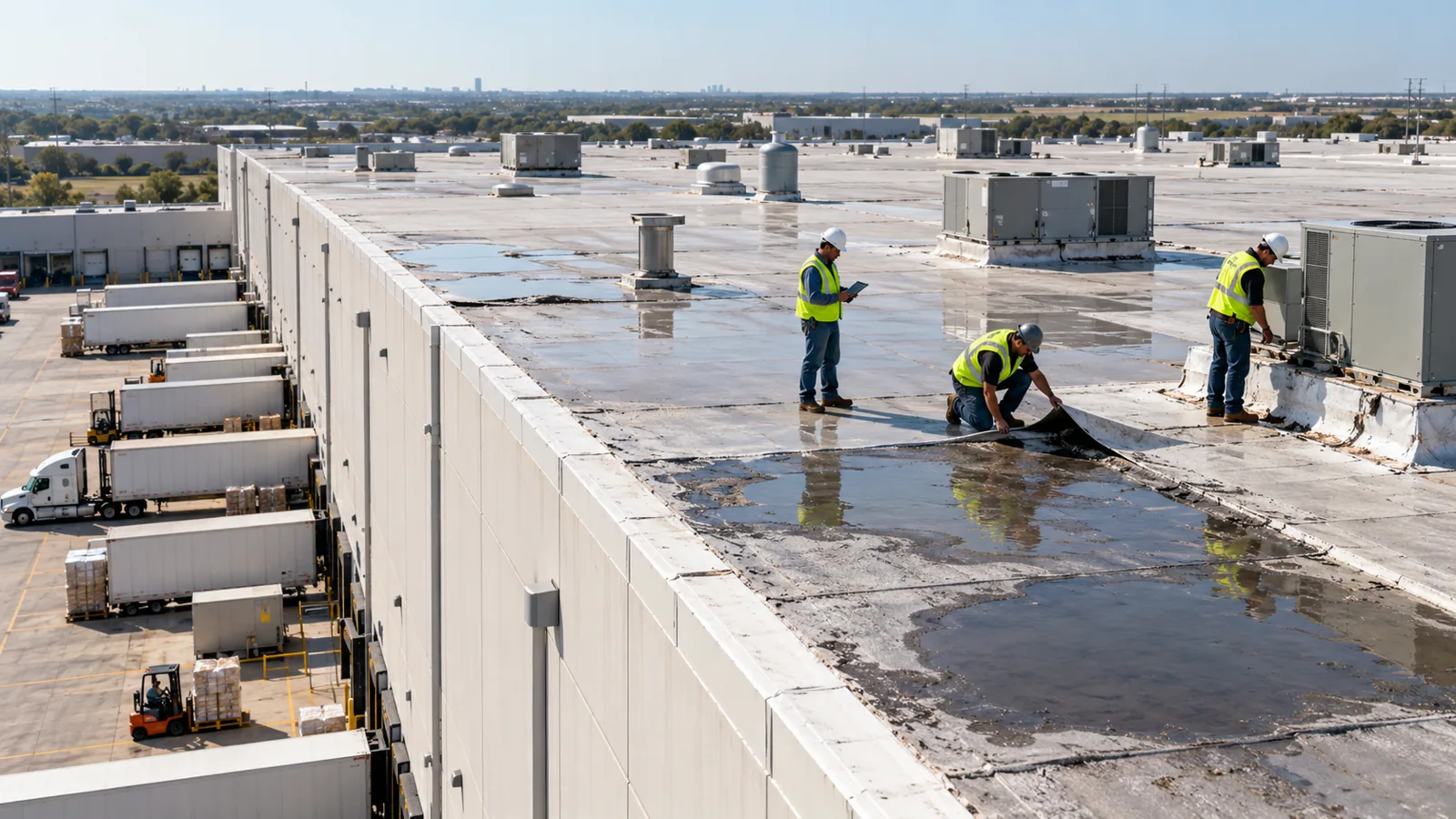
Four named industrial parks turn a roofing decision in Wallingford, CT into a portfolio question before it is a single-building question. The town lists Barnes, Casimir Pulaski, Centract and MedWay as industrial parks that contribute to its diversified tax base, and it describes a commercial and industrial base that includes medical and health care, services, high technology, specialty metal manufacturing and research and development.
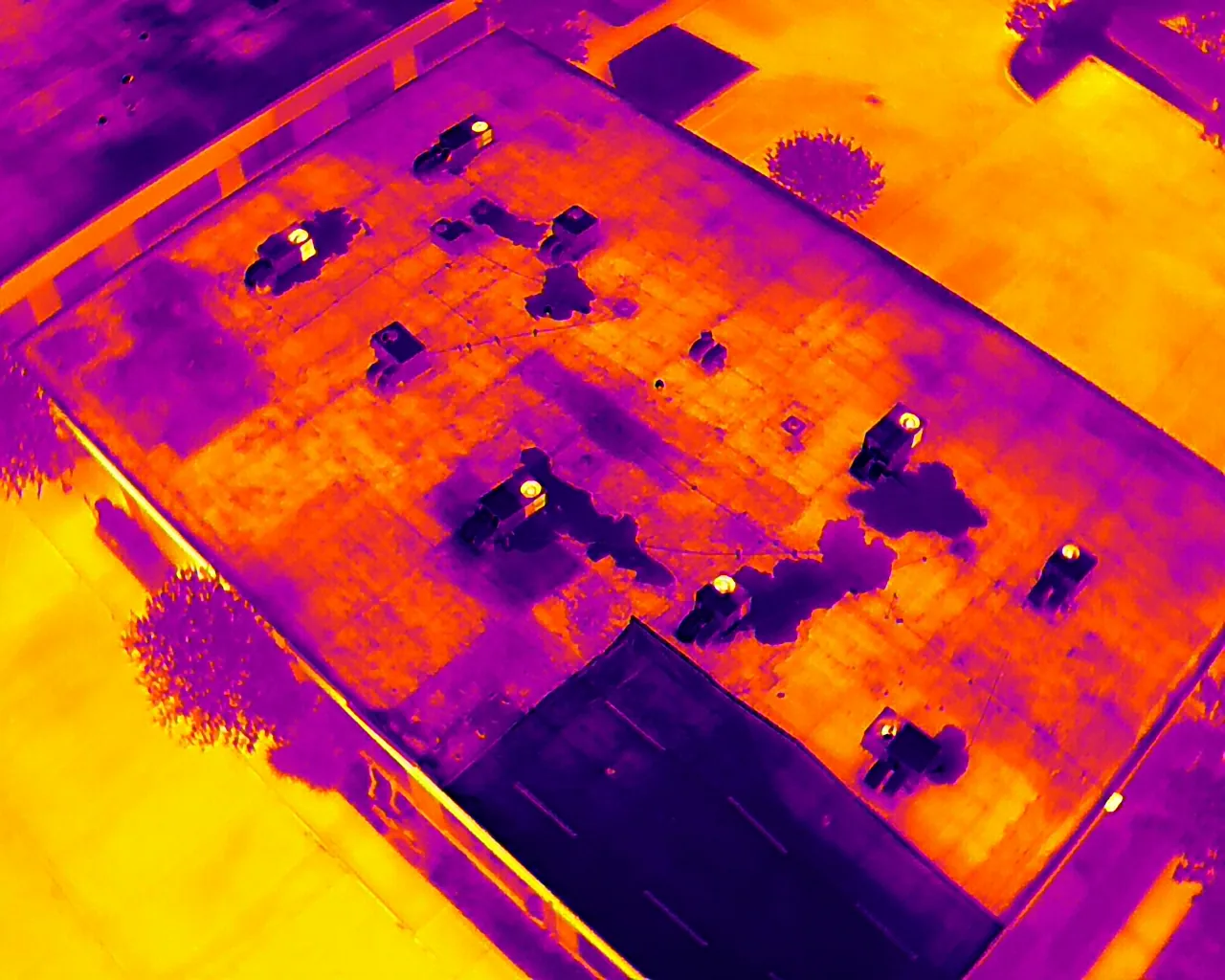
That variety means the budget conversation starts with use. We look first at what happens under each roof, then at the test that could change the scope, usually a moisture survey, and only then at a price. An owner who learns early which sections are dry can hold capital for the sections that are not.
Rank roofs across a park before pricing any of them
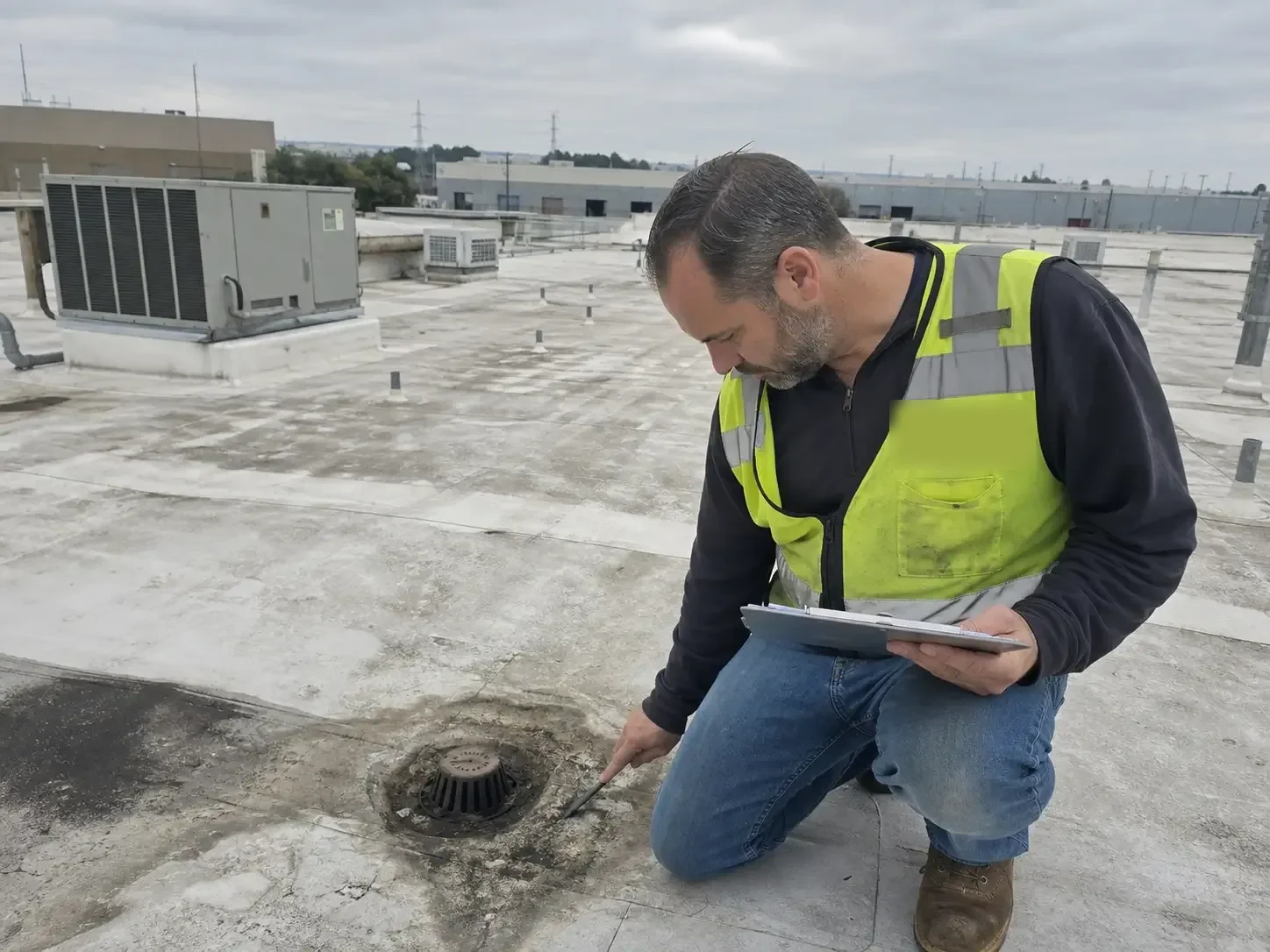
An owner or lender with several buildings in one park needs an order of work. We walk each roof, record the membrane, the number of previous repairs, the drain path and the equipment on it, and give each section a condition rating based on what we see and measure. The ratings feed a capital plan that shows which roofs need action now, which can be held with targeted repairs and which belong in a later budget year.
This approach avoids a common trap, which is replacing the oldest-looking roof first when a newer one with wet insulation is closer to failure. Age alone is a poor guide, because a roof's condition depends on drainage, traffic, equipment and past repairs. The ranking is only as good as the evidence, so we state what was tested and what was only observed, and we mark any section we could not reach.
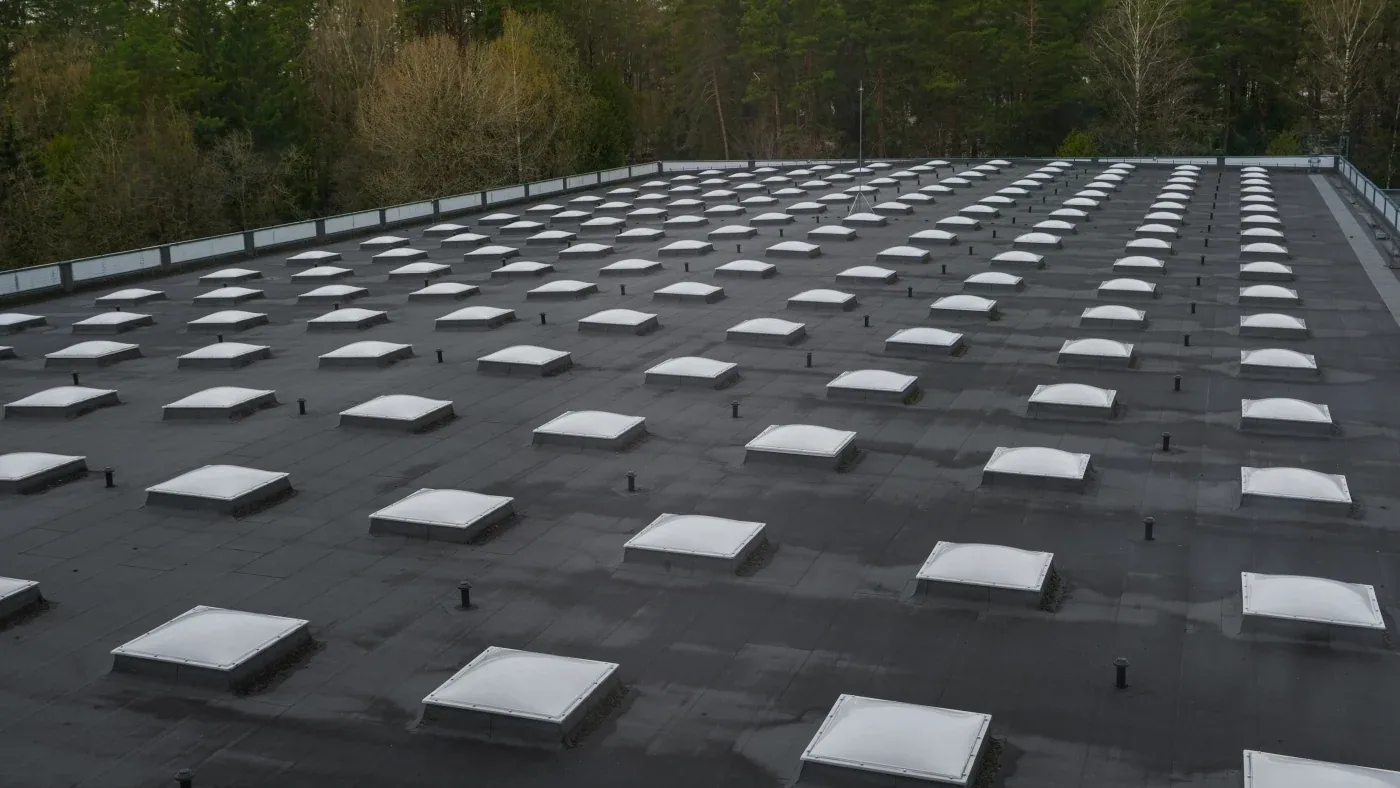
Specialty manufacturers add a variable that pure warehouse roofs do not have: process exhaust. Stacks, hoods and make-up air units perforate the roof, and each opening is a flashing detail that ages on its own schedule. We count the penetrations on every roof, check their curbs and boots, and price the flashing renewals as a separate group, because they often outlast the field membrane or fail well before it, and the owner should see that difference before choosing a boundary.
Protect process areas and clean spaces below the deck
Specialty metal manufacturing, research and development, and medical uses all have areas where a roof opening is a risk to more than the ceiling. Dust, odor, vibration and water can disturb a process or contaminate a clean space, and a roofer who treats the work like a warehouse job can cause damage that costs far more than the repair. Before a section is opened, we ask which rooms below are sensitive, what protection the operator already uses and who has the authority to stop the work.
For a medical or lab-type space, we plan the dry-in point section by section and use temporary protection that the facility can accept. A phased occupied-building scope sets the work zones, the hours for noisy tear-off and the handoff each day. Where roof-mounted equipment serves a sensitive area, we coordinate shutdowns with the facility staff so no unit runs through an open roof.
Plan deliveries along Route 5, I-91 and Route 15
Wallingford sits astride the Quinnipiac River and is traversed by Route 5, I-91, Route 15, Route 68, Route 71 and Route 150. Those roads give most properties a clear truck route, and they also mean roofing deliveries share space with the park's own freight. We ask the site contact for receiving hours, dock restrictions and the best staging area, then schedule material drops to avoid the busiest times.
A river-valley town also raises a seasonal drainage question. The hazard plan for Waterbury lists summer storms and tornadoes as local hazards, and the annex to it calls summers warm and wet and winters freezing, using dated 1980 to 2016 averages. They support one practical habit: clear drains and inspect edges before the heavy-weather months, then again afterward. A storm damage repair done soon after an event is cheaper to scope than one found months later.
Weigh the repair line against a recover or replacement
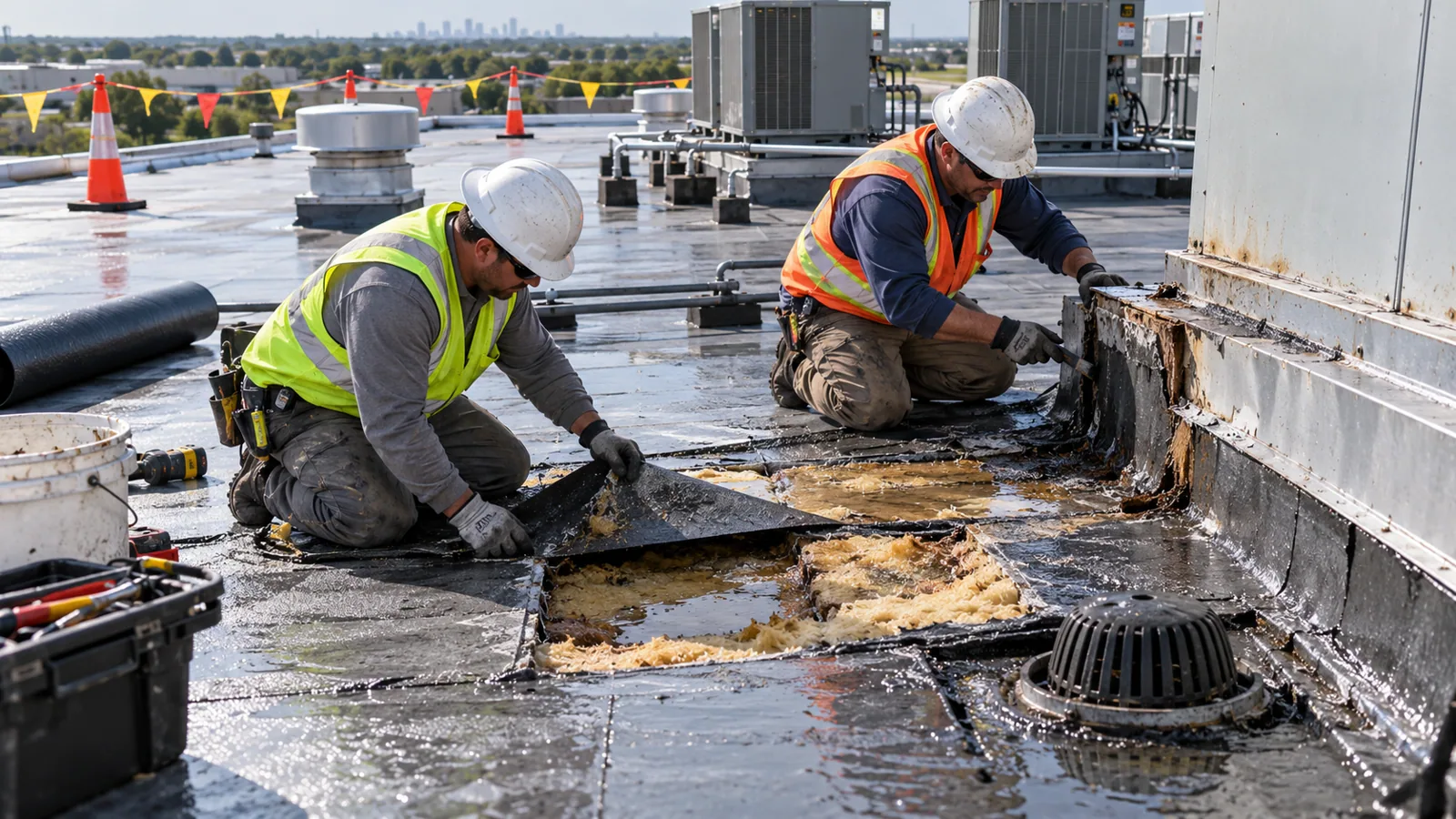
For a roof that still sheds water in most places, a repair line may be the right answer, with the report naming each fix and its allowance. When wet insulation extends across a section, a recover option is worth pricing if the structure and existing layers allow another system, since it avoids tear-off cost and disruption. Where the core is wet widely, or the structure cannot take another layer, replacement of the affected section is the sound path.
We separate cost drivers so each can be challenged: removal, disposal, insulation, perimeter metal, penetration flashing, protection and permit review. Because the state code adopted in 2022 follows the 2021 International Codes, we confirm insulation and permit terms before quoting a final figure. A moisture survey before the decision costs little compared with an allowance for wet core that turns out to be unnecessary.
Timing follows the answer. A repair can usually be scheduled within the next dry stretch, a recover needs a longer weather window and a material lead time, and a replacement adds permit review and a staging plan for removal. We give the owner the dates that each path would require, so a lease renewal, a tenant move or a budget deadline can be set against them. If the dates do not fit, a documented temporary repair holds the roof until the larger scope can start.
Document the work for lenders, tenants and buyers
Roof records help in a park with changing tenants and owners. We provide closeout photos for each roof section, a marked plan of what was done, and product information for the materials installed. If a warranty applies, we state what it asks for in upkeep. The records are written so someone who was not present can read them. For a tenant-occupied building, we also give the property manager a short plain summary that can be forwarded to tenants, listing the dates, the work areas and the contact who can answer questions during the job.
Owners with buildings in Meriden or North Haven can use the same format across their holdings, which makes it easier to compare roofs and plan spending. A warranty record kept with the closeout photos also saves time if a claim is ever needed.
Commercial Roofing Questions
Should I replace the oldest roof in a park first?
Not automatically. Condition depends on moisture, drainage and repair history as well as age. A newer roof with wet insulation can be closer to failure than an older dry one, so the order comes from the survey.
How do you protect a lab or clean space during roof work?
We identify sensitive rooms before the work starts, open one roof section at a time, use temporary protection the facility accepts and coordinate equipment shutdowns with its staff. The dry-in point is set in advance.
Can several buildings be priced as one program?
Yes. A program ranks the roofs, assigns a scope allowance to each and spreads mobilization across the group. The ranking and allowances are shown separately so the owner can approve work building by building.
What does a moisture survey add before a recover decision?
It maps wet insulation, which is the main factor that rules a recover in or out. Without it the estimate carries a large allowance for the unknown, and that allowance usually costs more than the survey.
What records do you hand over at closeout?
Photos of each roof section, a marked plan of the work, product data and any warranty terms. We keep copies so the same record is available if ownership or tenancy changes.
Send the park, the buildings and the uses
Share the property list, the use under each roof, roof records and access rules for sensitive areas. We will rank the roofs by condition, run the moisture checks and report which sections need repair, recover or replacement.