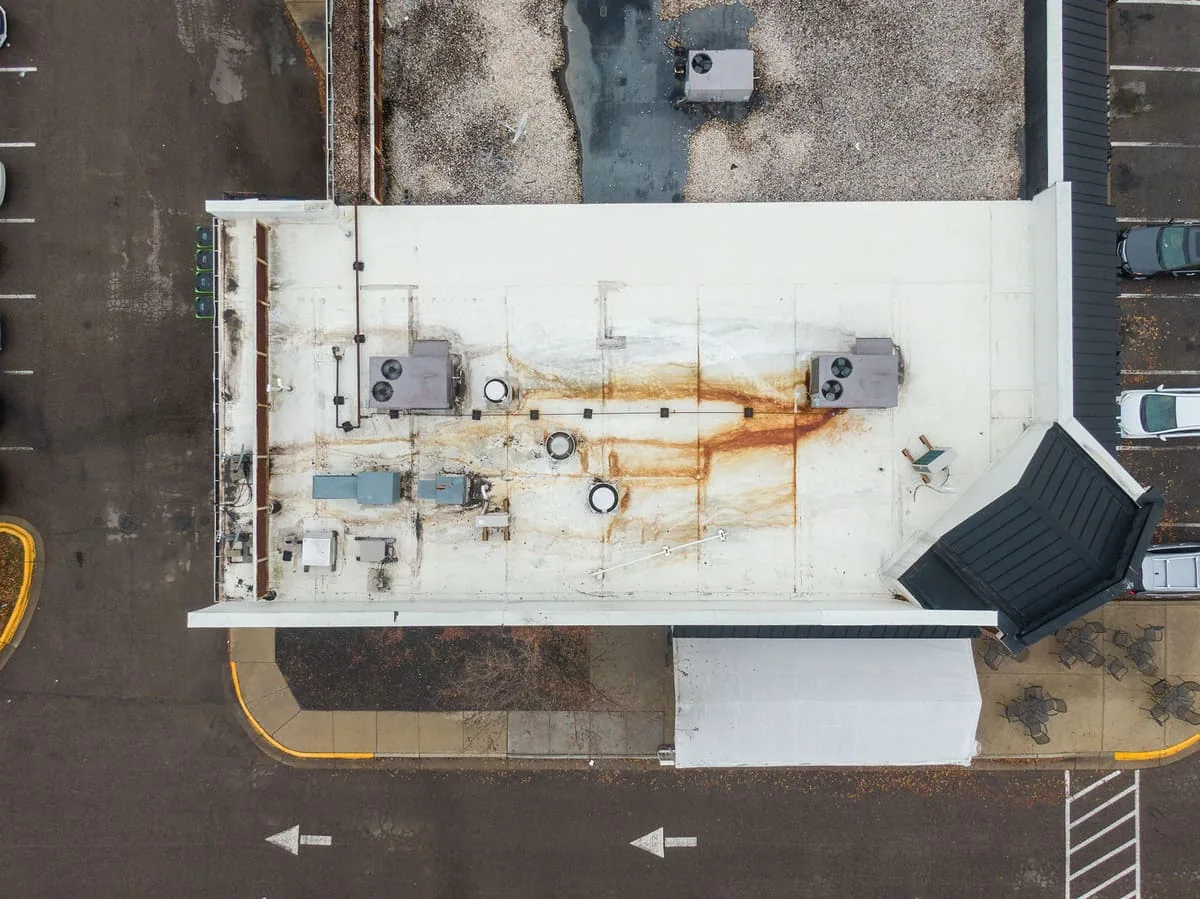
Flashing is priced in linear feet of detail, not in squares of roof, and that difference changes how an asset manager should read an estimate. A roof with a sound field and a long run of cracked wall termination can cost more to correct than a roof with a worn field and a handful of details, and the order in which the work is done decides whether the leak returns. The first budget question is therefore a count: how many feet of wall base, how many curbs, how many penetrations, and how many corners.
In Waterbury, CT, the city plan puts a compact central business district beside the I-84 and Route 8 junction, ringed by industrial districts and mixed-use corridors. Buildings in each setting carry walls, parapets, rooftop units and pipes, and each of those is a flashing. The condition of those details, not the age of the field, often decides whether a roof can stay in service another season.
Count the Details Before Quoting the Roof
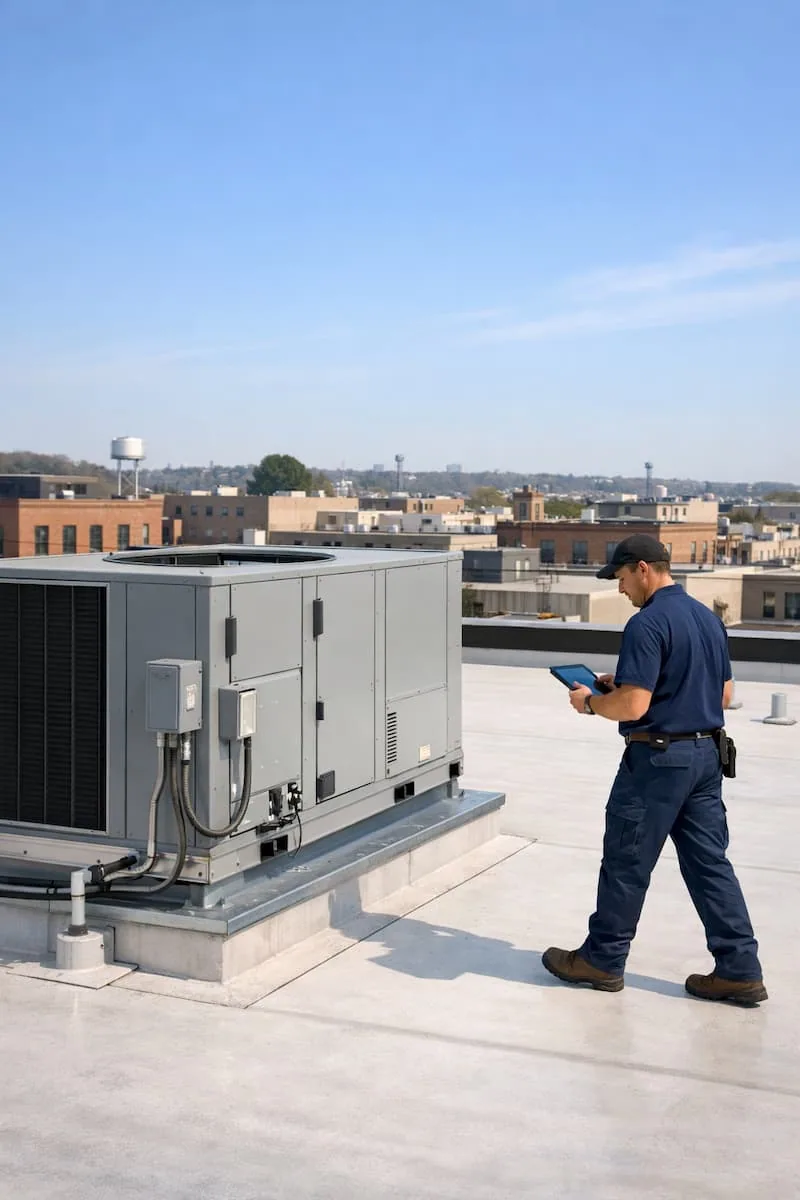
We walk the roof with a plan and list every flashing by type: base flashing at walls, counterflashing and reglets, curb flashing at equipment, pipe boots, pitch pockets, scupper and drain collars, and edge terminations. Each entry gets a section number, a length or count, a condition and a photograph. The list becomes the quantity schedule that the repair quote is built on.
That schedule also shows where the roof is clustered with risk. A mechanical area with many penetrations in a small space, or a long parapet with a single repaired stretch, is visible at a glance. The asset manager can see that the cost of a section is driven by detail density, and can decide whether to repair the cluster, reflash it, or fold it into a larger scope.
Walk Walls, Curbs and Penetrations in Order
Walls come first, since base flashing at a wall is the longest and most exposed detail. We check the termination height, the fasteners, the sealant at the top edge and the condition of the counterflashing, and we press the membrane to see whether it has pulled away or shrunk back from the wall. Curbs follow, with attention to the corners where the membrane folds, and then pipes and conduit, where boots crack and clamps loosen.
Rooftop equipment adds its own set of questions. A unit that has been replaced may sit on a curb that was flashed for the old unit; a new conduit may pass through a roof with a sealant patch in place of a boot. These are recorded as they are found, and the curb and support condition is rated alongside the membrane so the repair does not stop at the wrong boundary.
Separate Failed Sealant From Failed Termination
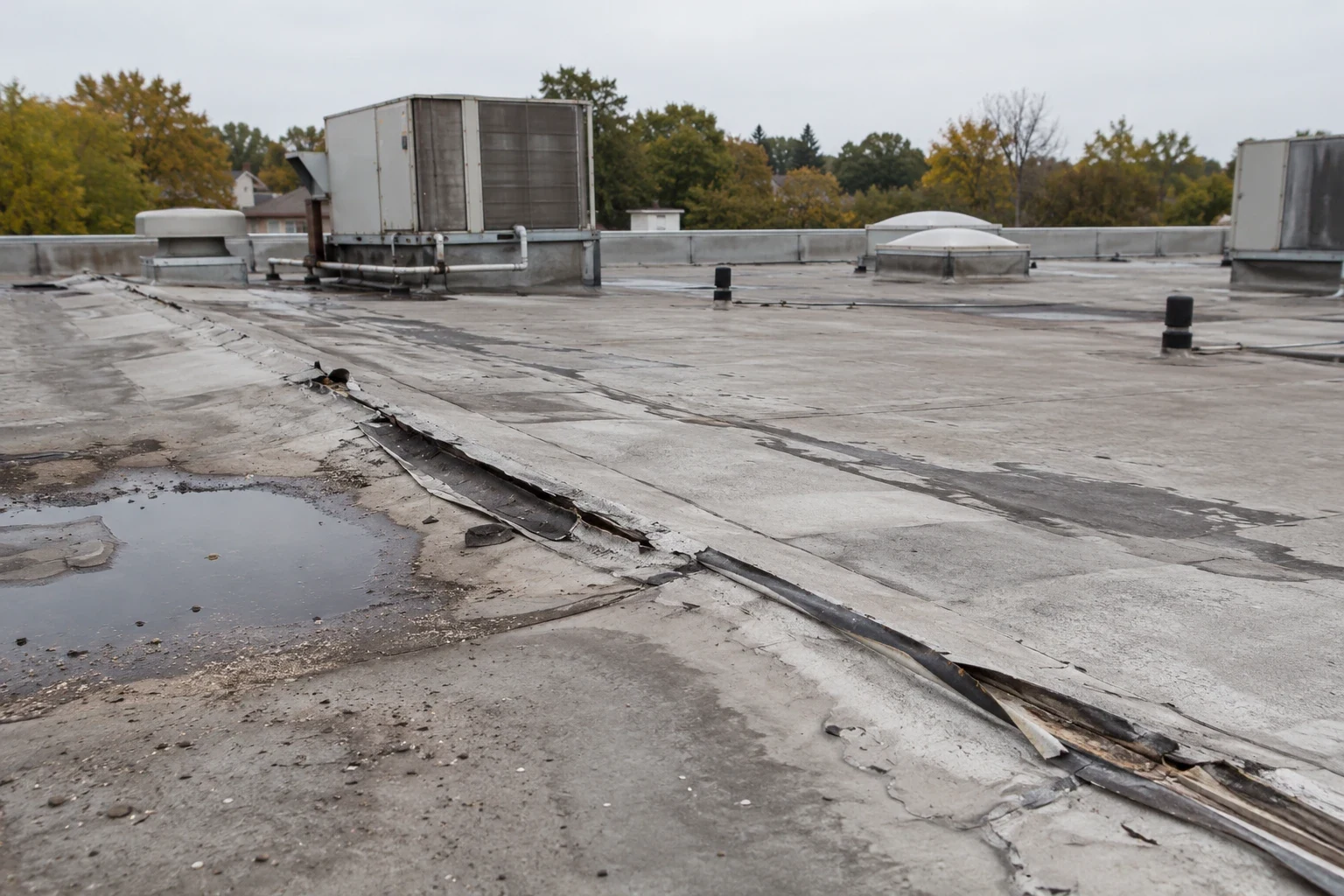
Sealant that has cracked is a maintenance item, and a termination that has pulled loose from the wall is a repair item. The two are priced differently, and mixing them leads to repeat visits. A bead of sealant over a loose termination holds for a season and then lets go, because the underlying fastening has not changed.
We test each suspect termination by hand and with a probe, check the fasteners for backing out, and look for water tracks on the wall below. Where the wall is masonry, the mortar joints and reglets are examined as well, since a flashing that is sound can still leak through a joint above it. The report lists each detail as re-seal, refasten, replace or monitor, and gives the quantity for each, so the budget follows the condition.
Where a seam meets a flashing and has opened, the work follows the scope for seam failure repair, and the two repairs are tied together so one does not undo the other. Where the flashing sits near a drain, the sump collar is checked at the same visit, since a loose collar passes water to the same wall.
Choose Between Re-Seal, Reflash and Replace
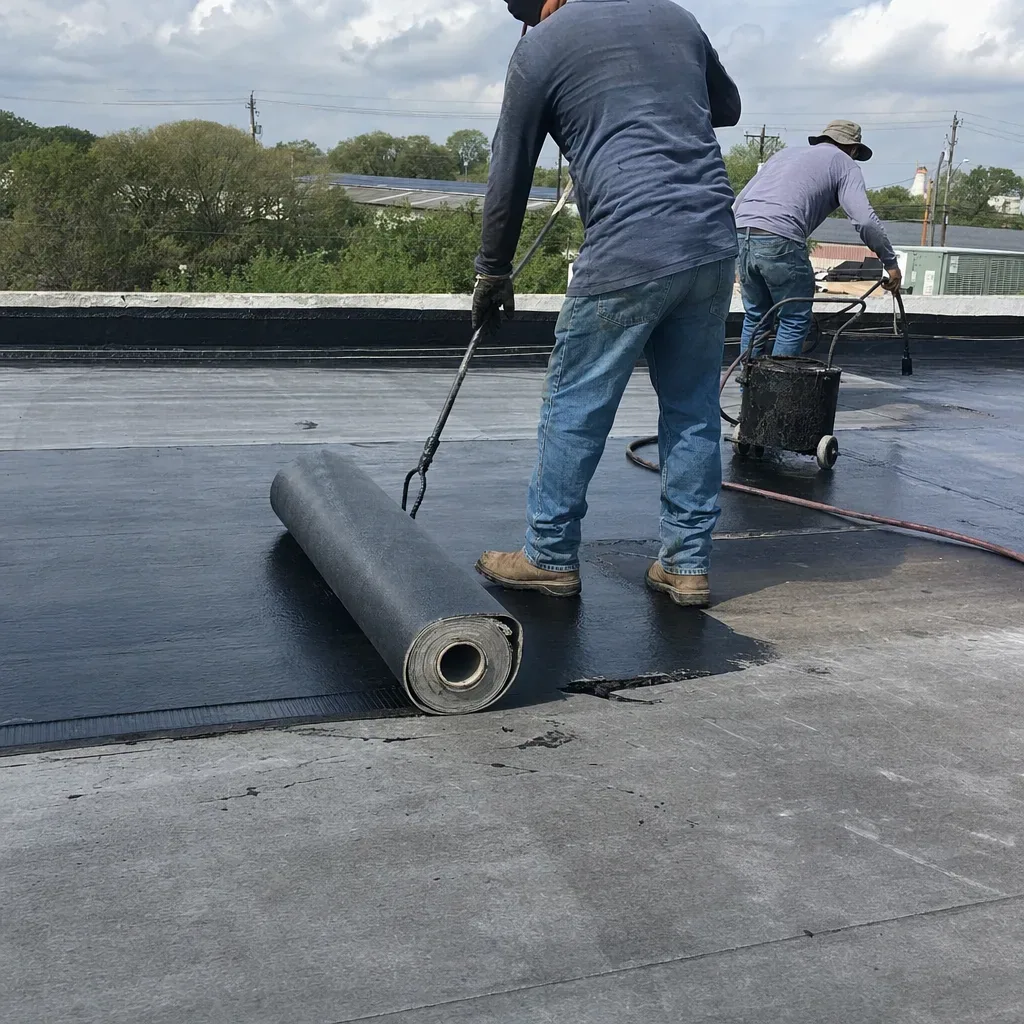
A re-seal fits when the termination is tight and the sealant has aged. A reflash fits when the flashing is detached or cracked and the membrane beneath is sound; the old detail is removed, the substrate cleaned, and a new flashing set with the right fasteners and sealant. A replacement of the adjoining membrane is needed when the damage extends into the field, or when the flashing cannot be attached to what remains.
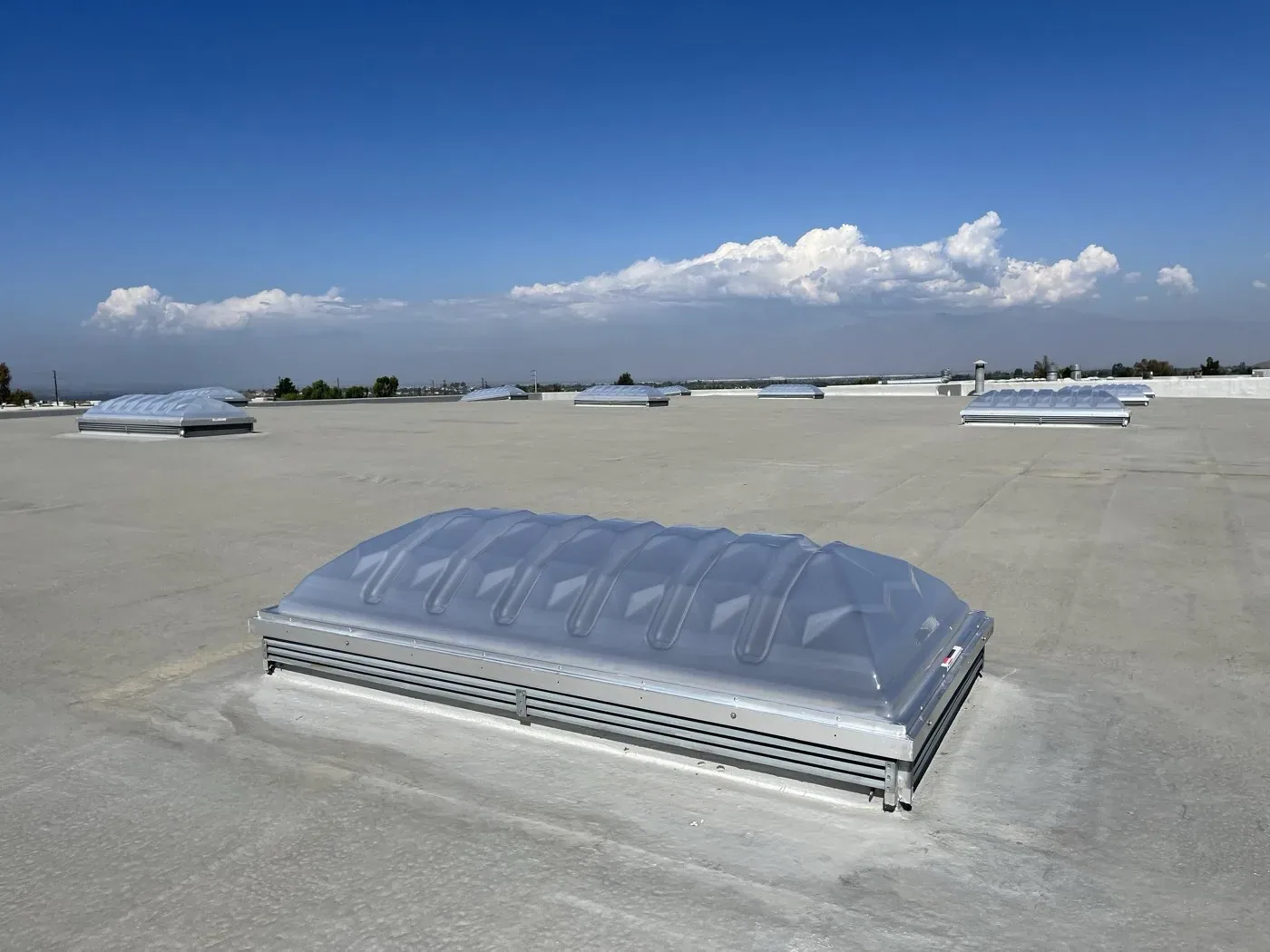
Each option is shown with its linear-foot quantity and the allowance it carries. If the wall behind the flashing needs repair before the new detail can be set, that item is listed as an allowance with the approver named. For skylight and penetration flashing, a prefabricated or field-formed part is specified for the membrane family on the roof, so the new detail suits the surface it joins.
Plan Around Freeze, Thaw and Wind
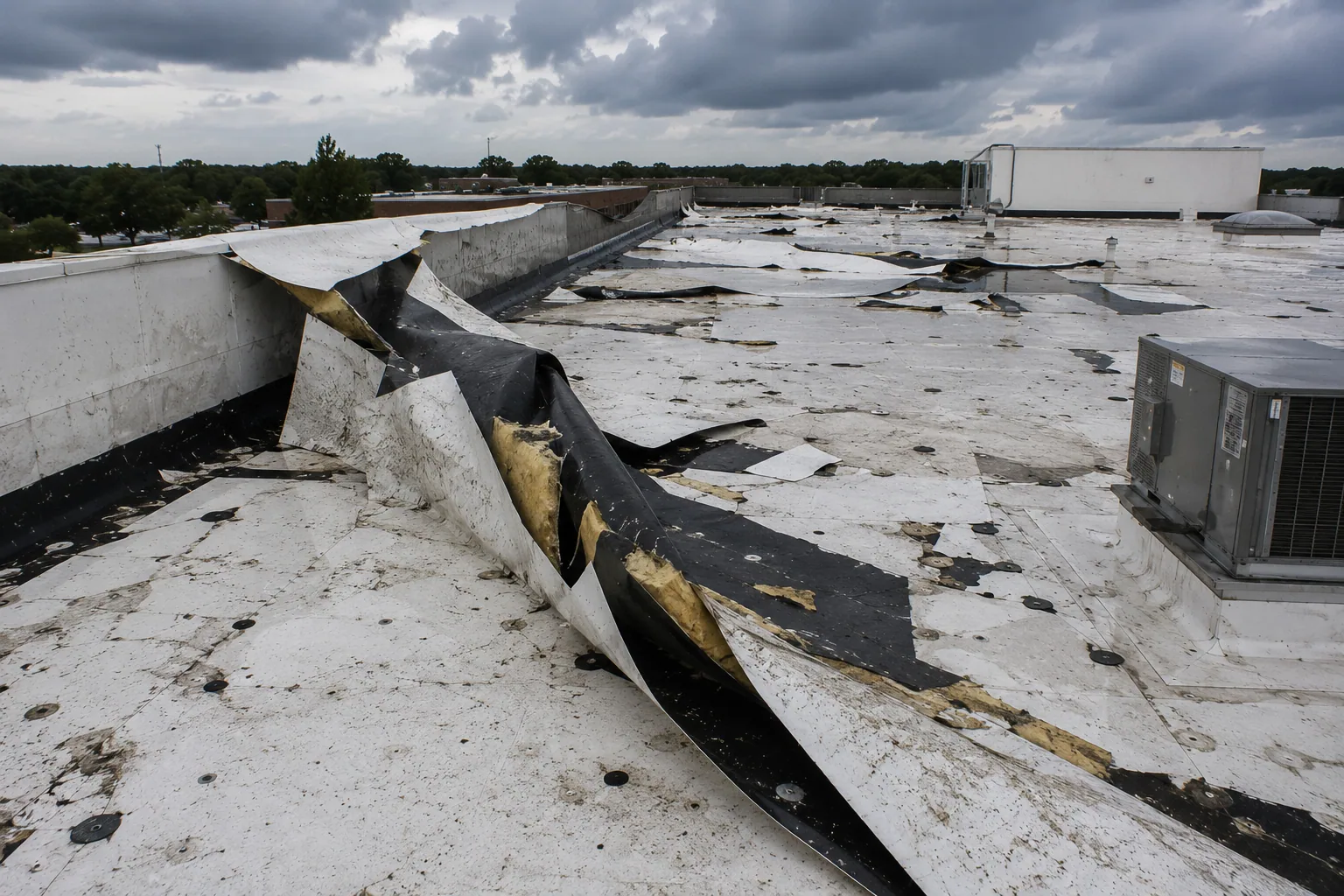
The hazard plan carries snow, ice and sleet for the whole of Waterbury, and it treats summer storms and tornadoes as local hazards. Flashings feel both. Freeze-thaw cycles open cracks in sealant, ice lifts terminations, and wind works loose edge details. Following a storm, the wind damage walk starts at the perimeter and moves inward along the wall flashings.
Repairs are scheduled for dry weather and workable temperatures, and a temporary dry-in is priced for any detail that is open to water. In Naugatuck and along the Naugatuck River, where the city plan places older industrial lands, the same quantity schedule is used so details can be compared building to building.
Close the Scope With Photographs and Permit Position
The finished file contains the detail schedule, before and after photographs for each flashing, the sealant and fastener types used and any test results. Connecticut reviews permit applications filed since October 1, 2022 under its State Building Code, which adopts the 2021 International Building and Energy Conservation Codes. A flashing repair seldom triggers review, but a reroof that replaces the adjoining membrane may, and the quote states the expected permit date.
An owner who wants to separate the detail work from a larger capital item can use the schedule to do so: the flashing work can proceed now while a recover or replacement is planned for a later window. When a leak repair returns to the same detail, the earlier photographs show what was done and what has changed.
Commercial Roofing Questions
Why is flashing priced by linear foot?
Because the work follows the length of wall, curb and edge, not the area of the field. Our quote comes with a schedule that lists each detail with its length or count, so it can be checked against what is on the roof.
Can sealant alone fix a leaking wall flashing?
Only when the termination is tight and the sealant is the sole failure. If the flashing has pulled loose, sealant over it will hold for a season at most. The scope calls for a refasten or a reflash, with sealant kept for the top edge.
What is the best order for repairs on a roof with many details?
Start with walls, then curbs, then penetrations, because walls carry the most linear feet and the most water. Fix the details at active leaks first, then schedule the rest against the capital window.
Should flashing be replaced when the membrane is replaced?
Yes, in most full replacements, since the new membrane must be joined to new flashing to carry the same service horizon. In a recover, the existing flashings are inspected and reflashed where they cannot be reused.
Does a wall problem change the flashing scope?
It can. Cracked mortar, loose reglets or damaged coping let water behind a sound flashing. List the wall repair as a separate allowance with its own approver, so the roof detail is not blamed for a wall leak.
Send the access rules, the leak history and the capital window
Send the roof plan, the locations of any wall or curb leaks, the access rules for the building and the capital or permit window. We will count the details, test the terminations and deliver a written scope that separates re-seal, reflash and replacement.