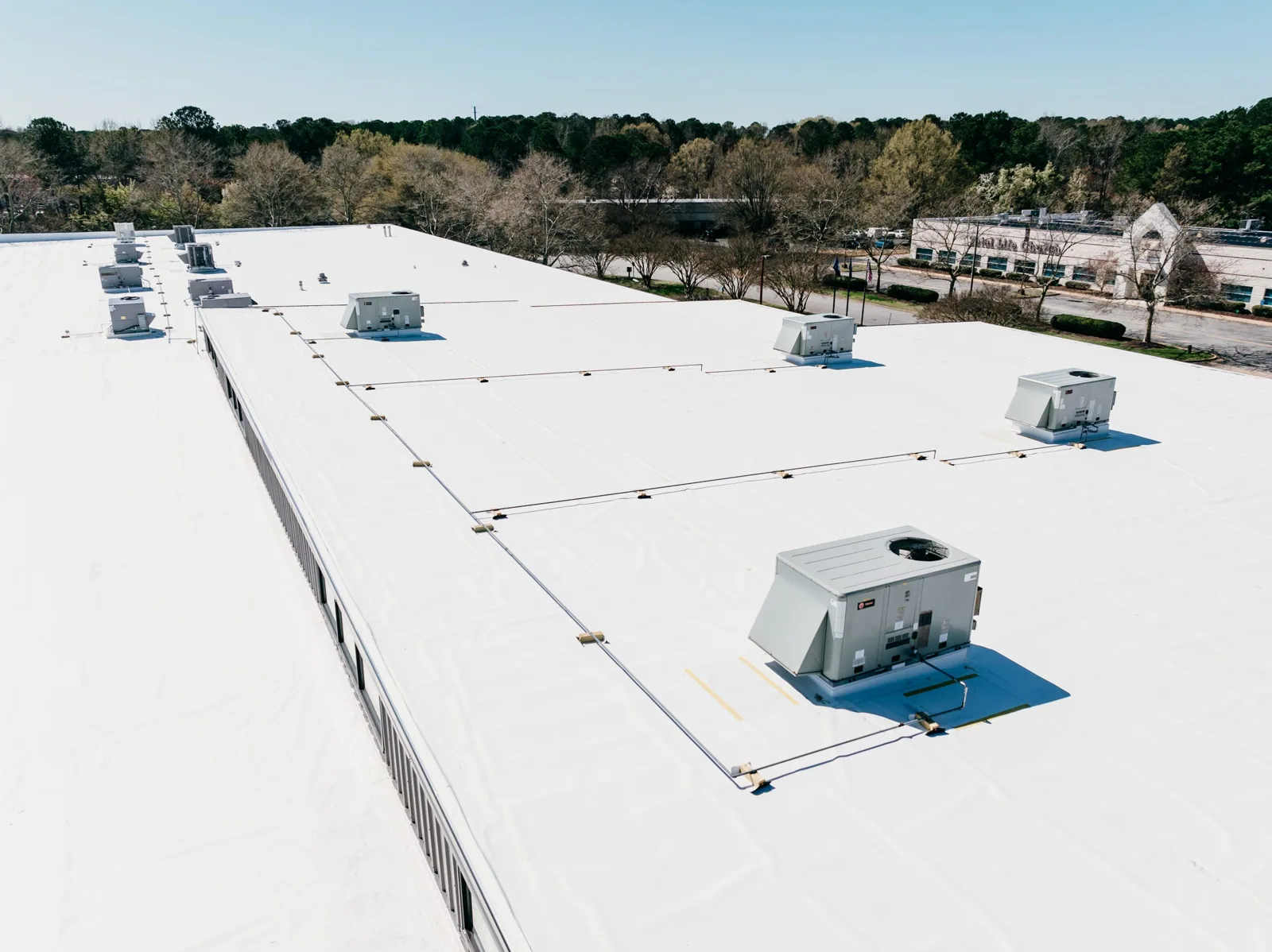
Warehouse and distribution roofs carry their cost in square footage and in the days a dock can be closed, so the first budget decision in Cheshire, CT is how to divide a large roof into sections that operations can live with. The town's November 2025 draft Plan of Conservation and Development describes the north-central area near I-84 and I-691 as industrial-zoned, with warehouse, distribution, manufacturing and corporate-office uses, and it identifies Route 10 as the main north-south commercial corridor.
We begin with the inspection finding that can change the plan: where the insulation is wet and how far that extends. A moisture map by section shows whether a repair line holds, whether a recover option is realistic or whether a replacement boundary should be drawn, and it lets the operator choose which dock bays stay open. The survey result also gives the operator something concrete to take to a lender or a tenant, because it shows the repair, recover and replacement costs side by side with the evidence beneath each.
Section a large roof around dock and shipping hours
A distribution or manufacturing building cannot always stop shipping for a roof. We ask for the dock schedule, the shifts, the areas where forklift traffic is heaviest and any zones where product is stored under the roof. The work is then divided into sections so that the area over the busiest bays is done in a quieter window, and each section is dried in before the shift ends.
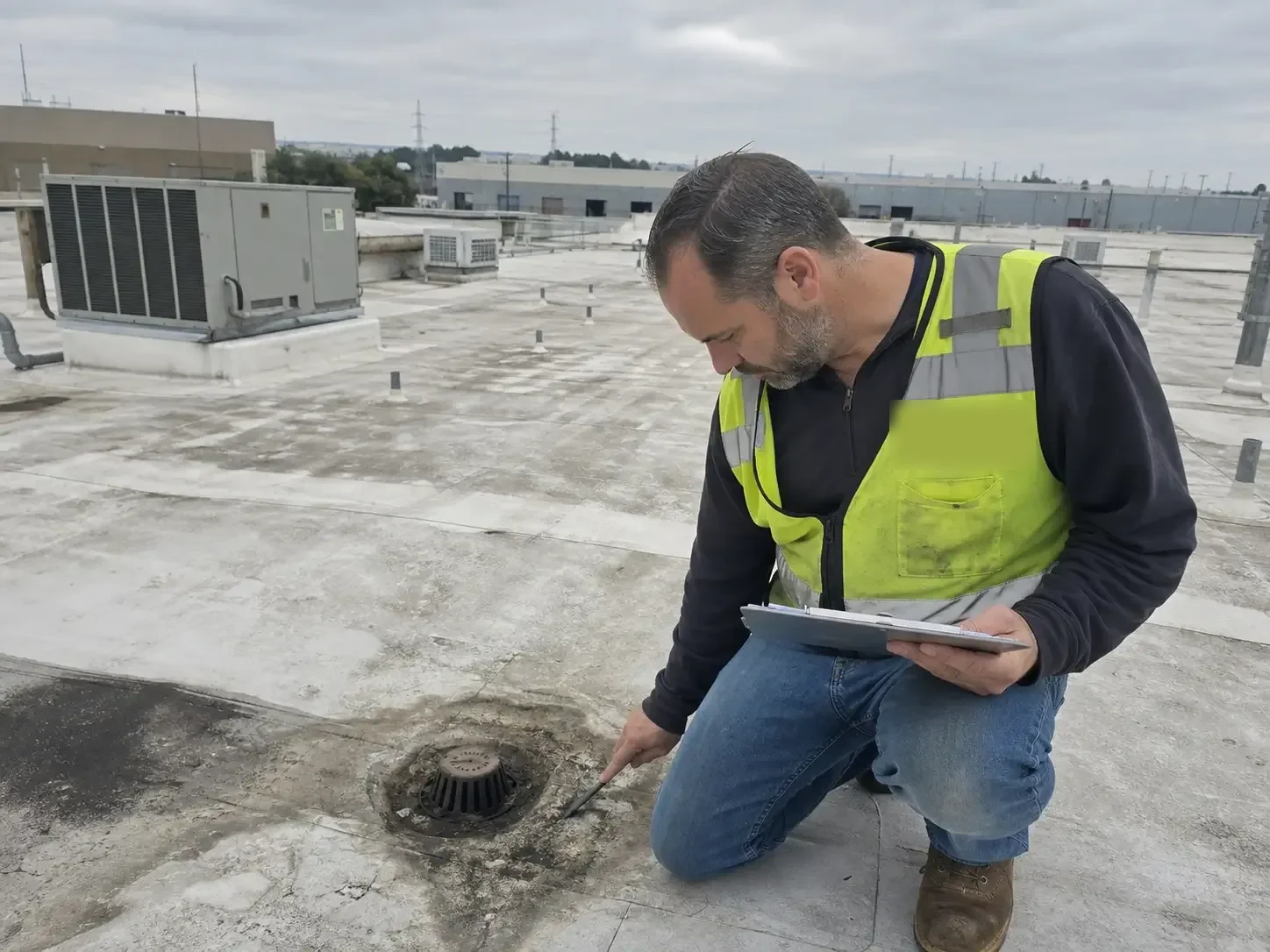
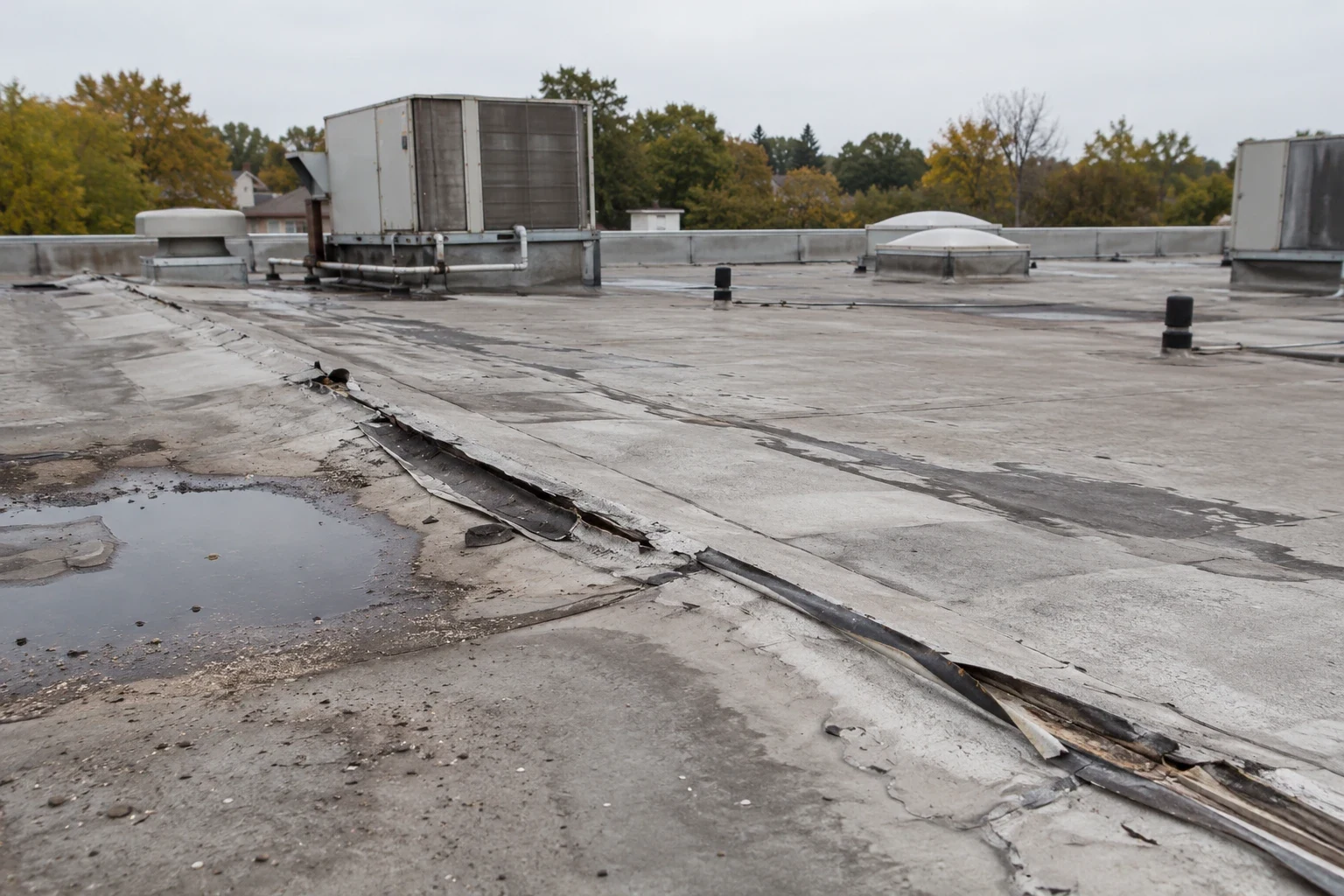
Long drain paths are a recurring feature of big low-slope roofs, and a clogged outlet can hold a pond across a wide area. We trace each drain, measure the fall toward it and read the stains that show where water stood. A drain and scupper review costs little and often finds the cheapest fix, since clearing or resetting an outlet removes the weight and moisture load that otherwise damages the membrane over time.
Corporate-office space attached to a warehouse or manufacturing building changes the calendar. Office occupants notice noise and dust sooner than dock crews, and an office ceiling is more expensive to repair than a bay ceiling. When a building mixes the two, we separate the roof over the office from the roof over the floor, give each its own dry-in point and place the noisy work over the floor first.
Handle Route 10 retail and the historic center on their own terms
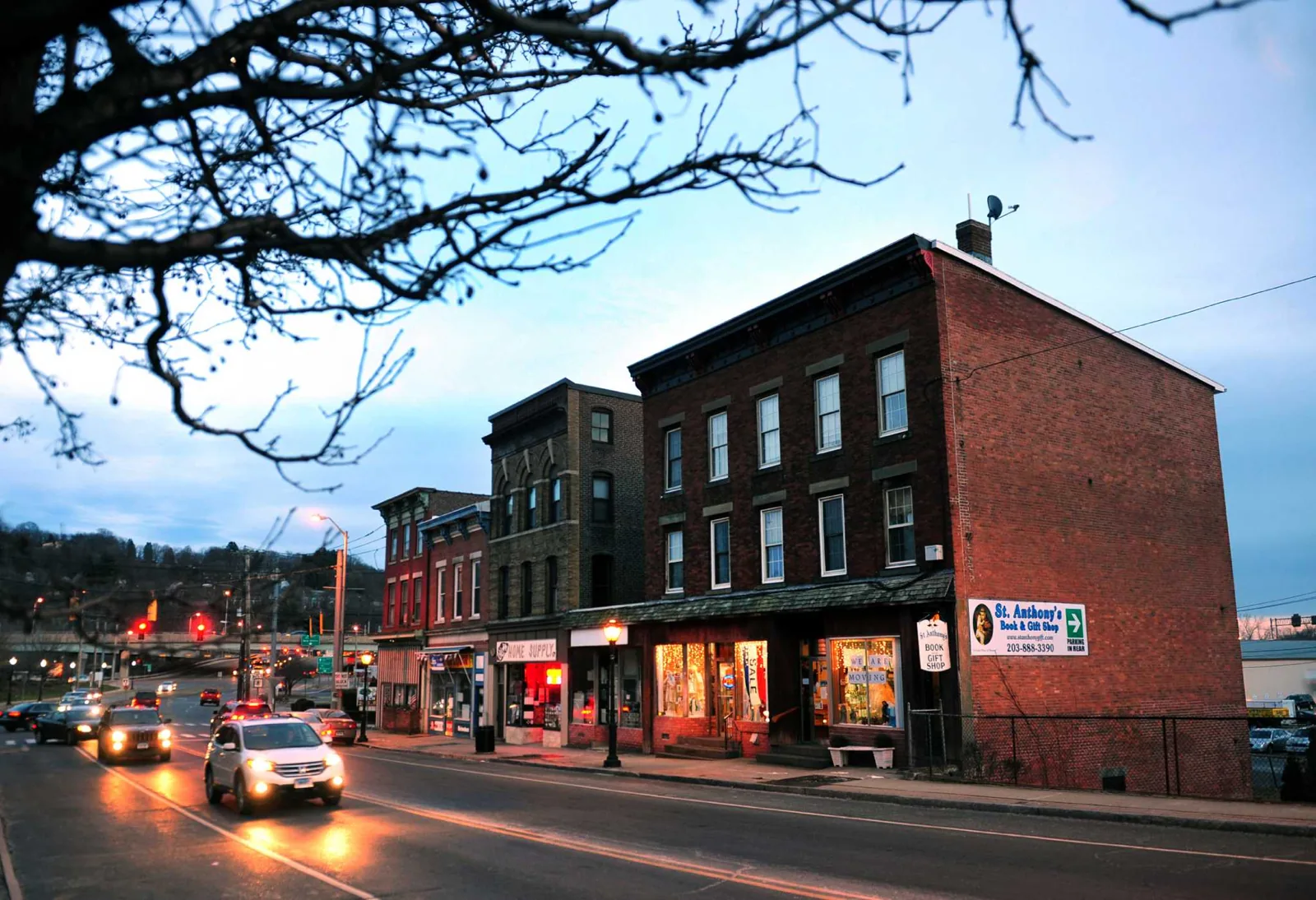
The draft plan describes commercial uses lining Route 10, and it places the town's historic center around the Routes 10, 68 and 70 intersection, where downtown shopping, dining and civic uses are described. Retail and dining roofs have tenants with business hours, grease and exhaust equipment, and shared drains. The historic center adds closer neighbors and tighter staging.
For a shop or restaurant, we ask for the busiest weeks and plan the dry-in dates around them. We check curb flashing at each fan and unit, the condition of the perimeter and the discharge points for the drains. In the center, where buildings may sit near sidewalks and neighbors, a lift or crane may need permits and traffic control, and those appear as separate lines in the estimate. A phased scope keeps tenants open while sections are worked.
Prepare roofs on redevelopment parcels
The draft plan says development and redevelopment parcels remain in Cheshire's commercial areas along Routes 10 and 68/70. When a parcel is redeveloped or a building changes hands, the roof becomes a due-diligence item. A buyer or lender needs to know what the roof will cost over the next several years, and the answer depends on moisture, drainage and repair history, not on the building's age alone.
A due diligence roof survey gives a buyer a dated record: the covering, insulation condition, defects and a ranked list of repairs with costs. For an owner preparing to sell, the same survey can be used to fix the cheap items before listing and to present a roof history that supports the price. Where a developer plans to add rooftop equipment or change use, we review the curbs and structure before design is finalized.
Prepare for summer storms and winter loads
The hazard plan prepared for Waterbury treats summer storms and tornadoes as local hazards and projects increasing extreme precipitation and hotter summers across Connecticut. A large Cheshire roof is exposed to wind uplift at its edges and to water loads when drains are blocked. We inspect perimeter metal, field seams and flashing, and we look at whether the attachment pattern suits an edge zone.
Winter adds snow weight and melt. Snow collects at parapets, around units and in valleys, and the melt must find an outlet. We note where drifts are likely and whether drains lie in the path. A seam failure repair in spring, after the freeze-thaw season, is typical, and we schedule a walk to find the open laps before they take in summer rain.
A large roof also needs a record of foot traffic. Maintenance crews walk the same path to service units, and a path that crosses bare membrane wears faster than the field around it. Walk pads along the service route, laid out clear of drains, cost little and protect the sheet, and we show them as an optional line with the reason they are recommended.
Build the estimate so each line can be tested
An estimate for a large building should show quantities and rates. The repair line lists the fixes found. The recover option states the conditions that make it possible: dry insulation, sound deck, adequate wall height and structure capacity. The replacement line lists removal, disposal, new insulation, edge metal, flashing, drains, protection below and closeout photos. Wet-core allowances are unit rates tied to test cuts.
A full replacement is checked against Connecticut's 2022 building code, which adopts the 2021 International Codes, so insulation and permit terms are settled before the final figure, and we tell the owner which items in the replacement line exist because the code requires them and which are choices. For an owner with property in Southington or Wallingford as well, we can rank roofs across the holdings in a single capital plan and show which buildings take the first dollars.
Commercial Roofing Questions
Can a warehouse roof be replaced while the docks keep running?
Usually, if the roof is divided into sections and the work over the busiest bays is scheduled in quiet hours. Each section is dried in before the shift ends, and protection is placed below the opened area.
How does a drain problem lead to membrane damage?
A blocked outlet holds water, and the weight and moisture strain seams and flashing. Clearing or resetting a drain is often the least expensive repair and removes the cause of repeated leaks.
What does a due diligence survey include?
A walk of every roof section, moisture testing, photographs, a list of defects and a ranked set of repairs with costs. It is dated so a buyer or lender can use it in the transaction.
What should a Cheshire owner prepare before a roof survey?
Roof drawings if they exist, the dock and shipping hours, the areas where leaks appear, and the person who can authorize roof access. With those, the survey can be planned section by section around operations.
When should an owner choose a recover option?
When testing shows dry insulation, a sound deck, enough wall height and structure capacity. If any of those fails, the section is usually better replaced, and the report shows the cost of both.
Send the dock schedule and the roof records
Share the property contact, the shipping or business hours, roof drawings and the areas where leaks appear. We will map the roof by section, test for moisture and report whether repair, recover or replacement is supported.