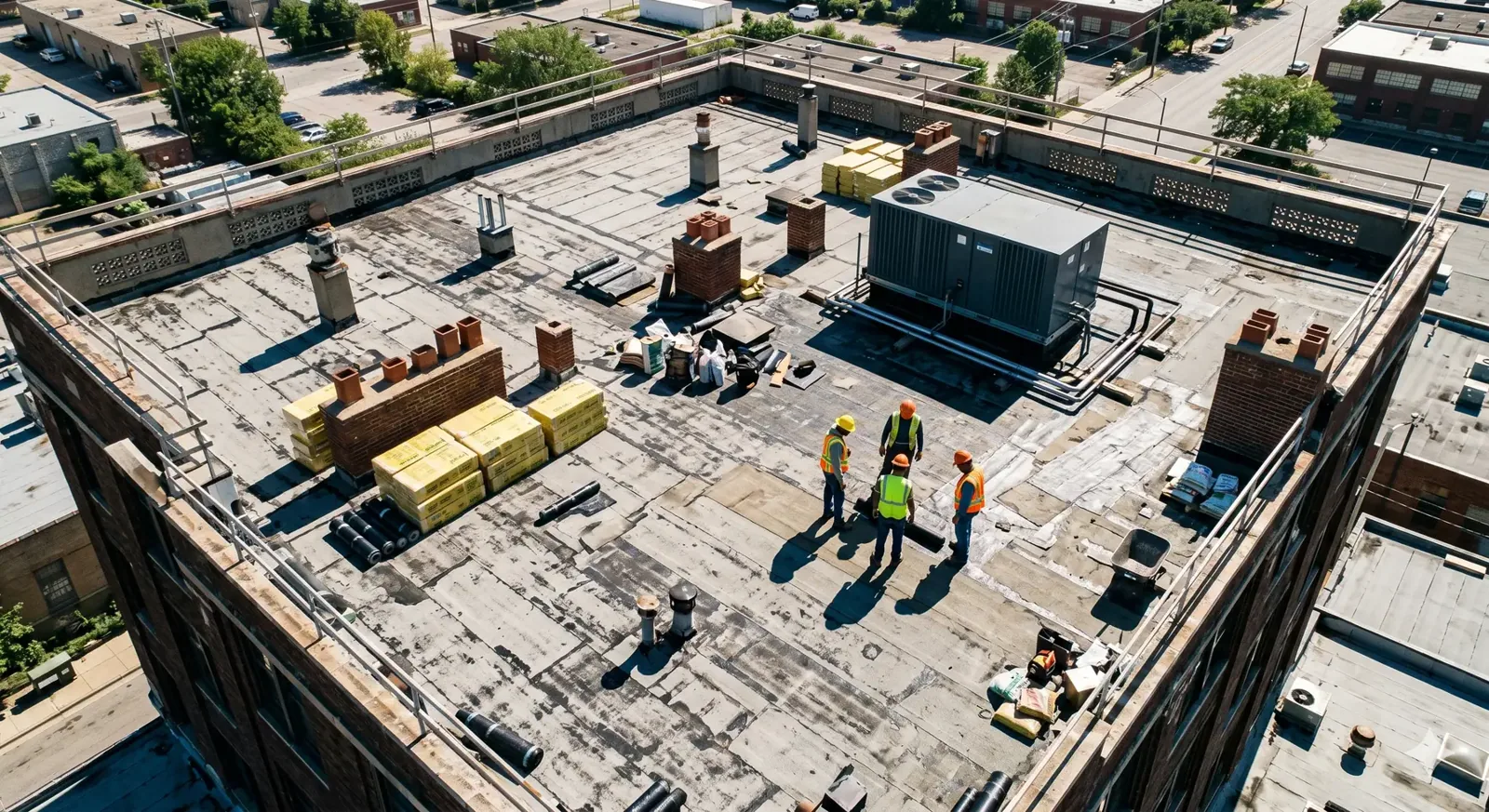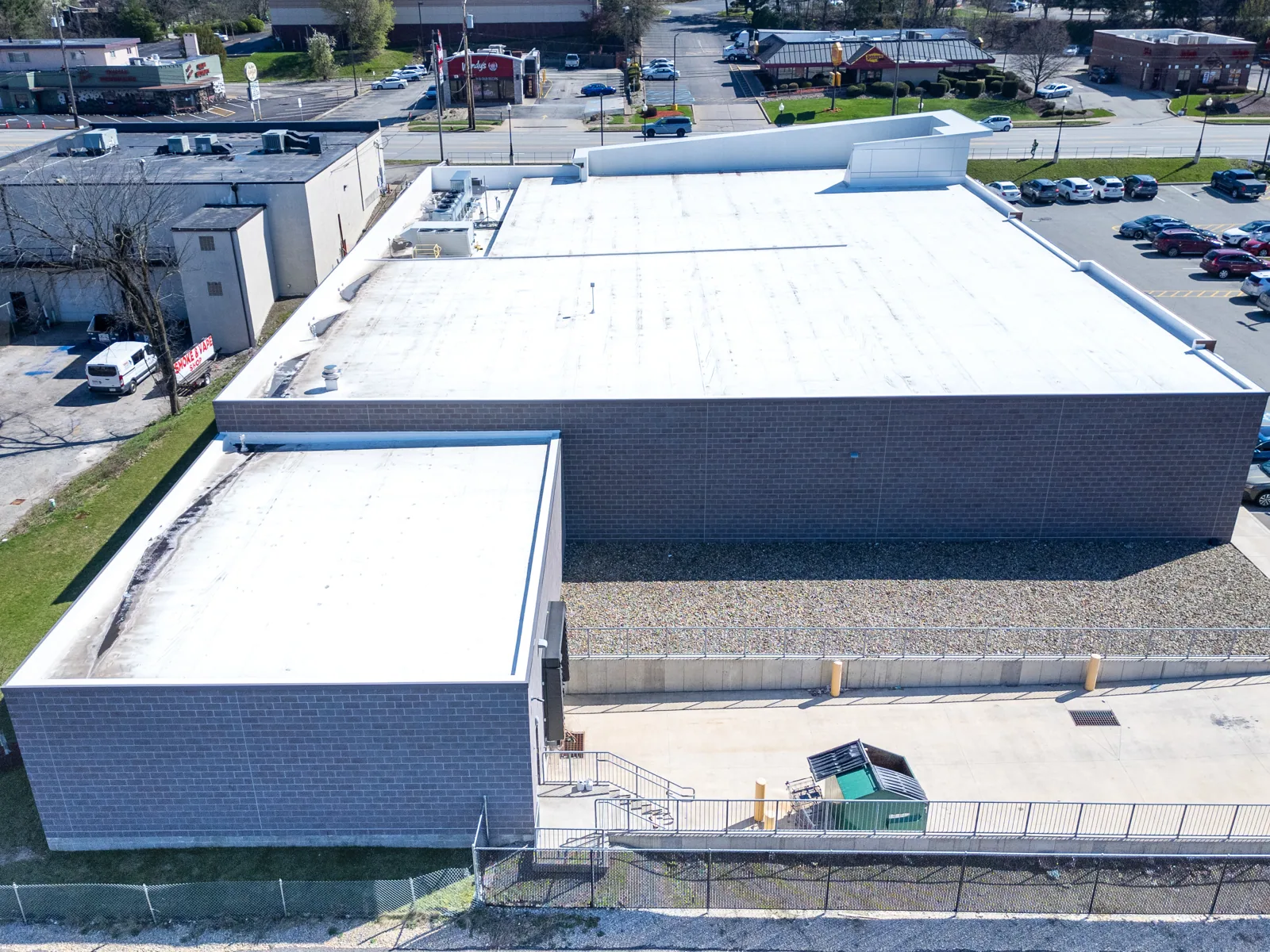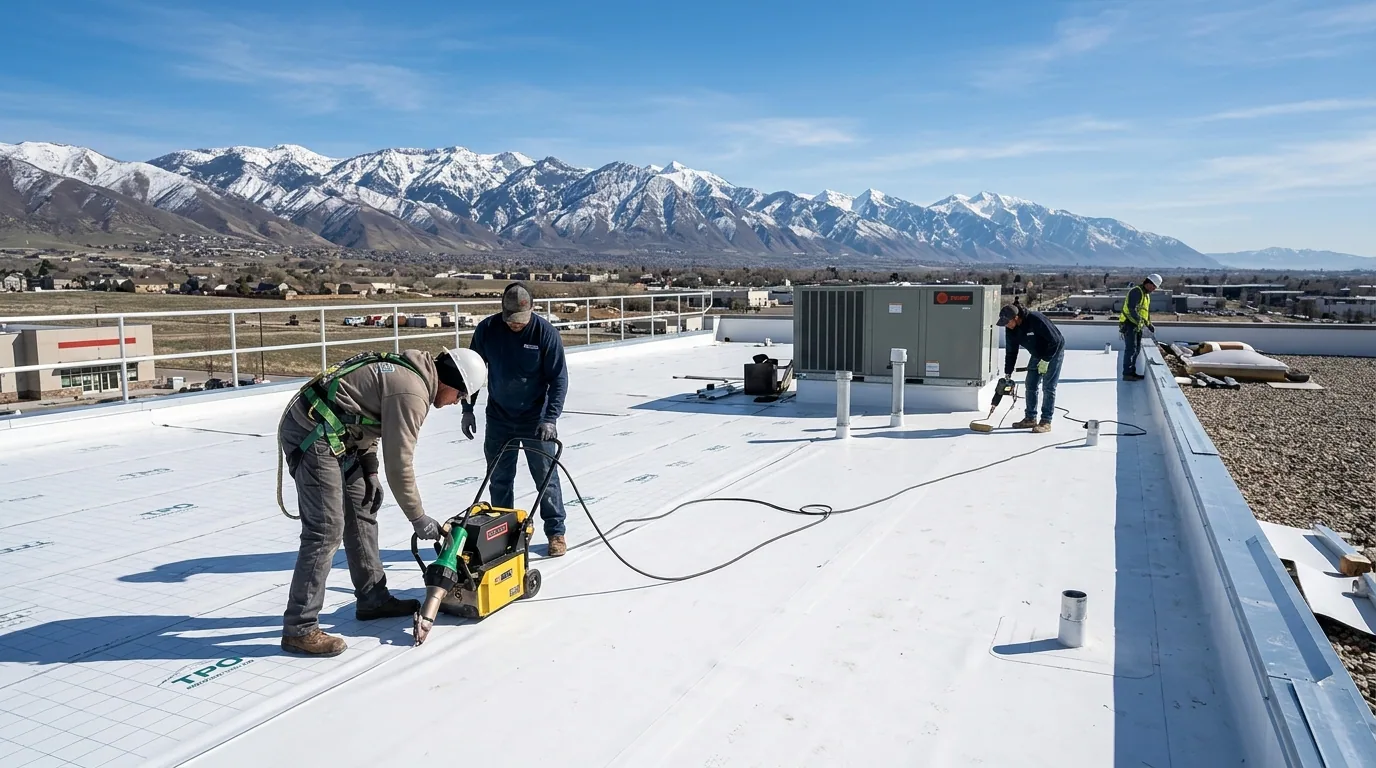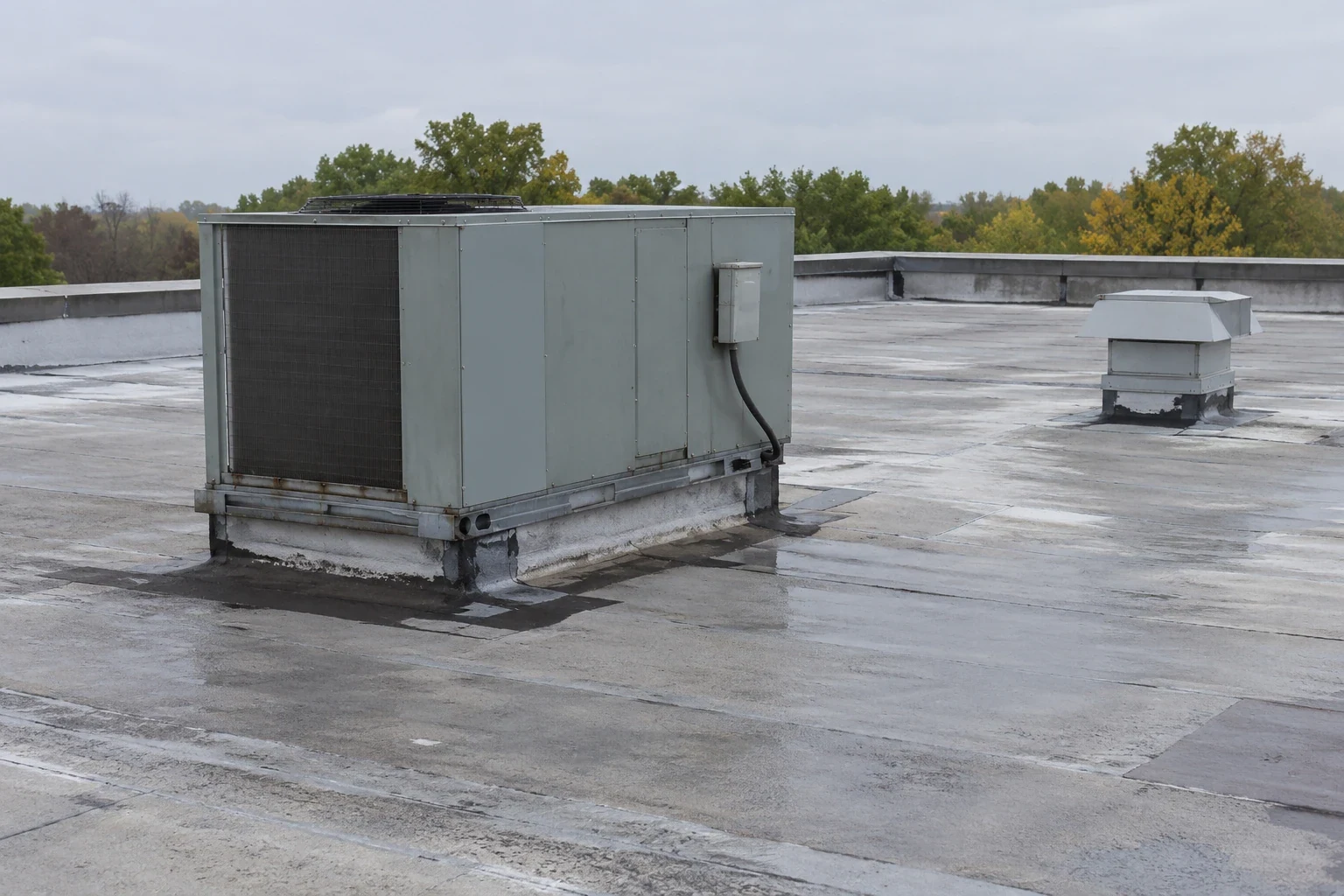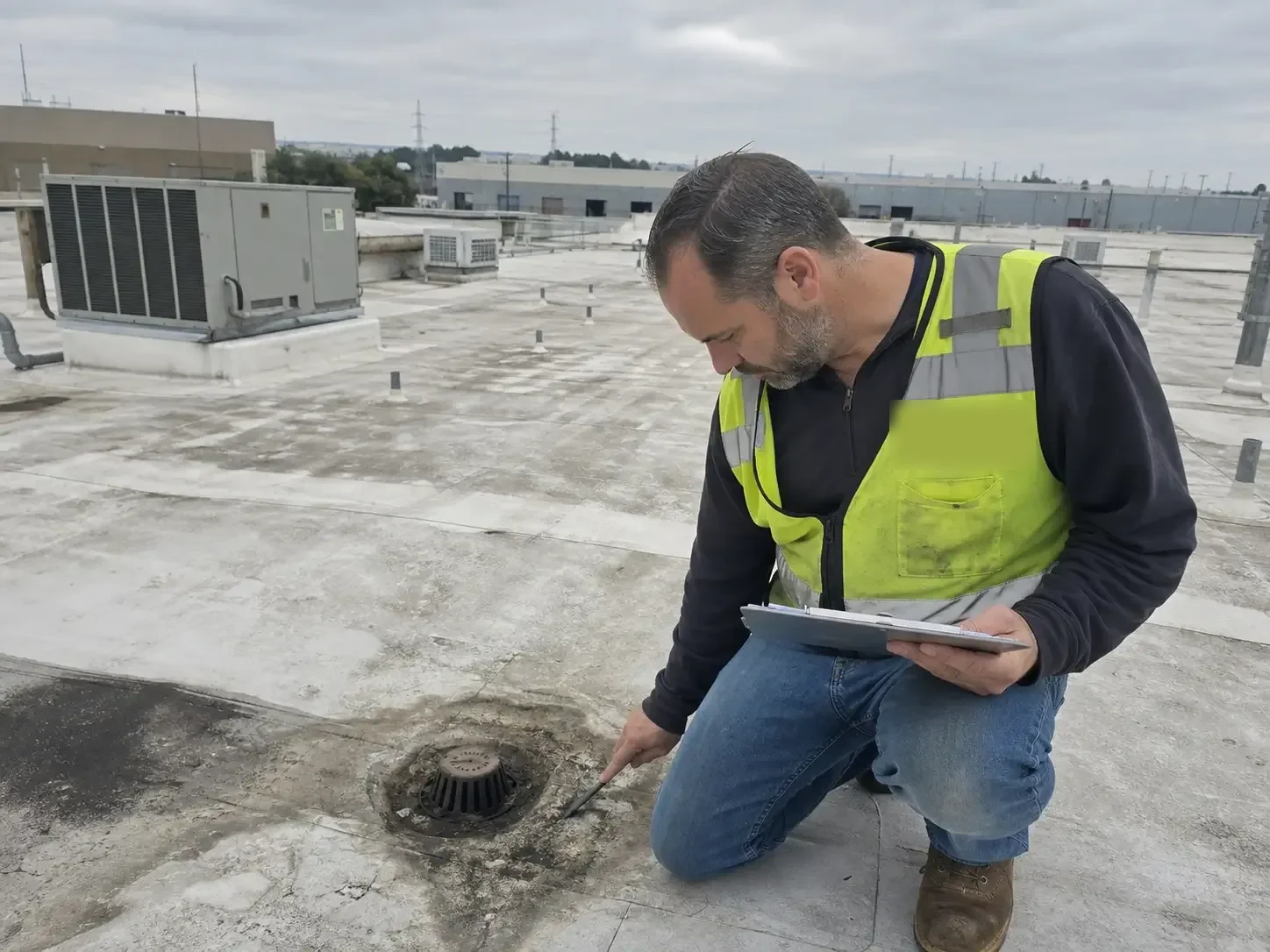
A drain repair should follow the route water takes across the roof, not stop at a clogged strainer. We inspect outlet height, bowl or scupper condition, nearby seams, slopes, and low areas, then identify whether the issue is debris, flashing, or the larger drainage layout. Waterbury's hazard plan lists winter storms citywide and summer storms locally. That context makes a clear discharge path useful to the maintenance plan, while the roof section and measured elevation determine the correction.
South Main and East Main are among Waterbury's mixed-use corridors, and industrial land follows the Naugatuck River. Those are the settings where access and operating hours shape each visit. We document each outlet and proposed change so an asset manager can compare a local repair with tapered insulation or broader roof work.
Trace the Water Path to Its Outlet
We locate drains, scuppers, downspouts, roof edges, and low points on the roof plan, then walk the accessible route between them. The inspection checks strainers, drain bowls, clamping rings, flashing, scupper throats, and visible discharge connections. We note debris, standing water, open joints, corrosion, and any obstruction that limits flow. A photo record ties each condition to the section where the work would occur.
A ceiling stain may sit far from the outlet or transition where water entered. We compare interior notes with roof slope, seams, curbs, and nearby wall details before describing the entry path. A roof inspection can establish that baseline, and ponding-water repair planning can address a low area that remains after debris is cleared.
We also distinguish water held by an obstruction from water that stays because the roof lacks adequate slope. If the route is unclear, a level survey or targeted opening may answer the next question. We state the purpose and area of that investigation before adding it to the scope, so the owner can decide whether it is needed to price a durable correction.
Check Drain and Scupper Connections
A drain assembly depends on a secure connection between the membrane and the outlet. We inspect the visible bowl, clamping ring, seal, surrounding membrane, and any signs of movement or damage. Where a scupper passes through a parapet, we examine the flashing and throat for openings or debris. The work scope names the assembly and termination rather than applying a surface patch without identifying what holds water back.
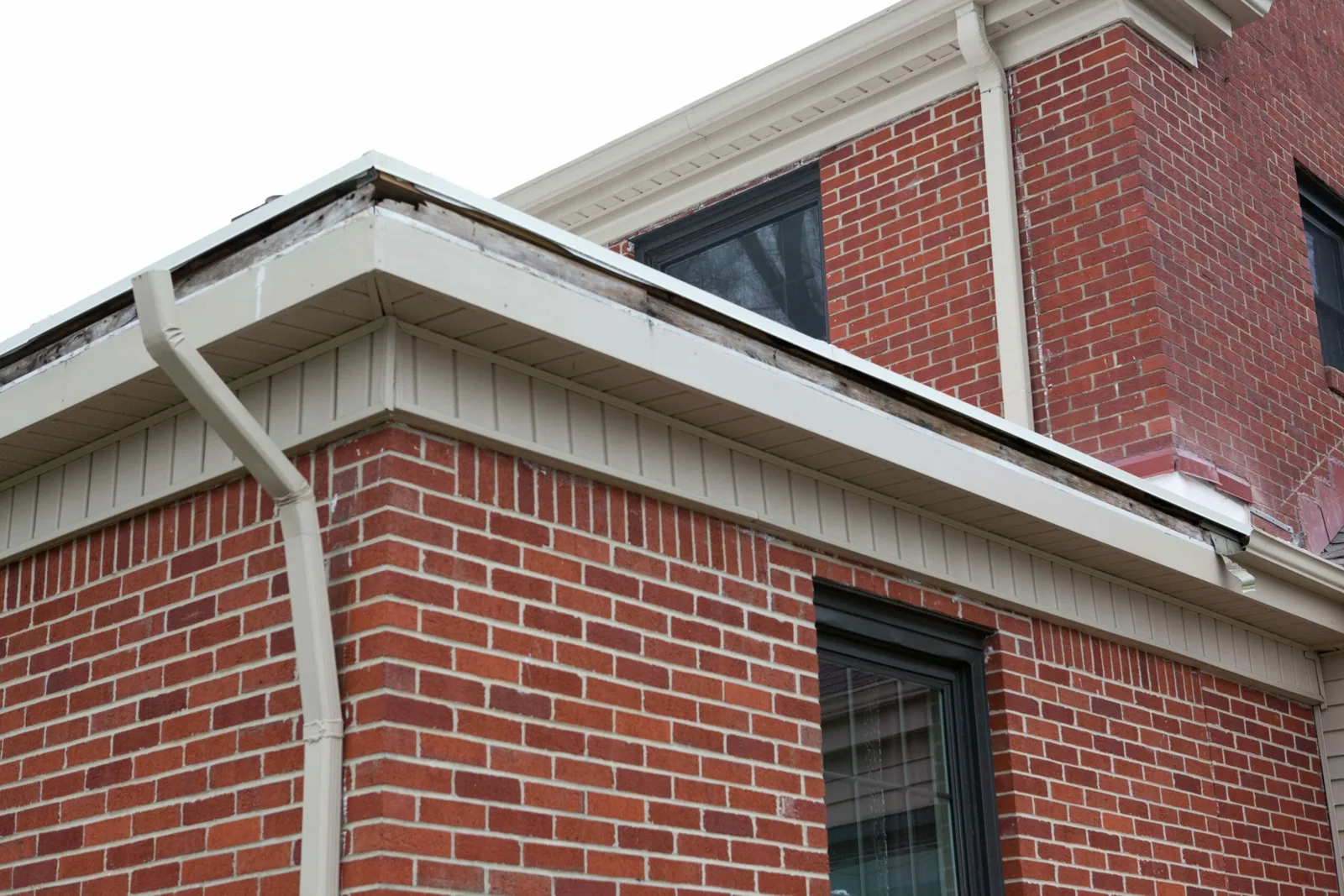
Waterbury's plan projects increasing extreme precipitation for Connecticut and gives a 24-hour rainfall estimate for the city. It is planning context, not a design flow calculation for one building. We measure the existing route and discharge point, then identify whether the proposed work changes outlet capacity, tie-in, or drainage geometry. A coping and gutter review can address the transition where scuppers or edge discharge meet the building perimeter.
For a repair, we define preparation, materials, and the extent of membrane removal. If the outlet is too high relative to the surrounding surface, a drain adjustment may need to be coordinated with insulation or roof-system changes. We include affected details and temporary dry-in so the estimate reflects the assembly that must be reopened and restored.
Correct Low Areas with a Measured Plan
A cricket or tapered insulation plan redirects water toward an outlet, but its geometry needs to match the existing roof. We map elevation and drainage path, verify the drain location, and account for curbs, parapets, expansion joints, and adjacent roof levels. If the surface is irregular or the deck condition is unknown, a test or field measurement may be needed before quantities are set.
The compact central business district near I-84 and Route 8 includes several kinds of commercial and institutional use, while industrial districts extend along the river. That city context may affect staging and occupied hours, but slope and deck condition are building-specific. We record the proposed cricket or tapered section on the roof plan and show where the new surface meets existing drains and flashings.
A tapered insulation design can correct a documented slope condition when the rest of the assembly supports it. If water remains because seams, attachment, or substrate have failed, a roof repair scope may need to accompany drainage work. We keep those quantities distinct so the owner can see which item improves water movement and which item restores a failed roof detail.
Plan the Work Before Water Returns
Drainage work often requires opening the membrane, changing the outlet, or tying in new insulation. We schedule the work for a period when the roof can be prepared and closed safely, with temporary dry-in available for each shift. Waterbury's winter plan includes snow, ice, sleet, nor'easters, and blizzards; the day-of forecast and surface condition still determine whether the repair can proceed.
For sites along East Main, South Main, or in the industrial area near the Naugatuck River, we confirm delivery route, lift access, discharge protection, and operating hours with the property contact. A phased roof plan can identify daily closure points and safe paths below the work. If active water entry starts before scheduled correction, emergency response is available at any hour to protect the area while a permanent repair is prepared.
We state the condition required before the drain or scupper can return to service and who confirms the interior area is clear. If testing shows damaged substrate or a larger drainage problem, the owner sees the finding and revised quantity before the work boundary expands. That keeps urgent water control and permanent slope correction in the same record without confusing their budgets.
Verify Flow and Preserve the Drain Record
At closeout, we photograph the drain, scupper, cricket, nearby seams, and restored membrane. The report identifies the repair performed, materials, outlet condition, and any area that still needs monitoring. If a test opening exposed wet insulation or deck damage, we record the location and owner decision. The next maintenance visit can compare the same outlet rather than relying on a general note that the roof drains were cleared.
Keep roof plans, past leak reports, drainage measurements, and repair invoices with the building record. A photo condition report can show how the work changes the water path. For a property in Waterbury, we can also note site access and discharge rules so the next repair or inspection can be scheduled accurately.
Bring the roof plan, history of ponding or leaks, access rules, and the next capital window. We can inspect accessible outlets, measure the correction, and identify whether the scope ends at cleaning, a local repair, or a larger slope project. The estimate will show the work boundary and the evidence that supports it.
Commercial Roofing Questions
When does ponding require more than clearing a drain?
If water remains after accessible debris is removed, we check slope, outlet elevation, and nearby transitions. A survey or test opening may be needed to determine whether the correction is an outlet repair, tapered insulation, or a broader roof scope.
Can a scupper repair change how water exits the building?
The scupper and its discharge path are inspected together. We document the throat, flashing, gutter or downspout connection, and any protection required below, then specify the repair without assuming an outlet change is permitted.
How do you decide whether a cricket is needed?
We map roof elevations and obstacles around the outlet, then determine whether a cricket or tapered insulation can direct water without creating a new low point. The proposed layout is tied to measured conditions and drain location.
Will a drain replacement repair a leak nearby?
Only if the leak is connected to that drain assembly. We inspect the clamping ring, flashing, membrane, and surrounding seams, compare the location with interior evidence, and keep any separate defect in its own work item.
What affects the schedule for drainage work?
Access, forecast, surface moisture, outlet parts, insulation or deck condition, and the time needed for temporary dry-in affect sequencing. We set a daily closure point and identify the condition that must be met before the roof is left.
Map the Water Path and Repair Boundary
Share the roof plan, leak notes, ponding history, access rules, and capital window. We can inspect the outlet and surrounding slope, document the evidence, and price the correction.