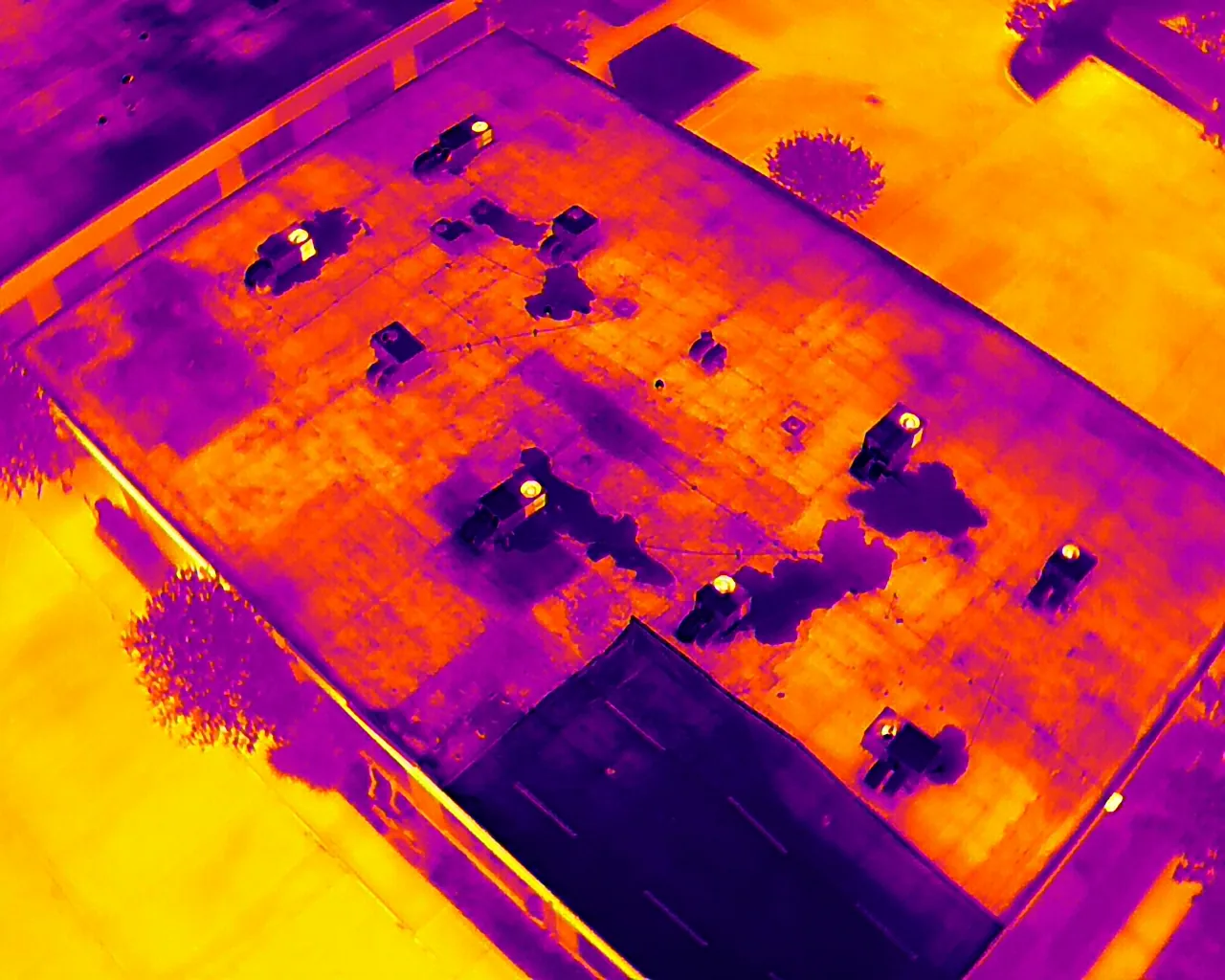
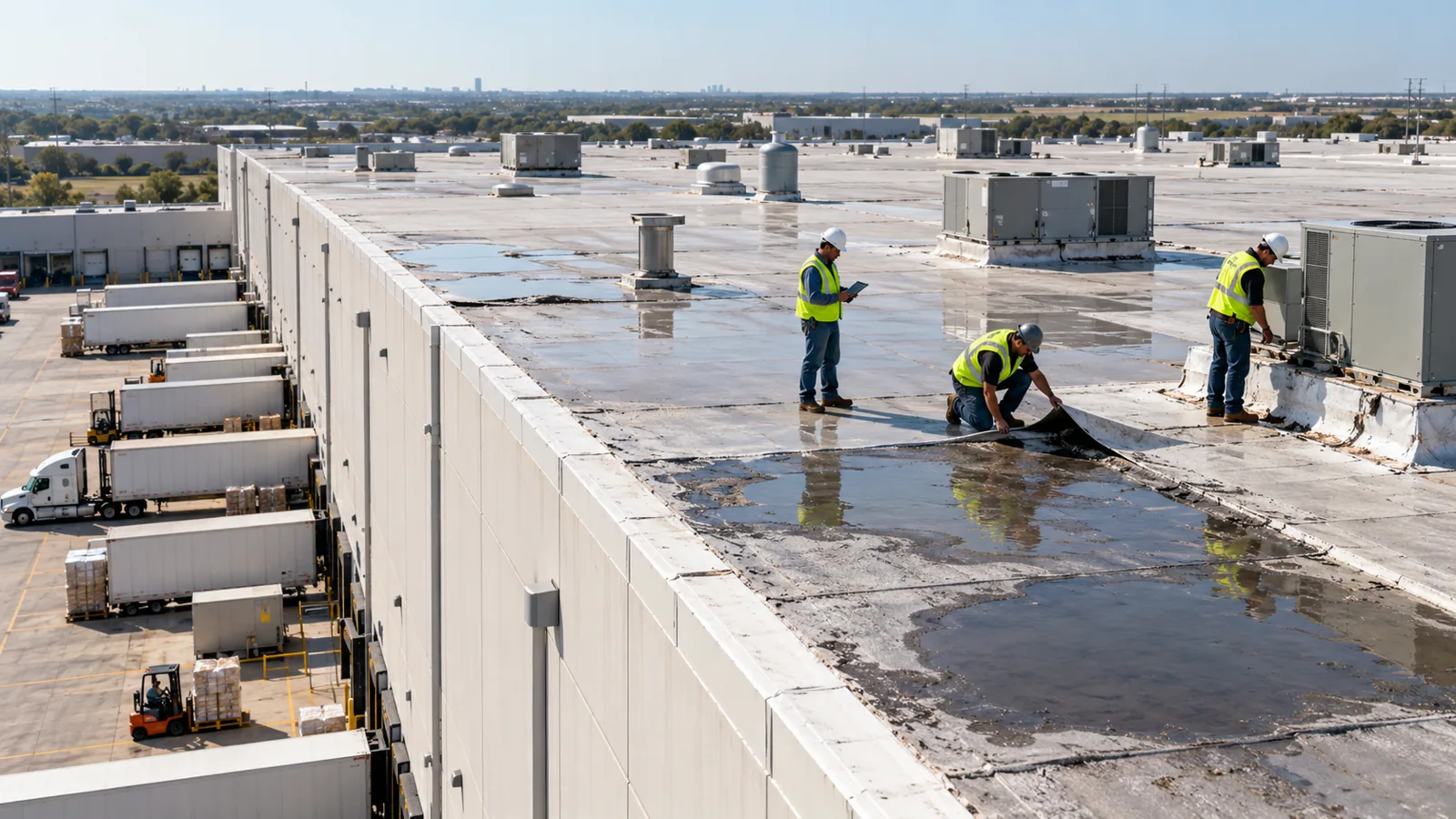
The first budget question on a Burlington, CT roof is how much of it is still dry enough to keep. Burlington's 2020 town plan inventories two Central Business areas, five Neighborhood Business areas and eleven Industrial areas, so commercial roofs here are scattered across many separate zones instead of packed into one downtown. A sound roof budget gets built zone by zone, with a test cut and a moisture reading deciding where a repair stops and where a recover option or a replacement line begins.
Each building gets a scope that separates the roof section that can be patched, the section that can take a recover, and the section that has to come off to the deck.
Price Each Business Area on Its Own Roof Sections
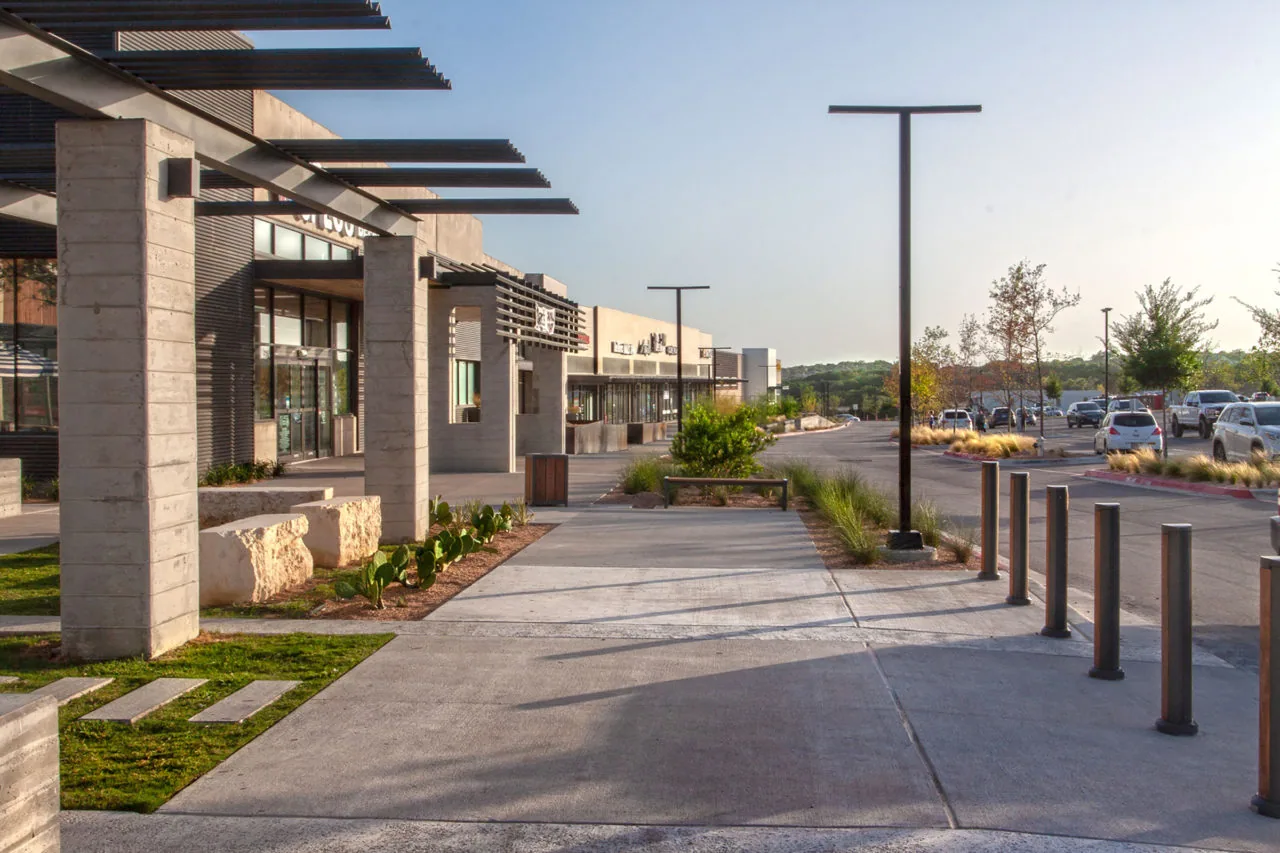
Central Business and Neighborhood Business areas tend to hold the buildings where tenants are in the space every day: storefront rows, small offices, service counters and restaurants. Occupied hours drive the schedule on those roofs, so we open and dry in one roof section at a time. A single allowance for the whole building hides which section is actually costing money.
The first walk covers the low-slope field, the parapet and edge metal, and every penetration that serves a tenant: kitchen exhaust, bathroom vents, rooftop units and the curbs under them. A shopping center roof with several tenants often carries a different failure in each bay, because each tenant added its own equipment at a different time. We mark those bays separately so a landlord can repair the failing ones now and carry the rest to a later capital window.
Schedule Access Around Burlington Center
The town plan calls Burlington Center a community focal point and wants a mix of business, civic and residential uses there. A roof in that kind of mixed setting has neighbors who notice noise, hot work and debris, and that shapes the work sequence as much as the membrane choice does. We plan tear-off boundaries so loose material is never left open over a doorway, and we stage lifts and dumpsters where foot traffic is lightest.
The same plan asks for site and parking connections among Burlington Commons, Library Lane, Covey Road and nearby uses. Where lots are shared or are reworked to connect, staging areas and truck turning room can move from one season to the next, so we confirm access rules and the permit date with the property manager before material is ordered. A roof that cannot be reached by a delivery truck costs more than one that can, and that difference belongs in the scope allowance from the start.
Plan Industrial Dry-In Around Operations
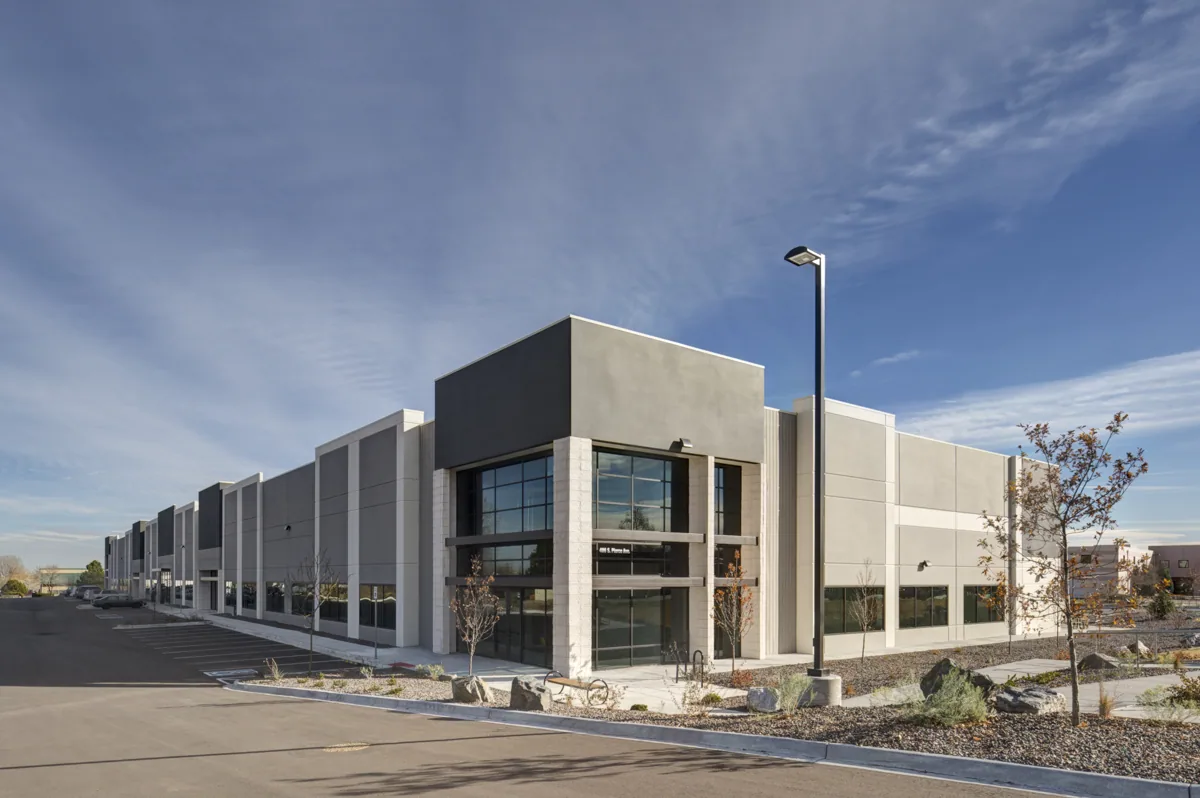
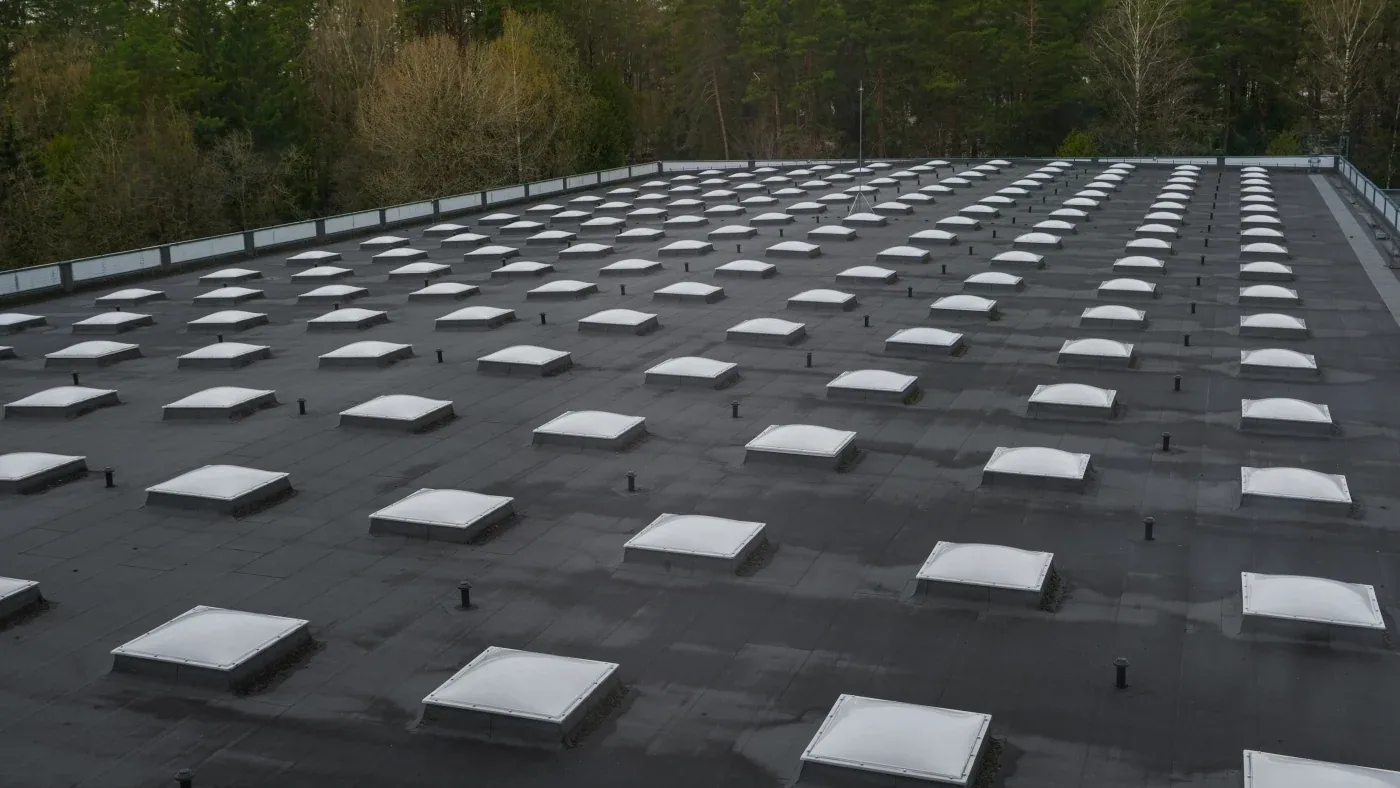
Eleven Industrial areas make up the longest line on the town's inventory. On a first walk at an industrial building we look for what drives risk on any low-slope roof: how many roof sections there are, where the drains sit, how much rooftop equipment has been added, and whether insulation under the membrane is holding water.
A building with production or storage underneath cannot always stop for a reroof, so we split the work into sections that match the floor plan. Dry-in is finished section by section, and any equipment shutdown is booked ahead of time against the schedule. For a flex industrial roof, where offices and warehouse space share one structure, the office bay and the warehouse bay are often priced as separate scopes because their insulation and drainage needs differ.
Size the Drain Path for Waterbury Rainfall and Winter
Waterbury, CT sets the planning reference here: its hazard plan puts the whole city under winter-storm exposure, from snow and ice to nor'easters, and pegs a one-day rainfall of 5.54 inches at a 10 percent chance in any year. The same plan projects hotter summers and heavier rain across Connecticut, which is the state-level pressure any Burlington roof will see.
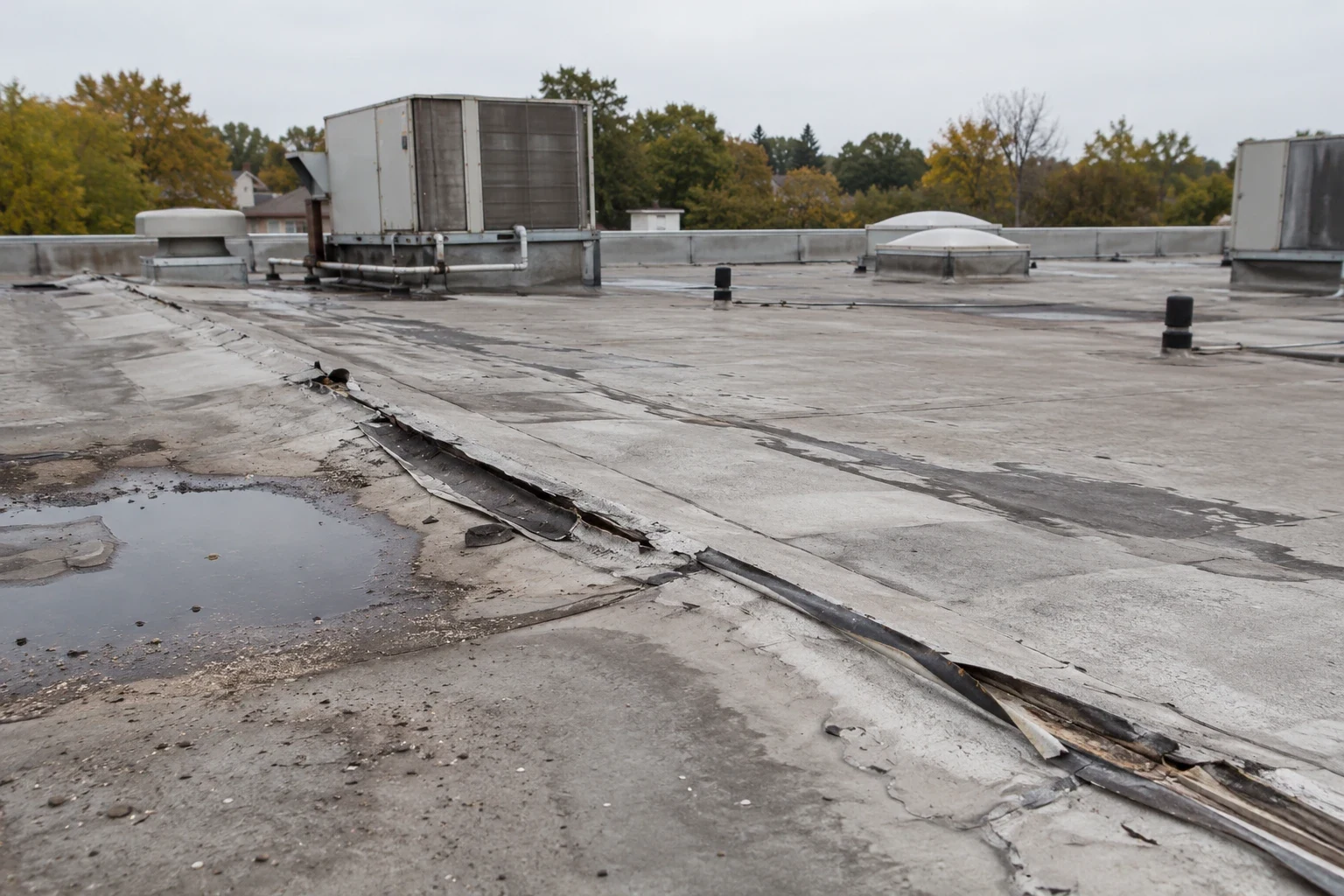
For drainage, the practical question is whether the drain path can carry a hard rain and shed melt without leaving standing water at the low points. We check the slope to each drain, the condition of the sumps and the edge metal. Water that sits through a freeze cycle points toward snow and ice damage repair rather than a cosmetic patch.
Check the Permit Date Against the 2022 Code
Connecticut's 2022 State Building Code covers permit applications filed from October 1, 2022 forward and rests on the 2021 International Codes, building and energy conservation volumes alike. For a recover, that matters because a second layer adds weight and may leave the existing insulation value in place, while a full tear-off to the deck can bring the current energy provisions into the scope.
We lay out both routes with their cost drivers before an owner picks one. A roof recover is the shorter job when the existing assembly is dry. The moisture evidence from an infrared moisture survey and the test cuts tells the owner which route the roof can actually support, and that evidence goes to the building department with the permit package.
Leave Records That Support the Next Capital Window
Spreading roof spending across several years works only if every roof has a service horizon written down. Our condition report gives each roof section a rating, a list of open defects and a time frame, backed by photographs.
Closeout photos finish the loop after the work: seams, flashing, drains and every penetration, taken before the last material leaves the site. A roof capital plan built from those photographs and a roof condition report lets the next owner or lender see what was done. A portfolio that crosses into Bristol or Waterbury keeps the same standard.
Commercial Roofing Questions
How should an owner in one of Burlington's industrial areas compare repair pricing with recover pricing?
Ask for the two numbers on the same roof section, with the moisture evidence behind each. A repair allowance makes sense when the insulation under the membrane tests dry, and a recover option stays on the table only if a test cut confirms the deck and insulation can carry another layer. Once wet core shows up in more than a few spots, the comparison usually moves toward a replacement line for that section, while dry sections of the same building can stay on the repair path.
What do closeout photos need to show on a roof in a mixed-use town center?
They need to show the seams, the flashing at every wall and curb, each drain, and the edge metal, plus the tear-off boundary where old roof meets new. At Burlington Center, where the town plan calls for business, civic and residential uses together, a neighbor or a future buyer may ask what was done. Dated photographs of each roof section answer that without a return visit.
A tenant reported a drip inside a Burlington retail bay. Which roof section gets tested first?
Test the section directly above the drip and then the roof area uphill from it, because water travels along the deck or the insulation before it appears at the ceiling. Moisture readings and a small test cut tell us whether the water entered at a penetration, a seam or the edge. Fixing that one entry point is usually the least costly step, and the report shows whether the surrounding insulation has been soaked.
Does the 2022 State Building Code change the choice between a recover and a tear-off?
It can. A tear-off to the deck lets the energy provisions of the 2021 International Energy Conservation Code come into the scope, while a recover leaves the existing assembly in place and adds a new membrane over it. The permit date, the existing insulation and the weight of the second layer all feed the decision, and we set them out together so the building department and the owner see the same assumptions.
How much lead time does a Burlington reroof need before the dry-in date?
Plan for the permit date, the material lead time and any shared-lot access rules to land before the first section opens. Winter storm exposure shortens the practical window, so owners who want work finished in a dry season should settle the scope and the capital approval well ahead. Phased work is possible on occupied buildings, with each roof section dried in before the next one is opened.
Set Up a Burlington Roof Inspection
Tell us the access rules, what roof records exist and when your capital or permit window closes. We inspect, price repair, recover and replacement separately, and return the photographs and test results behind each allowance.