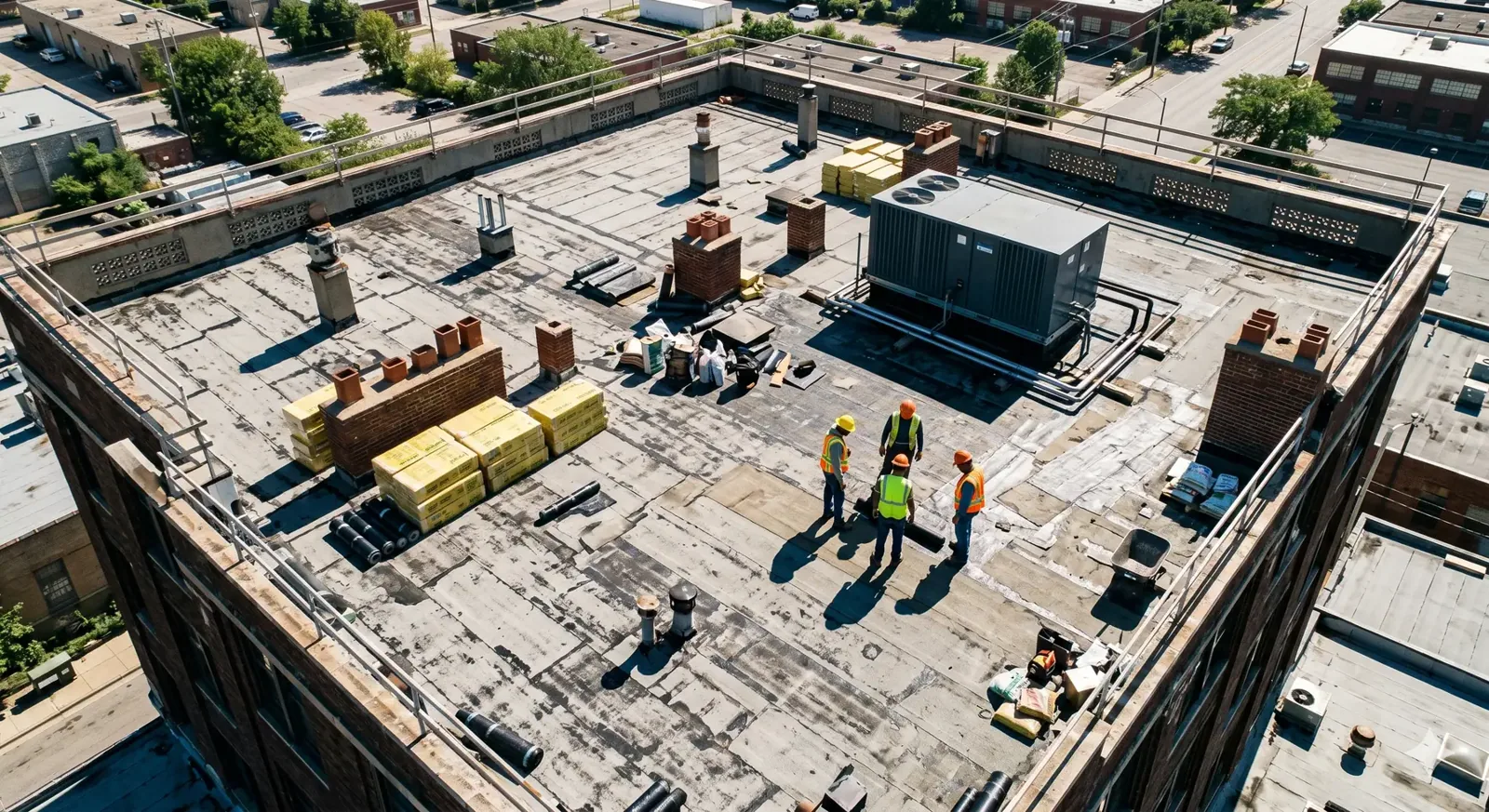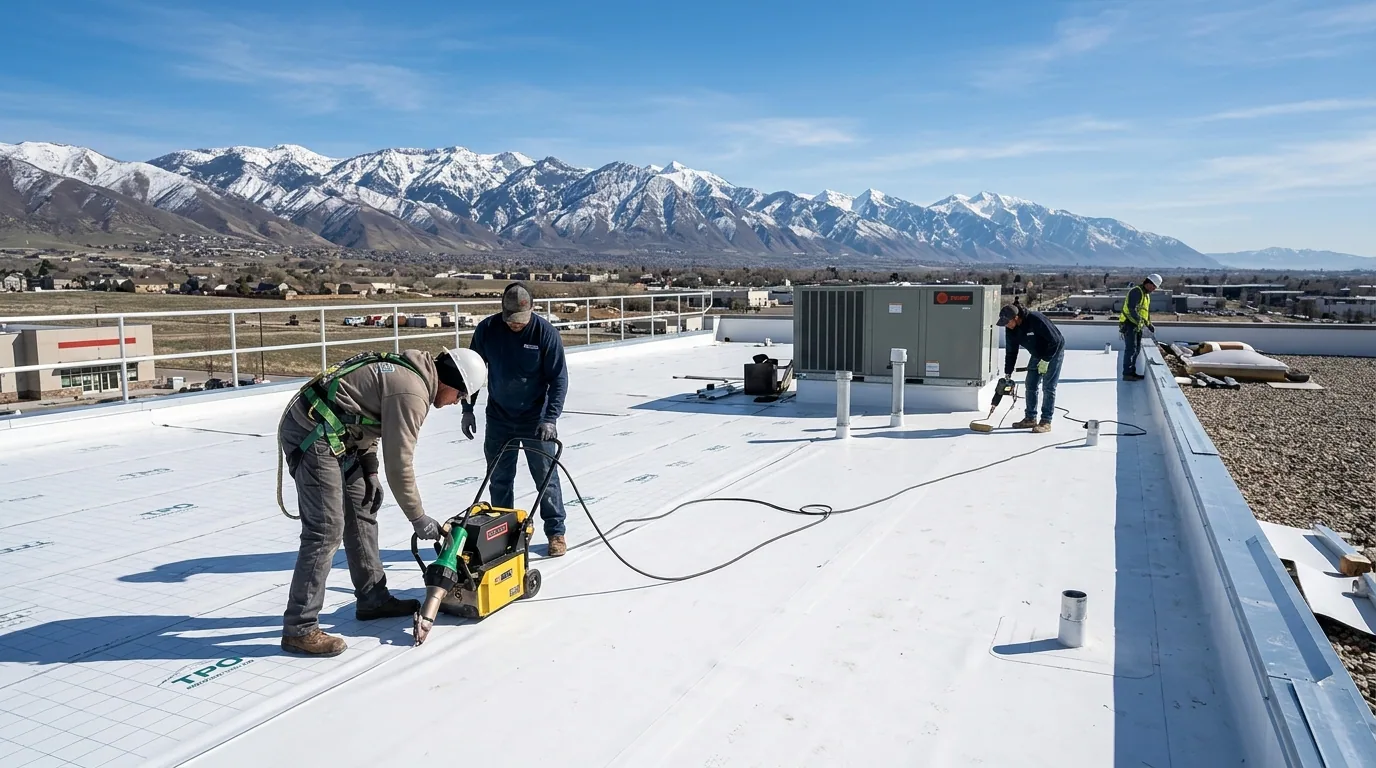
The budget choice at a rooftop unit starts with the curb, the membrane tie-in, and the condition of the insulation below. We inspect the equipment base, fasteners, counterflashing, pipe supports, and nearby seams before pricing a repair or a larger roof section. A unit replacement can change curb height, weight, and service access, so the roof scope has to match the mechanical plan. In Waterbury, winter ice and summer storms make a weak transition costly to leave open, but weather exposure alone does not set the replacement line. We document what is visible and identify any test needed to confirm the assembly.
Waterbury's industrial land follows the Naugatuck River, while Reidville Drive and East Main Street are arterial commercial corridors. Those settings bring different delivery and operating constraints. Our estimate follows the actual curb and roof section, with the repair boundary, dry-in approach, and trade handoff stated plainly. The estimate starts from a commercial roof inspection of the curb and the section around it, whether the building is in Waterbury or a neighboring town.
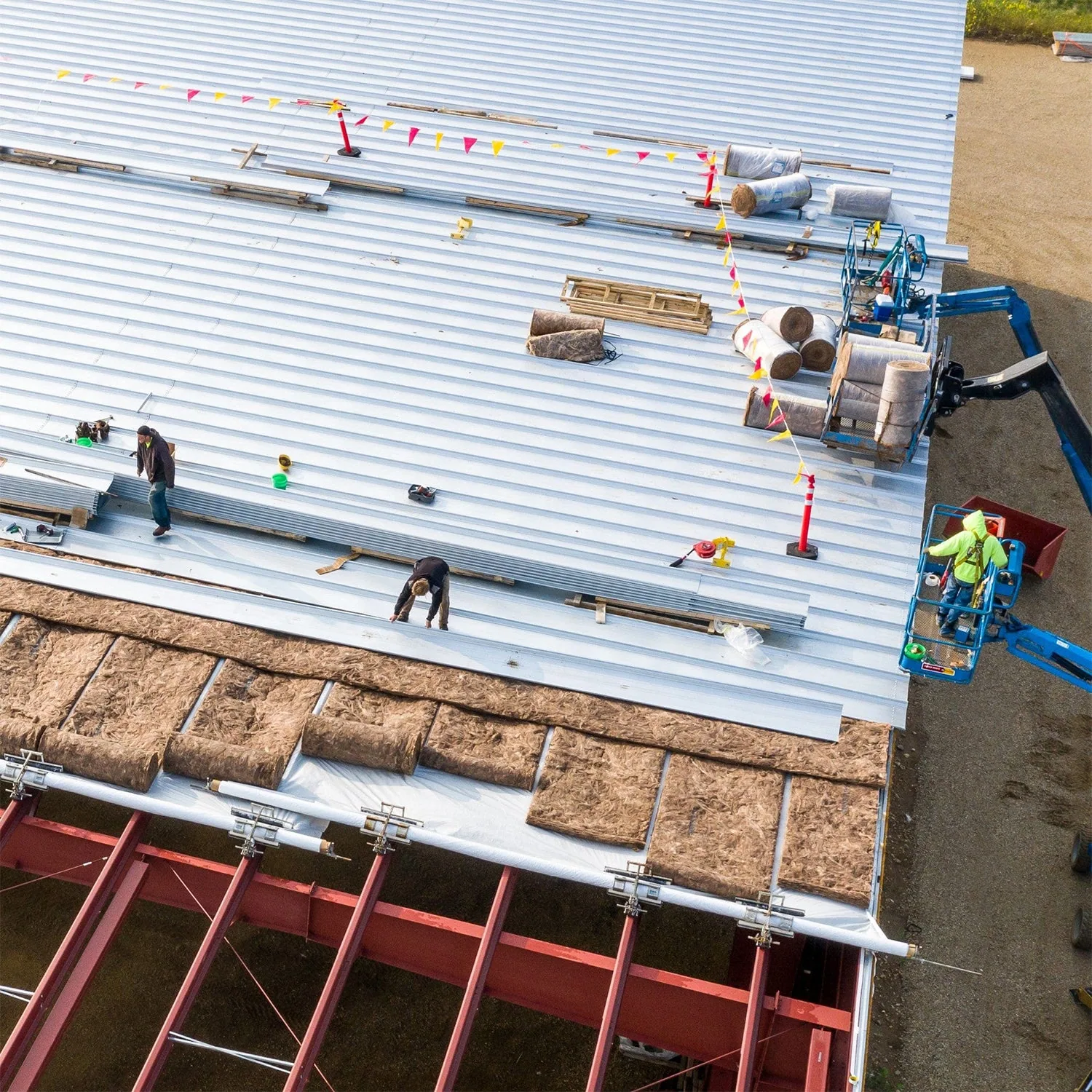
Inspect the Curb Before Pricing the Roof
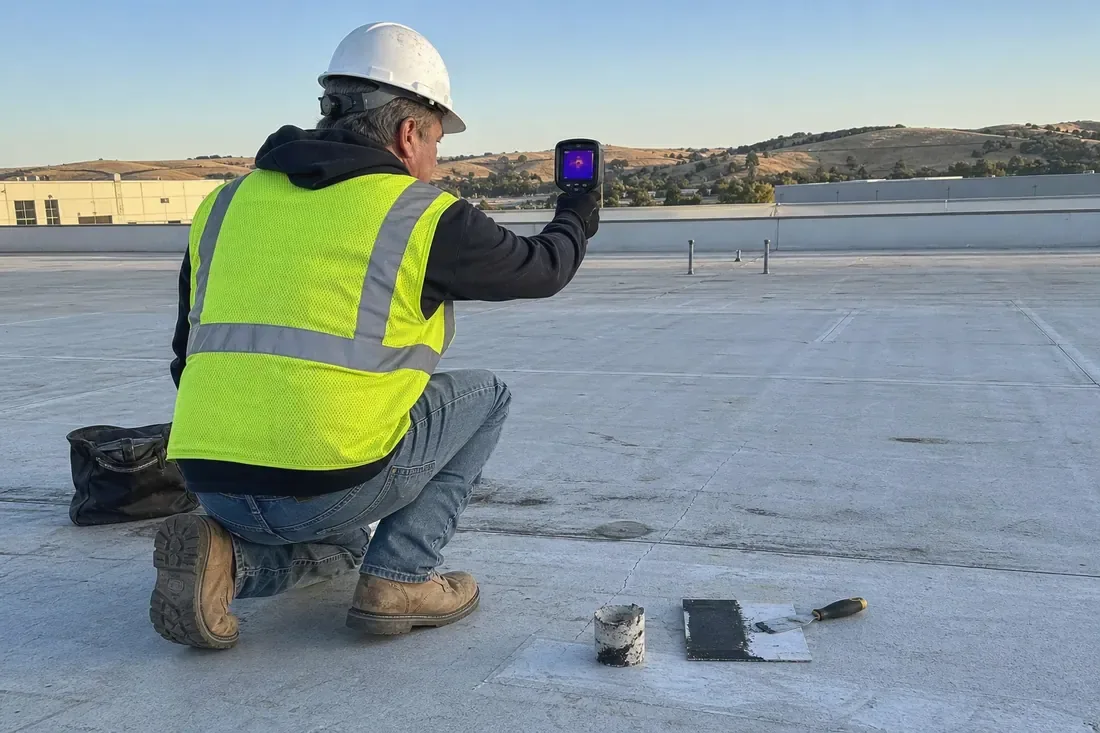
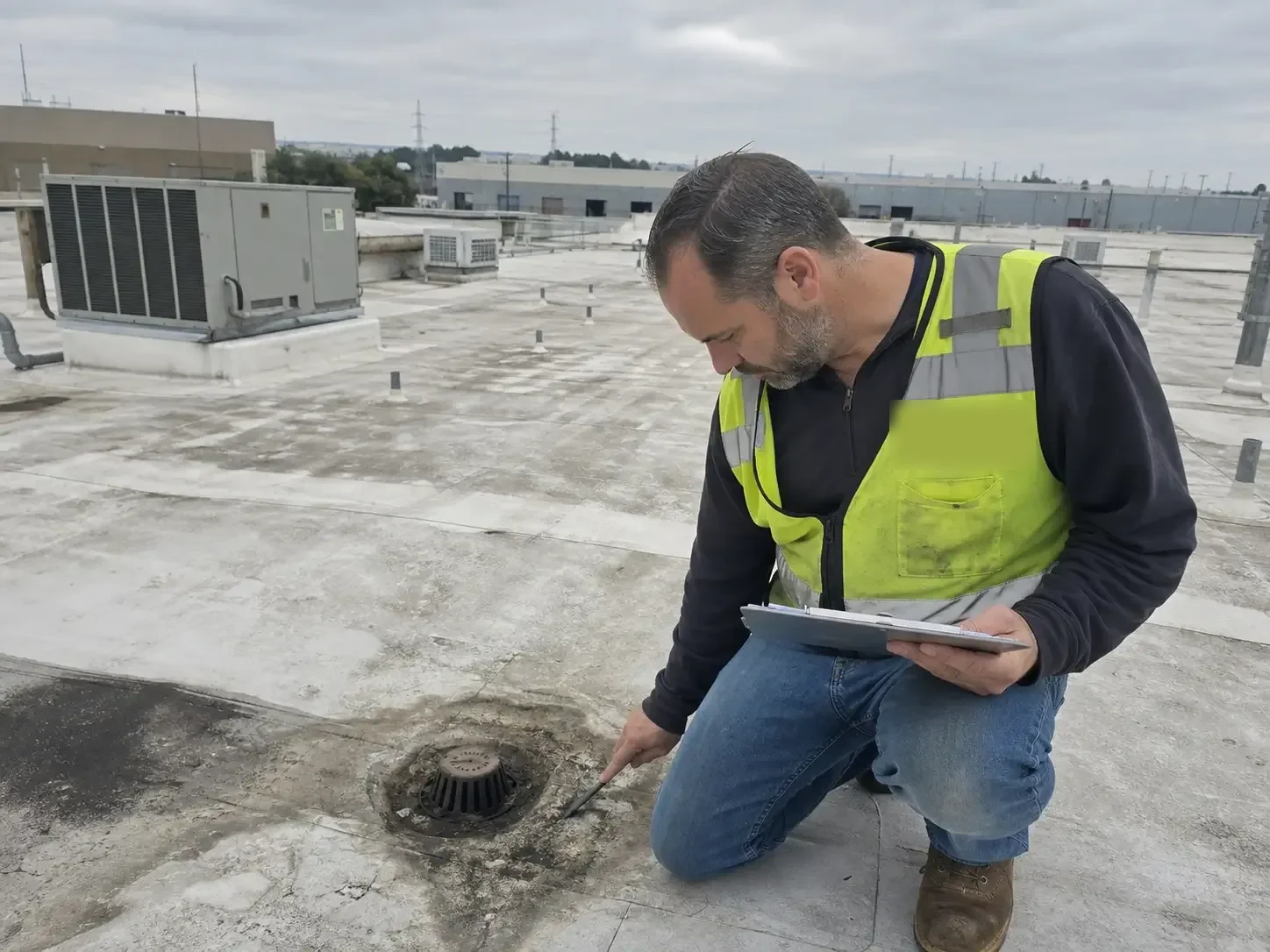
A curb leak may start at the membrane turn-up, a loose counterflashing edge, a split corner, or an equipment change that left the old opening exposed. We check the full perimeter and compare surface evidence with interior reports. Fasteners, pitch pockets, conduit entries, and adjacent pipe supports receive separate notes because a repair to one detail does not seal the others. If the insulation or deck feels suspect, we recommend a defined test cut rather than assuming the visible stain maps the full wet area.
The written scope identifies each affected unit by roof plan location, describes the observed defect, and shows whether the work stops at flashing or reaches the surrounding membrane. We can also record equipment clearances and existing service paths before a mechanical contractor schedules removal. A photo condition report preserves the base detail and repair limits for the next capital review. That record matters when several roof sections carry different ages or repair histories, because one curb should not set the allowance for every penetration.
Coordinate the Curb with Mechanical Work
Replacing a rooftop unit without a roofing handoff can leave a curb too low, too narrow, or incompatible with the selected membrane. Before work starts, we compare equipment dimensions, curb drawings, electrical and gas routes, lifting access, and the roof assembly. The mechanical scope defines what must be removed; the roofing scope defines temporary protection, flashing removal, substrate repair, and final tie-in. We agree on who controls the opening and when each trade leaves it dry. This avoids a gap between crane day and permanent closeout.
Waterbury's compact center sits near the I-84 and Route 8 junction, and mixed-use corridors include South Main. In tighter operating settings, staging, street access, and occupied hours can affect the lift sequence. We confirm those property rules with the site contact rather than infer them from the corridor. If a curb change requires broader roof work, a replacement scope can define tear-off limits and insulation transitions, while phased reroofing can set daily closure points around business operations.
Choose a Repair, Curb Rebuild, or Roof Section
A sound curb with localized flashing failure may support a limited repair. Corroded metal, movement, damaged wood nailers, repeated patching, or wet insulation can push the boundary farther. We inspect corners, curb height, attachment, membrane compatibility, and the condition of the surrounding roof before recommending a rebuild. Where the assembly remains concealed, test cuts at selected points can distinguish a surface defect from a moisture problem that extends beyond the base.
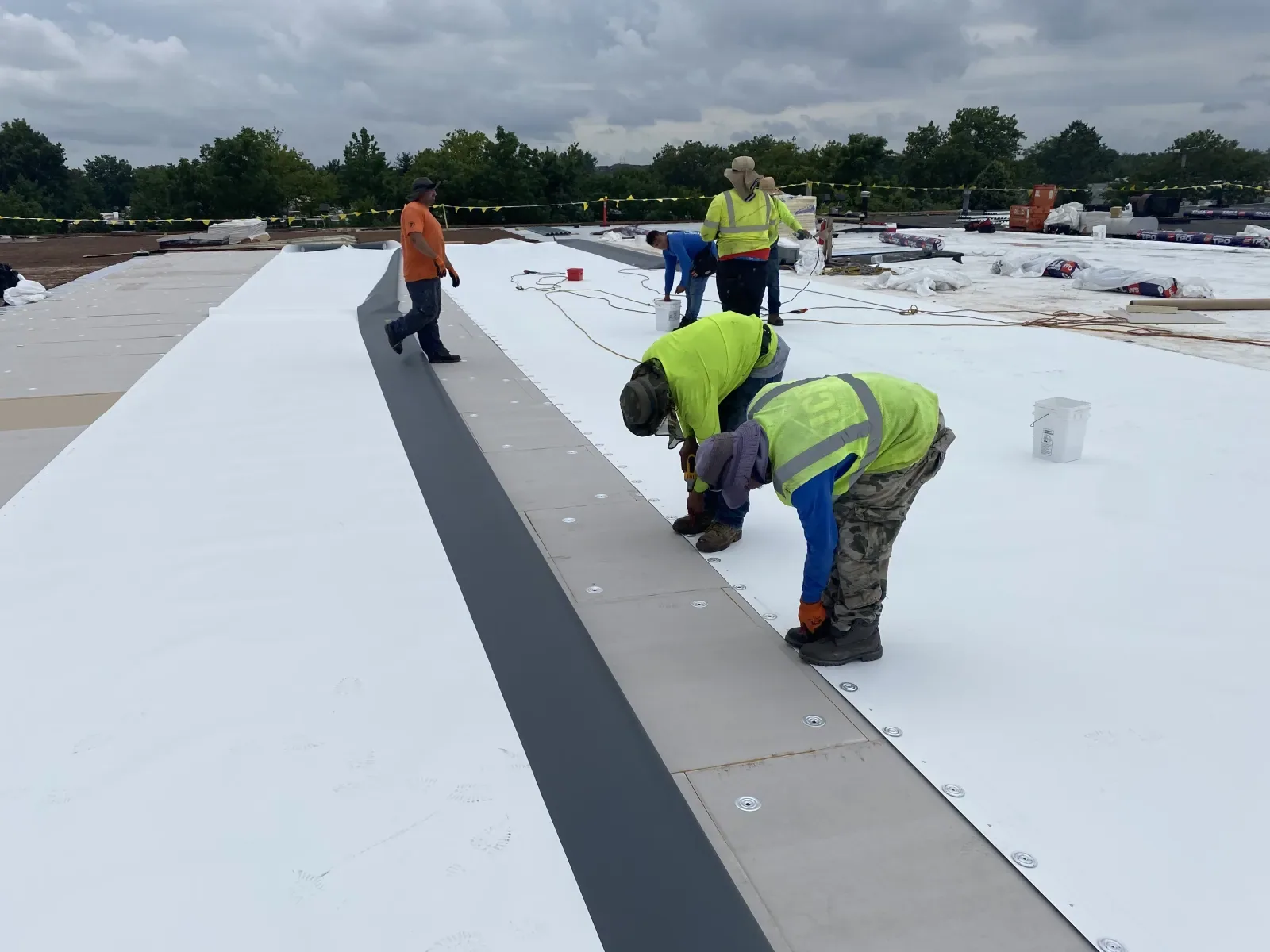
We separate base flashing, curb fabrication, insulation, membrane tie-in, and interior protection in the estimate. If unit replacement is planned, the dimensions and setting date should be settled before material is ordered. If the unit will remain, the scope should preserve required service clearances and avoid trapping water at the perimeter. A cover-board and insulation review can help address a confirmed substrate issue, while flashing failure repair can define a local transition when the rest of the assembly remains serviceable.
Set a Dry-In Date and Daily Handoff
Equipment work exposes the roof at a point where rain protection and trade timing matter. We identify the opening size, temporary cover, planned curb delivery, and the condition required before the roof can be left for the day. The crew works to a dry-in date that accounts for surface moisture and forecast, with a closure plan if the mechanical work pauses. Waterbury's hazard plan includes winter storms citywide and summer storm exposure; the actual roof surface and forecast govern each work window.
Before mobilization, we review roof access, lift placement, equipment routes, tenant notices, and any restrictions on shutting down the unit. We protect nearby drains and prevent debris from entering open equipment or the building. If a leak is active before the scheduled curb project, our emergency roof response can stabilize the area at any hour, including weekends and holidays, while the permanent scope is prepared. The emergency visit and planned curb replacement remain separate cost lines.
Close the Work with a Curb Record
At completion, we photograph the curb corners, membrane termination, counterflashing, support points, and restored surface. The closeout notes the materials used, any substrate repair, and any area that remains outside the approved work boundary. If the mechanical unit was replaced, we record the final interface and confirm the roof tie-in is complete before the opening returns to normal service. A clear record lets the next inspection compare like details instead of relying on a general note that equipment flashing was repaired.
Keep the unit schedule, roof plan, service records, access requirements, and closeout photos together. Waterbury's industrial districts and downtown corridors include different operating patterns, so the building's own rules should guide future access. Share the next capital window and any planned equipment change before pricing begins. We can inspect the curb, explain the repair or replacement boundary, and provide a written scope tied to the roof evidence.
Commercial Roofing Questions
Can a leaking rooftop unit be repaired without replacing the curb?
A curb can remain when its structure, attachment, height, and metal condition are sound and the leak is confined to the membrane or flashing. We inspect the full perimeter and nearby layers, then price the smallest boundary supported by the evidence. If a test cut finds wet insulation or the curb is unstable, the recommendation changes.
What should be ready before a mechanical unit is lifted?
Provide the unit dimensions, curb drawings, lift date, access rules, and the roof plan if available. We coordinate the opening, temporary cover, and final flashing with the mechanical schedule so the roof is not left exposed between trades. Any change in curb size or location needs review before the new unit arrives.
Do pipe supports need separate roof flashing?
Yes, each pipe, conduit, and support needs a compatible detail that keeps water from reaching the deck. We document the support type, movement, attachment, and membrane condition, then separate those repairs from the unit curb scope. That prevents a sealed equipment base from leaving nearby penetrations unresolved.
How do you price a curb rebuild?
The main cost drivers are curb dimensions, fabrication, roof layers, substrate condition, access, equipment downtime, and how much membrane must be reopened. We show those items separately and use a test cut when concealed moisture could change the quantity. The estimate also states the work window and dry-in requirements.
Can the work happen while the building stays open?
Often, with a planned work zone, protected interior area, and an agreed equipment shutdown. We confirm tenant hours, lift access, noise limits, and daily closure points before mobilization. Where operations cannot pause, the sequence can move by roof section or unit, subject to safe access and weather.
Price the Curb and Roof Interface
Send the roof plan, equipment schedule, leak notes, access rules, and planned unit date. We will inspect the curb, document the roof boundary, and separate repair, rebuild, and replacement options.