A guest who finds a bucket under a ceiling tile has already formed an opinion of the building, so the first roofing question for a lodging or dining operator is which room is exposed and how fast it can be closed off. The second is how much of the roof has to change to stop it. We separate those two answers on every Waterbury, CT property: an immediate stabilization of the active entry, then a written choice between a repair boundary, a recover option, and a replacement line, each priced against the booking calendar.
Downtown Waterbury mixes civic, financial, health-care, and higher-education uses, and its mixed-use corridors, among them East Main, North Main, South Main, Highland Avenue, and Willow Street, put restaurants beside retail, services, housing, and civic activity. Operators in either setting share a roof problem: water that reaches a dining room or a meeting space costs revenue before it costs a repair.

Stop the active entry before pricing the larger scope
A leak over a dining room or a guest corridor needs two things at once, protection below and a path to the source. We ask for the room, the time the water appeared, and the weather that preceded it, then trace the line from the ceiling stain to the nearest penetration, seam, drain, or edge. The ceiling mark shows where water arrives, and the entry point may sit a long way up the deck, so the first visit ends with a marked plan and a bounded emergency repair when water is still coming in.
Emergency response runs around the clock, holidays included, which matters for an operator whose busiest nights fall on a holiday weekend. Temporary work is described as temporary, with the permanent scope priced separately once the cause is documented.
Treat kitchen exhaust and rooftop equipment as a separate roof zone
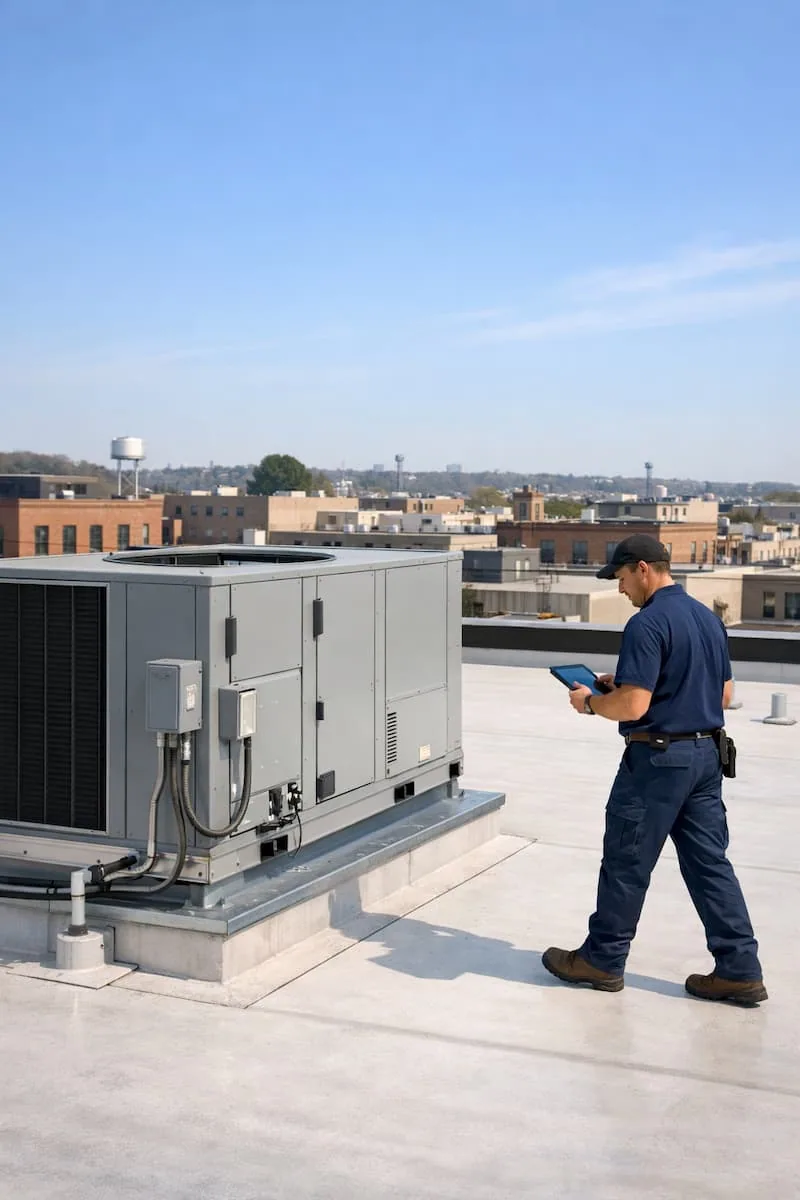
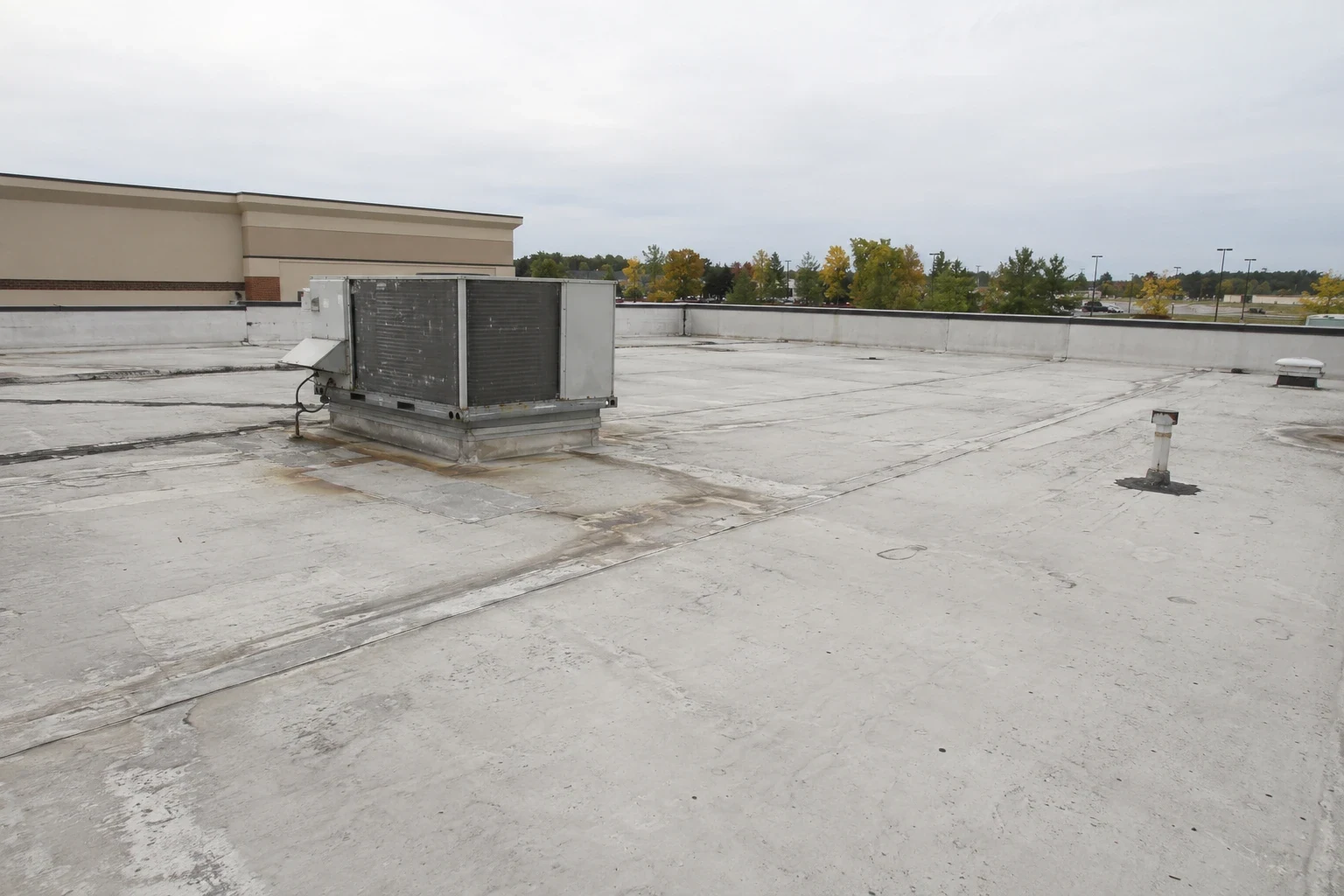
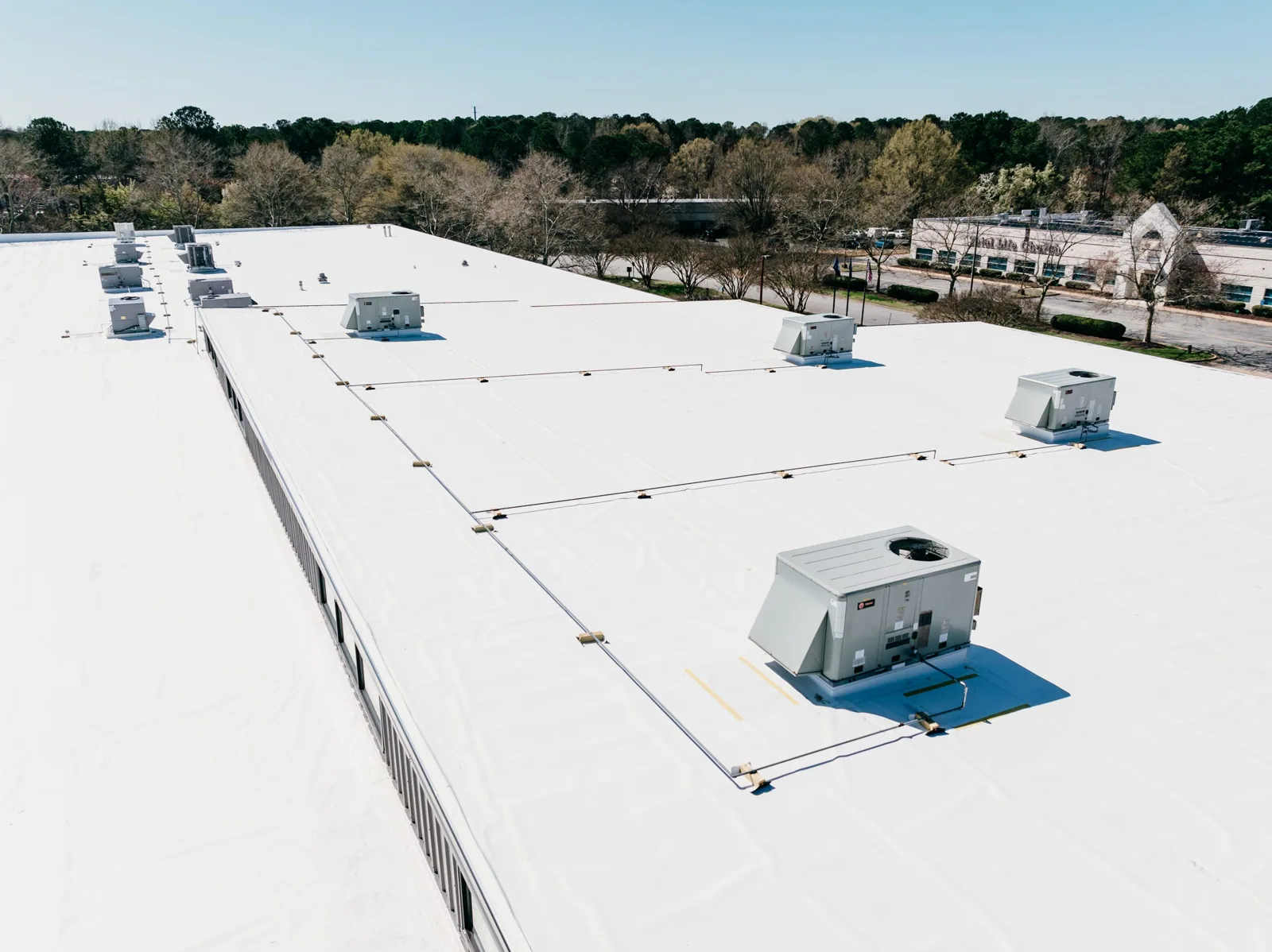
Restaurant and banquet kitchens put grease-laden exhaust, makeup air units, and refrigeration condensers on the roof, and the membrane around them takes foot traffic and spills that the field of the roof never sees. We walk each curb, check flashing height and sealant, look for ponding at equipment bases, and inspect the membrane for grease softening, which shortens the life of some single-ply sheets.
Service technicians walk the same route to the same units every week, so we mark the route and recommend walk pads where bare membrane shows wear. Those pads are small items, and they protect the area most likely to be punctured. Where the equipment sits on curbs and supports that are failing, the repair is usually cheaper than a leak into a kitchen below. Chains that run many dining rooms often bring the same questions to retail and restaurant operators across several buildings, and each location still gets its own roof walk.
Phase a reroof around occupancy, events, and noise
A hotel cannot close a wing for a roof, and an event space cannot move a wedding. The reroof is divided into sections, each with a start condition, a dry-in point, and a protection plan below, so noisy tear-off over guest rooms is done during the hours the operator names, and quiet work such as flashing and seam welding fills the rest. We ask for the event calendar and the housekeeping schedule before we set a start date.
Material staging, hoisting, and debris chutes need their own plan, because a dumpster in a guest drop-off lane is a guest-experience problem. An occupied-building reroof lists those logistics next to the membrane details, so the general manager can approve both in one meeting. In the compact central business district near where I-84 meets Route 8, lift placement and delivery access are shaped by the neighboring buildings, so we confirm the staging area on the site walk rather than on the drawings.
Read Waterbury weather as a drainage and edge question
The municipal hazard plan puts the whole city under winter storms, from snow and ice to sleet, nor'easters, and blizzards, and lists summer storms and tornadoes among local hazards. Its tropical-storm discussion says historical cyclone damage has most often come from flooding. For a roof, those hazards turn into specific inspection items: drains that must carry meltwater, scuppers that must not freeze shut, and edge metal that holds when wind lifts at the perimeter.
The plan also reports a 24-hour rainfall estimate of 5.54 inches for a 10-percent annual chance event. That figure is a planning measure, not a forecast, and we use it to ask whether outlets and overflow paths are clear before a heavy storm, since a clogged drain or scupper turns a routine storm into a ceiling failure.
Choose between repair, recover, and replacement on evidence
A repair is the right scope when the leak path is identifiable and the surrounding membrane and insulation are sound. A recover option is worth pricing only when a test cut shows dry insulation and an attachment that can carry another layer. Replacement belongs in the budget when wet material crosses several sections or repeated patches no longer hold. We show the three side by side, each with its removal depth, deck allowance, edge metal, and protection below.
For a group that owns several properties, the same findings feed a multi-site roof program that spreads the capital across years instead of concentrating it in one season. Each building keeps its own record, and the comparison across them is by condition, so the property with an active leak does not wait behind one with a cosmetic stain.
Leave the property with photographs, a roof map, and a next review date
At closeout, we hand over dated photographs of each repaired seam, flashing, and drain, a marked roof plan, the materials installed, and any condition left under observation. A general manager who changes jobs can then see what was repaired and what was deferred. The same file shows insurers and lenders what the roof looked like on the day the work ended.
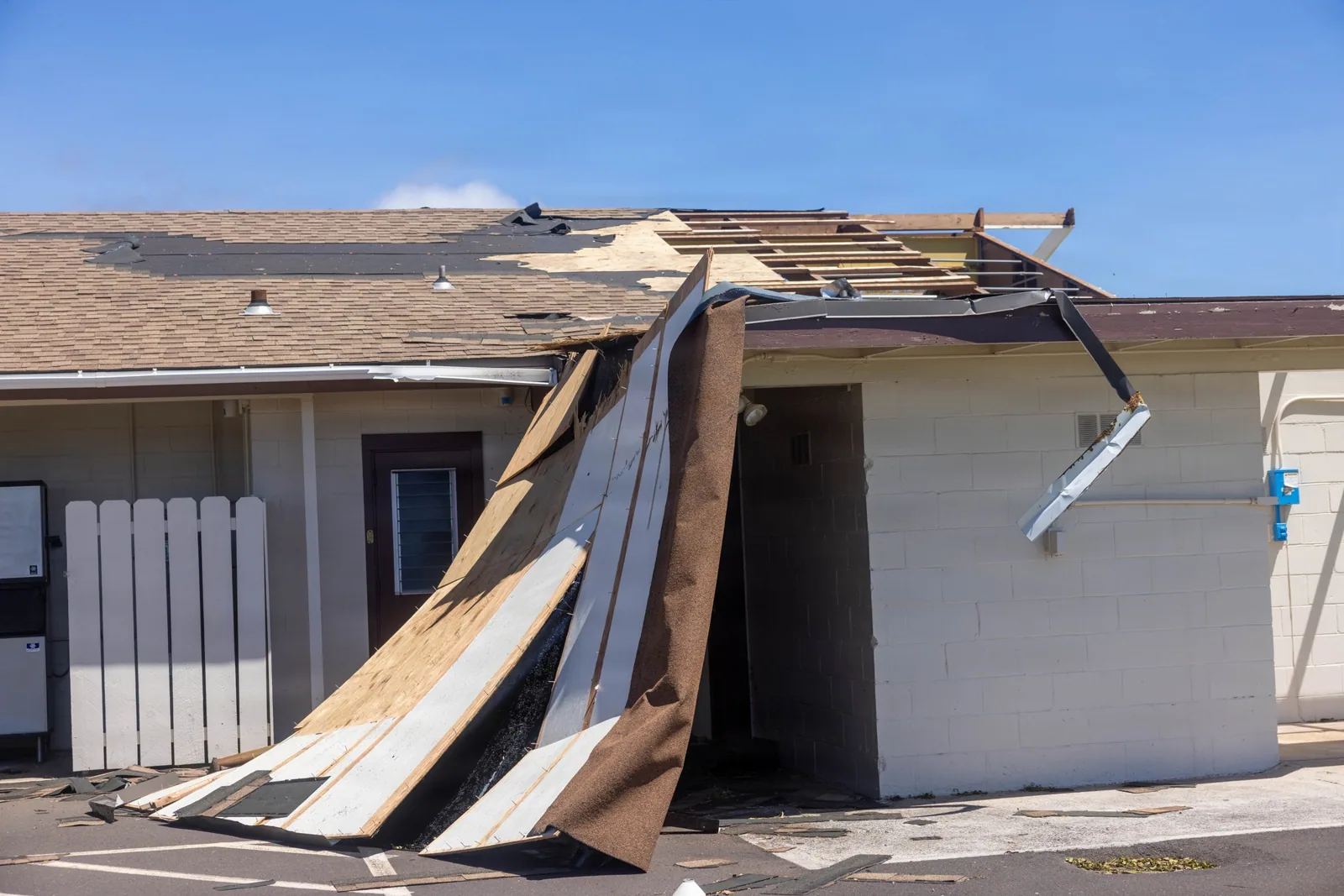
If a storm event damages a roof, that file supports a claim by showing the prior condition. Coordination with an insurance restoration team is easier when the baseline already exists, and the work is scoped from the photographs instead of from memory. Owners who hire a property manager should make sure that file travels with the building when management changes. A lodging or restaurant owner in Naugatuck, where the municipal plan describes a linear commercial district along Route 63, the river, and Route 8, gets the same file and the same review date.
Commercial Roofing Questions
How do you schedule rooftop work above occupied guest rooms?
We divide the roof by the rooms below, then schedule noisy removal for the hours the operator approves and keep quiet tasks for the remainder. Each section is dried in before the crew leaves, and the protection below stays in place until the area is released.
What roof problems come from commercial kitchens?
Grease from exhaust fans can soften some membranes, curb flashings crack under heat, and service traffic wears the sheet along the same path. We inspect those zones separately and recommend walk pads or a curb repair where they will pay back.
When does a recover make sense for a hotel roof?
Only when moisture testing shows dry insulation, the deck is sound, and the wall and equipment heights allow another layer. If wet core appears under several sections, the section is better removed, and the report prices both choices.
Can an event space keep its date during a roof repair?
Usually, when the work is limited to a bounded repair done outside event hours. A full reroof needs a longer plan, so we ask for the calendar first and divide the work so a protected section sits over the event floor on the dates that matter.
What does a storm-damage claim need from the roof?
Dated photographs of the damage, a description of the cause, the roof section affected, and the temporary protection installed. Baseline photographs from earlier visits help show what changed, so we keep them with the property file.
Share the booking calendar and the roof plan
Send the event dates, housekeeping schedule, access rules, and any leak history. We will mark the exposed rooms, price the choices, and set a dry-in plan the operations team can approve.