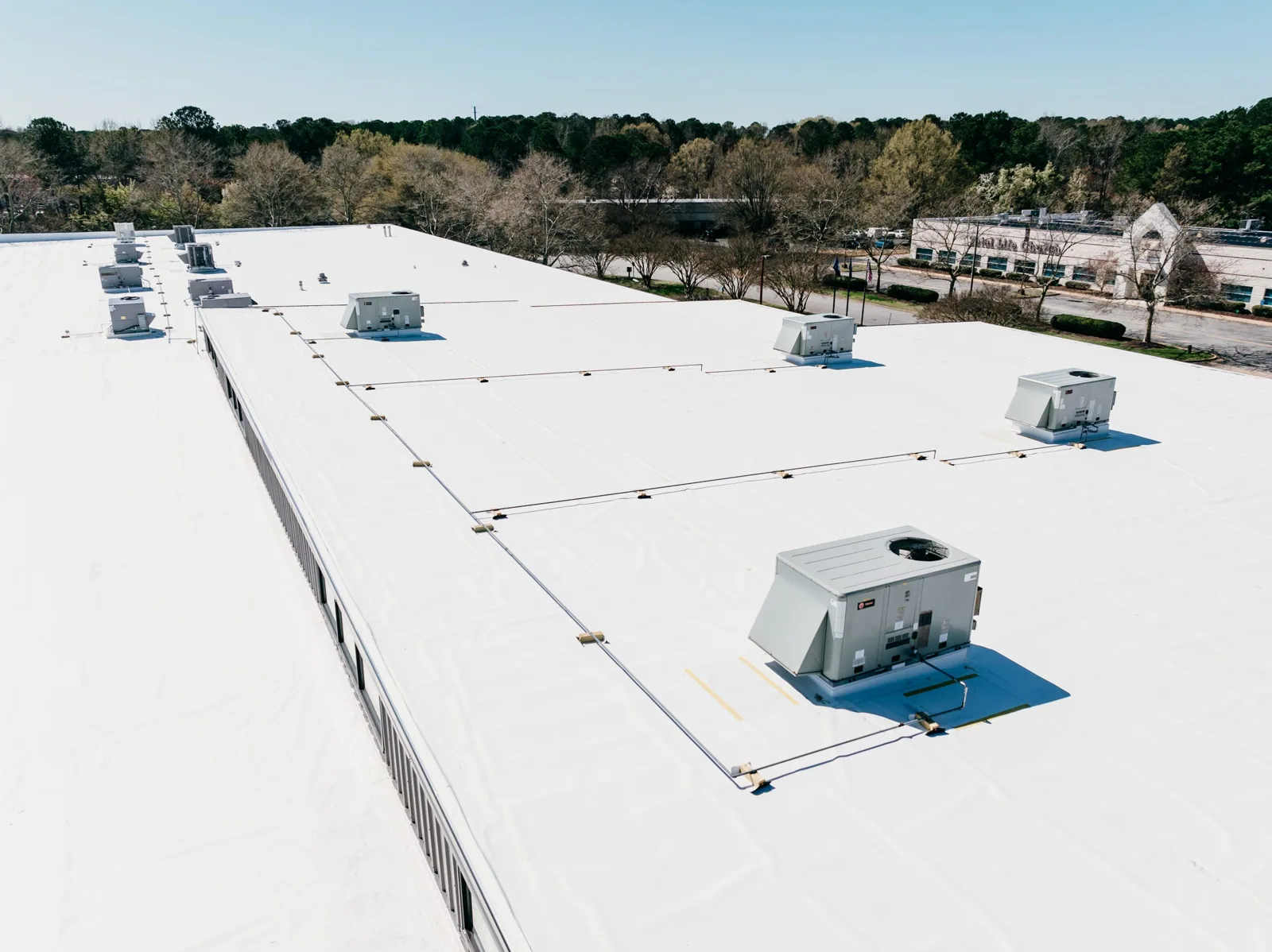
Water still standing on a low-slope roof two days after a rain is a scope question before it is a maintenance question, and the answer changes the capital window. A pond over sound insulation may call for a new drain and a modest repair. A pond over wet insulation may move that roof section from the maintenance line to the replacement line, with a tear-off boundary that follows the wet core. The difference between those two outcomes is a test cut and a moisture scan, and both can be done before a figure goes into a budget.
For owners in Waterbury, CT, the 2021 municipal hazard plan projects increasing extreme precipitation for Connecticut and reports a 24-hour, 10 percent annual-chance rainfall estimate of 5.54 inches for the city. That is a planning figure, not a measurement of any building. It does explain why the drain path deserves attention before the next heavy rain, and why a pond that looks minor in dry weather can become the section that decides the year's roofing spend.
Measure the Pond Before Choosing a Fix
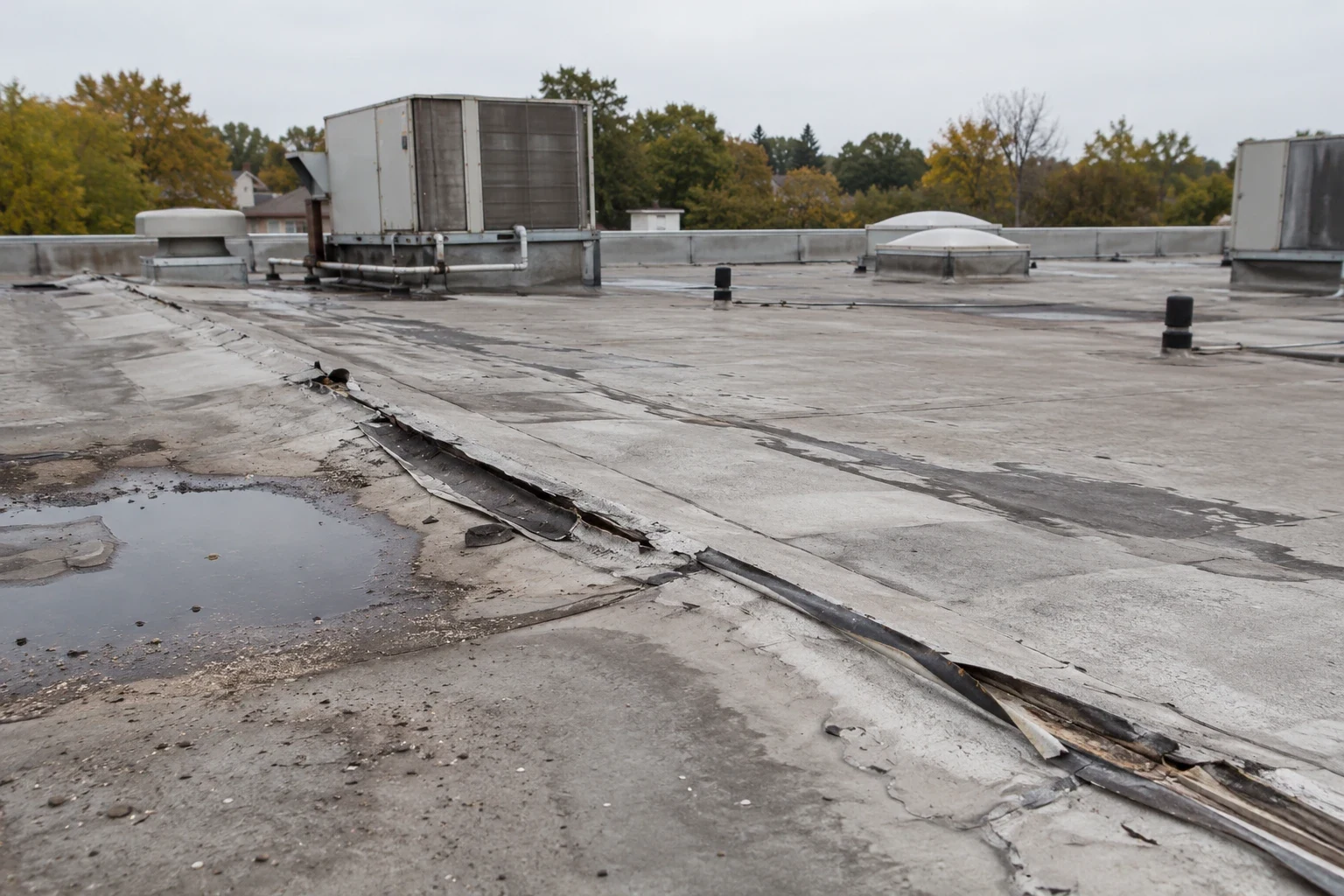
We walk the roof after rain, or after a hose test where rain is not forecast, and mark each pond on the plan with its outline, its depth at the center and the time it takes to clear. Watermarks, algae lines and dirt rings show where water has stood before. A pond that clears in a day is monitored; one that remains is traced to a cause.
The photographs are taken from the same marked positions each visit, which lets the next inspection compare the pond's size and depth. A pond that grows between visits is moving toward a deflected deck or compressed insulation, and the growth is a stronger argument for action than any single measurement. Measured ponds, not impressions, go into the report so the asset manager can see which ones justify a scope allowance.
Trace the Drain Path From the Low Point
Water leaves a roof along a path from field to drain to leader to grade, and ponding is often a failure somewhere along it. We check drains and scuppers for debris, for a sump that has settled below the membrane, for a strainer that has been removed and for a clamping ring that sits above the surrounding surface. We run water at the drain and watch the flow from below where access allows.
The cost of fixing the drain is usually the smallest item in the scope, and it is the first one priced. If the drain is clear and the pond remains, the cause lies in the surface: a low area in the deck, insulation that has compressed under equipment or foot traffic, or a membrane that has stretched. Each points to a different repair, and the report names the likeliest cause with the evidence found.
Test for a Wet Core Under the Water
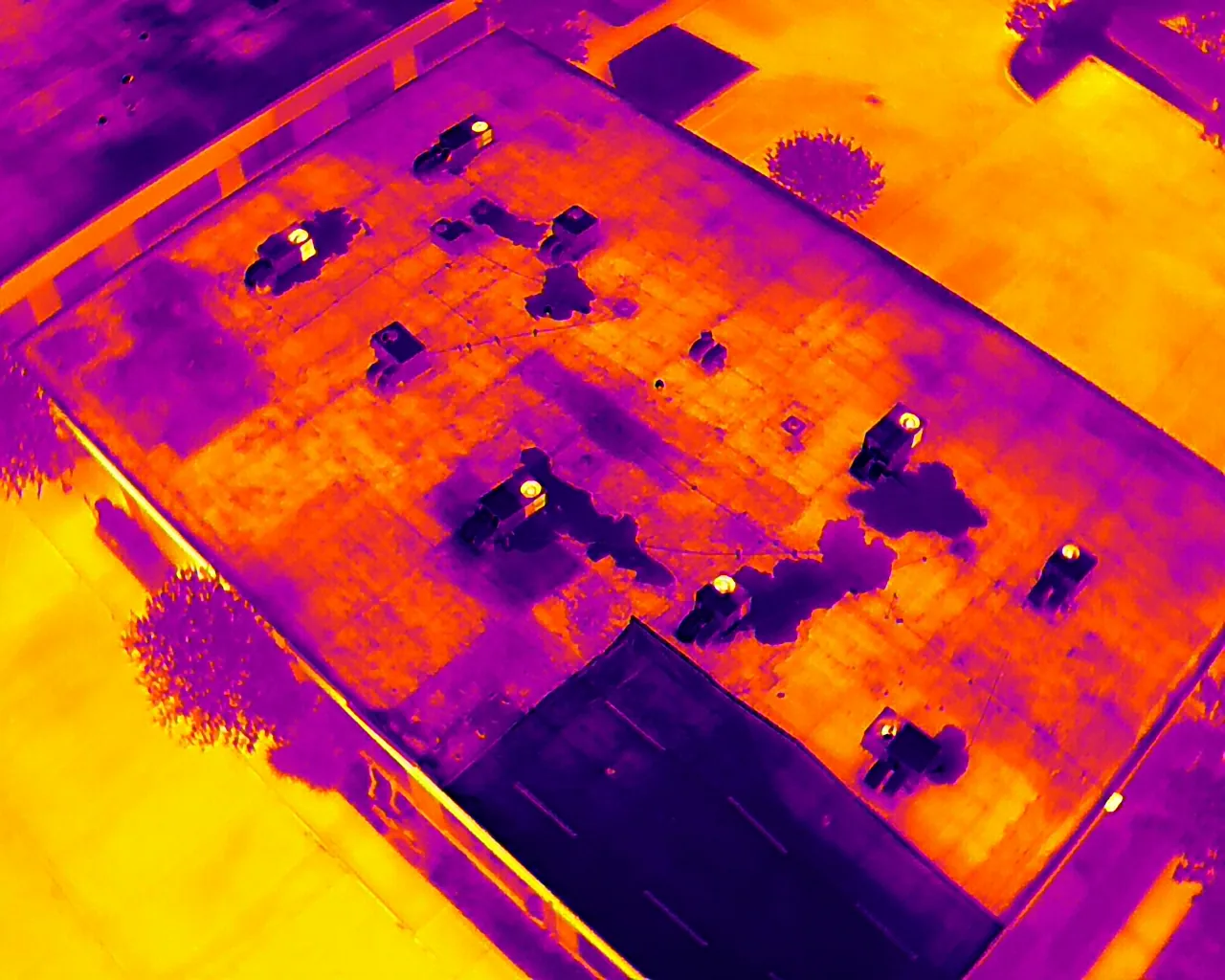
Standing water can sit above a dry roof or a saturated one, and the cost differs sharply. An infrared moisture survey or a handheld meter pass maps the wet and dry zones, and a test cut at the pond confirms the reading and shows the insulation type, thickness and deck. The cut is resealed the same day and photographed.
A dry core means the pond can be handled by drain work, tapered fill or a local correction. A wet core means the insulation over the pond must come out, and the tear-off boundary is drawn around the wet area, not around the whole section. A wet reading sets a boundary, and a dry reading does not by itself make the roof acceptable, which is why the report states the readings, the method and the cut locations and leaves the choice to the owner.
Price Added Drains Against Tapered Insulation
Three corrections are common. An added or lowered drain moves the low point to where water can leave. Tapered insulation or fill builds slope under or over the pond and brings the surface back toward the drain. A local deck repair removes a deflection that insulation cannot hide. The choice follows the cause, and the quote shows each option with the area it covers and the allowance it carries.
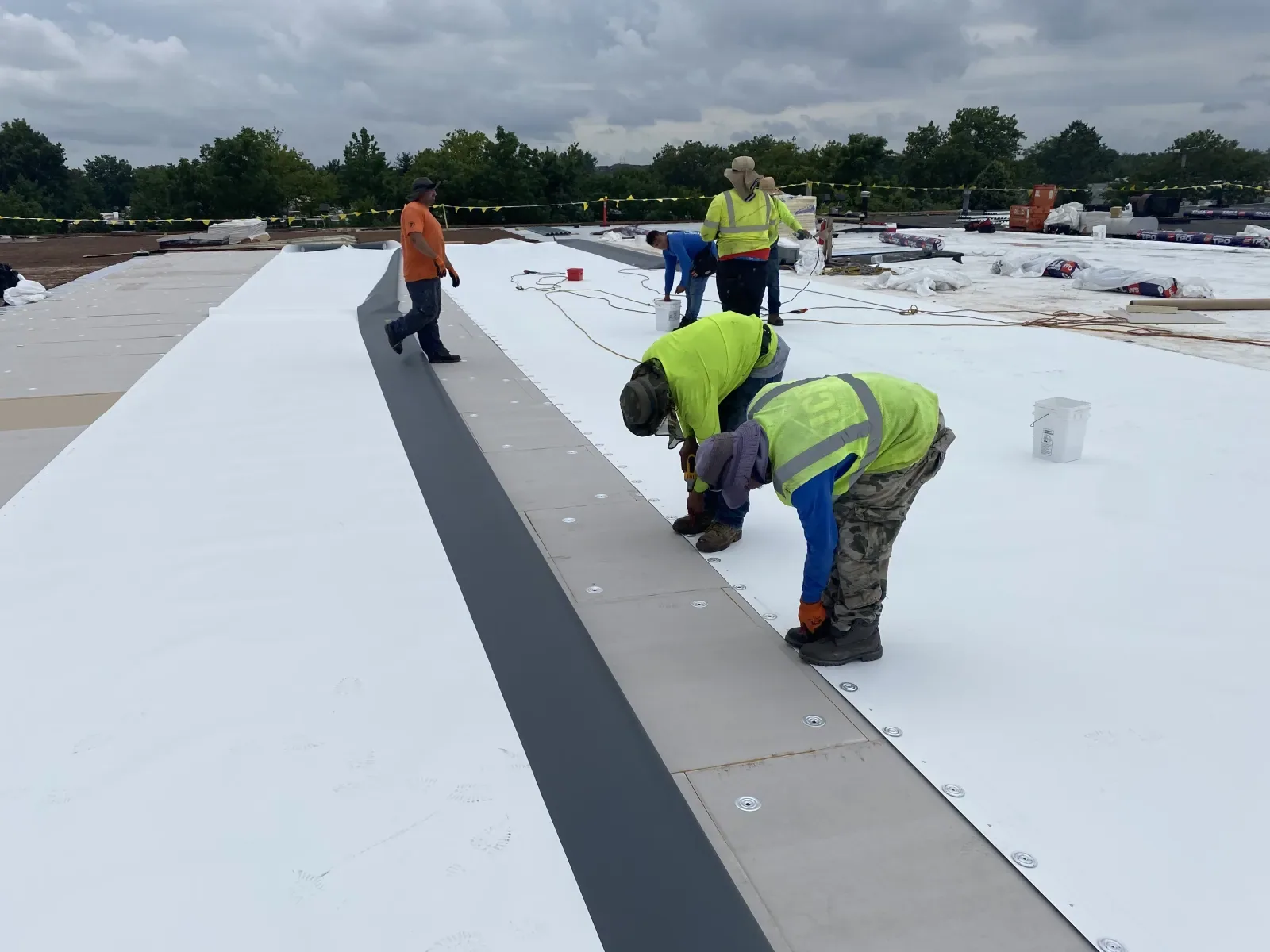
A recover over a ponded section is possible only when the insulation is dry and the added weight and height suit the roof edges and drains. Where the evidence rules the recover out, the written comparison says so and carries a replacement price for the affected section. The asset manager sees the repair, the recover and the replacement side by side, each with its cost drivers and the test behind it.
On South Main and North Main, and in the compact core by the I-84 and Route 8 junction, a pond over an occupied unit is a tenant matter as well as a roof one, and the schedule names who must be told before drain or fill work begins.
Time the Work Against Freeze and Thaw
The municipal annex describes freezing winters, and the hazard plan puts every part of Waterbury in the path of winter storms. Ponded water that freezes loads the membrane and works seams open; each cycle of freeze and thaw adds movement at the edges of the pond. A pond left through a winter can turn a repairable section into a snow and ice damage item the following spring.
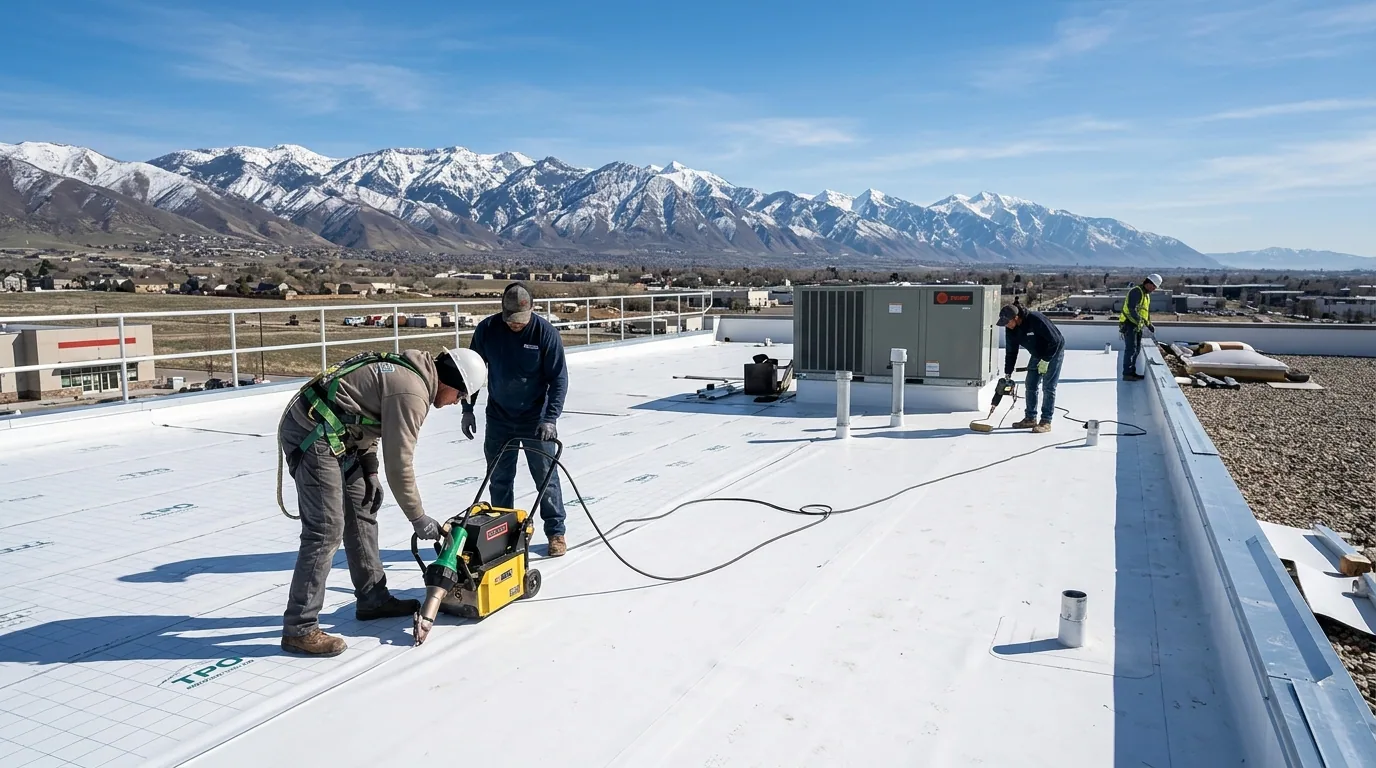
For that reason we put the dry-in date and the permanent repair window into the quote. Drain work can proceed in cold weather; membrane work needs temperatures and dry surfaces that suit adhesives and welds. Owners with buildings in the city's industrial parks, such as Reidville or Brookside, or with properties in Wolcott, can use the same format to rank ponds across several roofs.
Close the Decision With Photographs and Permit Dates
The closeout file holds the pond map, the drain tests, the test cut photographs and the finished work. Permit filings from October 1, 2022 forward are reviewed under Connecticut's State Building Code, an adoption of the 2021 International Building and Energy Conservation Codes, and a correction that adds insulation or changes drainage is reviewed against it before the price is fixed. The report states the expected permit date.
That file serves the asset manager twice: once as the basis for the current decision and once as the baseline for the next inspection, where the same pond is photographed from the same position. A repeat visit that shows the pond cleared is the closing record for the work. One that shows the pond back is the reason to reopen the scope with the evidence already in hand, including the membrane puncture records if foot traffic has contributed.
Commercial Roofing Questions
How long can water stand before it becomes a scope item?
Treat water that remains after a day or two as a scope item. Mark it on the plan, photograph it from a fixed position, and measure its depth. If it persists through the next visit, price a correction and the test cut that would show whether the core is wet.
Is an added drain better than tapered insulation?
Choose the added drain when the low point is local and the deck can accept the opening. Choose tapered insulation or fill when several ponds share a shallow area. We price both for the section and show the cost drivers, so the comparison rests on area and access.
Does ponding always mean wet insulation?
No, and the roof should not be treated as wet without a reading. A moisture scan and a test cut separate a dry core from a saturated one. Set the tear-off boundary only around confirmed wet material.
Can a coating cover a ponded area?
Some coating systems tolerate standing water and others do not, and a coating does not remove the pond or fix wet insulation. Use a coating only after moisture readings are dry and the drain problem is corrected, and price the product against the surface condition.
What should be recorded after the correction?
Record the pond outline, the drain test, the cut photographs and the finished surface on a rainy day or after a hose test. Keep them with the roof section number so the next inspection can compare.
Send the access rules, the roof records and the capital window
Send the roof plan, any moisture or leak history, the access rules for the building and the capital or permit window you are working to. We will map each pond, test for wet core, and deliver a written scope that separates repair, recover and replacement.