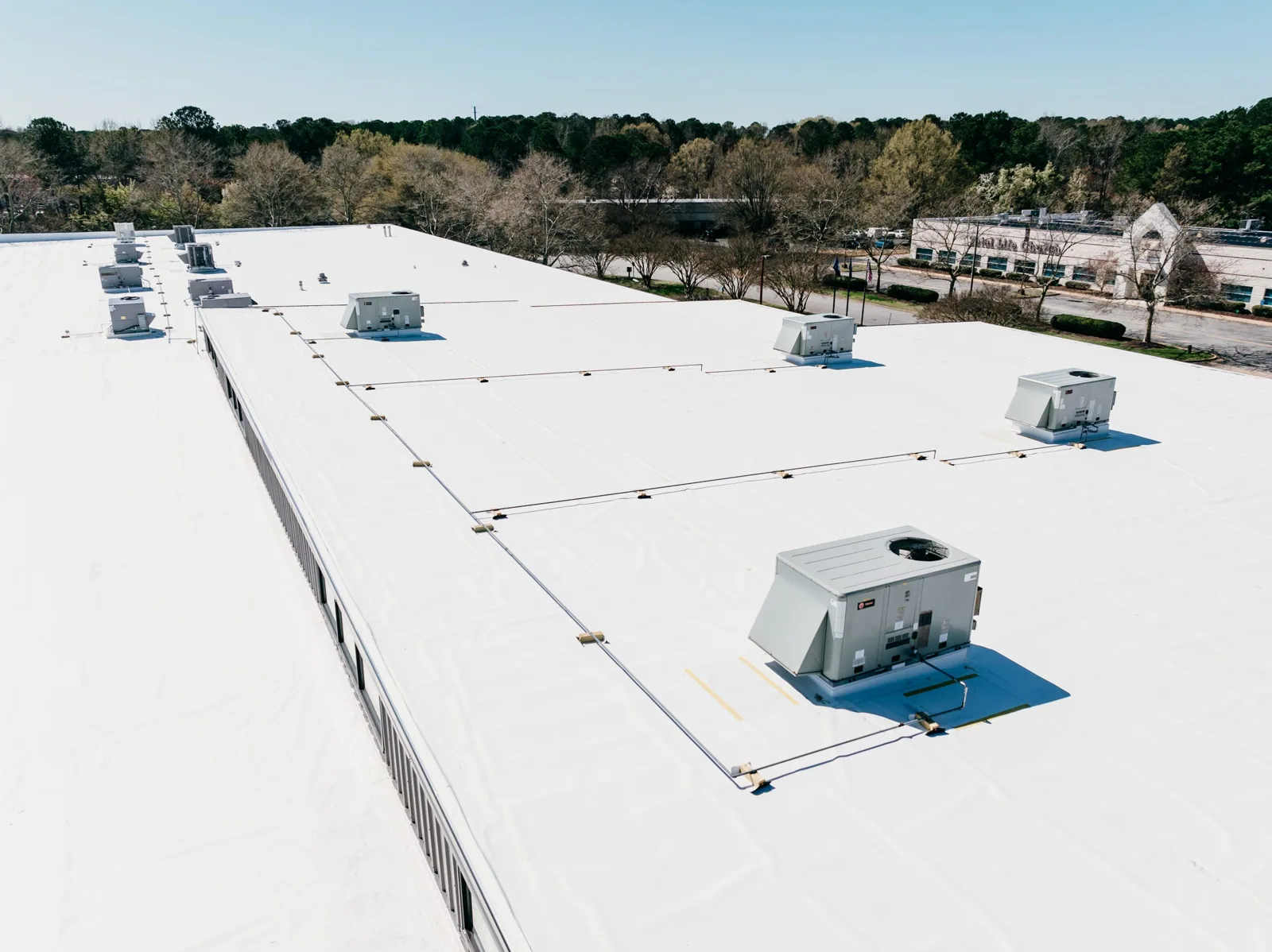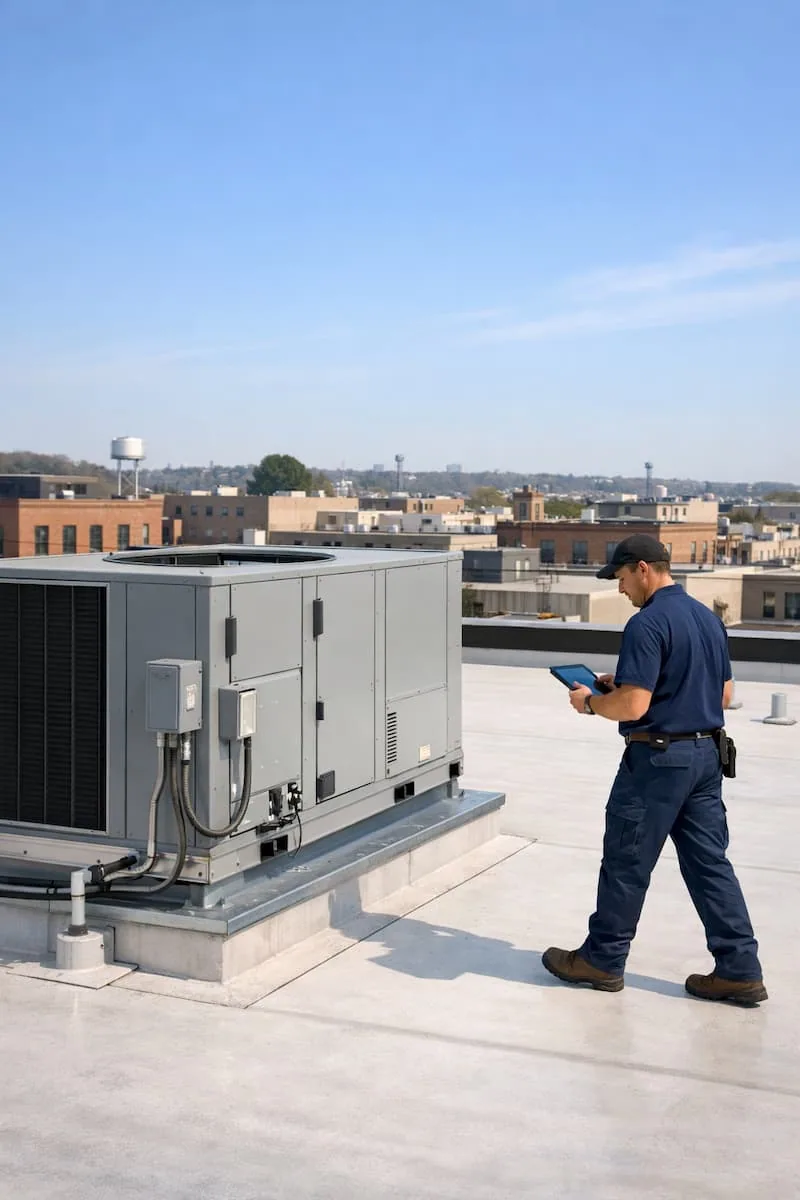
Punctures follow foot traffic, and foot traffic follows equipment, so the repair estimate should start at the nearest rooftop unit, not at the hole. A small cut beside a condenser is cheap to patch and expensive to ignore if water has already reached the insulation, and the same unit will bring a technician back across the same stretch of membrane next quarter. A scope that fixes the puncture and leaves the path unprotected has priced the symptom and left the cause in the budget for next year.
Asset managers in Waterbury, CT work in a downtown where civic, financial, health-care and higher-education uses share a compact core by the I-84 and Route 8 junction, and industrial districts and mixed-use corridors lie beyond. Buildings in any of those settings carry rooftop equipment, and equipment brings service visits. Where service visits are regular, punctures become a pattern, and the pattern can be priced and reduced.

Trace the Traffic Before Patching the Hole
The first walk maps every puncture, scuff and tear on the roof plan, with the equipment, hatches and ladders nearby. Punctures cluster along the shortest path between an access point and a unit, around the edges of curbs where a boot catches, and under areas where tools or parts are set down. The map shows the route that technicians actually take.
That route decides the scope. If the punctures sit along a path with no protection, the scope adds walkway pads on that path and the cost is shown beside the patches. If they sit at a single unit, the fix may be a splash pad or a curb extension. The asset manager sees the repair cost and the prevention cost side by side and can approve both or either, with the reasoning attached.
Photographs of each puncture are taken with a scale reference and a roof section number, so the repair quantity can be checked later and the same spot can be compared after the next season.
Probe Around Each Puncture for Wet Core
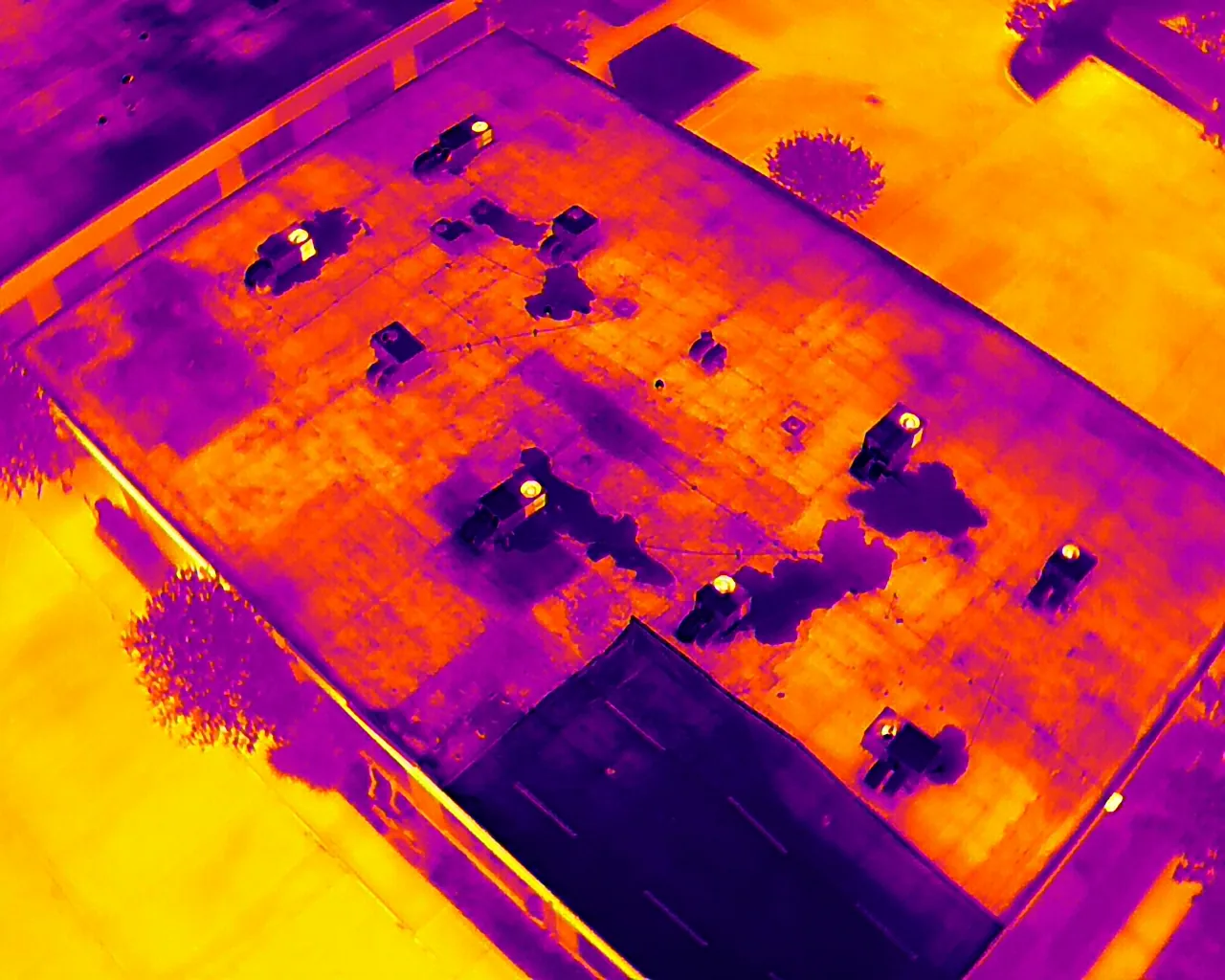
A puncture that has been open through a rain can wet the insulation beneath it, and the wet area can be much larger than the hole. We run a moisture meter around each puncture, mark the boundary where readings change and, for significant breaches, take a test cut. An infrared moisture survey maps the wider roof where many punctures are present or where interior stains suggest a spread.
The result changes the scope. A puncture over dry insulation takes a patch. A puncture over wet insulation takes a tear-off boundary drawn around the wet area, with new insulation and membrane set into it. The quote carries the wet area as an allowance if the survey is not yet done, with the test named and the approver identified, so the figure is confirmed when the area is opened.
Where punctures sit in a low area, the scope also checks for ponding water, since a pond over an open cut wets the core faster than rain alone.
Choose Between a Patch, a Plug and a Section Replacement
The size, location and membrane type set the repair. A small puncture in a thermoplastic sheet is cleaned and covered with a welded patch that extends past the damage. A puncture in an EPDM sheet is cleaned, primed and covered with a patch of compatible material. A cut in modified bitumen is dried, cleaned and covered with a reinforced patch set in the compatible adhesive.
Where damage is extensive, such as a section crossed by many cuts from a long-used path, replacing the membrane in that section can cost less over the service horizon than a field of patches. The comparison appears in the written scope, including the permit position and the likely effect on the roof's warranty. For a section near a drain, the repair follows the drain and scuppers check so water leaves the area cleanly.
Price Walkway Protection as Part of the Repair
Walkway pads, rubber or composite, are laid on the routes between access points and equipment and are bonded or welded to the membrane in a way that matches the system. They spread loads, protect the surface from dragged tools, and give technicians a defined path. A pad is a small cost compared with a section repair, and it is the clearest item in the scope for owners with many roofs.
Equipment that drips condensate or exhaust affects the surface as well, and a splash block under a drain line prevents a stain from becoming a thinning of the membrane. For rooftop equipment curbs and supports, the scope notes any support that rests directly on the sheet without a protection pad, and adds the pad to the repair list.
Record Who Goes on the Roof and Why
A roof access log is a low-cost control. It lists the companies with access, the work they do, the date and the roof sections they visit. When a puncture appears, the log narrows the question of when it happened, and the owner has a basis for asking the trade that caused it to cover the repair. The log also shows how often a unit is serviced, which sets the case for protecting its path.
For owners with properties on mixed-use corridors, such as East Main or South Main, where the city plan lists retail, services, restaurants, housing and civic uses, several tenants may hold equipment on one roof, and each tenant's contractors cross the membrane. The log covers them all, and the owner can see which tenant's path needs protection first.
Close the Scope With Photographs and a Review Date
The closeout file holds the puncture map, the moisture readings, the cut photographs and the finished repairs, together with any pads installed. Connecticut's State Building Code took effect for permit filings on October 1, 2022, built on the 2021 International Building Code and Energy Conservation Code; a patch seldom triggers review, while a section replacement may.
A review date is set for each repaired section, usually after the next heavy rain and again after winter. Owners with buildings in Waterbury or Watertown can use the same file format, and a recurring puncture at the same spot is visible across visits. If seam failure appears near the patch, the two repairs are scoped together.
Commercial Roofing Questions
Should I patch each puncture or replace the section?
Patch when punctures are few and the insulation tests dry. Replace the section when punctures are many, repeated along a path, or when wet insulation sits beneath them. We price both options side by side, with the moisture readings attached.
How much do walkway pads add to the repair?
They add a modest line against the cost of repeated patching. Price them by linear foot of path and place them where the puncture map shows traffic. They go in with the repair so the next service visit does not undo it.
Can I recover costs from the trade that caused the damage?
You can try, and a roof access log helps. It shows who was on the roof and when, which narrows the question. Photograph the damage before repair and keep the log with the roof plan.
Is a hole over a dry core still urgent?
Yes, though less than a wet one. Seal it quickly, since the next rain can wet the core. Then test the surrounding area and patch with a method that suits the membrane.
What does a moisture survey add for punctures?
It shows whether water has traveled from the hole into the insulation, and how far. Without it the scope carries an allowance. With it, the tear-off boundary is drawn around confirmed wet material.
Send the access rules, the service schedule and the capital window
Send the roof plan, the equipment list, the access rules and the capital or permit window you are working to. We will map the punctures, test for wet core, and deliver a written scope that prices the repair and the protection of each path.