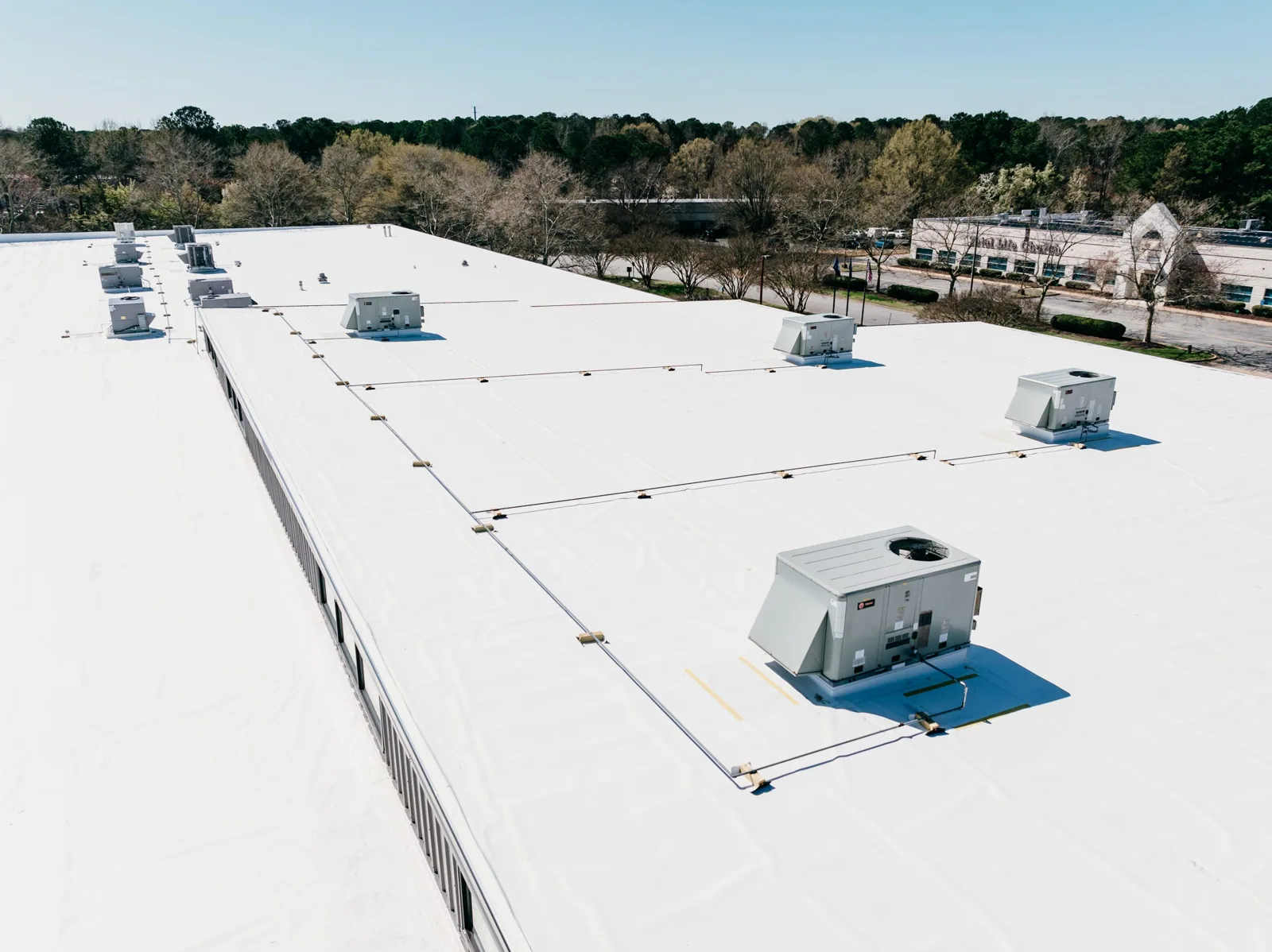
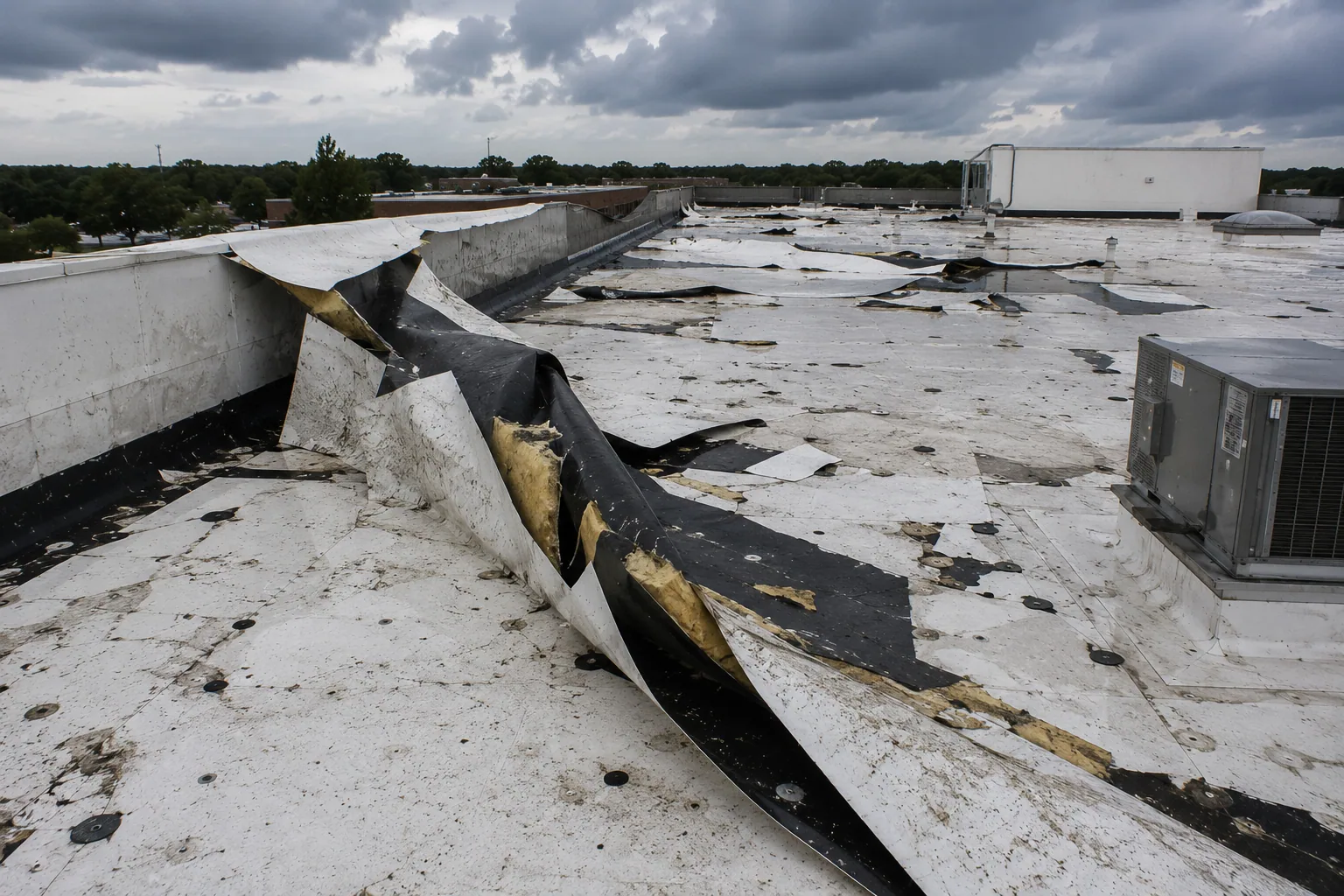
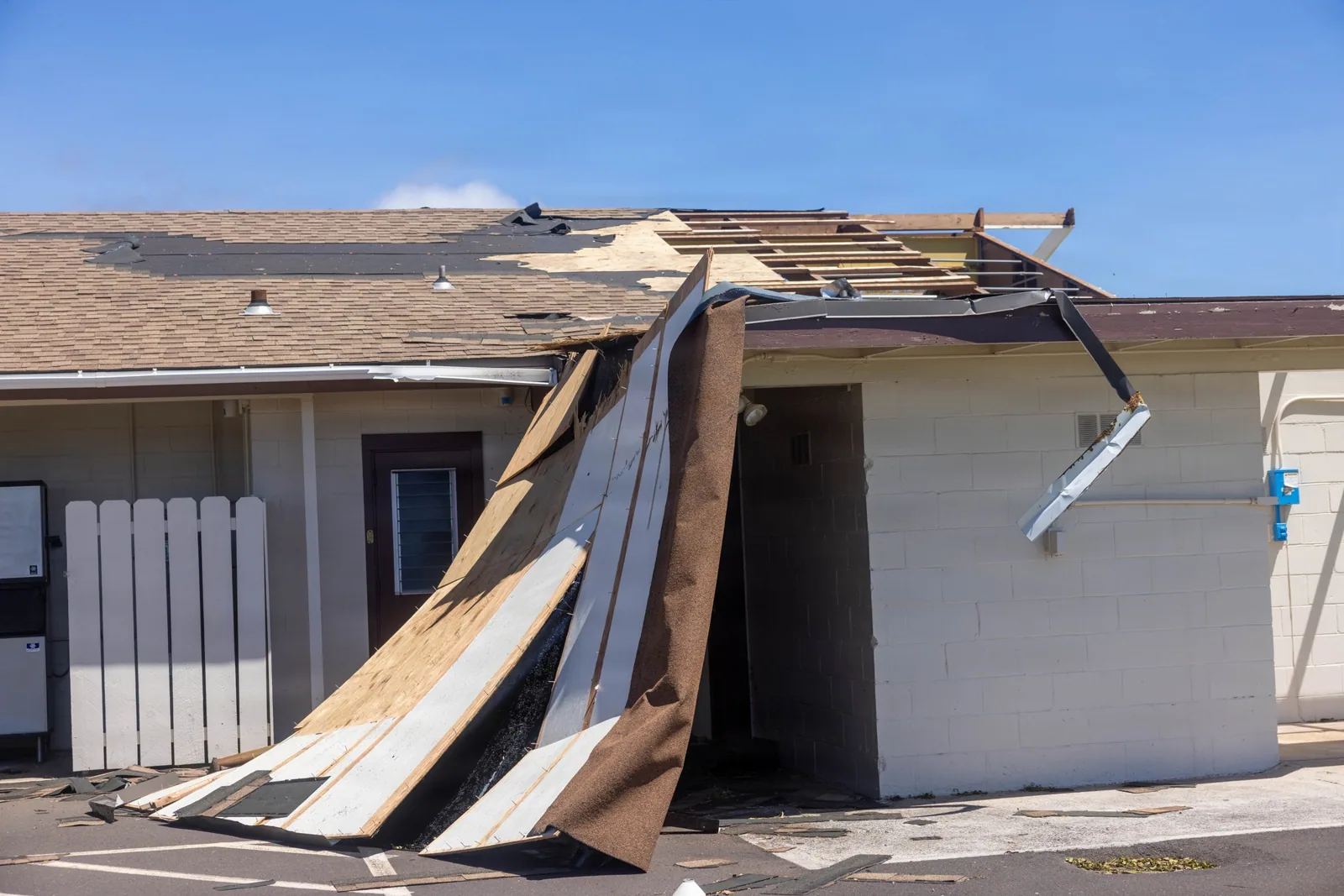
Tropical-storm exposure in Waterbury is mostly a water story, and the roof budget should follow that: the first item is the drain path that must carry a heavy rain, and the second is the edge and equipment detail that wind will test. The municipal hazard plan describes the city as vulnerable to hurricane and tropical-storm wind and rain, and it says historical tropical-cyclone damage in the city has most often been associated with flooding. For a roof, flooding at grade is a separate question; the roof's exposure is rain that arrives faster than the drains can clear and wind that works on edges and units.
For asset managers in Waterbury, CT, that framing changes what is priced before a storm and after it. Before: clear drains, secure edges and tie down loose equipment. After: a fast inspection, a dry-in where water is entering, and a repair scope that separates storm damage from conditions that were already present. The plan treats exposure as context, and it does not diagnose any building.
Read the Risk as Rain First
The same plan reports a 24-hour, 10 percent annual-chance rainfall estimate for Waterbury of 5.54 inches from NOAA Atlas 14, and it projects increasing extreme precipitation for Connecticut. A roof that drains slowly in an ordinary rain can overload in a heavy one, and a drain that is half blocked becomes a pond in an hour. We treat the drain path as the first system to inspect and the first to repair.
The walk checks drains and scuppers for debris, strainers, damaged domes and sumps that sit high. It checks that overflow scuppers exist where parapets would trap water and that they are not blocked. It marks areas that already pond, which are handled under ponding water repair before the season. Each item goes into a pre-season list with a price, so the asset manager can approve the correction before the storm and not after the water has reached the ceiling.
Cleaning is a small price against the interior damage a clogged drain can cause in one storm, and the pre-season list shows it as the first approval.
Secure Edges and Equipment Before the Season
Wind from a tropical system acts on the perimeter and on anything standing on the roof. Coping that is loose, edge metal with failed fasteners and flashings that have lifted are the usual places where wind finds an opening. Rooftop units on curbs without tie-downs, loose panels and unsecured ductwork can become debris that damages the membrane.
We list each item with its location and a repair, and price them as one pre-storm scope. After a storm, the same list becomes the first inspection checklist, which shortens the time to a damage map. A building with rooftop equipment near the I-84 and Route 8 junction, or one in the industrial districts, receives the same checklist so findings can be compared building to building. If the work is wind-specific, the wind damage scope applies.
Inspect and Dry In Within the First Forty-Eight Hours
After a storm, access comes first. We check that the roof can be reached, that no damaged equipment or live electrical lines are in the way and that no section is unsafe. The walk then follows the drain paths, the edges and the details, and records water entry with photographs. Where water is entering, a temporary dry-in goes on: a membrane patch, a sealed opening or a secured cover.
The dry-in is priced and recorded as its own item, with a life and a review date. Many storms are followed by more rain, and a stopgap that fails in the second storm costs more than the first. Crews mobilized for emergency roof repair hold to the same record, and the quote lists the date by which permanent work should begin.
Separate Roof Damage From Flood and Interior Damage
Not every wet ceiling after a tropical storm is a roof leak. Flooding at grade can wet lower floors, and backed-up drains can send water into the building through interior leaders. The report separates these causes. It records where water entered, the route it took and the roof section above it, so the owner and the carrier can see which damage belongs to the roof and which does not.
That separation also keeps the roof scope from being inflated or understated. If the roof is sound and the water came from a blocked leader, the fix is a drain repair, not a membrane replacement. If the roof is damaged, the scope shows where, how far and what test confirmed it. The same photographs support a claim filed after storm damage work.
Interior leaders deserve a separate test, because a leader that is cracked inside a wall can leak without any fault in the roof above. A water run at the drain, watched from below, shows whether the leader carries flow or sheds it into the wall.
Sequence Permanent Repairs Around Occupancy
Permanent repairs are scheduled by condition and by use. Roofs over occupied space, such as downtown offices, health-care uses or education buildings in the compact core the city plan describes, are sequenced to protect interiors first. Industrial roofs are sequenced around production. Retail on corridors such as South Main or Highland Avenue is sequenced around hours.
Each building's work order lists access rules, staging, noise limits and the date each section will be closed. Owners with properties in Waterbury and Seymour can request the same sequence format, which lets crews finish the most exposed buildings first and keeps the schedule readable across the portfolio.
Close With Photographs, Permits and a Review Date
For permits filed on or after October 1, 2022, Connecticut's State Building Code governs, and it is drawn from the 2021 International codes for building and energy conservation. A repair that replaces a large share of a section may be reviewed against it, and the quote lists the expected permit date and the items likely to change the assembly, including insulation and edge details.
The closeout file holds the pre-season list, the damage map, the test results, the dry-in record and the finished photographs. A review date after the next heavy rain tests the drain corrections. If the same area ponds again, the earlier record shows what was done and what remains, and the asset manager has the evidence needed to move it into the capital plan.
Where a building has several roof sections of different ages, each section carries its own entry, so a later storm can be compared against the same record rather than against memory.
Commercial Roofing Questions
What should be done to the roof before a tropical storm?
Clear drains and strainers, check overflow scuppers, secure loose edge metal and tie down loose equipment. We price that as one list, and it is best done before the forecast, since crews are scarce once rain begins.
How can I tell roof leaks from flood water inside the building?
Trace the water. Roof leaks come from above and follow ceilings and framing; flood water comes from grade or from a backed-up interior leader. Our report records the route for each wet area and the roof section above it.
Is a temporary cover enough through a storm season?
Only if it was built for sustained rain and wind and is inspected after each storm. The quote states its expected life, and the permanent repair is planned for the first suitable weather.
What does a pre-storm inspection add to a roof file?
It records drain condition, edge and equipment security, and any existing water entry with photographs, so a later storm can be compared against a known starting point. Your roof's condition is established by inspection, test cuts and photographs.
What records support a storm claim?
Dated photographs before and after, the damage map, moisture readings, the dry-in record and the written scope. Keep them together with the roof plan and the earlier condition report if there is one.
Send the access rules, the roof records and the capital window
Send the roof plan, the drain locations, past storm records and the capital or permit window you are working to. We will inspect before or after the storm, price a dry-in and repair sequence, and deliver a written scope with the evidence behind each allowance.