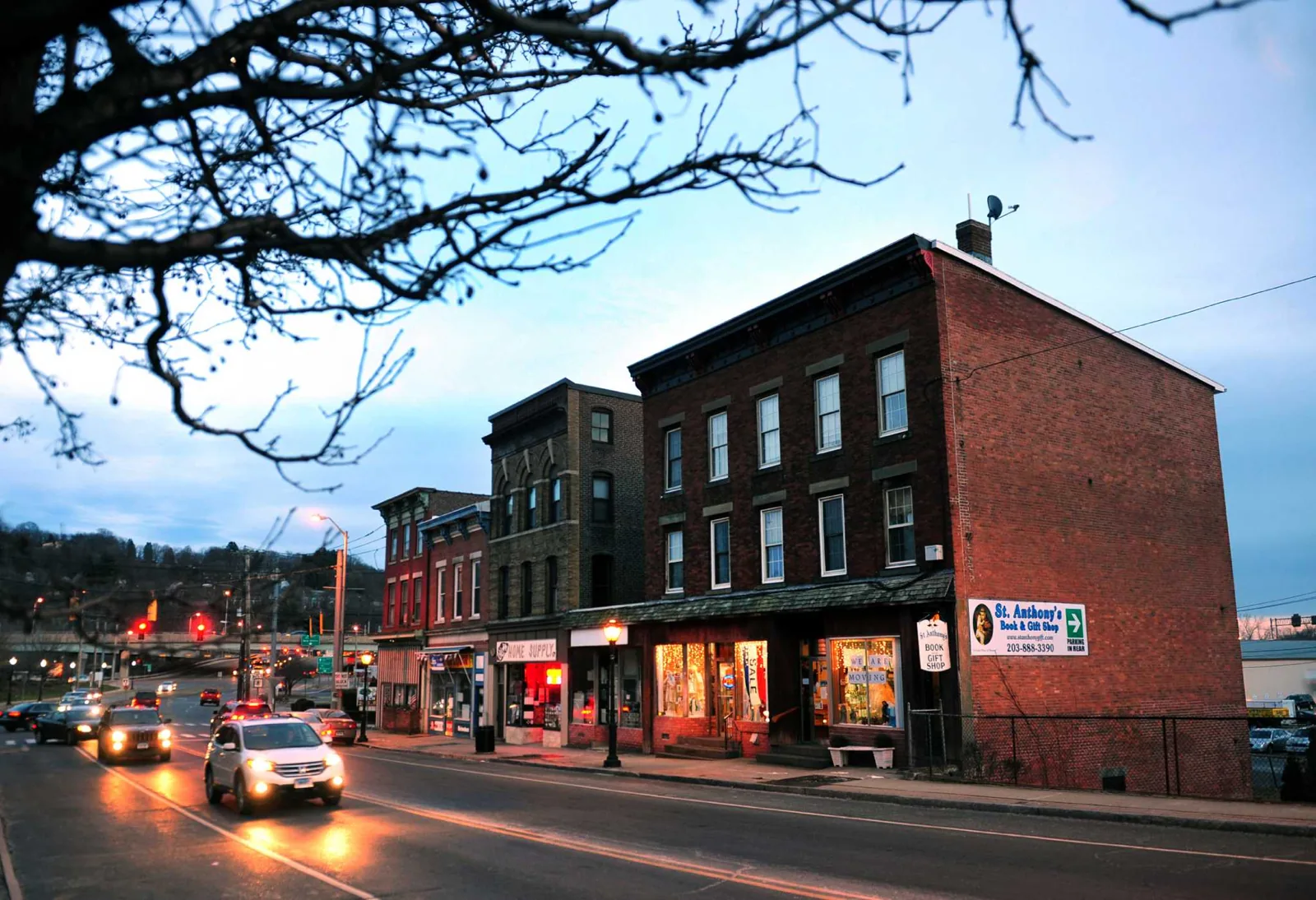
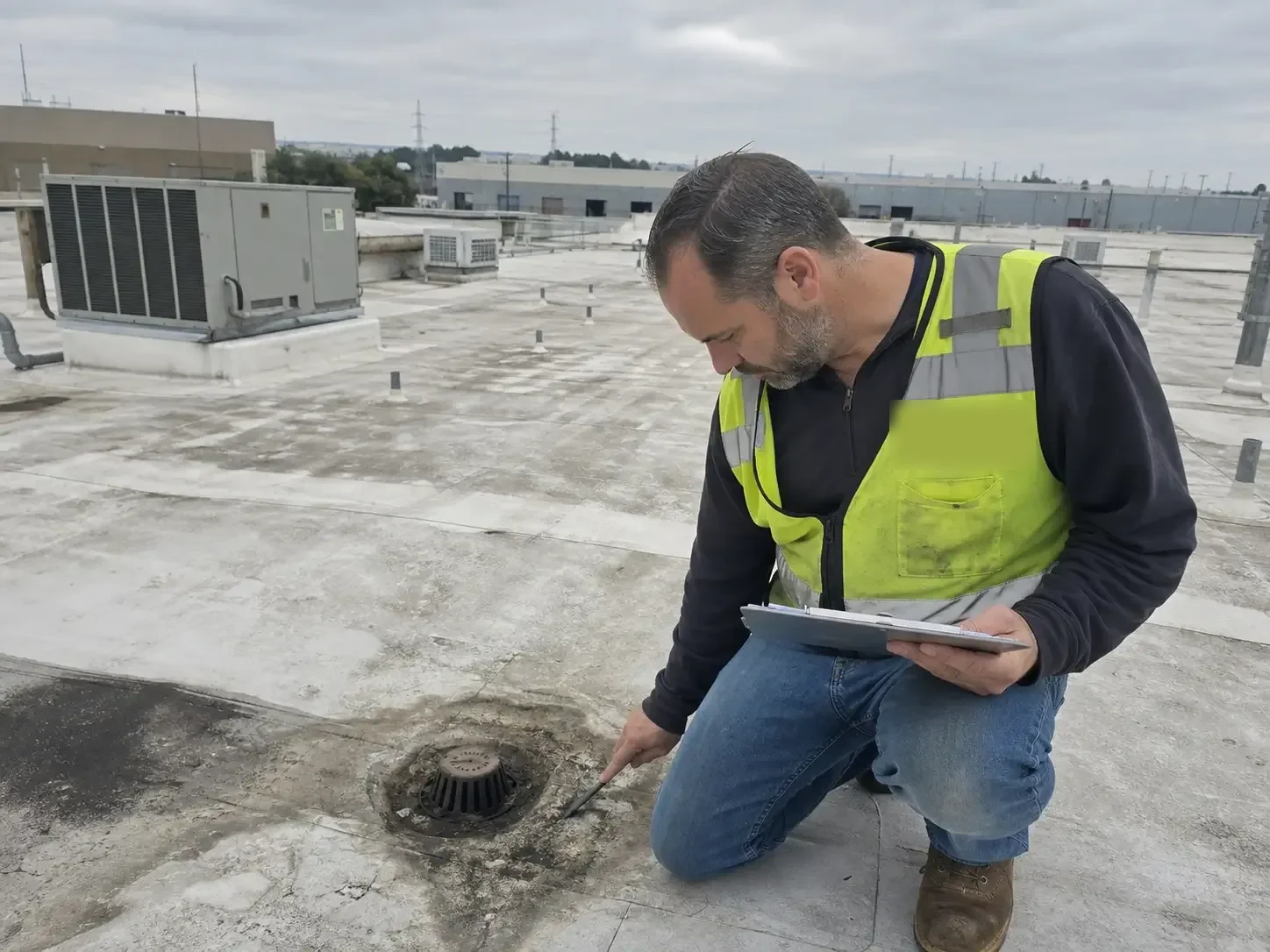
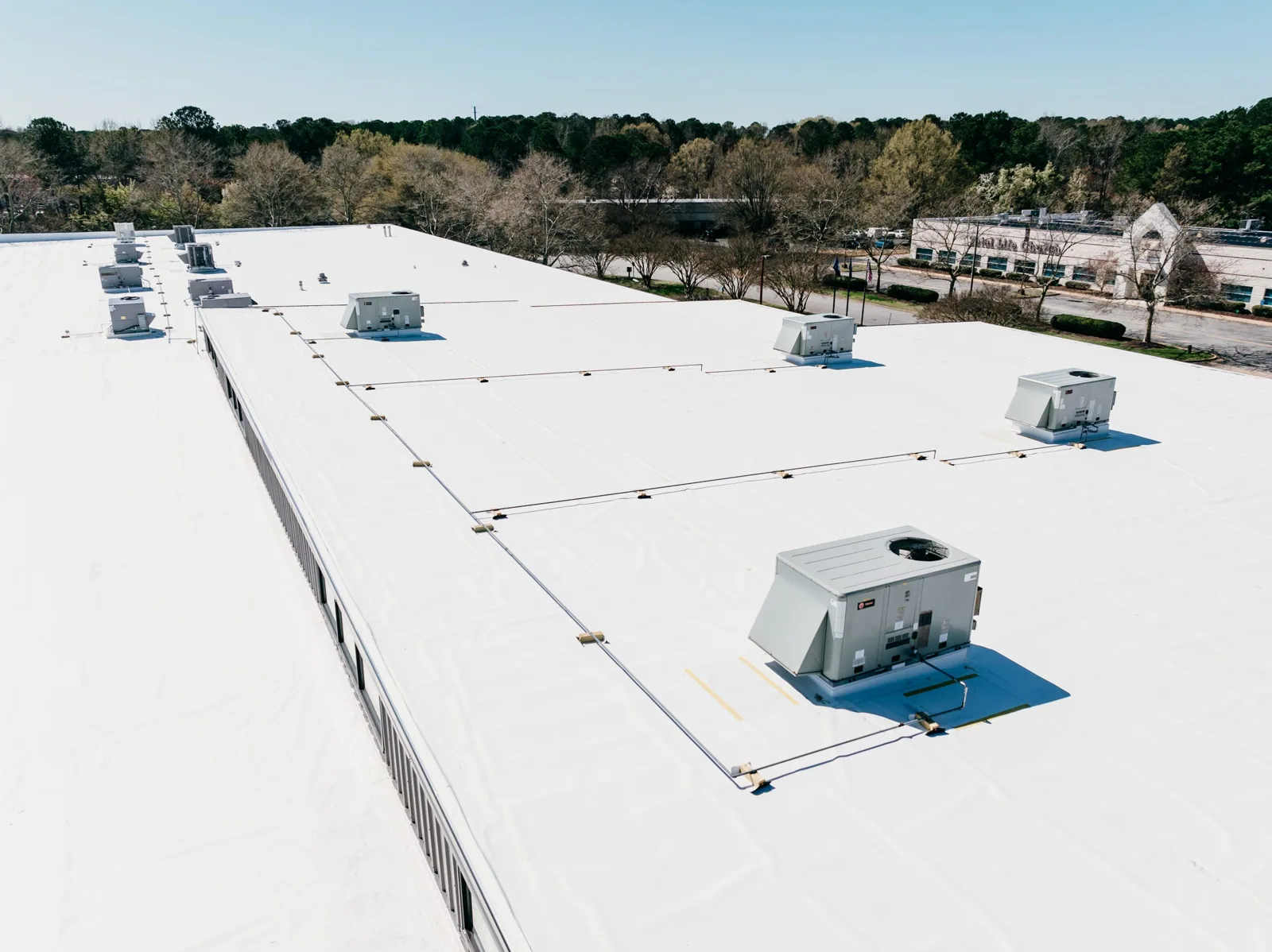
A leak that reaches an occupied room can shift the dry-in date before the replacement line is settled. Seymour, CT's downtown is a dense historic industrial center, with higher-density nonresidential uses by the Naugatuck and Housatonic Rivers and along Route 8. Next we verify the property, records and entry contact, then check the roof section that corresponds to the reported water path. A commercial roof inspection separates confirmed conditions from the test or access step that could change the scope.
Downtown redevelopment concepts near the Metro-North Waterbury Branch station have included a mixed-use commercial component. For an owner, the useful question is how roof access, temporary protection and work hours fit the actual property. We set those limits before comparing repair, recover and removal.
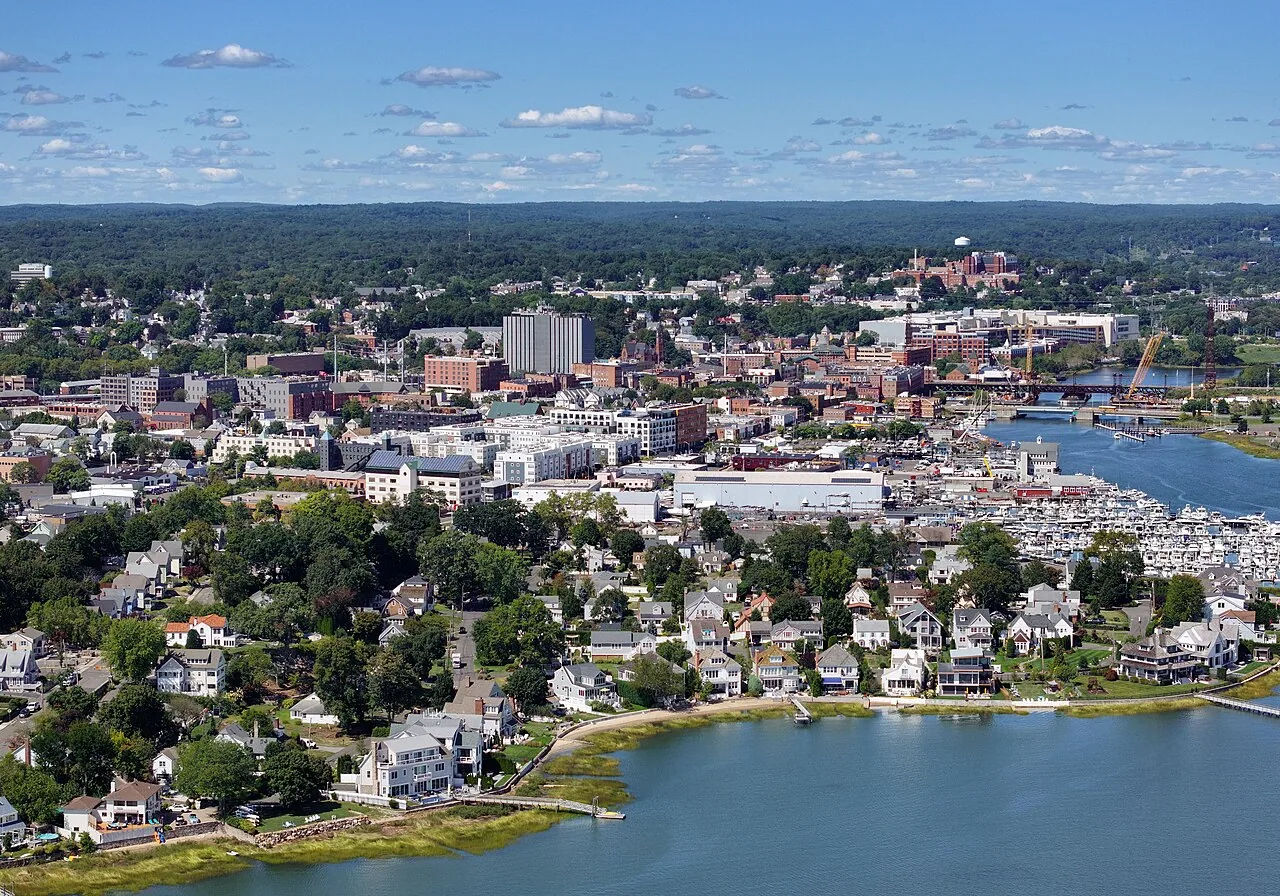
Follow the downtown work boundary
Commercial and residential areas near the Housatonic River and Route 34 have been considered alongside zoning and sewer extensions. Those locations make a useful map reference when confirming a service address, and the property file and roof walk establish how the roof was built. We record each section, visible membrane, drain and transition under the owner's chosen labels.
A roof assessment in Derby or service work in Ansonia gets its own access map. In Seymour, we ask which entrance is approved, whether an escort is required and where tools may be staged. If a roof area sits above active space, the facilities contact can identify noise or delivery windows that affect inspection or repair timing.
Match the leak report to the roof section
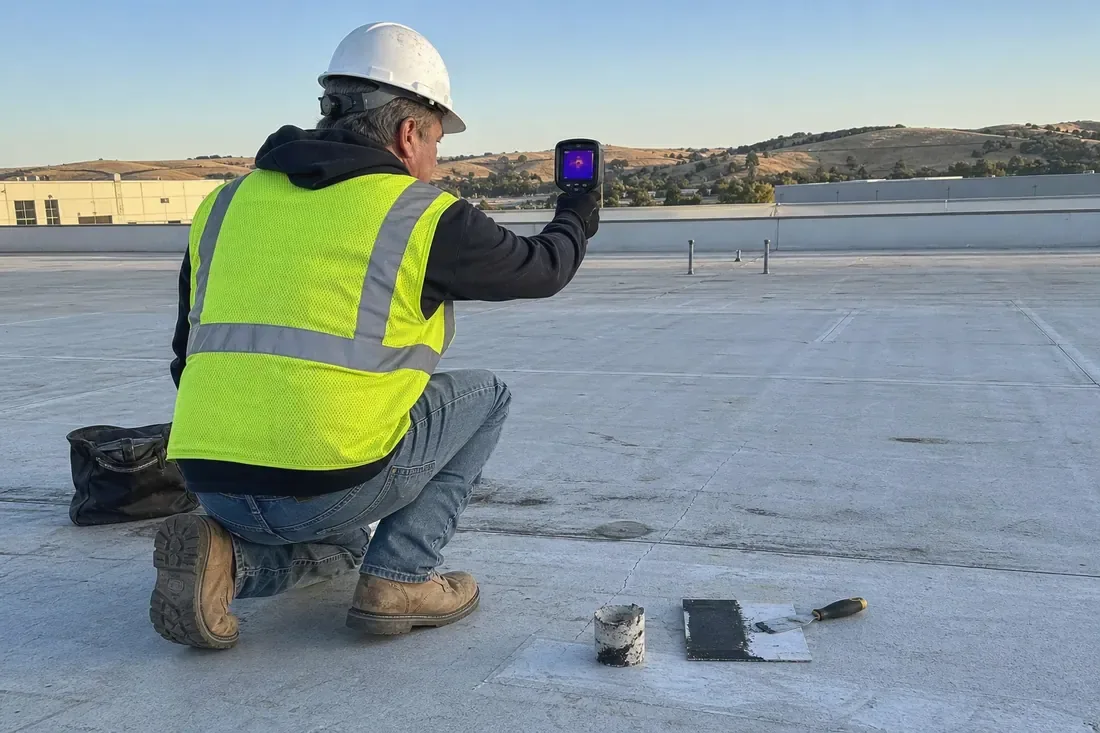
Water may travel beneath the membrane before it appears at the ceiling. We compare the reported room with slope, drains, curbs, penetrations and prior repairs, and photograph each observed condition in context. A photo-backed condition report shows which details are confirmed and which remain suspected. If insulation may be wet or the entry point is unclear, a moisture survey or test cut can locate the repair boundary before it is priced.
Open laps, loose flashing, punctures, ponding and soft areas need different responses. We check whether surrounding material is compatible with a new tie-in, and note where concealed conditions could change the amount of work. A localized patch may be sufficient if the adjacent assembly is sound. Repeating the same patch without checking the path can leave the cause in place, so we compare the roof observation with the interior report and previous work order.
For ownership with several assets, roof names must stay consistent across photographs, test results and proposal sections. If the plan labels do not match the field, we retain both identifiers until the facilities contact confirms the preferred record. That keeps a future repair or capital review from using a detail from the wrong roof zone.
Protect operations during the roof walk
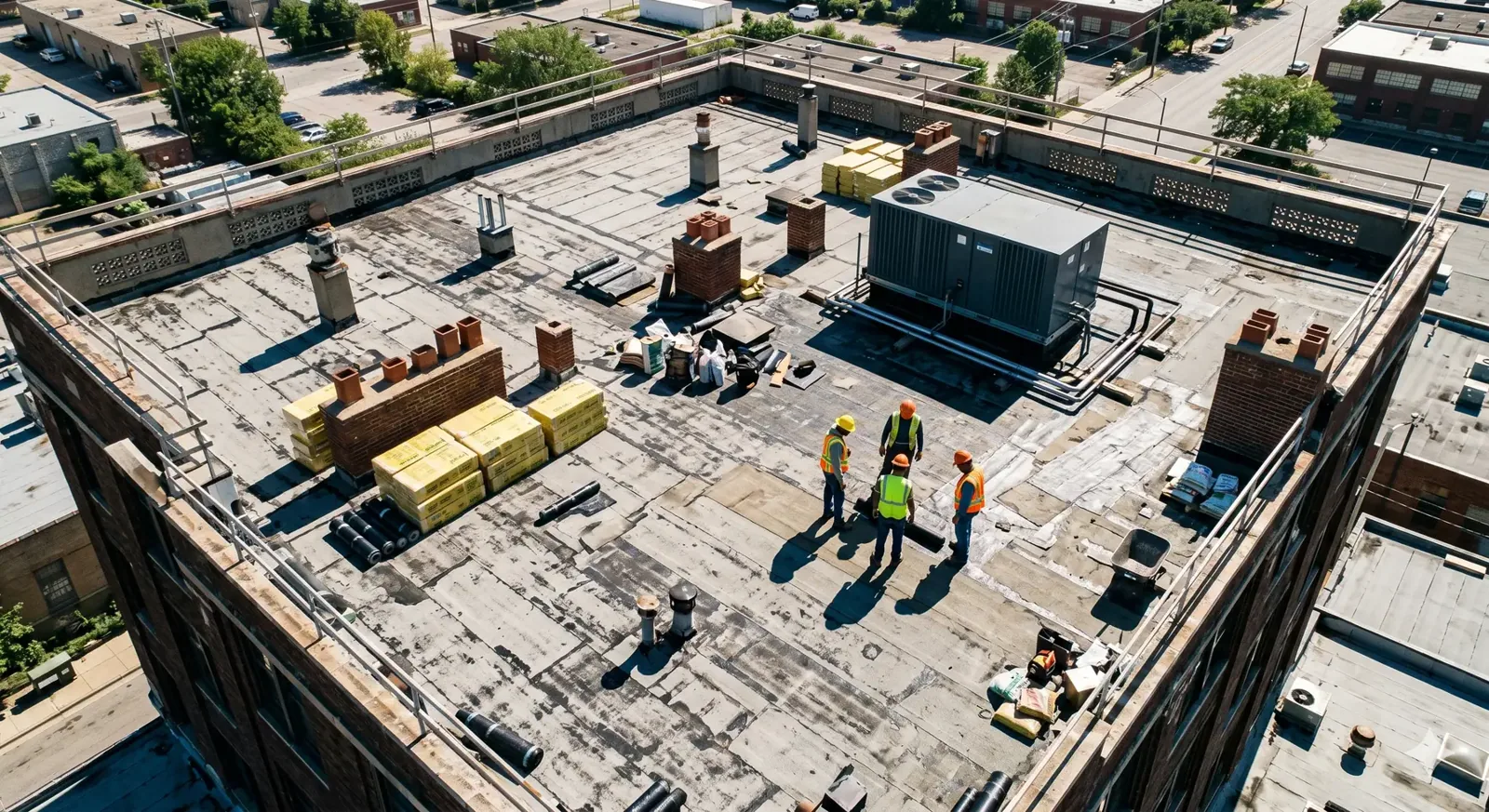
Before inspection, we confirm the ladder or hatch, escort, fall-protection procedure and staging area. The building contact can identify service routes, sensitive equipment and hours when a noisy task will disrupt operations. If the access plan changes, the crew pauses until a safe route is approved. This affects the number of sections reached in a shift and the time needed to document each one.
A phased occupied-building plan can show temporary dry-in, interior protection, daily closeout and the area affected in each phase. It names who can approve a schedule change and what conditions must be checked before the next section opens. The sequence should fit the building's actual activity, not an assumed tenant schedule based on a planning map.
Where access is incomplete, we list the blocked area and the reason. Ownership can arrange an escort or choose a return date. Until that happens, the section remains outside the confirmed scope rather than being treated as cleared.
Account for Waterbury's seasonal reference
Snow, ice and summer storms figure in the weather of the Waterbury market, and we use that to set the work window. At the property, we check the drain path, flashing and low points after a leak or melt. If snow or ice prevents safe entry, the report notes what could not be inspected and when a return is needed.
A drain and scupper repair should address a confirmed restriction or failed connection. If the outlet is open but water remains, slope, insulation or a concealed deck may need further evaluation. We explain what a moisture test or selective opening can establish before adding exploratory work to the scope.
A weather stop can change material handling and the temporary closure plan. We identify where the work ends each day, what protection is in place, and which surface conditions must be met before a permanent seam or flashing repair proceeds. The dry-in boundary stays connected to the specific section under work.
Price each assembly choice separately
A repair line can fit when damage is isolated and a sound tie-in surrounds it. Repeated entry or widespread moisture may justify testing, a recover comparison or removal. A commercial repair scope lists preparation, materials, protection below, limits and closeout. A recover review considers existing layers, attachment, moisture, height and project requirements before another assembly is added.
Removal exposes the deck and can include wet-insulation replacement, disposal and a more involved dry-in sequence. A replacement line defines included roof sections, edge details, penetrations, drainage and any allowance for concealed conditions. We keep immediate water control distinct from permanent work, so the owner can manage exposure while testing informs the larger decision.
A roof capital plan can place each finding alongside the next decision, test, or permit item. It shows why one section may need attention sooner and what remains unknown elsewhere. The estimate can then be compared on quantities and evidence rather than a single allowance that combines different assemblies.
Close the visit with a dated section record
The closeout file should show photos by roof zone, work limits, material used, test results and remaining questions. On a later walk, the same drain, seam or transition can be set against its earlier condition. If access or weather limited the first visit, that boundary stays visible so a future proposal does not assume that area was inspected.
Emergency response is available at any hour, all week, including holidays. Safe access and temporary water control come before a permanent repair. For planned work, we align the dry-in date, material sequence and access window with the scope, and show which condition could move the schedule.
Share the building contact, roof records, reported area and access rules. We can set a Seymour inspection route, identify any test needed to settle the repair line and provide a written record of the options. If a finding changes the cost or timing, the affected section and reason appear in the scope.
Commercial Roofing Questions
What should a Seymour owner prepare before a roof walk?
The building contact, the reported leak area, any roof drawings or earlier repair notes, and the approved entry route. With those, the first visit can target the right roof section and the first test cut.
What should a roof report show after a leak inspection?
It should connect the interior report with roof-zone photographs, confirmed details, test limits and open questions. We use those findings to set a repair boundary or explain what test is still needed.
Can work be scheduled around active operations?
We confirm entry, escorts, staging, service routes and noisy-work windows with the site contact, then build the roof sequence around those limits.
When might a recover option change to removal?
Wet or poorly attached layers, roof height, deck condition and project requirements can rule out a recover. We inspect and test the assembly before setting the removal boundary.
How are snow and ice handled during a Seymour inspection?
Snow or ice that blocks a safe route, or covers a seam, leaves that area outside the confirmed inspection until a return is possible. Drainage, access and materials are checked on the roof itself before work is recommended.
What changes the dry-in date?
Access, precipitation, material handling, surface conditions and the amount of roof opened each shift can affect closure. We list the sequence and the conditions that could move it.
Define the Seymour roof decision
Send the roof records, reported leak area, access contact and timing window. We will document the reachable sections and separate confirmed repair work from testing or replacement questions.