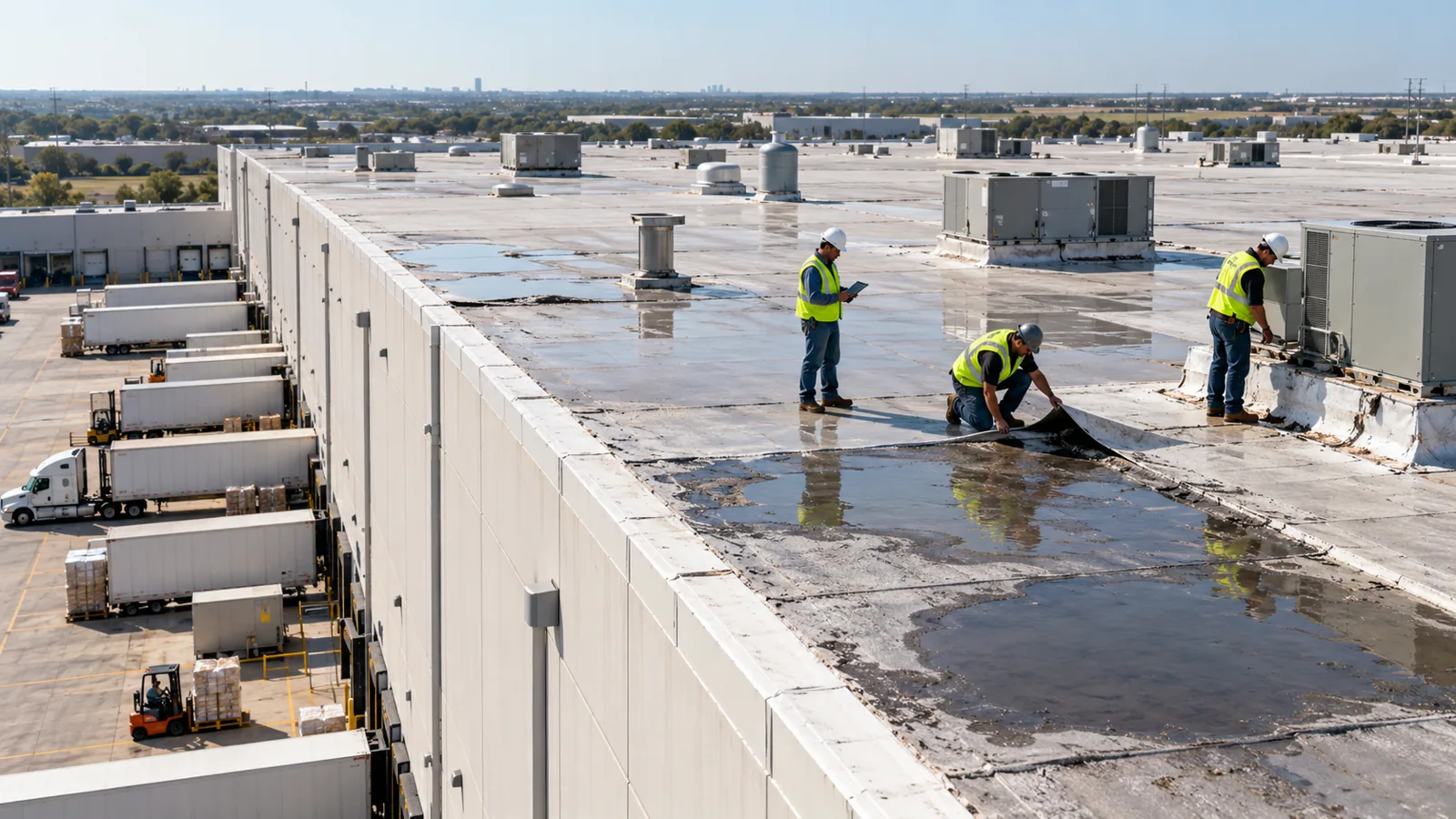
A river, a compact center and a ring of homes around it give Thomaston, CT roofs a shared problem: little room to work and little tolerance for an open deck. The first decision is whether the leak sits in a roof section that can be repaired inside a modest allowance or in one whose insulation has already taken on water. A moisture survey and a test cut settle that, and the answer decides whether the job is a repair, a recover or a full replacement that carries a permit date and a dry-in order of its own.
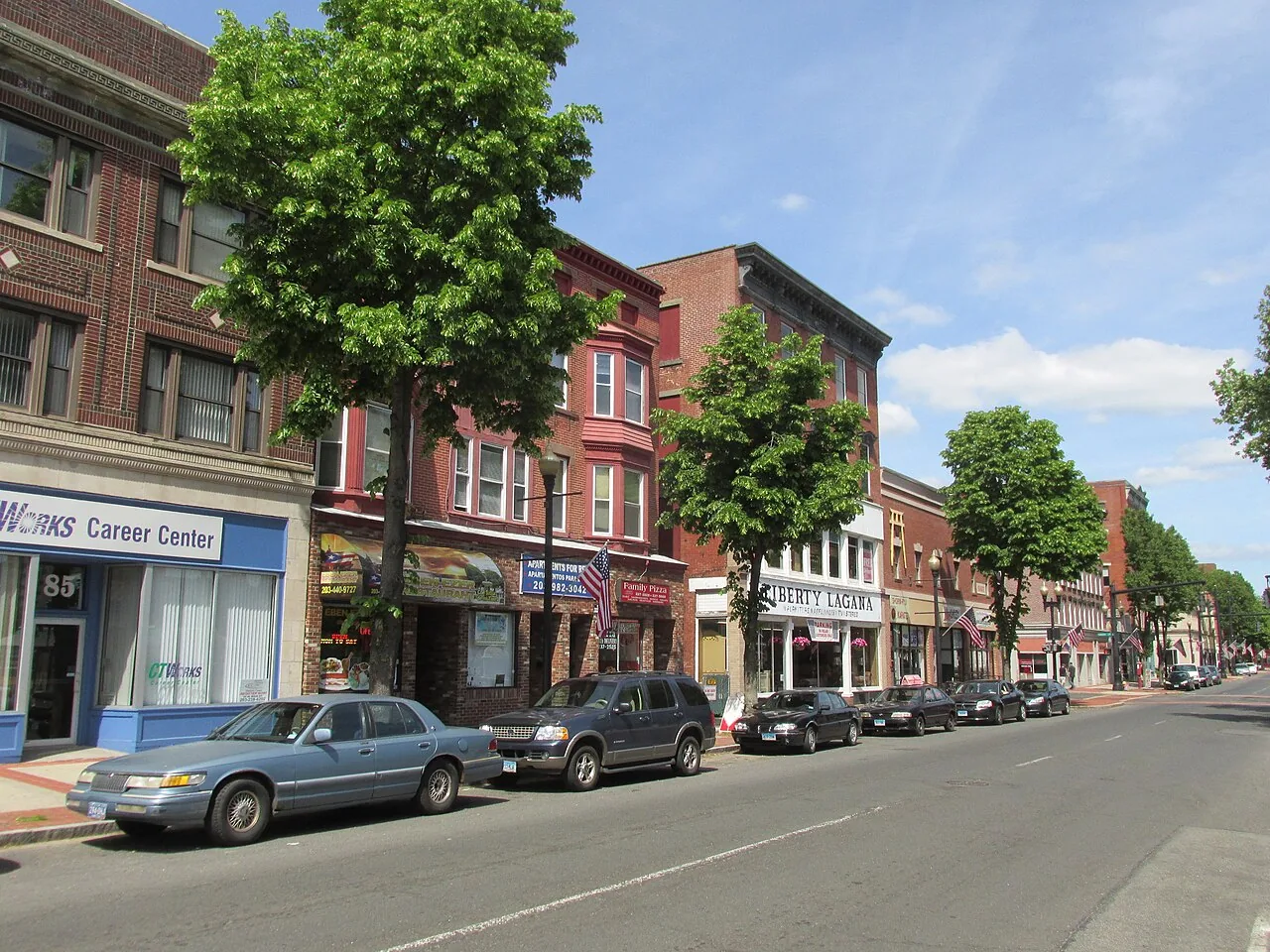
The town's compact commercial district sits near the center at East Main Street and Main Street, alongside the Naugatuck River, and industrial sites are dispersed along the river, with more commercial sites elsewhere in town.
Stage Work in a Center Surrounded by Homes
The town's land-use plan describes the commercial center as surrounded by medium-density residential areas, a close mix of business and neighborhood properties. That mix shapes the work. Lifts and trucks reach homes as well as tenants, noise carries to neighbors and a debris chute has to land where no one walks. Work hours are announced ahead of time, material runs stay short, sidewalks are covered, and a daily closeout means a section opened at breakfast is watertight by dinner. These steps cost little to plan and prevent the disputes that follow a surprise.
Before pricing, we also mark where a lift can stand, which parking spaces the tenants can give up and what hours the street is quietest.
Rooftop equipment in a compact center often serves more than one tenant, so a curb replacement needs notice and a date when each unit can be off. The plan names each unit to be lifted, the contractor who will set it back and the hours it will sit idle, so the roofing and mechanical schedules meet cleanly instead of colliding on crane day.
Check Drainage on Roofs Beside the Naugatuck River
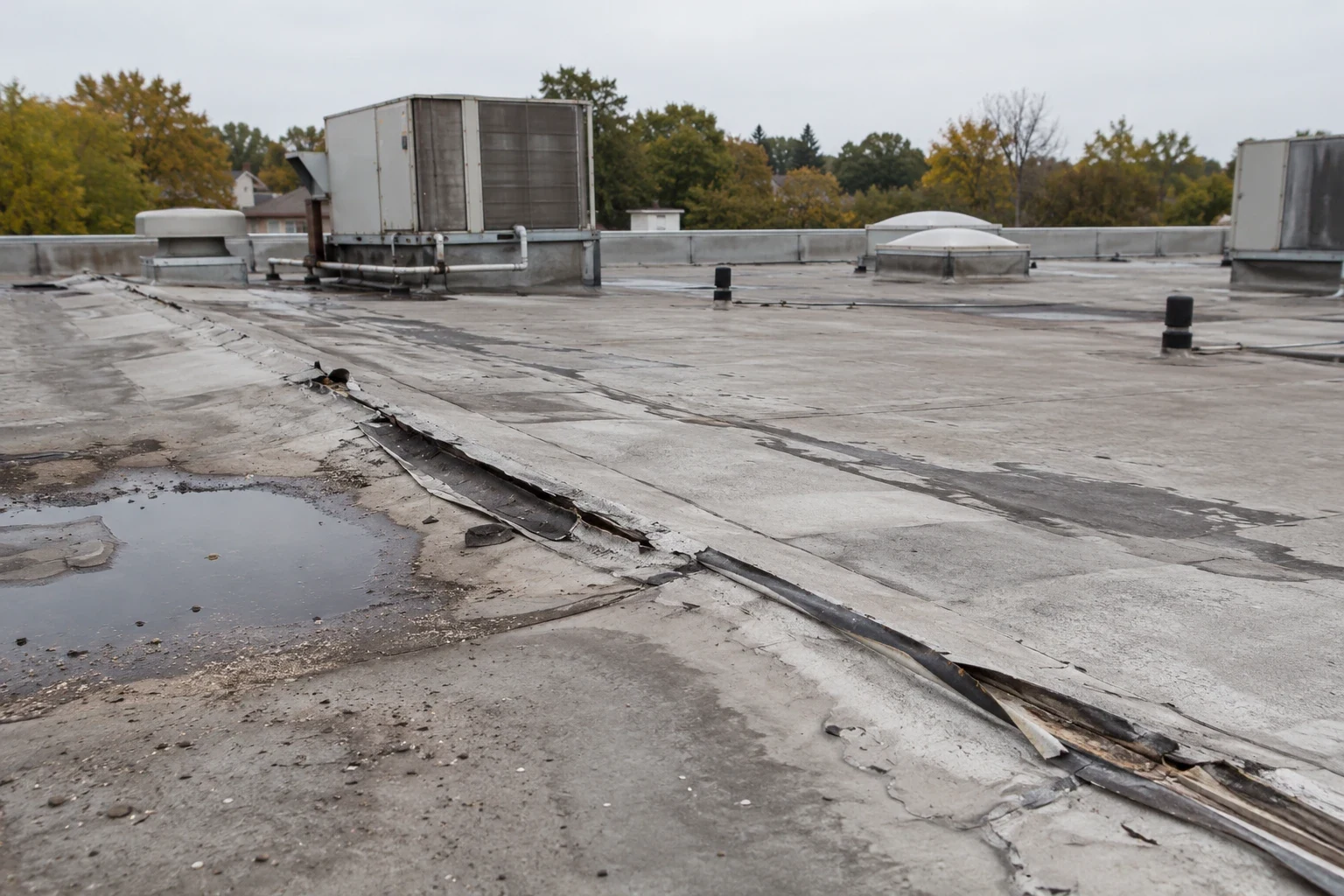
Buildings alongside a river deal with water from above and below. The roof drains still have to move rain away quickly, and the discharge point matters: a leader that empties toward low ground near the river needs a plan for where the water goes in a heavy storm. In Waterbury's hazard plan, tropical-cyclone damage is mostly a story of flooding, and a 24-hour rainfall of 5.54 inches is listed at a 10 percent annual chance. On each Thomaston roof the real work is opening and testing the drains and overflow routes and marking any low spot that holds water.
After any major storm, we recommend a short walk of drains, scuppers and edges while the damage is new. A strainer clogged with debris or a displaced piece of edge metal found the next day costs far less to correct than the same defect found after weeks of wet weather, and dated photographs help if an insurance claim follows.
Sequence Dispersed Industrial Roofs Around Operations
Industrial sites spread along the river are separate buildings, so a program covering several of them is really several projects with a shared report format. Each roof gets its own walk, its own moisture survey and its own scope. A manufacturing plant roof may carry process equipment that cannot stop, so we map the roof against the floor plan, mark where a leak would hurt most and protect those areas first. Each curb, vent and fan is looked at individually; on a big low-slope roof, curb flashing that has failed is a leading suspect when water gets in.
Because the sites are dispersed, travel and mobilization are part of the cost. Where an owner has more than one building, we schedule the walks together and report on all of them in one format, which saves time and lets the owner rank the roofs against each other before choosing where to spend first.
Price Small Commercial Roofs as Separate Assets
Additional commercial sites elsewhere in town are likely to differ from the center in size, age and construction, so what we learn on one tells us little about another. An office building roof or a small retail roof gets the same order of work as a larger one: sections outlined, drains followed, seams probed, flashings checked and a core taken where the readings suggest it. The difference is scale, and with a smaller roof the cost of mobilization is a larger share of the total, which is why we show it as its own line.
On any small commercial roof, penetrations deserve a close look. Pipe boots crack, vent flashings loosen and old capped lines sit open to water. We list each one, test the sealant and recommend whether to reseal, rebuild or remove it. Removing a dead penetration usually costs less than flashing it again, and the report shows the choice with its price.
Fix the Permit Date and the Winter Window
Permitting here runs on the 2022 Connecticut State Building Code, a derivative of the 2021 International Codes that governs applications from October 1, 2022. Layers, insulation and wind and fire provisions are reviewed against it ahead of any recover or replacement price, and the permit date marks the earliest possible start. Dry weather is scarce in winter, and seams, flashings and coatings need it, so the cold months go to inspection, emergency cover and drain clearing. After the thaw, a snow and ice damaged roof is searched for split seams, and any stopgap is logged until a lasting repair is possible.
Lead times matter. Insulation, membrane and edge metal can take weeks to arrive, and an order placed after the permit date pushes the dry-in date out with it. The sensible moment to order is when the scope is approved and the permit route is clear, so work begins the first good day.
Leave a File the Next Facility Manager Can Use
The job's photographs, test findings and repair limits are keyed to a marked roof plan, and that file shows the next manager where water entered, what was repaired and what remains under observation. An owner with buildings in Plymouth or Waterbury can use the same format on each, and a roof capital plan can then rank sections by evidence when the budget window opens.
Commercial Roofing Questions
How do I know whether a Thomaston roof leak calls for repair or replacement?
Start with the moisture survey and the cores. Dry insulation under a membrane that still flexes supports a repair or recover; wet core in several places pushes toward replacement, and the report then spells out where the tear-off stops and what is set aside for wet material.
What do you do to protect neighbors during a reroof near homes?
Hours are posted ahead of time, material is moved over short runs, debris goes to a protected drop point and sidewalks stay covered. The roof is worked in sections that can be dried in during a shift, so nothing stays open overnight.
Does a riverside location change the roofing scope?
It raises the importance of drainage. We trace each drain, test overflow paths and check where discharge goes, then price any needed changes, such as new drains or tapered insulation, as separate lines.
Can a smaller roof be done in one visit?
Often, if access and weather allow. A small repair can be finished in a day, while a recover or replacement is phased. The estimate shows mobilization separately so the owner sees how scale affects cost.
Which records should I gather first?
Gather the roof plans, invoices from earlier repairs, a list of past leaks with dates and places, and any warranty papers. Pass along the access rules and the date you must decide, and the report will be built to your capital or permit schedule.
Arrange a Thomaston Roof Inspection
Share the access rules, the roof records and the capital or permit window. We will inspect, separate repair, recover and replacement scopes and report with photographs, test results and allowances.