A roof repair over a busy fitness floor has to fit class turnover, equipment access, and the building's own hours. We inspect the roof membrane, curbs, drains, and interior leak reports, then set a work boundary that can be protected and closed in a defined shift. Waterbury's commercial corridors mix retail, services, dining, housing, and civic uses, and the city's central business area sits close to I-84 and Route 8. These broad locations help frame access; the center's schedule and roof condition decide the job.
We locate the reported leak against the roof plan and identify whether a repair, test cut, recover review, or replacement should follow. Waterbury faces winter snow and ice as well as summer storms, which can affect drainage and the time available for open-roof work. A commercial roof inspection can map the findings, and roofing service in Waterbury can be planned around member traffic and delivery access.
Choose a Work Window Around Classes and Member Flow
We ask when classes turn over, which doors remain open, and whether a studio, court, or weight area has a period when it can be cleared. The contact identifies check-in routes, showers, locker rooms, and any zone that cannot be interrupted. We then set staging, lift location, noise timing, and the roof area that can be opened. If the center runs early mornings and evenings, the schedule may use a quieter mid-day period for removal and closure.
A gym may have large open spans, rooftop heating or cooling equipment, and exhaust from locker or shower areas. We inspect what is present and document the clearance needed to service it. If an exercise room has a dropped ceiling, interior protection can be planned beneath the actual roof section rather than across the whole building. Other occupied buildings run on their own calendars, a school by term and a hotel by guest stays, and a fitness center runs on class turnover. We also confirm where members can check in if an entrance is temporarily affected, and who will update signs or notices during each phase.
Trace Leaks Near Showers, Studios, and Equipment
A ceiling stain in a locker room can reflect a roof leak, a plumbing line, or condensation from mechanical equipment. We compare the location with the roof above, check the curb and flashing, inspect seams and drainage, and identify any interior conditions that need a separate trade review. The report distinguishes confirmed roof entry from a suspected source so the roof scope does not absorb unrelated work.
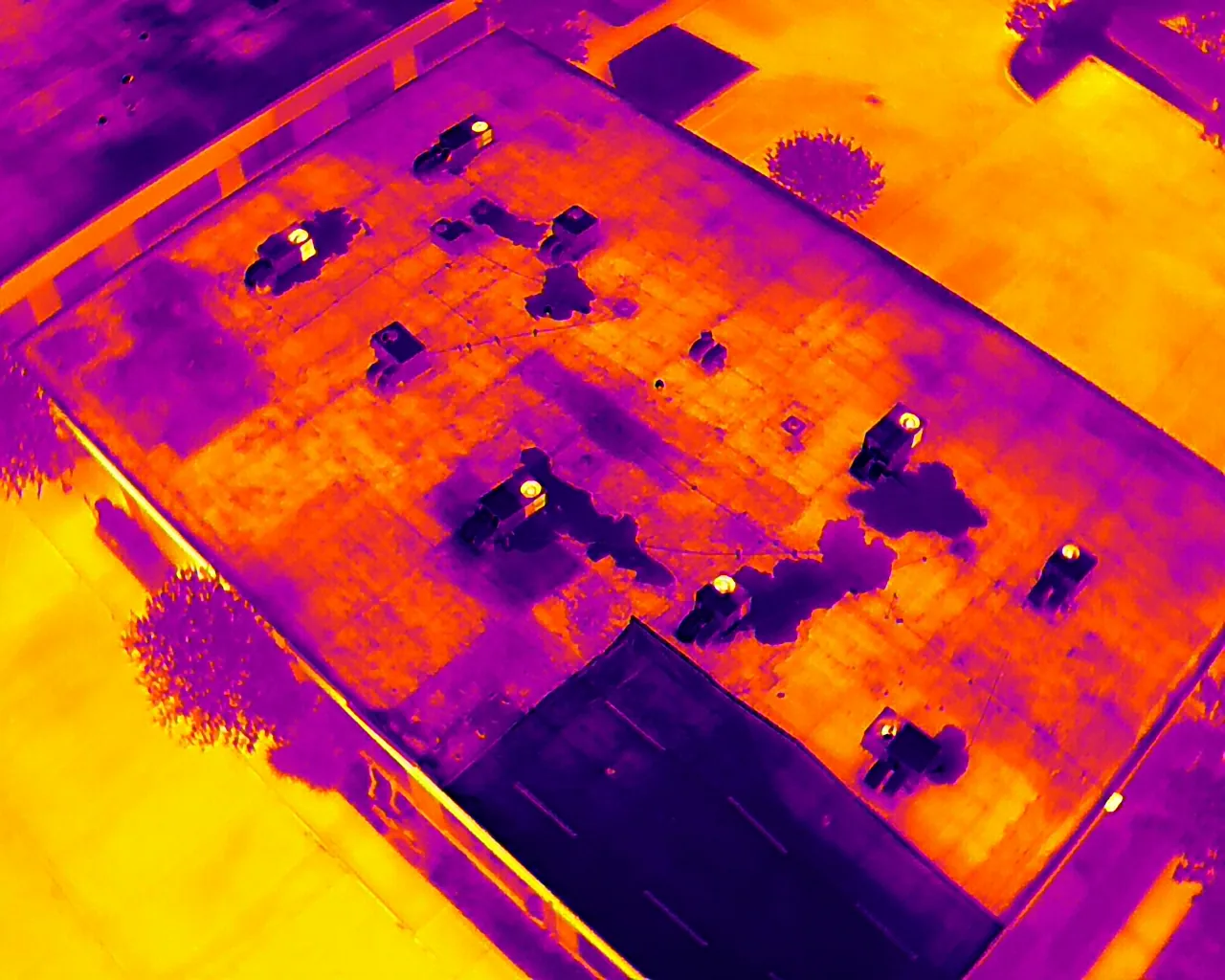
Where the building contains a pool or other high-moisture room, we review roof assembly and mechanical conditions together before drawing conclusions. A test cut or moisture scan can help determine whether insulation is affected beyond the visible area. Waterbury's winter weather can put extra focus on outlet and edge conditions, while summer storms can interrupt an exposed repair. An infrared moisture survey can guide sample locations, and drain work can correct an outlet restriction if inspection identifies one.
Inspect Curbs and Open Spans as Separate Work Items
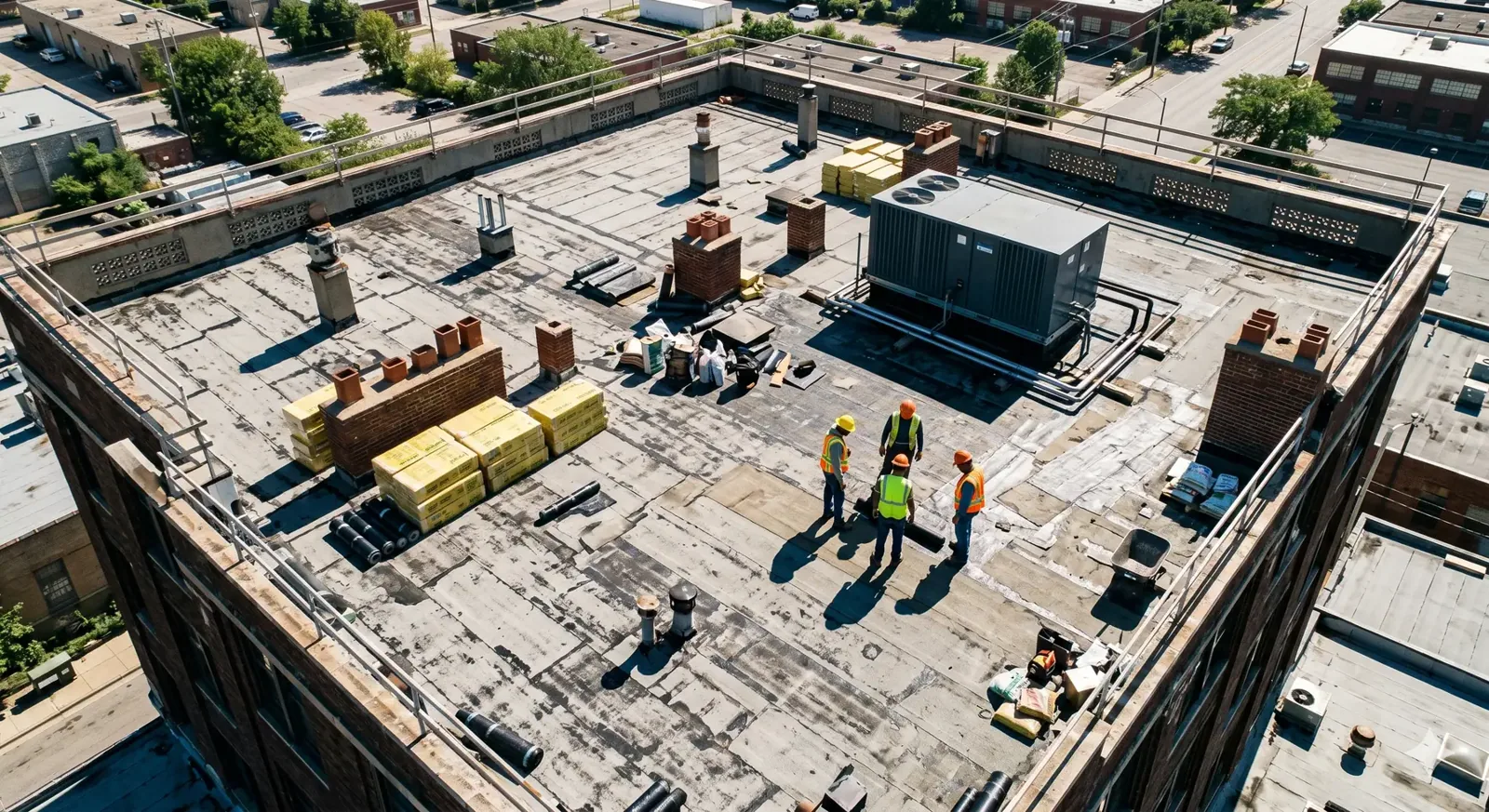
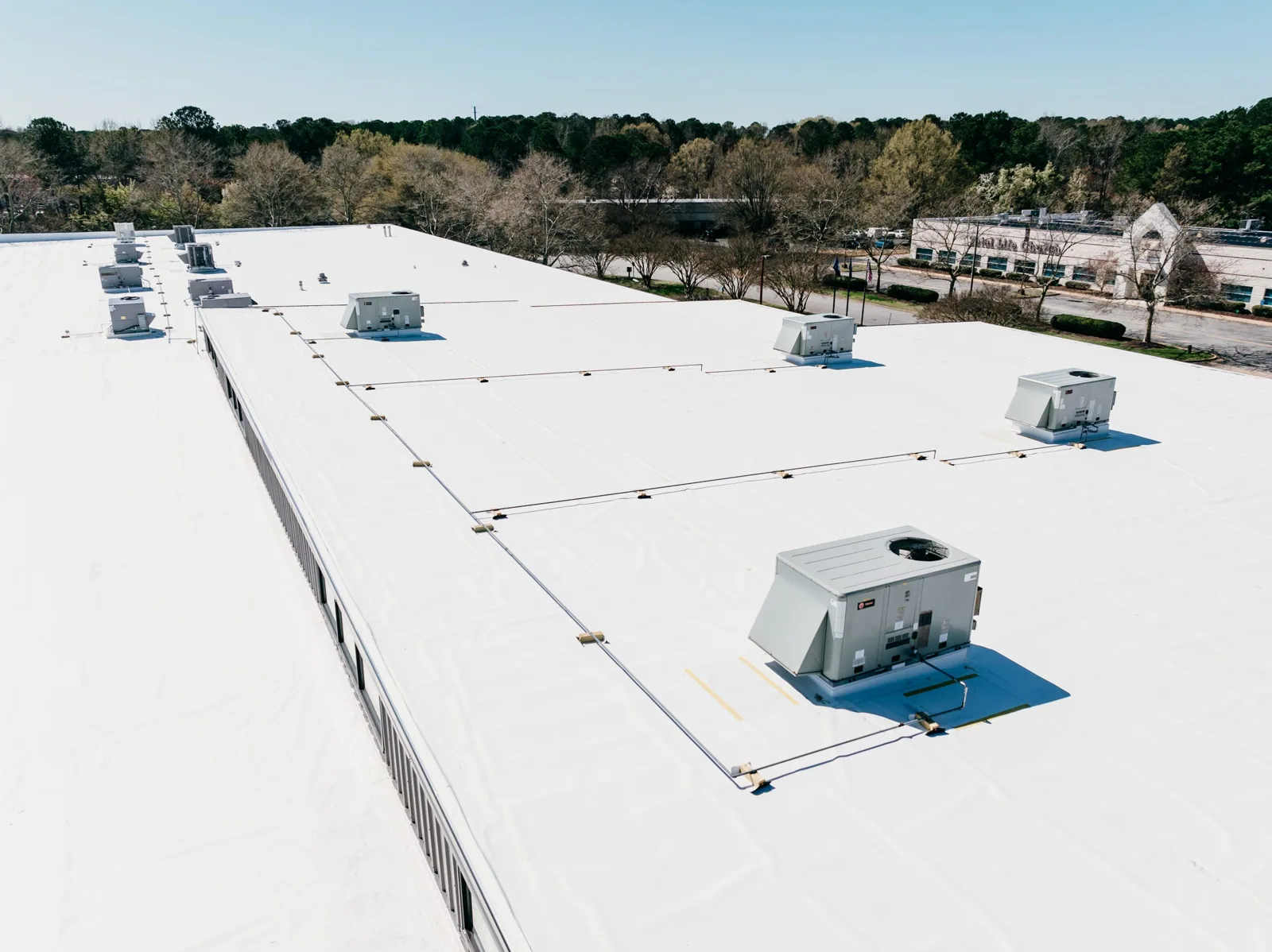
Large open rooms may have a long roof span with multiple heating, cooling, exhaust, and communication units above. We check each curb, pipe penetration, seam, edge, and drain, then record the affected roof area. If a mechanical unit must be lifted, the roofing and equipment scopes share a curb detail, outage window, and return-to-service check. The estimate makes that boundary explicit so weather protection and mechanical work are not priced twice or left unassigned.
A localized repair may fit when the membrane is secure and insulation is dry. If multiple areas hold moisture or prior patches keep failing, a broader scope may be needed. We review attachment, layer count, deck, and drain height before deciding whether recover is viable. A TPO assembly review can compare details for a compatible low-slope roof, and a replacement proposal can show tear-off and insulation quantities if the existing system is a poor base.
Protect Members and Keep the Roof Closed Each Shift
The plan states which rooms are restricted, how members are directed around staging, and when noise or odors may occur. We separate demolition, preparation, flashing, and closure into phases that leave a safe route between active areas. Every phase has a daily dry-in point, and any temporary cover receives a named check before the crew leaves. The facility contact can align notices with class calendars and scheduled events.
Waterbury's industrial areas follow the Naugatuck River and extend into the southeast, while commercial activity also runs along East Main and South Main. Cost changes with access height, equipment coordination, interior protection, tear-off, disposal, and the number of shifts needed. For active water entry outside regular hours, emergency roof response is available at any time, holidays included, to stabilize the affected section while permanent work is priced.
Give the Operator a Section-by-Section Record
At closeout, we photograph seams, curbs, drains, edge metal, and completed tie-ins, then mark those items on the roof plan. The report lists tested areas, materials, deferred conditions, and the date for the next review. If a room or piece of equipment was temporarily restricted, the facility contact confirms its return to service. The record gives the operator a basis for scheduling future work without treating each stain as a new roof failure.
Class schedules, roof plans, equipment service dates, access rules, and leak reports go into one file, and the actual roof assembly determines the repair boundary. We identify the cost and timing drivers by section and state any testing allowance. That lets an owner weigh a limited repair against a larger capital scope with the operational effect visible. A posted notice at the front desk, written with management, tells members which entrance and rooms are affected on each work day, which keeps questions away from the crew and the roof schedule intact.
Commercial Roofing Questions
Can roofing work happen while classes continue?
We map class times, member paths, entrances, equipment access, and noisy work before setting the sequence. The plan identifies each room or roof zone affected and where staging will sit. If an area needs a short closure, the contact can issue a notice and use a different schedule for that phase.
How do you decide whether a locker room stain is from the roof?
We compare the interior mark with the roof above, including drains, seams, curbs, and wall transitions. Plumbing or condensation may require a separate trade review. The report states which evidence supports roof work and whether testing is needed before a repair boundary can be priced.
What if HVAC equipment needs to move?
We identify the unit, curb, clearance, and roof detail, then coordinate the lift or shutdown with the mechanical contact. The estimate states who handles disconnection and return to service, along with the flashing work required after the unit moves. No equipment is assumed to be active or removable until the operator confirms it.
What determines whether a recover can be used?
The membrane attachment, moisture condition, deck, existing layer count, and available height at edges and drains determine whether a recover is viable. We inspect the assembly and use a test cut if hidden layers could change the answer. The estimate compares recover with repair or tear-off using the observed condition.
How should a center prepare for a roof estimate?
Provide roof plans, leak locations, class calendars, access hours, equipment records, and any member routes that must stay open. Those details help set staging and work windows. We verify the roof in the field, document unknowns, and list any allowance that would require approval after testing.
Set a Fitness Center Roof Work Window
Send roof plans, leak reports, class schedules, equipment records, member routes, and access limits. We will document the assembly and price repairs or replacement by section, with closures and dry-in points stated.