A Johns Manville name on a spec sheet or a warranty letter answers who made the materials, but it does not answer what the next scope should be. That depends on how many layers sit on the deck, whether the insulation is dry, how the roof drains, and what the building can tolerate during the work. Johns Manville is a manufacturer of commercial low-slope materials that include single-ply membranes, asphalt-based sheets and built-up components, and roof insulation. For owners in Waterbury, CT, we start with the roof as found, identify the assembly in the field, and compare a repair, a recover, and a replacement against the evidence.
Identify the Assembly Before Matching Any Material
The first task on a roof that may carry Johns Manville materials is confirming what is actually there. Labels, warranty files, and purchase records help, but a roof may have been repaired with other materials, recovered, or extended since installation. We probe the surface, pull a test cut where the question matters, and record the membrane type, the number of layers, the insulation type and thickness, the deck, and the attachment method. The result is a section-by-section description that a repair or recover scope can rely on.
The distinction matters because compatibility drives repair success. A patch that suits a heat-welded single ply will not bond to a modified bitumen sheet, and a flashing material that works on one asphalt system can attack another. Naming the system correctly, by observation, is the step that makes every later choice reliable.
Compare the Product Families by How They Fail
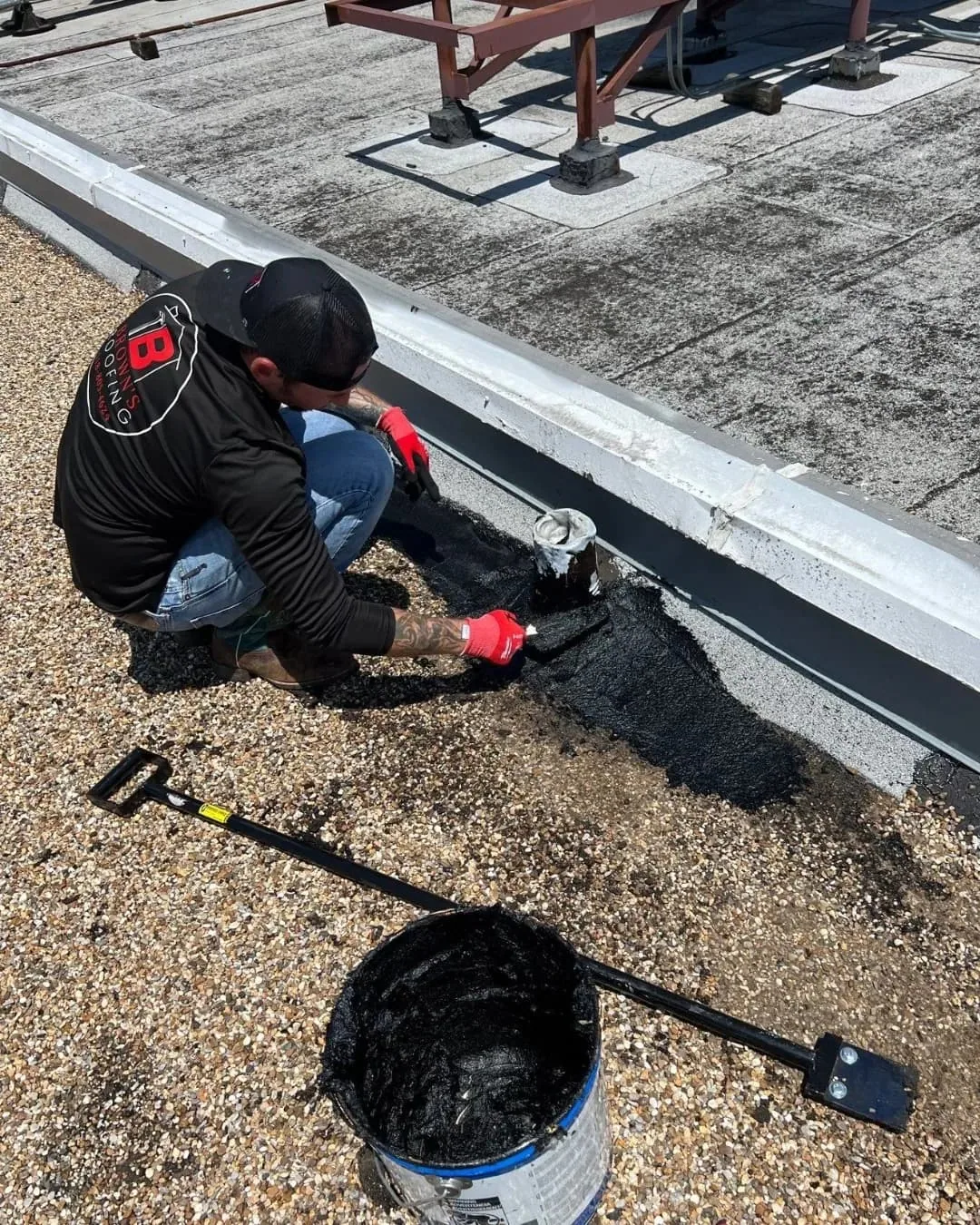
Single-ply thermoplastic and rubber membranes fail at seams, at flashing terminations, around penetrations, and where traffic or ponding wears the surface. Asphalt-based sheets, including modified bitumen, fail at laps, at blistered or split areas, at flashing, and where surfacing granules wear away and expose the reinforcement. Built-up roofs fail at plies and edges, at blistering, and at flashing where movement tears the base layers. Each family also has its own repair method, from heat welding to cold adhesive to torch or hot application where conditions allow.
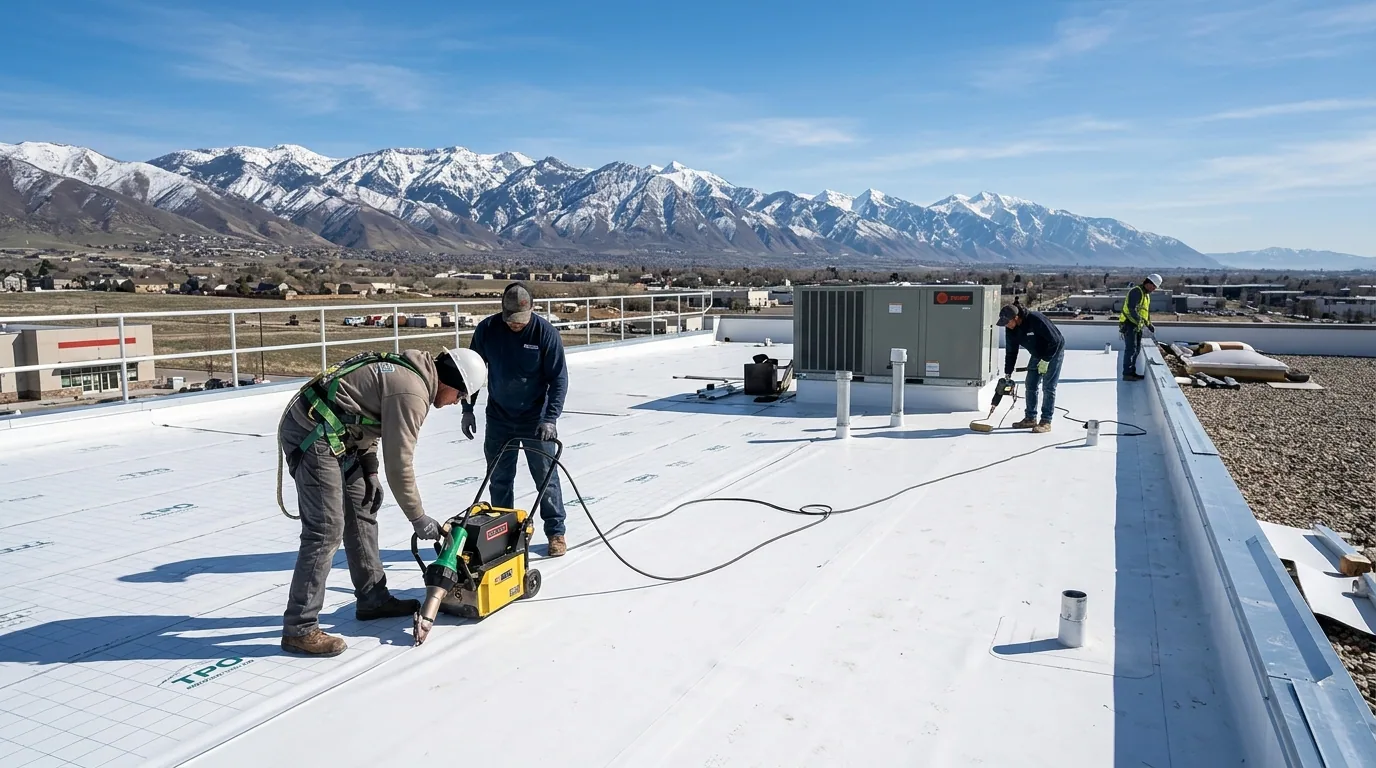
Our inspections record those failure points by section. For asphalt systems we pay close attention to modified bitumen laps and built-up roof edges, and for single ply to the weld lines of a TPO roof. A similar asphalt system from Soprema or GAF raises the same questions about details and compatibility, which the field survey answers, not the brand.
Check the Insulation and Cover Board as Part of the Roof
Johns Manville is also known for roof insulation, and insulation is where many scopes are decided. Polyisocyanurate and other boards lose performance when wet, crush under traffic, and shrink or curl at edges. A moisture scan followed by a test cut shows whether the insulation is dry enough to stay, and the finding sets the replacement line. A dry core under a worn membrane can support a recover with a new cover board, while a wet core means tear-off to the deck in the affected area.
Cover board choices affect impact resistance, fastener pull-out, and fire rating, and they should be reviewed with the membrane and attachment. The insulation and cover board scope records the thickness, the required R-value under the current Connecticut energy code, and the effect on drain heights and flashing.
Fit the Scope to Waterbury Conditions and Operations
The hazard plan expects winter storms, from snow and ice to nor'easters, to reach every corner of Waterbury, and it adds summer storms and tornadoes. In the field, that means drains and scuppers, edge metal, and seams get a close look, and temporary dry-in details are planned before a tear-off begins. Space can be tight in the compact downtown where I-84 meets Route 8, so material handling and crane or lift position become scope items, and the industrial parks at Reidville and Brookside get their own staging check on the site walk.
We write the sequence against the building's operation. Occupied offices, health-care uses, and retail each set different hours and noise limits, and those limits change the work plan.
Price the Work in Layers, Not as a Single Number
An asset manager comparing options wants to see where the money goes, and the scope can be built in layers that mirror the roof. The bottom layer is removal: how much of the old assembly comes off, whether the insulation goes with it, and how debris is handled. The next is the substrate: deck repair, new insulation, and cover board. Then comes the membrane or sheet system with its attachment method, then the details at drains, curbs, edges, and penetrations, then temporary protection and access. Each layer carries a quantity and an allowance, and the allowances are tied to a test.
For asphalt-based systems, installation method is also a cost and safety driver. Torch application, hot asphalt, cold adhesive, and self-adhered sheets each have different labor, fire-watch, and ventilation requirements, and an occupied building may rule some of them out. We state the method for each section and the reason, and we price the alternative where the building's use limits the first choice.
For insulation-only upgrades, such as raising the thermal value in a recover, the plan shows how added board thickness affects drain heights, flashing heights, and the weight on the deck, since those secondary effects can add scope that the insulation price alone does not show.
Repair, Recover, or Replace With the Evidence in Hand
A repair is right when defects are limited and the assembly beneath is sound; the scope names the defects, the method, and the boundary. A recover is right when moisture, deck, attachment, drainage, and weight allow another assembly over the old one; the scope names the preparation and the terminations. A replacement is right when wet insulation, failed attachment, or widespread seam and flashing failure make the old assembly unreliable; the scope names the tear-off boundary and the allowances for concealed conditions. We price all three where the evidence supports them.
Each choice has its own preparation: a recover needs the dry-core finding and a clear termination plan, and a replacement needs the tear-off boundary and the dry-in date.
Keep the Warranty Paper Trail Intact
Whatever the system, a manufacturer's warranty carries conditions about notice, maintenance, and repairs by qualified installers. We summarize the terms, log repairs by section, and keep dated inspection photographs, so that a warranty claim can be supported from the file. Owners with buildings in Waterbury and Meriden receive the same file format, with the same numbering and photograph positions.
Commercial Roofing Questions
Does Johns Manville make more than one kind of commercial roof?
Its commercial offering spans single-ply membranes, asphalt-based sheets and built-up components, and roof insulation. Which one is on a given roof depends on the installation history, so the field survey identifies it before any repair is specified.
Can a Johns Manville roof be repaired with another manufacturer's materials?
Sometimes, if the materials are compatible and the warranty terms allow it. We identify the system, check compatibility, and read the warranty before choosing repair materials.
When does a recover make sense over an older assembly?
A recover is a fair option once scans and cut samples show dry insulation, a sound deck, adequate attachment, and drains and flashings that can take more height. A wet core rules it out.
How do you confirm what a roof is made of?
By reviewing records and then inspecting in the field: probing the surface, taking a test cut where needed, and recording layers, insulation, deck, and attachment. Labels and invoices support the finding but do not replace it.
Does a manufacturer's name affect the price of repair?
The material and method affect it more. Cost follows the removal depth, insulation condition, details, access, and work window, and the brand matters mostly where compatibility or warranty terms limit the options.
What records come with the work?
A numbered roof plan, dated photographs, test results, the method for each repair, and the warranty summary. Future inspections and claims start from that file.
Send the roof records, access rules, and permit window
Send any warranty papers, drawings, or past repair invoices, along with access rules and the capital or permit window. We will inspect the roof, identify the assembly, and return a written report that separates repair, recover, and replacement scopes with the evidence behind each.