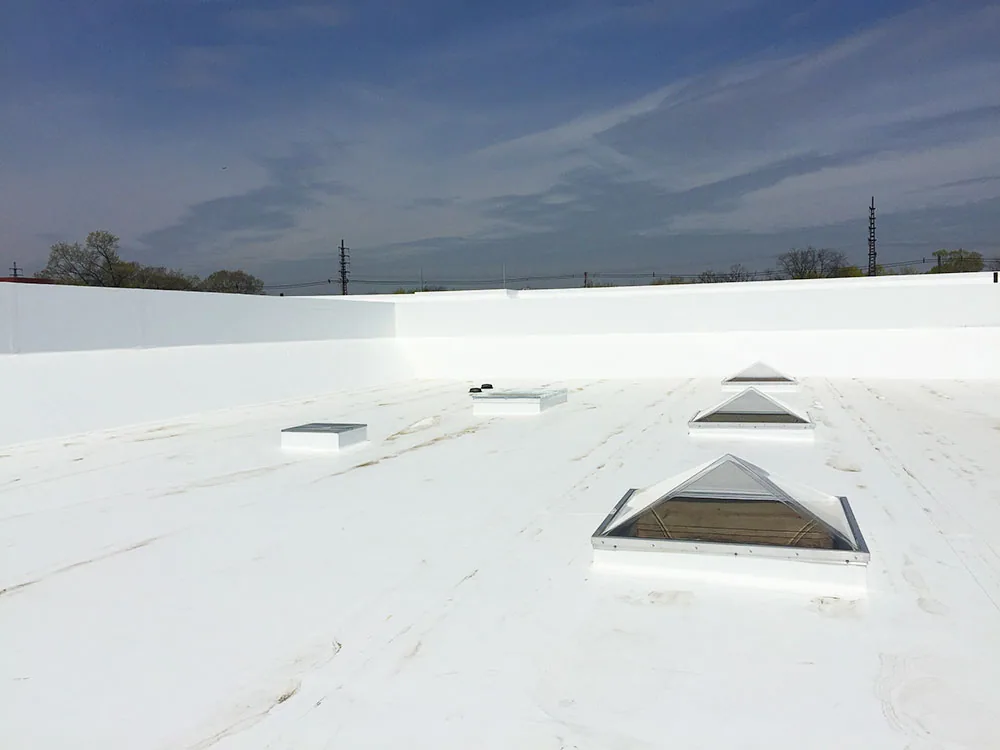
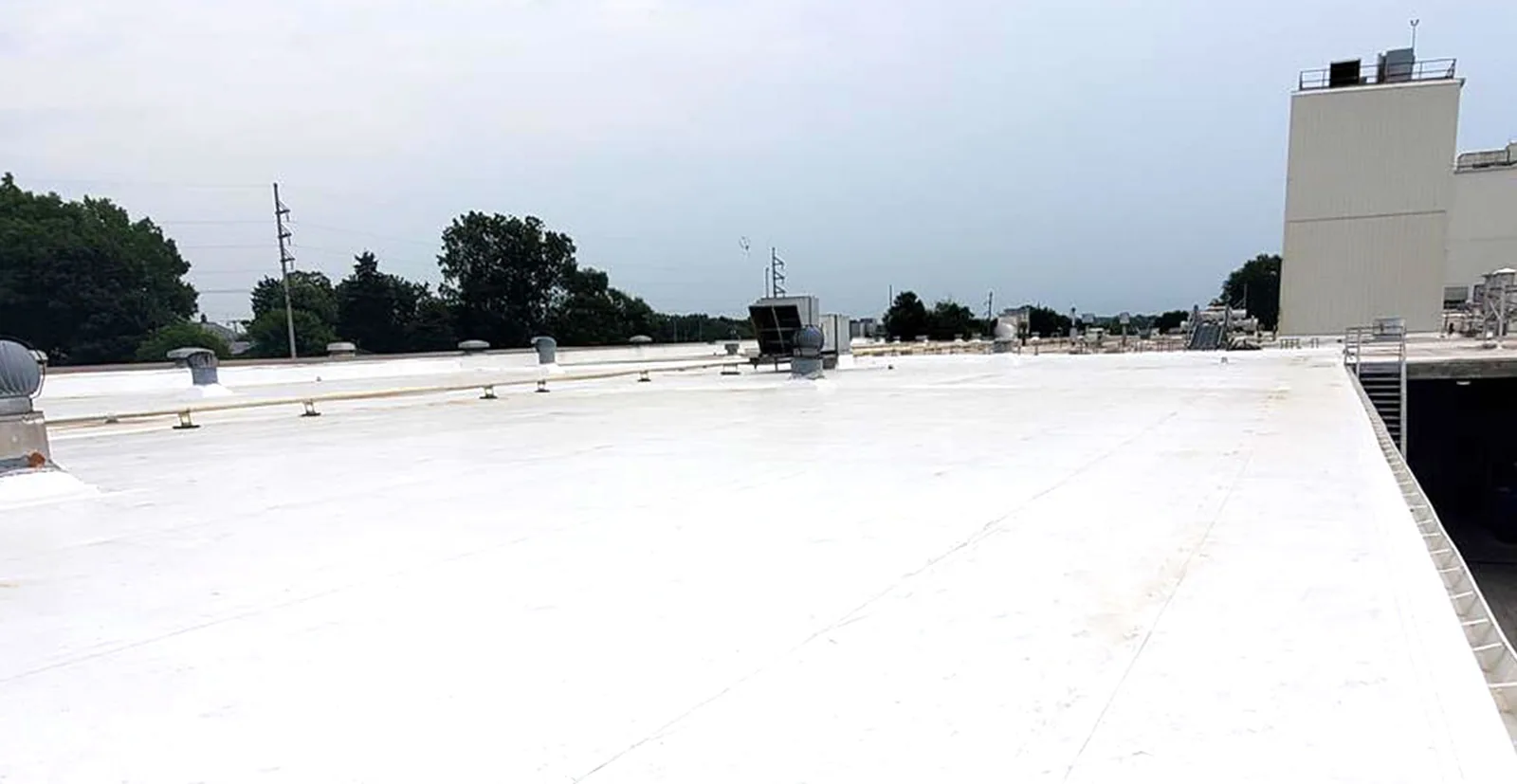
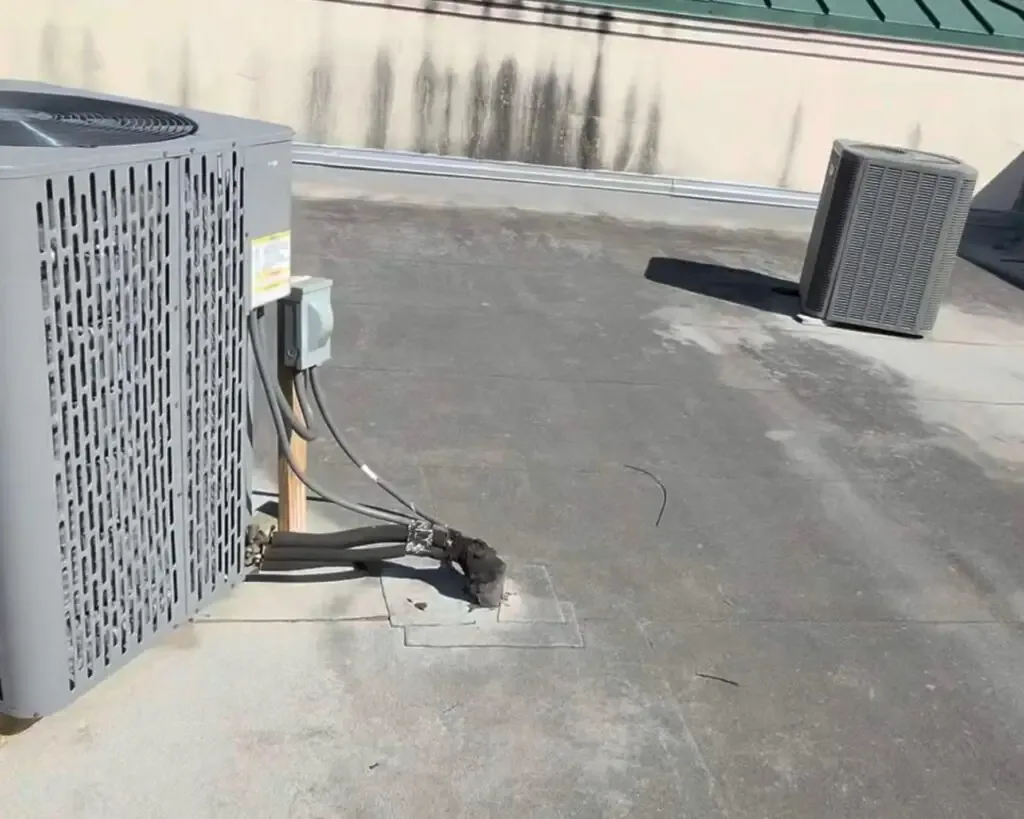
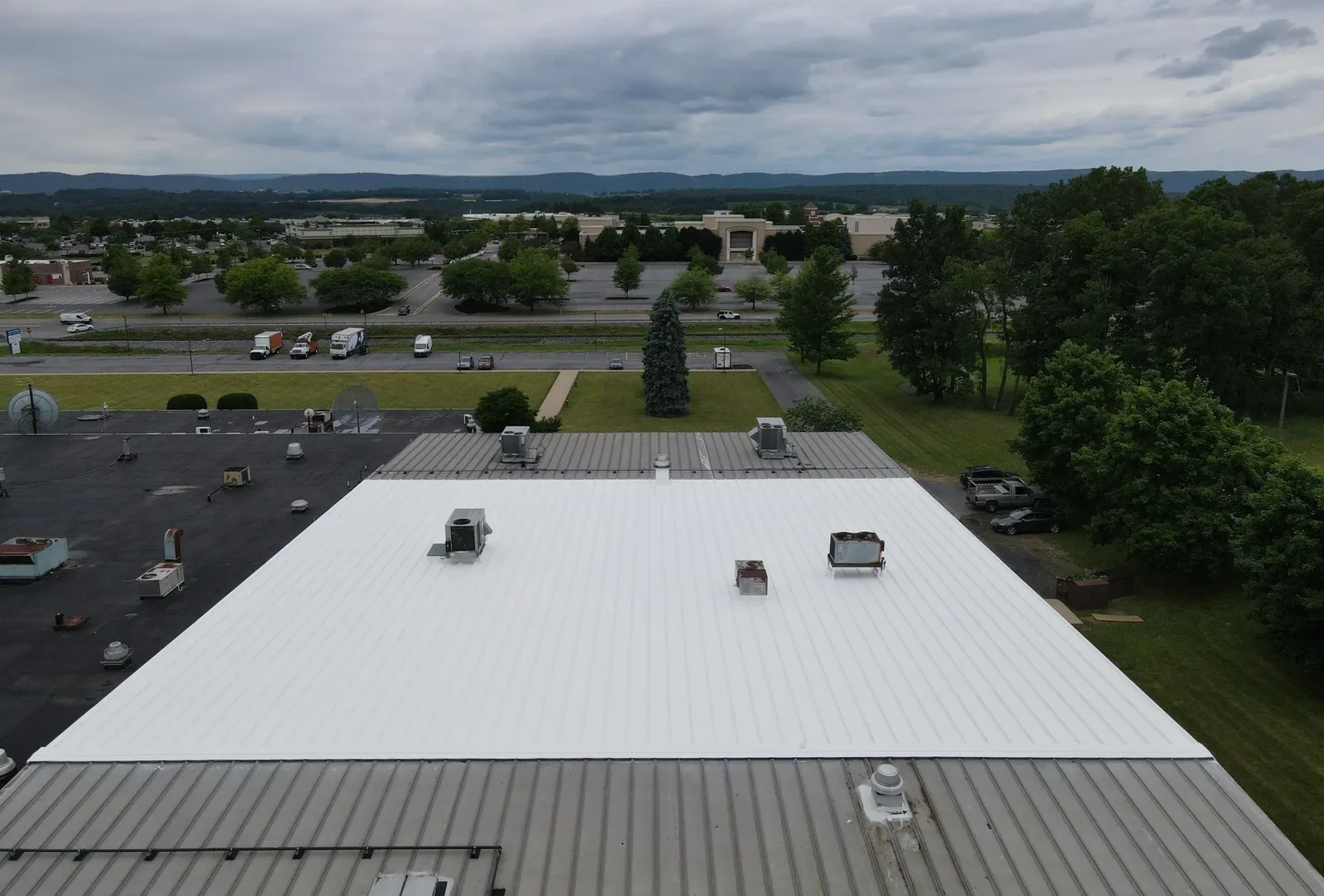
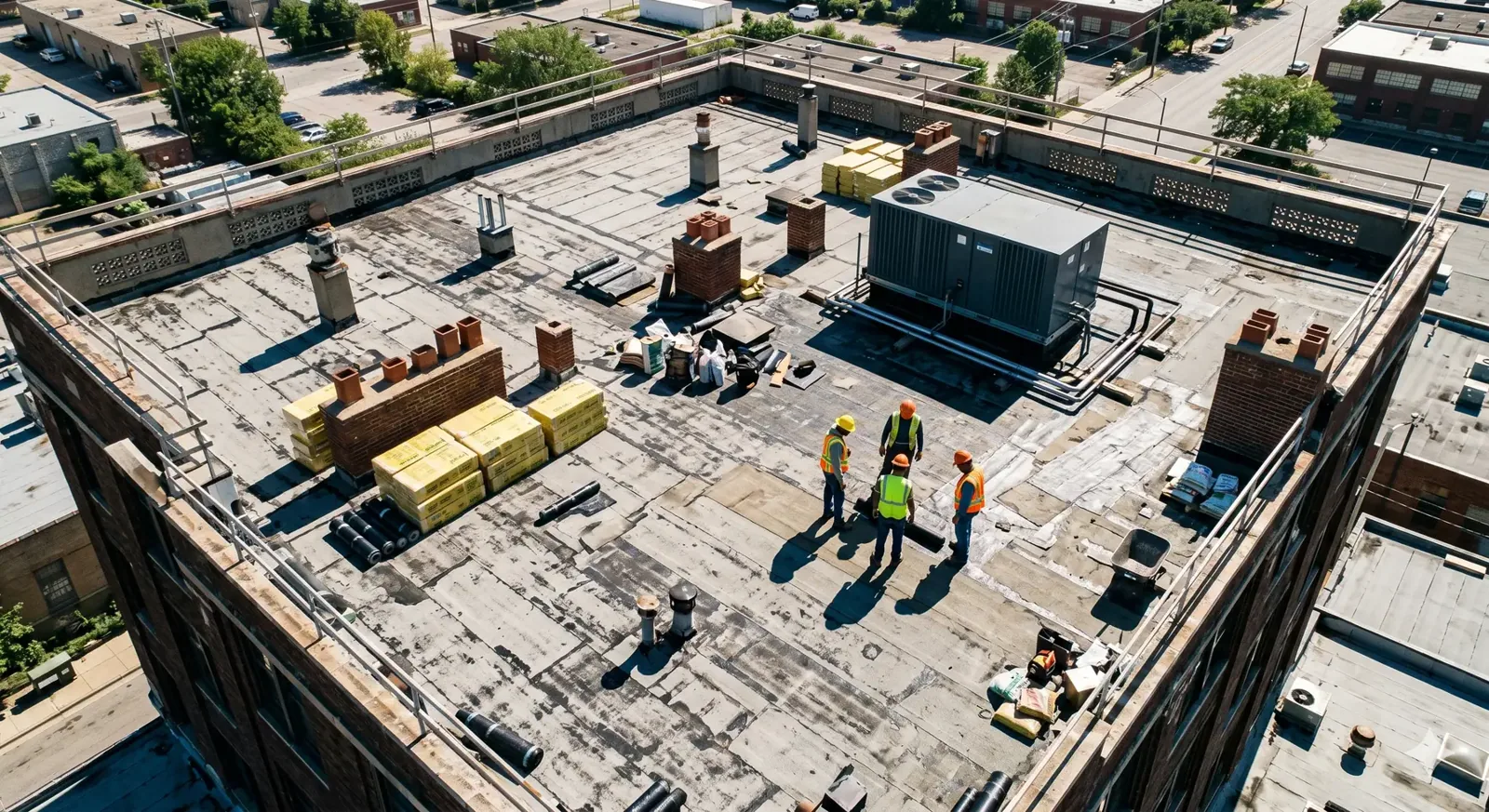
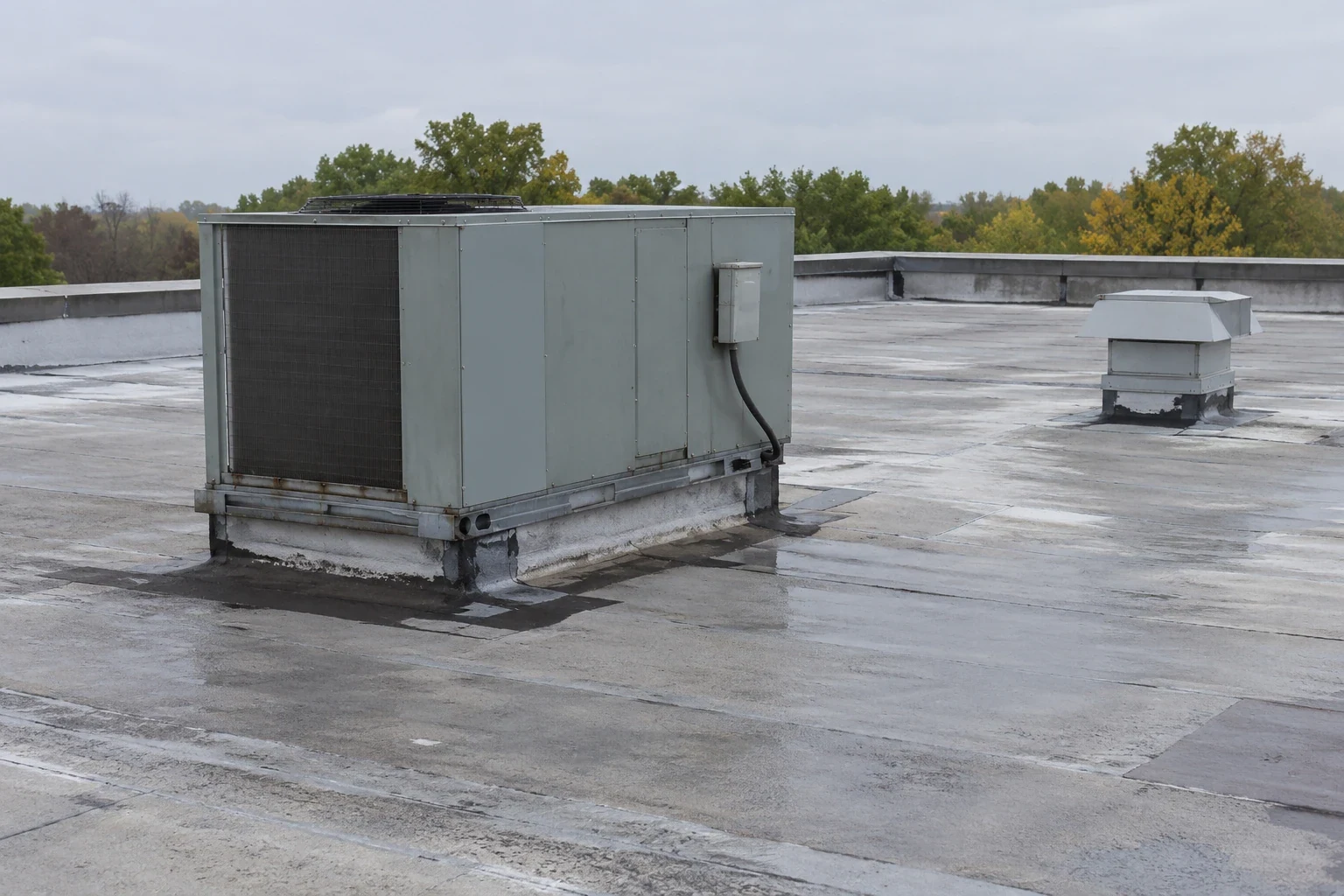
A GAF label identifies a manufacturer, not a roof specification. The working choice still turns on the existing assembly, deck, moisture, attachment, drainage, exposure, and the building's operating window. GAF makes commercial low-slope systems across thermoplastic membranes, asphaltic plies, built-up roofing, and liquid-applied coatings. We inspect the roof in place, identify the material and the repair boundary, then compare a compatible repair, recover, restoration, or replacement scope. For a Waterbury owner, that means a decision tied to the actual roof section and its access conditions, not a default recommendation drawn from a brand name.
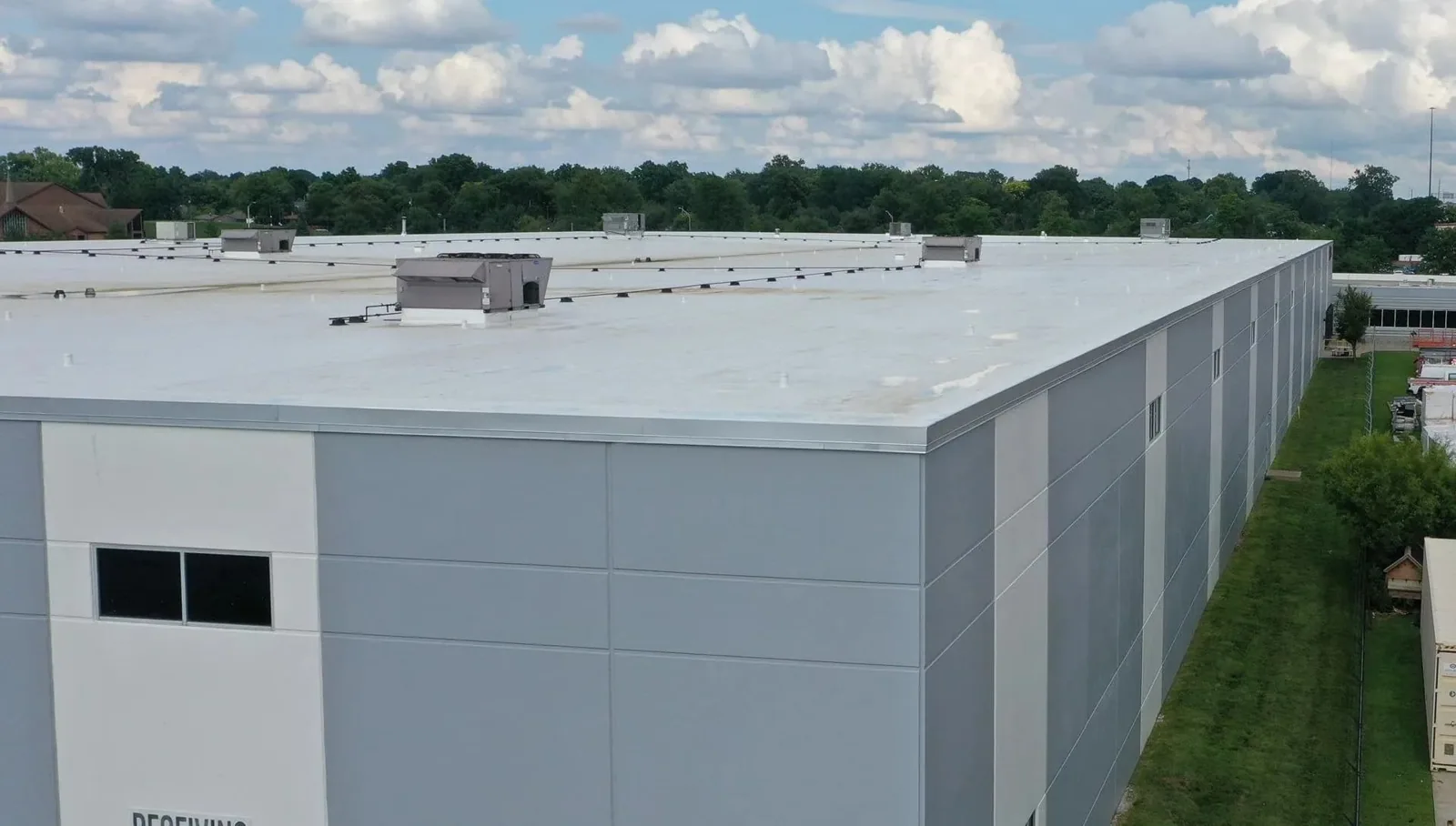
Identify the assembly before pricing a GAF system
GAF sells EverGuard TPO and PVC single-ply membranes, RUBEROID SBS and APP modified bitumen, GAFGLAS components for built-up roofs, and liquid-applied coatings. Their seams, flashings, and repair methods differ, so the first walk establishes the existing layers, attachment, moisture, roof-to-wall details, drains, and any earlier recover work. We name a material only after the field and the paperwork agree.
Each section gets its own entry when an addition, recover, or old repair created a different assembly. A membrane patch does not dry insulation, and a coating cannot secure a loose panel or a failed deck, so we mark the areas we could not reach and say whether a test cut or adhesion check would change the choice. On an EverGuard roof, the build-up is compared with the TPO system before a repair material is picked.
Match EverGuard membrane to the roof geometry
EverGuard TPO and PVC seams are heat-welded, so we probe the welds, laps, corners, and field seams, and we look at flashing at curbs and pipes. Soiled laps get cleaned, and a small test area goes in first when coatings or contamination remain. Smooth and fleece-back sheets call for different attachment and substrate decisions, and mechanical fastening, adhesion, and induction welding transfer load differently, so the deck and fastening pattern are verified during the survey.
Chemically demanding exposures change the question. Around kitchen exhaust, oils, or equipment discharge, we document what reaches the membrane and where before a PVC choice is made. A repair uses material compatible with the installed system, restores seam and flashing continuity, and leaves the adjacent area visible for review. The existing assembly is weighed against PVC membrane options before a larger section is priced.
Read RUBEROID and GAFGLAS as layered systems
RUBEROID SBS and APP are modified bitumen sheets, and a GAFGLAS built-up roof stacks reinforcing plies with asphalt between them under a cap or surfacing. We look for splits, open laps, blisters, exposed reinforcement, failed flashing, lost surfacing, and patch edges that hold water. A defect in the cap can leave the lower plies intact, but exposed plies need protection while the repair waits.
Repair planning starts with the membrane type, the surfacing, the attachment method, and a safe application method for that assembly. Some asphaltic systems use heat-welding, cold adhesives, self-adhered sheets, or hot asphalt, and an open-flame method is not a blanket choice for an occupied or combustible setting, so fire safety, ventilation, staging, and protection of equipment below go into the scope. For a replacement, we count the layers to be removed and decide whether the deck needs repair first. The inspection logic mirrors the one used for modified bitumen systems.
Qualify a coating or recover instead of assuming
A GAF acrylic coating is a liquid-applied system for a suitable substrate. We check for loose fasteners, failed seams, splits, wet insulation, corrosion, and movement, clean and repair the surface, and test adhesion where the substrate calls for it. Coating over trapped moisture or an unsound deck preserves a defect, so a fleece-back TPO or PVC recover gets its own checks for moisture, attachment, drain height, perimeter details, and added load.
Restoration is scoped around preparation, repairs, seam and penetration reinforcement, coats, and any area that needs more than a surface treatment. It can avoid tear-off when the existing assembly qualifies, and widespread deterioration or a compromised deck points to a different scope. When the evidence supports a coating, roof coating restoration carries the adhesion result, the repair boundary, and the field conditions that control application.
Account for Waterbury exposure and building mix
Waterbury's hazard profile runs from freezing precipitation to nor'easters and blizzards in winter, with summer storms and tornadoes listed as local exposures. We read that as an inspection list: drains, edges, penetrations, and temporary dry-in details. The city's 24-hour rainfall estimate for a 10-percent annual chance event is 5.54 inches, a useful reason to walk the outlet and overflow paths, while field conditions show whether a drain is clear, a seam is sound, or the insulation is wet.
Waterbury's compact business center lies by I-84 and Route 8, with older industrial areas along the Naugatuck River and parks at Reidville, Brookside, and Waterbury Industrial Commons. Those settings bring different access and rooftop-service questions, and a commercial roof inspection ties the local exposure to the roof evidence and records the area actually checked.
Build the scope around attachment and continuity
For a new GAF assembly, we verify the deck, slope, vapor control, insulation, cover board, perimeter conditions, and attachment before material is ordered. Membrane or ply selection follows the fastening, adhesive, welding, and coating details, and drain bowls, scuppers, expansion joints, rooftop units, and edge metal each need a compatible transition. Sections and terminations are marked so field work and detail work stay distinct.
Repairs need a clean, dry surface and a tie-in to sound material, and welded seams are probed after the work. We record moisture, access, and sequencing limits that could interrupt the application. A leak that cannot wait for a full replacement decision gets a limited stabilization scope through commercial roof repair while the owner considers a broader assembly change.
Compare options by evidence, timing, and cost
The alternatives are a repair of one zone, a restoration of a qualifying substrate, a recover, or a removal to the deck. We separate confirmed quantities from allowances for wet insulation, deck repairs, edge metal, and concealed conditions, name the test that would activate each allowance, and name who approves added work. Cost moves with removal depth, attachment, roof details, equipment protection, material handling, and the work window.
An owner should see why a GAF system fits the deck and the operating needs, what a repair leaves in place, and which finding could change the scope. We set the same condition record beside Carlisle and Johns Manville systems so the comparison rests on the roof. Owners in Waterbury send roof plans, past repairs, access rules, and the schedule window to start.
Commercial Roofing Questions
Which GAF commercial systems can be installed on a low-slope roof?
GAF offers EverGuard TPO and PVC single-ply membranes, RUBEROID modified bitumen, GAFGLAS built-up roofing, and liquid-applied coating systems. The existing assembly and project requirements determine which option belongs in the scope.
Can a GAF roof be repaired without replacing the full system?
Often, if the defect is limited and adjacent material remains sound. The repair must match the installed system, restore the seam or detail, and identify any wet insulation or other condition outside the repair boundary.
When should a GAF roof be restored with coating?
When the substrate is suitable, dry, well secured, and able to pass any required adhesion testing. Widespread failure or a compromised deck can call for a different scope.
What should be checked before a recover?
We review existing layers, moisture, attachment, drain height, perimeter details, and structural capacity. A test cut or other investigation may change whether recovery is suitable.
How do you tell which GAF product is on an existing roof?
We read the closeout file, look for labels on exposed laps and edges, and take a test cut where the layers are still in question. The seam method also helps, since thermoplastic laps are heat-welded and modified bitumen laps are torched, adhered, or self-adhered. We record what is confirmed and name a product only when the field and the paperwork agree.
Start with the roof assembly, not the label
Share the roof plan, repair history, access rules, and schedule window. We will inspect the system, document the repair boundary, and compare options supported by field conditions.