A roof hit by a tornado or a severe summer storm runs on two schedules at once, the emergency schedule that keeps water and people out and the claim schedule that decides what will be paid for, and the first job is to keep the two from contradicting each other. Debris cleared too early removes evidence. Debris left too long keeps a damaged deck loaded and a breach open. The written scope has to say which items can be moved today, which must be photographed first and which wait for a structural review.
For asset managers in Waterbury, CT, the municipal hazard plan treats summer storms and tornadoes as local hazards, and it identifies the entire city as exposed to winter storms as well. That is planning context for how long a breach can stay open and what weather may follow it, not a statement about any building. The condition of the roof comes from inspection, and the order of work comes from safety, water entry and approvals.
Triage Safety Before Estimating Anything
The first walk is a safety walk. We ask whether the building has been cleared for entry, whether utilities and rooftop gas lines are secure, and whether any roof section is unsafe to load. Sections with visible sag, missing decking or hanging material are fenced off and photographed from a distance. A lift or a drone may replace foot access for the first record.
The estimate begins only after that walk. It lists the areas reached, the areas seen from a distance and the areas not seen, with the reason for each. An asset manager reading it knows which numbers are confirmed quantities and which are allowances awaiting access. That clarity helps when an adjuster asks why a figure changed after the second visit.
Access rules for the site are recorded at the same time: gate hours, parking for the lift, the route for debris removal and the person who holds the keys to roof hatches. Those details change labor cost on day one, and the owner should see them in the estimate.
Photograph Debris Before It Is Moved
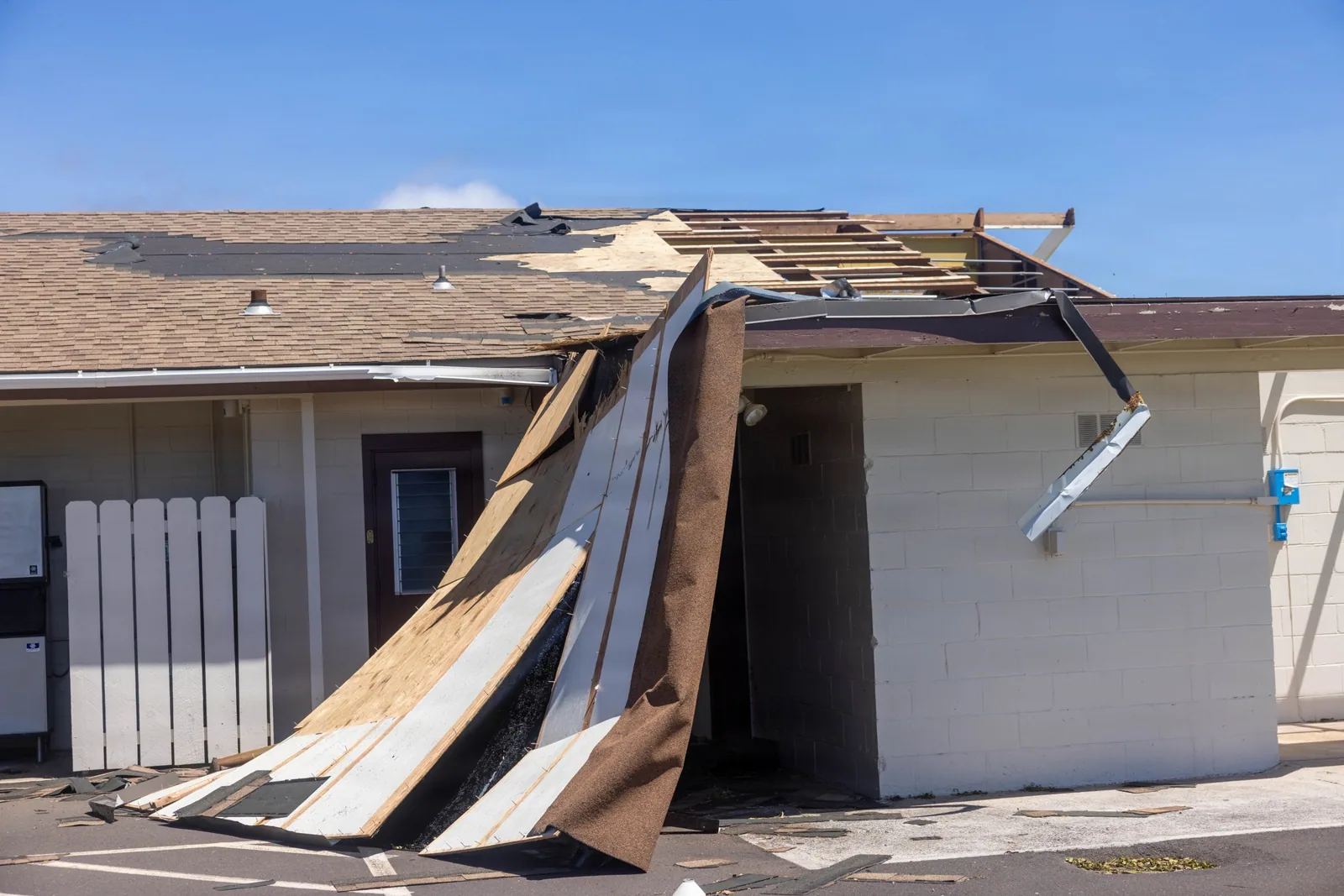
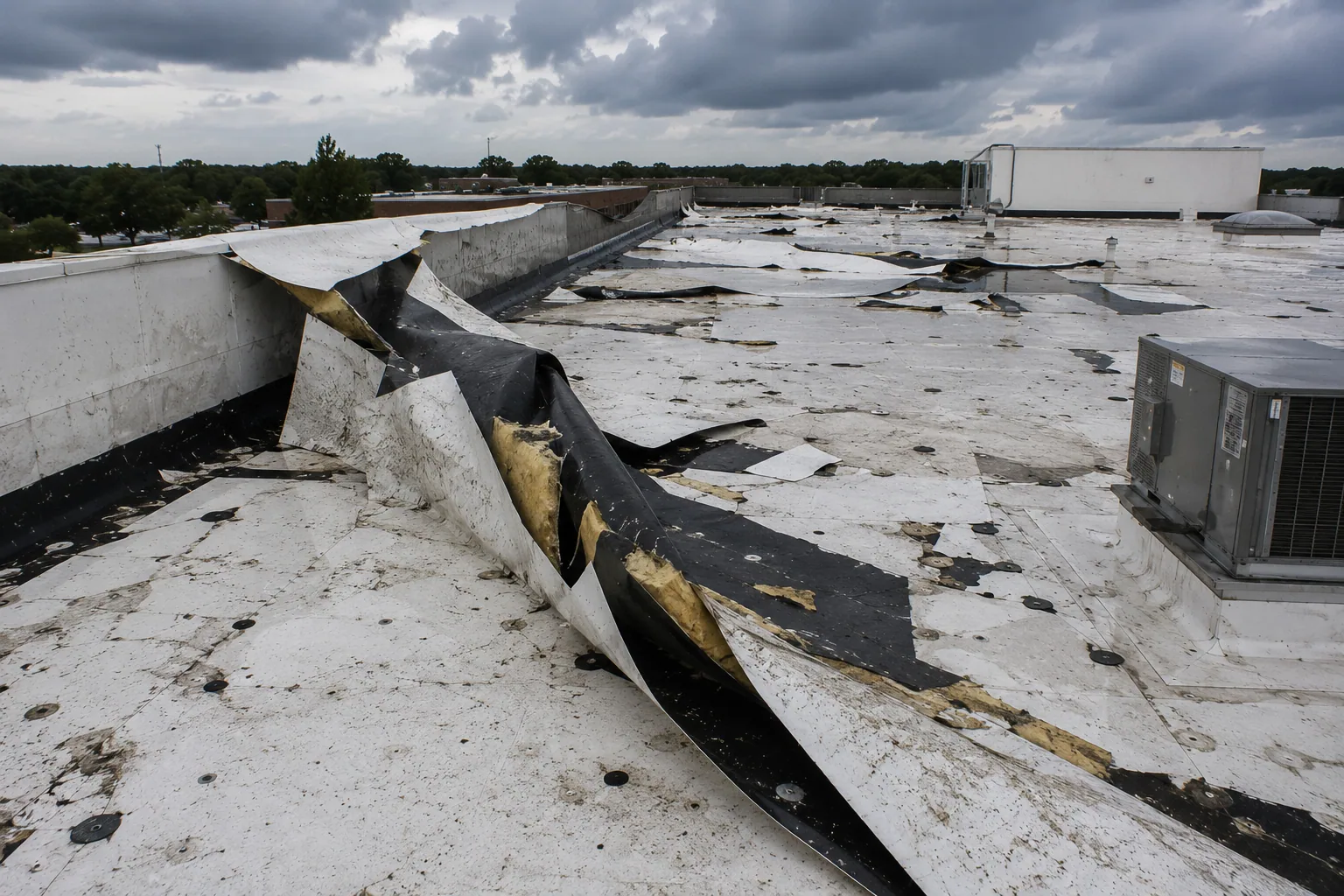
Debris on a roof is evidence of what struck it and from where. Impact marks, punctures and dents tell different stories from lifted edges and peeled membrane. We photograph each piece in place, mark the roof section, and record whether it came from the building, a neighboring structure or a tree. Material that must be removed for safety is moved after the record is made.
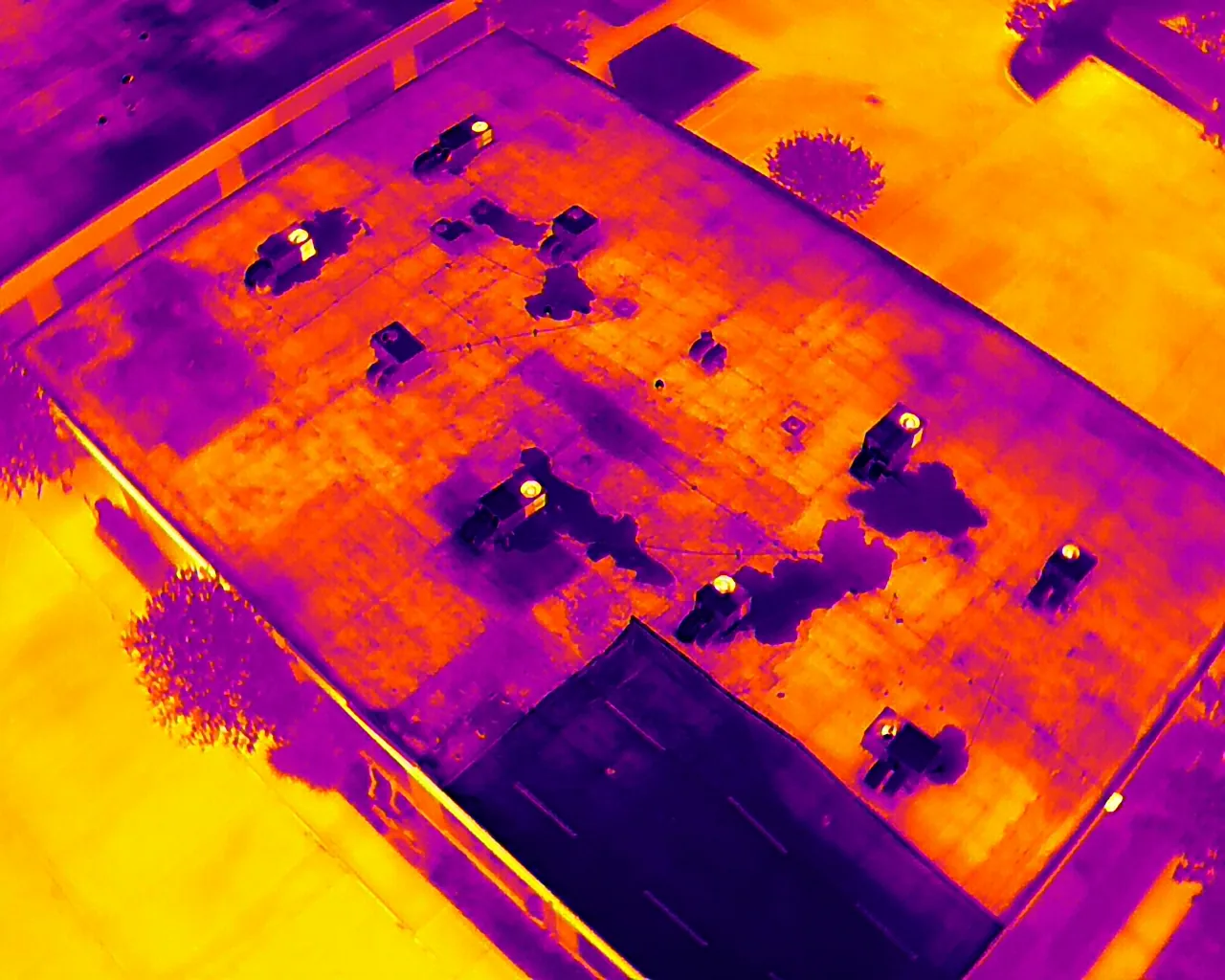
The same walk records what the debris did. A heavy object can crush insulation and break a deck without opening the membrane, and the damage appears only as a soft spot underfoot. We map those areas with a probe and, where access allows, with an infrared moisture survey to find water that entered through small openings.
Rooftop equipment that was moved or struck is photographed with its curb and its connections, since a displaced unit can have a torn flashing and a broken line beneath it. A line that leaks into the building is shut off first, and the work order notes who did it.
Separate Impact Damage From Uplift Damage
Two mechanisms act on a roof in a violent storm. Impact damages the surface and what lies beneath it. Uplift lifts the sheet, the edge metal and the equipment, and it works from the perimeter and corners inward. Each calls for a different repair, and a roof can have both.
For uplift damage, the scope follows the wind damage method: edge metal, attachment tests and the repair boundary extending past visible damage. For impact damage, the scope focuses on puncture repair, insulation replacement and deck repair under the impact area. A membrane puncture over wet insulation is priced with a tear-off boundary around the wet material, and each boundary is shown on the plan.
Wait for the Structural Review Where the Deck Has Moved
Where a deck has deflected, a joist has shifted or a wall has cracked, a structural engineer reviews the building before permanent roof work begins. We coordinate with that review, and we hold work in the affected area until limits on loading and access are set. Temporary measures proceed outside the restricted area.
The roof scope carries deck repair, reinforcement and fastener replacement as allowances with quantities to be confirmed when the area is opened. Assumptions are written into the quote, along with the point at which a revised price will follow. Naming the approver for each allowance keeps a hidden condition from stalling the job while the owner searches for someone to sign.
Choose the Temporary Roof for the Weather That Follows
Temporary protection ranges from a patch over a puncture to a full temporary roof over a collapsed section. The choice depends on the size of the breach, the condition of the deck and the weather that follows. A summer storm may be followed by more rain within days, and in cold months the same cover must resist snow and ice.
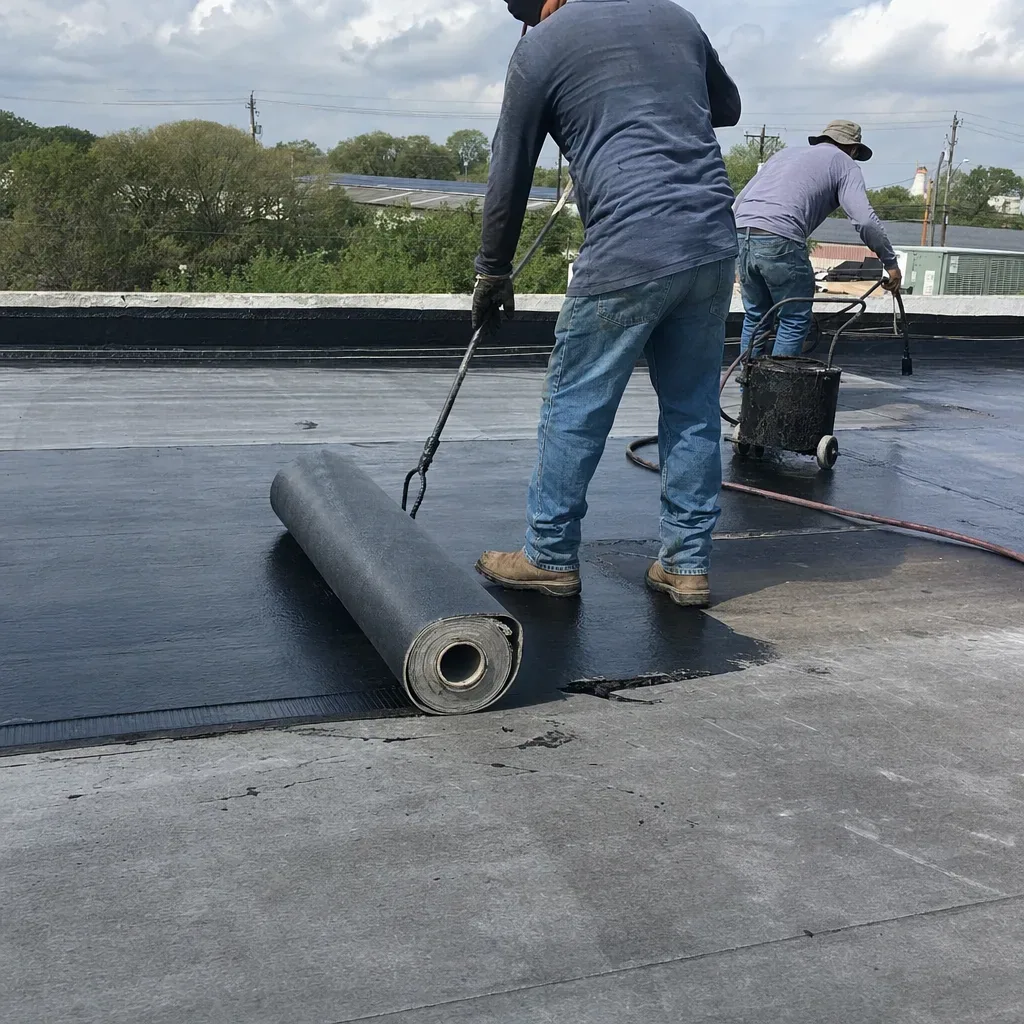
The quote shows each option with its life, its securing method and the cost to extend it. The dry-in date and the permanent repair window appear together, so the owner can see how long the stopgap must last. This item can move the budget sharply: a stopgap that must hold for a month costs more than one that holds for a week, and a failure costs more than either. Crews responding under emergency roof repair can start the dry-in while the claim is opened.
Phase Permanent Work and Align the Claim
Permanent repairs are phased by condition and by occupancy. Sections over occupied space come first, with interior protection placed before tear-off. Industrial roofs are sequenced around production. The same documentation goes to owners of buildings in the compact core near I-84 and Route 8, in Waterbury or in Wolcott, so the portfolio can be compared.
Connecticut's State Building Code governs permit applications filed from October 1, 2022 on, using the 2021 International building and energy conservation codes as its base, and a reroof of a heavily damaged area will be reviewed against it. At closeout the file carries the debris map, test results, structural findings as provided, finished photographs and permit record, which support the claim through insurance claim assistance.
Commercial Roofing Questions
What comes first after a tornado hits a commercial roof?
Confirm the building is cleared for entry, secure utilities and fence off unsafe sections. Photograph from safe positions, then dry-in any opening that can be reached. Hold permanent work until the structural review is complete.
Why photograph debris before it is moved?
It shows what struck the roof and where it came from, which separates impact from uplift and supports the claim. Move debris only after it is recorded, except where it is a safety hazard.
Can an undamaged-looking section hide damage?
Yes. Impact can crush insulation or break a deck without opening the membrane. Probe soft spots and run a moisture scan. Set the scope on those results, not on the surface.
How long should a temporary roof be designed to last?
As long as the permanent work will take to start, plus a margin for weather. The quote states the life and the price to extend it. A short-lived cover that fails in the next storm costs more than a sturdier one.
How long can a breach stay open between storms?
Only as long as the temporary cover is rated for the weather that follows. The city lists summer storms and tornadoes as local hazards and the whole city as exposed to winter storms, so the cover is priced for the season and inspected after each storm.
Send the release status, the access rules and the permit window
Send the roof plan, the release status of the building, the insurer's contact and the capital or permit window. We will triage for safety, document the roof, and deliver a phased written scope with the evidence behind each allowance.