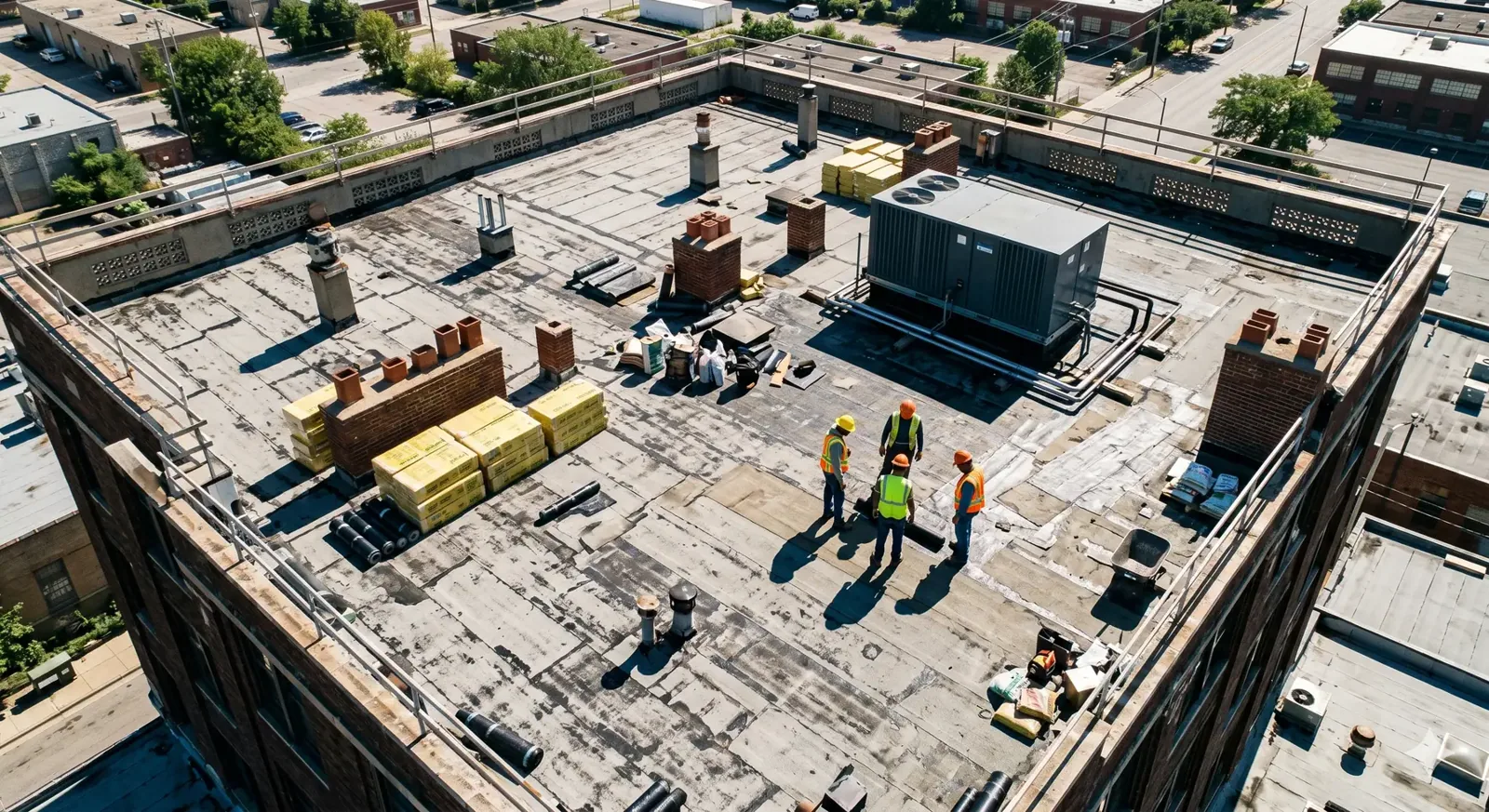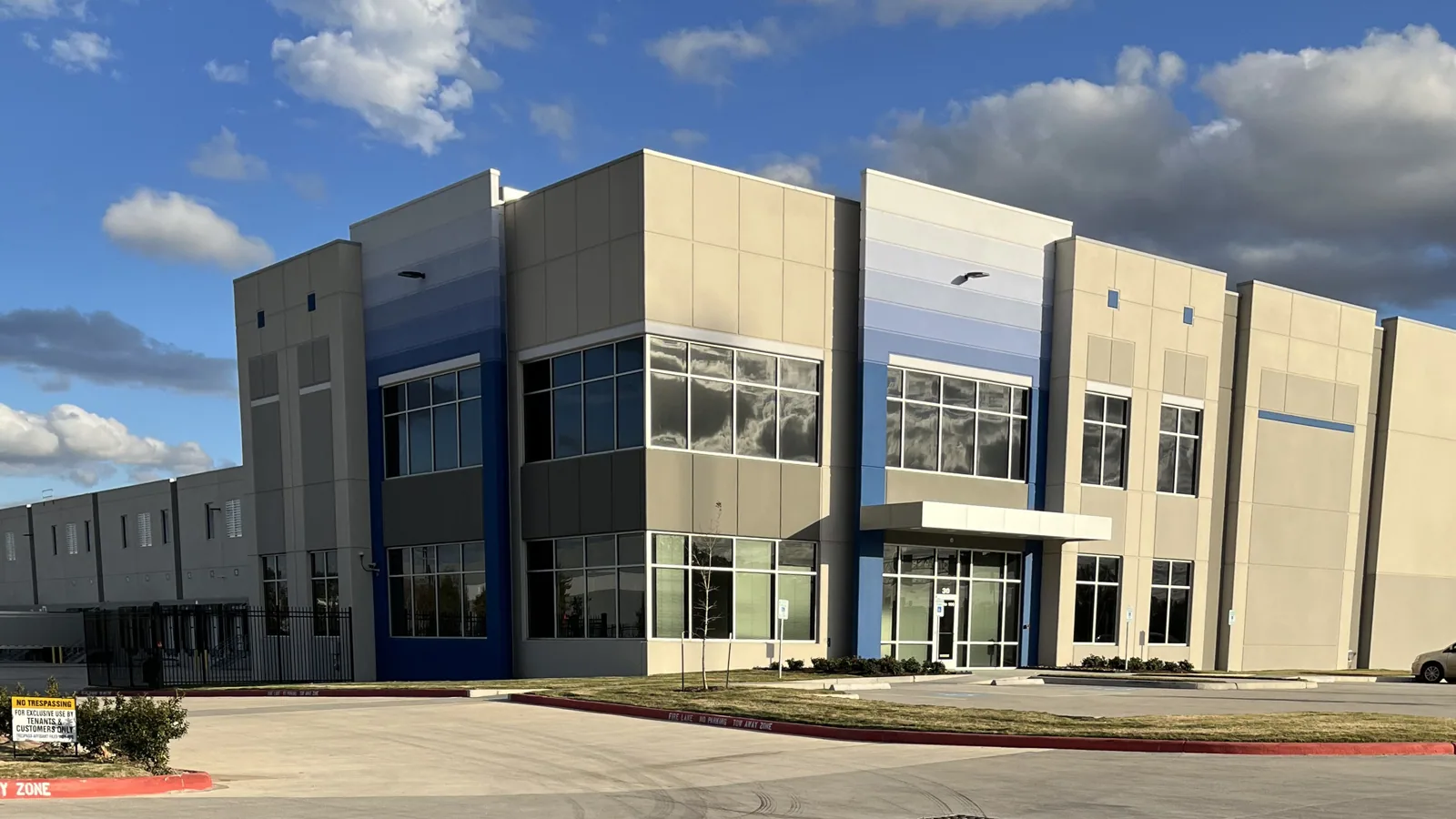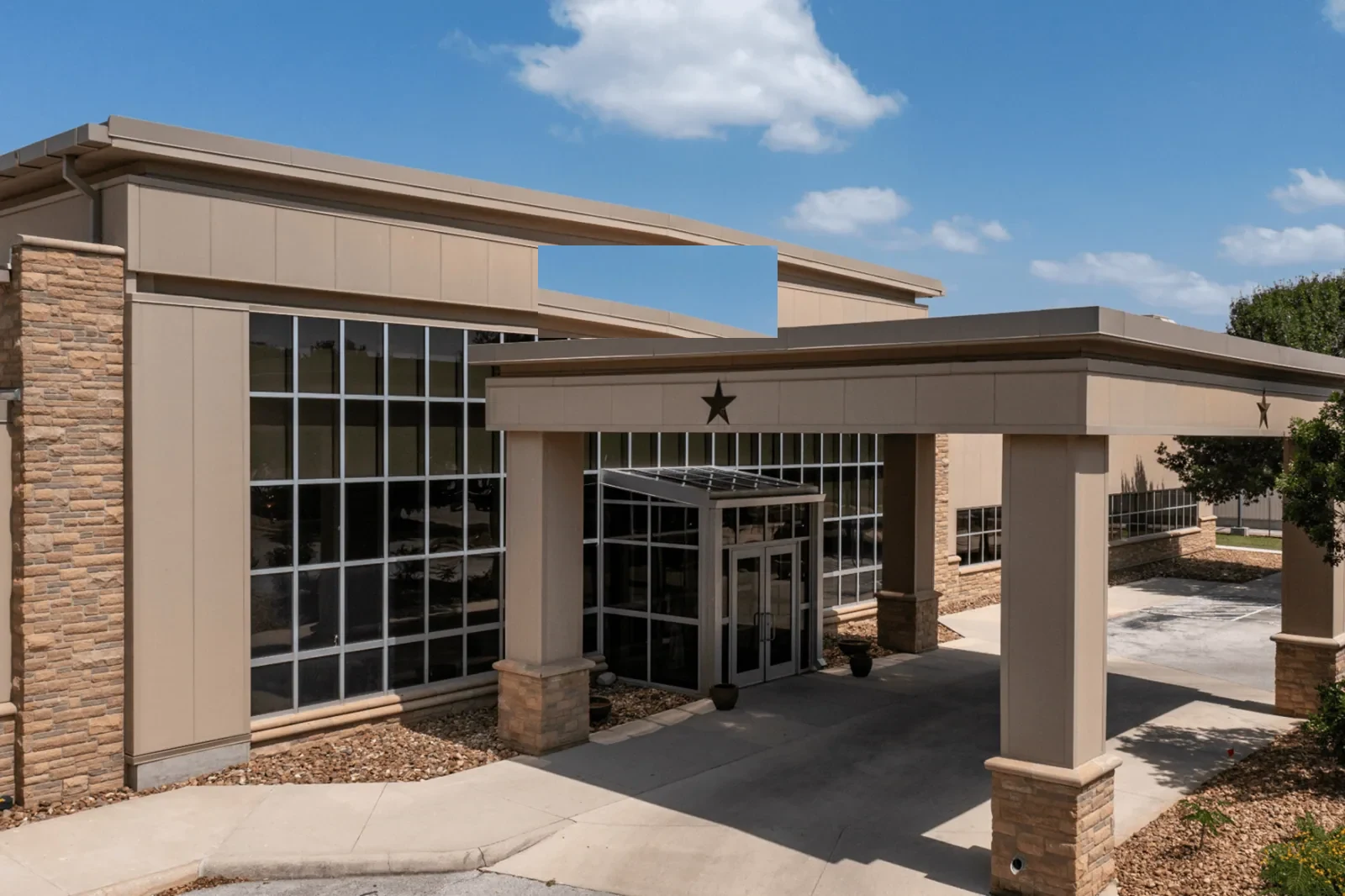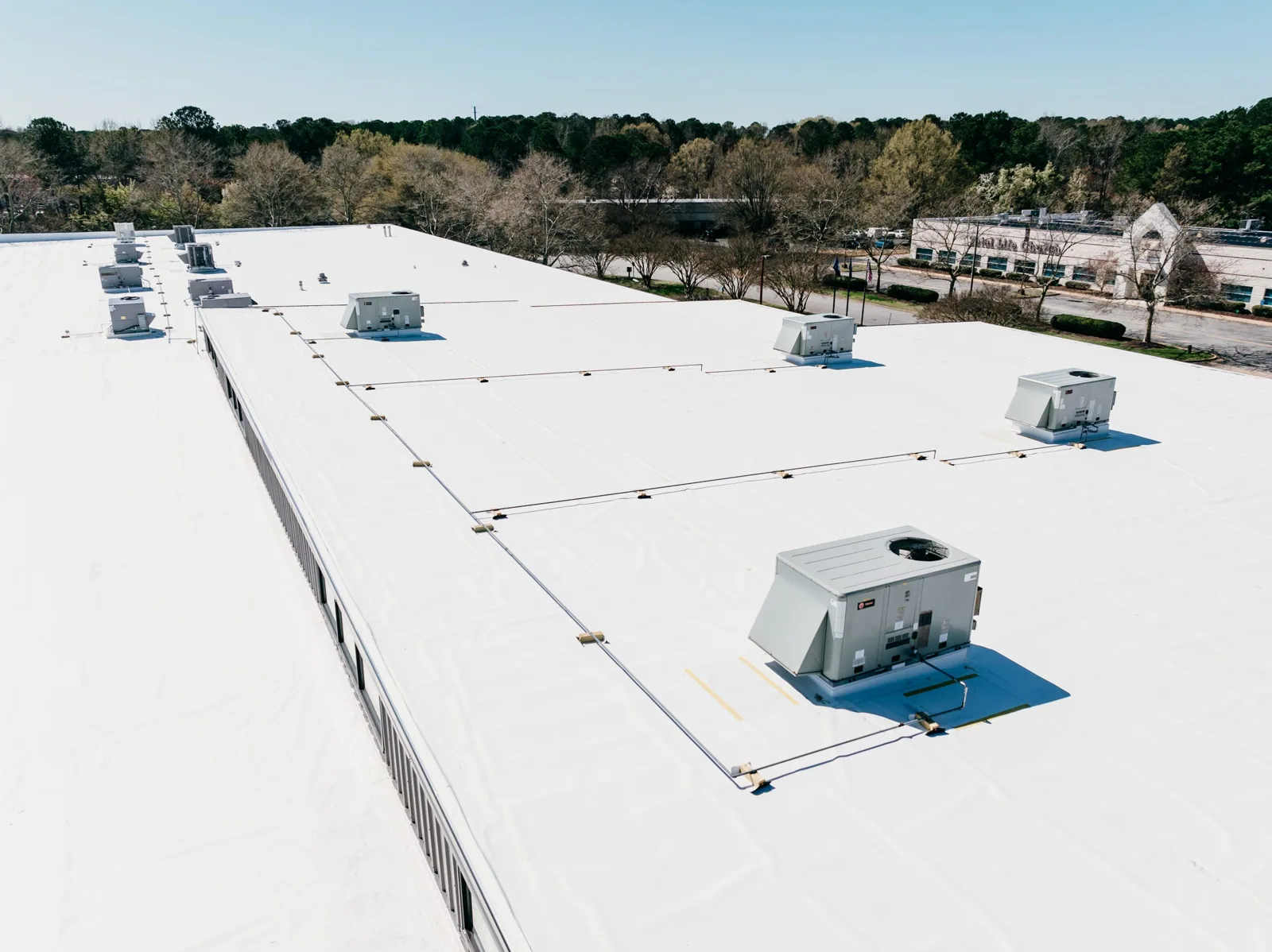
Roof work over a showroom or service area has to account for where vehicles, staff, and customers move during the day. We inspect membrane, metal, drainage, and equipment details, then divide repair, recover, or replacement into work areas that can be closed safely. Waterbury's arterial commercial corridors include Reidville Drive, East Main Street, and Chase Avenue, with development along those routes during the prior decade. That is broad commercial context; a dealership's roof, delivery schedule, and service hours govern the plan.
We map roof sections against the areas below, identify potential water paths, and record which details need testing before a price is final. Waterbury also faces winter snow and ice and summer storm exposure, both of which affect drainage and the time available to close an opening. A commercial roof inspection can establish the condition, and roof work in Waterbury can be scheduled to preserve customer and service access.
Keep Showroom and Service Traffic Moving
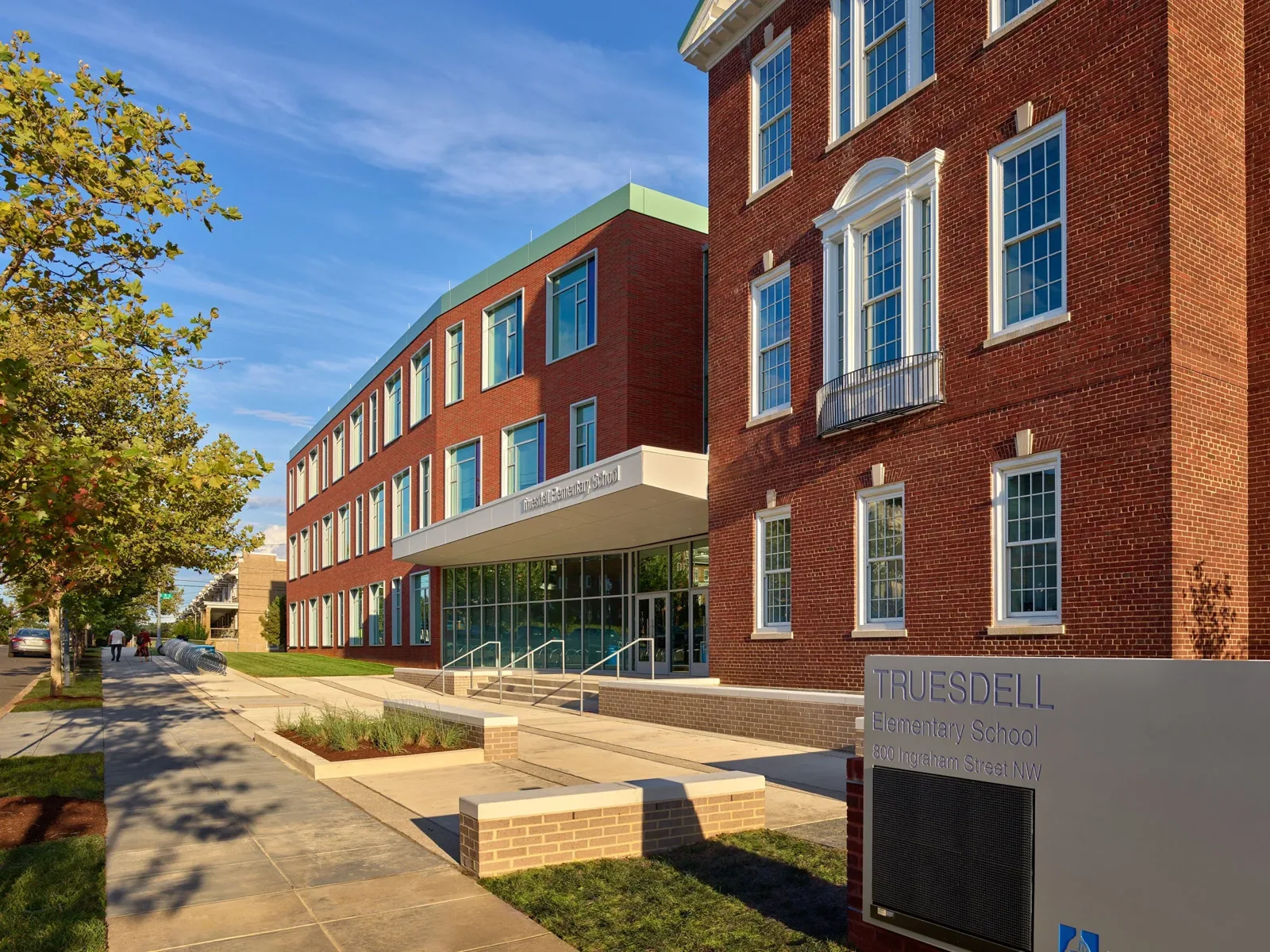
We identify customer entrances, service write-up lanes, vehicle circulation, parts receiving, and any space used for delivery or staging. The site contact marks paths that must stay open and tells us when lifts, dumpsters, and material trucks can arrive. A roof section above an active service bay may require a different shift from a section over an office or storage room. We set that sequence before mobilization so ground access and roof access stay coordinated.
Our field review records showroom glazing, rooftop units, exhaust equipment, or a parts mezzanine when those features are present, then assigns any needed protection. Roofs over parts storage borrow from warehouse roof planning for inventory and dock movement, and roofs over shop equipment borrow from manufacturing roof planning for production areas. The actual service calendar and interior layout decide which approach applies to each section.
Locate the Leak Before Protecting Vehicles
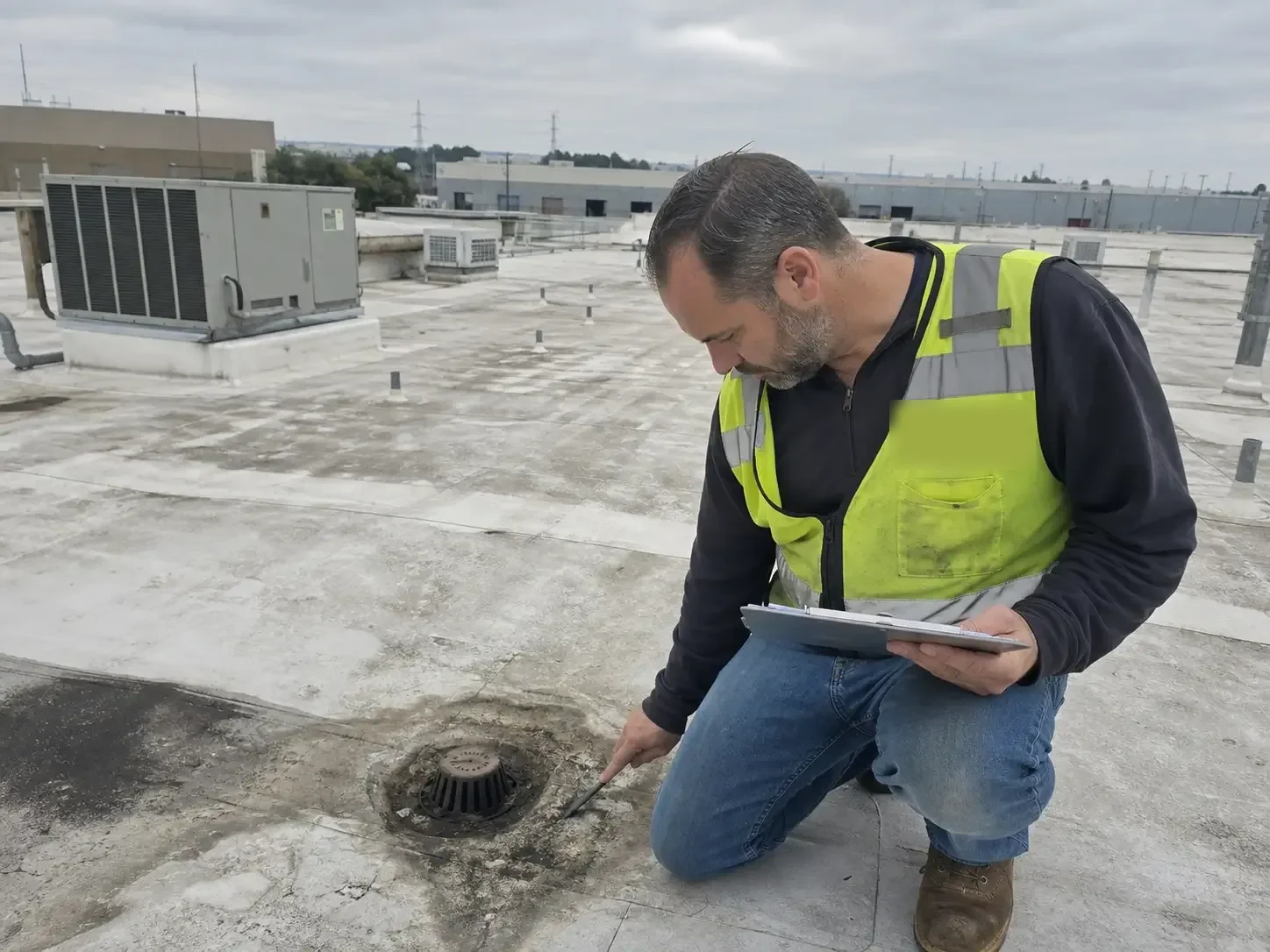
A ceiling mark near an office or bay may sit below a seam, curb, or wall transition that is farther upslope. We compare the report with roof drainage, lap direction, penetrations, skylights if present, and previous patch lines. Photos tie the likely entry to a specific section. When concealed moisture could spread below a larger area, a test cut can establish how much insulation needs attention before vehicle protection and repair quantities are set.
We note where vehicles should be moved, covered, or kept outside the work zone while the repair is open. The owner can use that location map to direct service advisors and customers without closing unrelated areas. Waterbury's winter-weather exposure makes drain function important before ice forms around outlets, and a heavy rain can expose a backed-up scupper or failed curb. A drain assessment can identify outlet issues, while occupied-building phasing can define the shift-by-shift limit.
Inspect the Roof Assembly Around Equipment
Showroom and service roofs may combine low-slope membrane with sloped metal or other assemblies. We identify where the systems meet, inspect the transition flashing, and check fasteners, seams, curb bases, and roof edges. If a rooftop unit must be lifted or isolated, the mechanical scope needs a shared curb detail and a return-to-service check. The roof estimate distinguishes membrane work from equipment work so the boundary between trades is visible.
A local seam or flashing repair can fit when the surrounding roof remains attached and dry. If several sections show wet insulation or repeated failure, a recover or tear-off may be more practical. We check attachment, layer count, drain height, deck condition, and perimeter metal before selecting a system. A metal retrofit review can address a compatible existing panel roof; a replacement scope can show tear-off, insulation, and staging quantities when the current assembly is no longer a sound base.
Set a Work Window Around Sales and Service
The work schedule lists customer hours, service-bay turnover, deliveries, lift placement, noise periods, and the daily closure point. We can sequence quieter preparation while the showroom is busy and plan removal for a period that gives the crew time to secure the roof before close. A section left open at shift end requires a designed temporary tie-in and a person assigned to confirm it. Weather holds are tied to the forecast and exposed area, not a vague date range.
If the dealership has a vehicle delivery or service promotion on the calendar, we record that date before sequencing sections. We can place high-noise removal away from the busiest customer period and confirm where a temporary route will lead. A named site contact approves a change to the staging zone, so vehicles are not directed into a lift path or material drop area during a shift.
Cost changes with roof height, staging distance, tear-off, disposal, insulation replacement, curb work, and the number of times access must be reset. Waterbury's commercial center is near I-84 and Route 8, while commercial activity also follows South Main and East Main. For active leaks outside normal hours, emergency response is available around the clock, including holidays, to stabilize the roof while the permanent boundary is priced.
Close the Job with a Roof and Site Map
Closeout photos show repaired laps, flashing, edges, drains, and equipment bases. We mark the work limit on the roof plan and identify any deferred condition or follow-up test. The building manager can keep the roof record with service schedules, equipment information, and previous repair invoices. That helps the next inspection distinguish a new leak from a detail already corrected and gives the owner a record of the agreed work boundary.
Waterbury's commercial corridors share the city with industrial parcels near the river and in the southeast. Share vehicle circulation rules, bay hours, roof plans, and the next capital window. We will document what is damaged, what can be repaired, and what needs broader replacement, with access, timing, and concealed-condition allowances stated plainly. A dated photograph of the showroom ceiling before work starts gives the manager a clear baseline if a customer or an insurer later asks whether a stain predates the roofing project.
Commercial Roofing Questions
Can the showroom stay open during roof work?
The site contact identifies customer routes, service activity, and areas that cannot be blocked. We plan lift placement and roof sections around those conditions, then mark any temporary closure for approval. The work sequence gives the manager a daily tie-in and a clear point for releasing the work zone.
How do you protect vehicles below a repair?
We locate vehicles and sensitive areas against the roof section before opening the assembly. The scope states whether vehicles should be moved, covered, or kept outside the staging area, and it names the expected work period. If testing shows a larger affected zone, we update the protection boundary before extending removal.
What roof findings can stop a recover?
Wet insulation, poor attachment, damaged deck, too many existing layers, or inadequate height at drains and edges can make another layer unsuitable. We inspect the actual assembly and test concealed areas when needed. The estimate compares the recover with repair and tear-off using those findings.
How do you coordinate roof and HVAC work?
We identify rooftop units, curb flashing, service clearances, and any equipment that must be lifted or isolated. The roof and mechanical scopes share a curb detail and a return-to-service point, with approvals assigned to the facility contact. That avoids leaving a trade boundary undefined in the estimate.
What records help price a dealership roof?
Roof plans, equipment lists, prior leaks, service-bay hours, customer access rules, and vehicle staging requirements help set the sequence. We verify the roof in the field and note missing information that affects quantities. The final scope ties each price item to an area and its operating constraint.
Plan Roof Work Around Vehicle and Service Access
Provide roof plans, equipment records, leak history, bay hours, delivery windows, customer routes, and vehicle protection requirements. We will map the affected sections and price repair, recover, and replacement with clear access and dry-in assumptions.